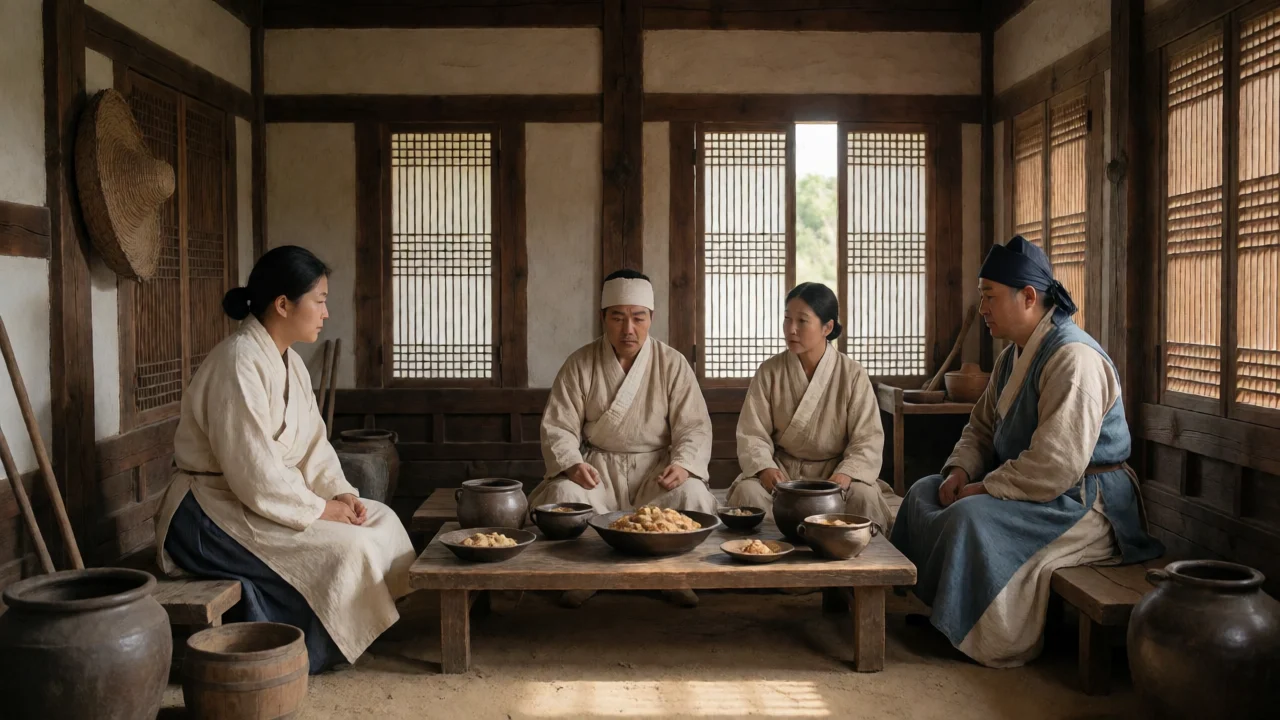
On the first day of the lunar second month, fierce winds announce the arrival of Grandpa Yeongdeung. At Sarabong Chilmeridang, a heartwarming story unfolds as young Doyun and his grandfather prepare for the Jeju Chilmeridang Yeongdeunggut.
Settle in and listen to the story at a gentle pace before you begin reading.
The Yeongdeung Month: A Guest Carried on Fierce Winds
In Jeju, the lunar second month is known as the “Yeongdeung Month.” Around this time, Grandpa Yeongdeung is said to cross the sea, touring every corner of the island before departing on the fifteenth day of the month. Historical texts like the Dongguk Yeoji Seungnam (Complete Survey of the Geography of the Eastern Kingdom) and Haesang Ilsa (Maritime Records) vividly record the ancient customs of welcoming the deity on the first day and sending off the ritual boat into the sea on the fifteenth.
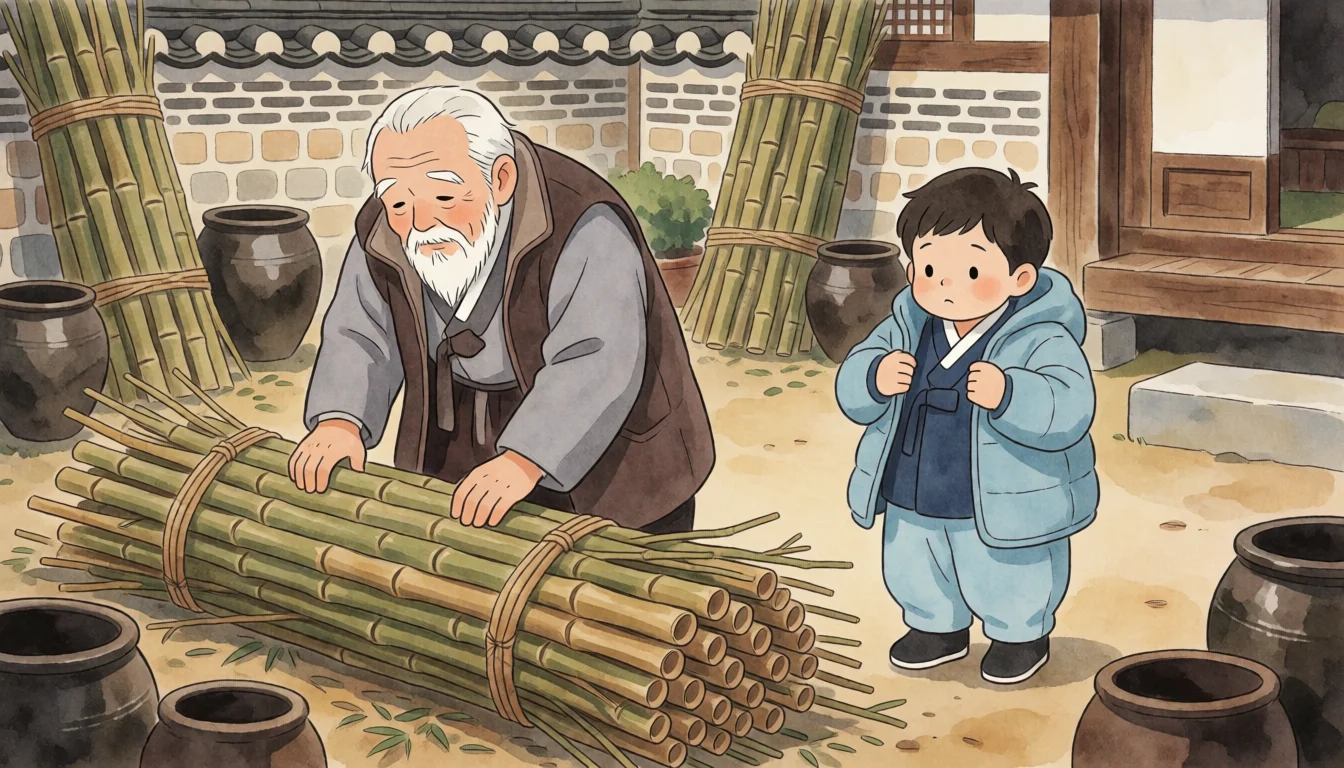
That morning, however, the windowpanes rattled violently, hissing like harsh whistles. Pulling his blanket tight, Doyun woke to the sound of a broom sweeping the courtyard. Slipping into his straw shoes and opening the door, a chilling sea breeze whipped fiercely against his cheeks. Outside, his grandfather was neatly bundling thick bamboo branches.
“Grandpa, why is the wind blowing so wildly? It feels like it’s going to break the doors down.”
As Doyun grumbled, pulling his shoulders inward, his grandfather dusted off his broom and smiled faintly.
“Grandpa Yeongdeung has finally set foot on Jeju land. Today, we need to head up to Chilmeridang and get ready to welcome our guest. Pull your coat tight and help me carry these bamboo poles.”
Heading to Sarabong Chilmeridang
Doyun dutifully followed his grandfather toward the slopes of Sarabong. Originally, Chilmeridang was located inside the village of Geonip-dong, but as Sanji Port was developed and the surroundings grew congested, it was relocated here to Sarabong. The higher they climbed, the more fiercely the sea wind whipped at their clothes.
As soon as they arrived at the shrine, village elders were already busy sweeping and tidying up inside and out. Among Jeju’s many village shaman rituals, the Chilmeridang Yeongdeunggut is an important communal rite that tells the story of the village’s resident tutelary god meeting and parting ways with the wandering visitor from afar.
“Grandpa, we already have our own village gods. Why do we have to go to such lengths for a wandering guest from so far away? All he brings is this biting wind.”
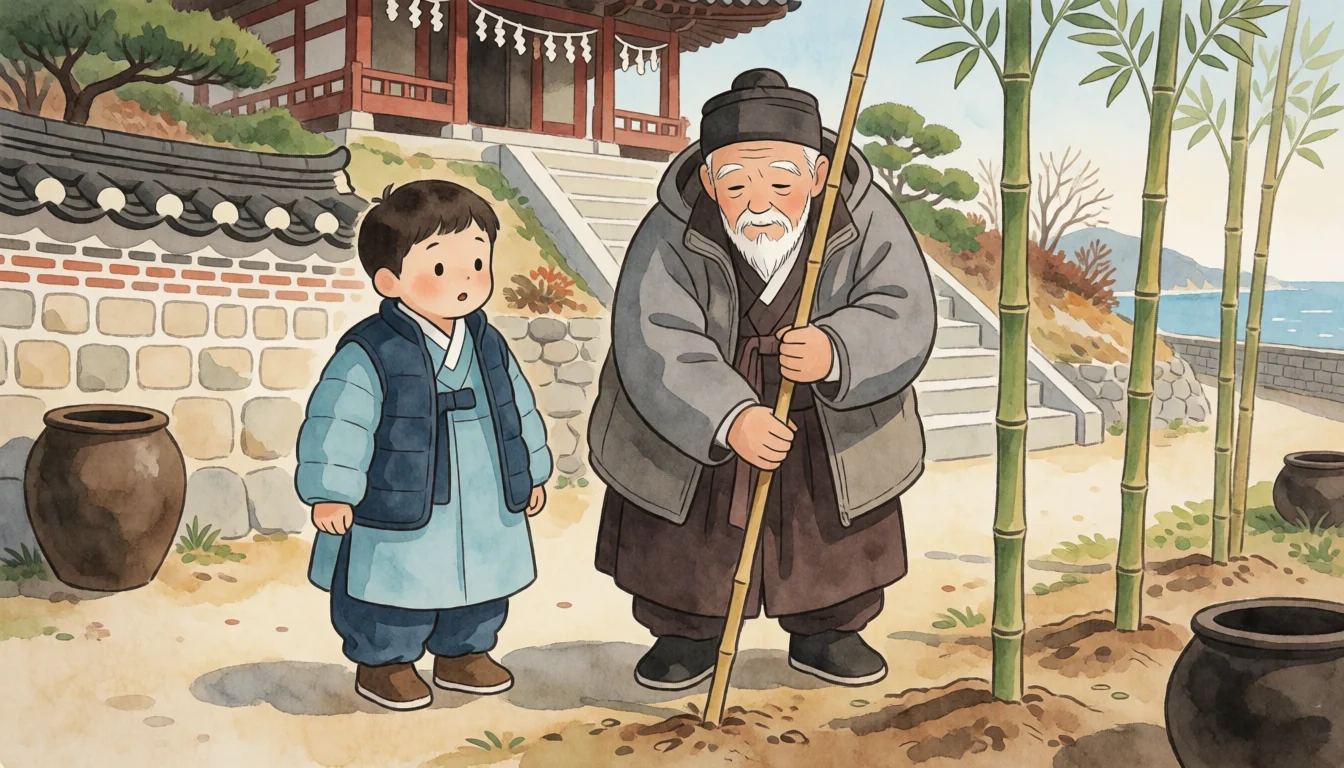
Puffing for breath, Doyun asked. His grandfather firmly drove a bamboo branch into the muddy ground and wiped the sweat from his forehead.
“Isn’t he a guest who has traveled a long way across the sea to reach us? For those who make their living from the ocean, that guest must leave behind abundant blessings so our farming and diving can go smoothly for the year.”
Howling Sea Winds and the Swaying Baebangseon
Yet, the wind showed no sign of calming down. Even tying together the twelve wooden poles to enclose the ritual site proved exhausting. A bamboo branch planted in the ground suddenly snapped back, sharply stinging Doyun’s hand.
“Ouch!”
“Are you alright? The wind is too strong; when you grab the branches, you have to wrap your hands around the inside, not the outside.”
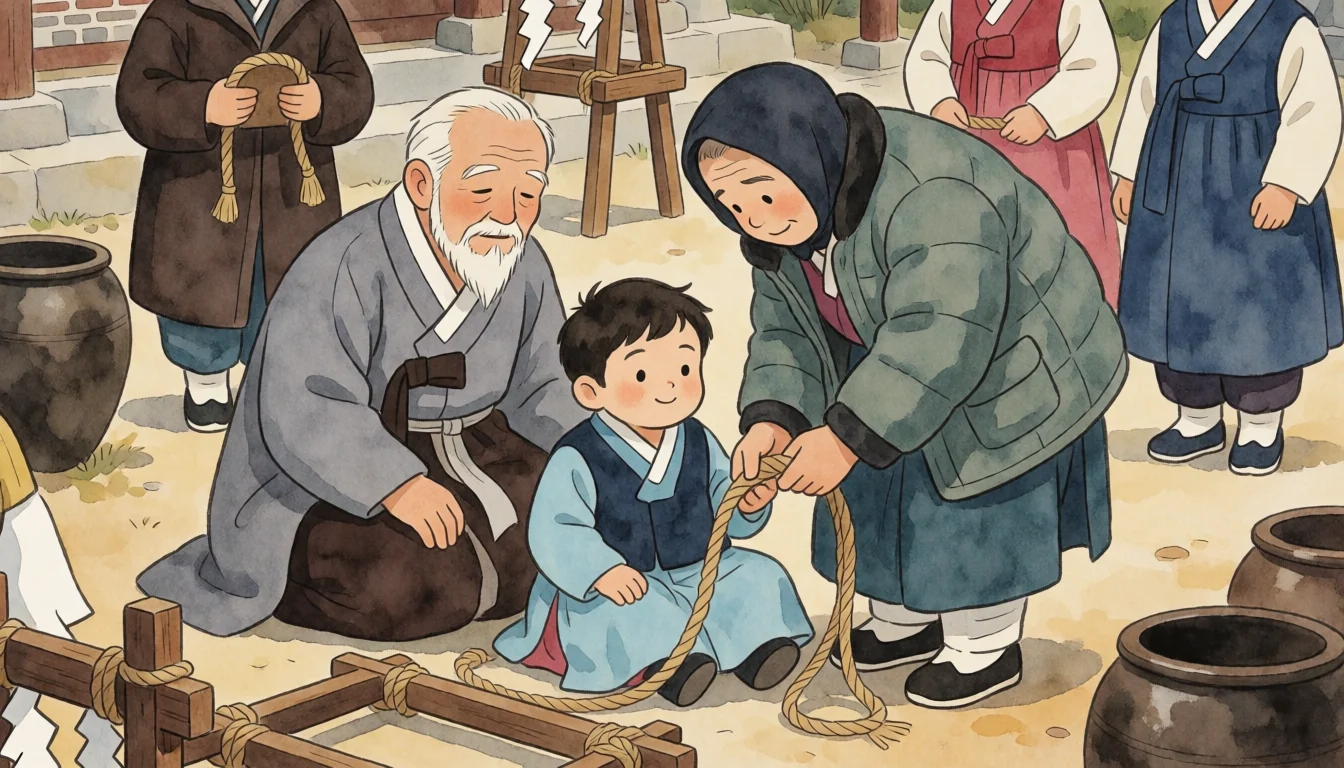
Grandpa hurried over, checked Doyun’s hand, and fixed the knot. Nearby, villagers were working on the baebangseon—a boat-shaped ritual vessel that would be sent out to sea during the farewell ceremony—but the ropes on its mast were tangled tightly against the howling gale. With his fingertips frozen numb and the cords slipping repeatedly, Doyun finally slumped down onto the dirt.
“Do we really have to suffer through all this just to send off a god we can’t even see? The wind is going to smash the baebangseon to pieces anyway!”
Glancing down at the complaining boy, Grandpa quietly took the tangled rope and laid it across his lap.
The Deeper Meaning Left by King Yeongdeung
Sitting with his back to the wind, Grandpa slowly untangled the knots as he began to speak.
“Over in Hansu-ri, Hallim, there’s an old tale known as the Yeongdeung Daewang Bonpuli (Origin Myth of the Great Yeongdeung King). Long, long ago, Hwang-yeongdeung lived in the Dragon King’s realm. When fierce storms struck, our fishermen were swept toward the country of the one-eyed people and faced certain death.”
Doyun looked up into his grandfather’s face with curious eyes.
“At that time, Hwang-yeongdeung sat atop a royal rock and hid the boats and fishermen within the folds of her wide skirt. When the one-eyed people came looking to see if she had seen the fishermen, Yeongdeung feigned ignorance, claiming she was waiting to catch them herself, thereby protecting our men. Before sending them off, she sternly urged them to chant the name of the Goddess of Mercy without stopping.”
“Did the fishermen make it back safely?” Doyun asked cautiously.
Grandpa nodded. “Though they nearly got dragged back because they stopped chanting midway, thanks to Yeongdeung’s persistent guidance and help, they returned safely to Hansu-ri. Yeongdeung asked them not to forget her, and paid a heavy price for saving the fishermen. It is said her head landed on Sosong (Udo), her limbs on Hansu-ri, and her torso on Seongsan. The sea people began holding rituals to honor her gratitude and spirit.”
Doyun listened once more to the roaring wind. The gale that had felt merely harsh and bitter moments before now carried the weighty presence of a divine breath that had once rescued lives from an angry sea.
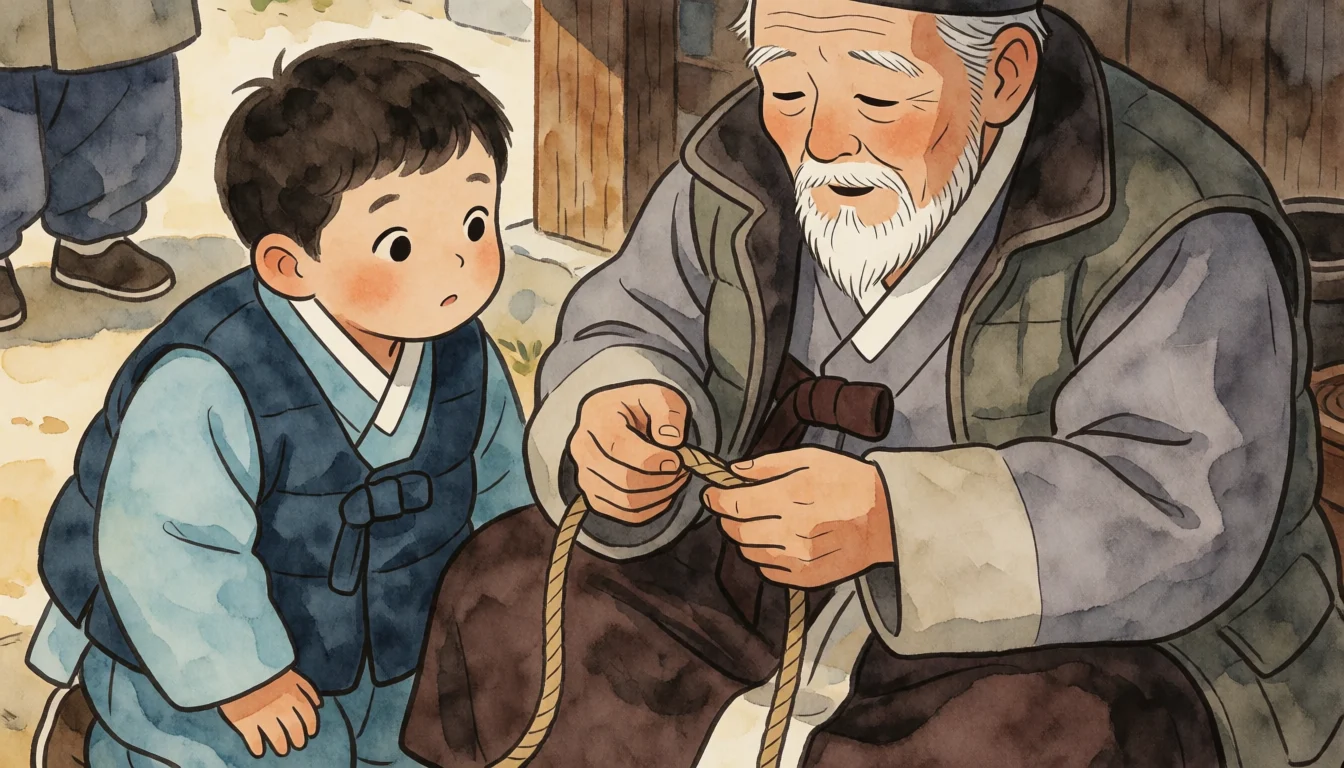
The Mast Tied by Doyun’s Hands
“In that case, Grandpa, we need to send this baebangseon off safely, just like the boat that saved those fishermen.”
Rolling up his sleeves, Doyun sat back down before the tangled knots. All traces of his previous complaints were gone. Though his fingers were red and stiff from the cold wind, Doyun wrapped the rope twice and tied it down securely, exactly as his grandfather had taught him.
“Hoho, that’s right. You have to tie it down tight like that so the baebangseon won’t easily capsize in high waves. Your hands are quite deft now.”
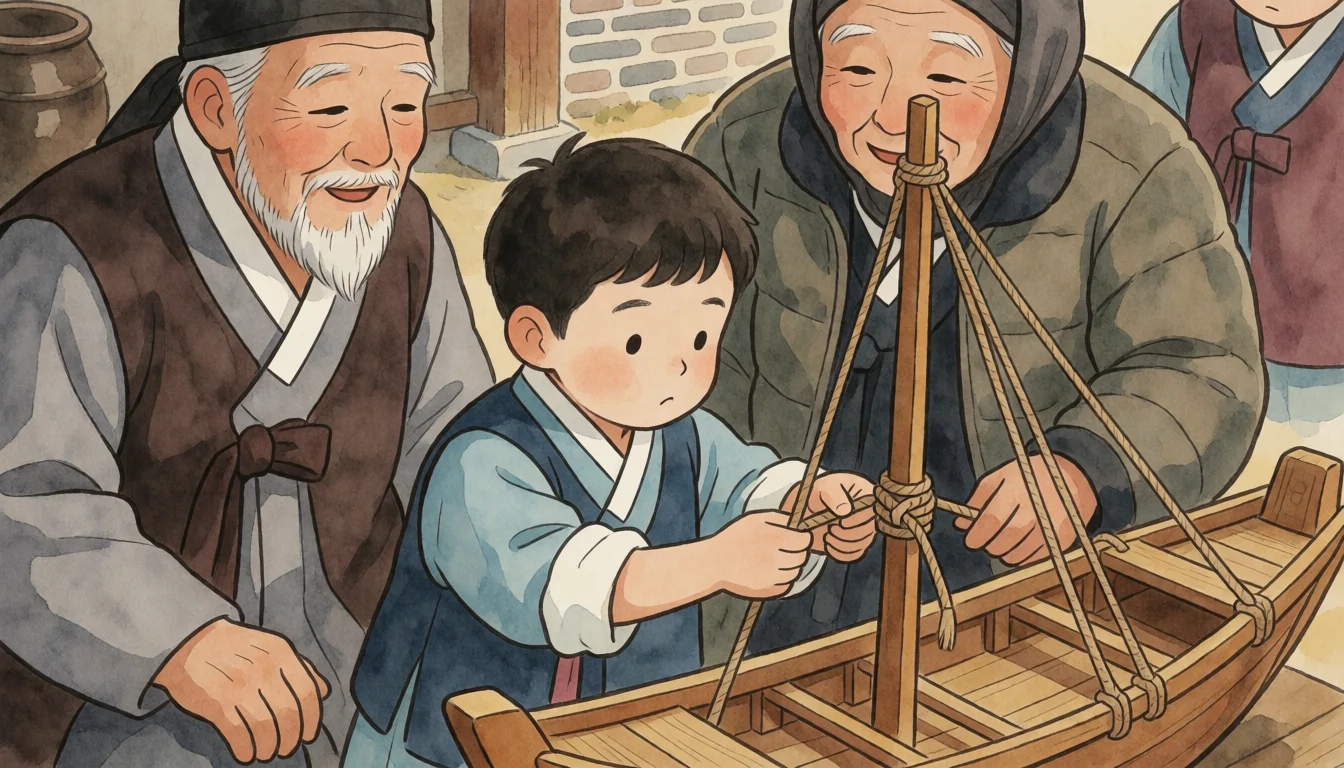
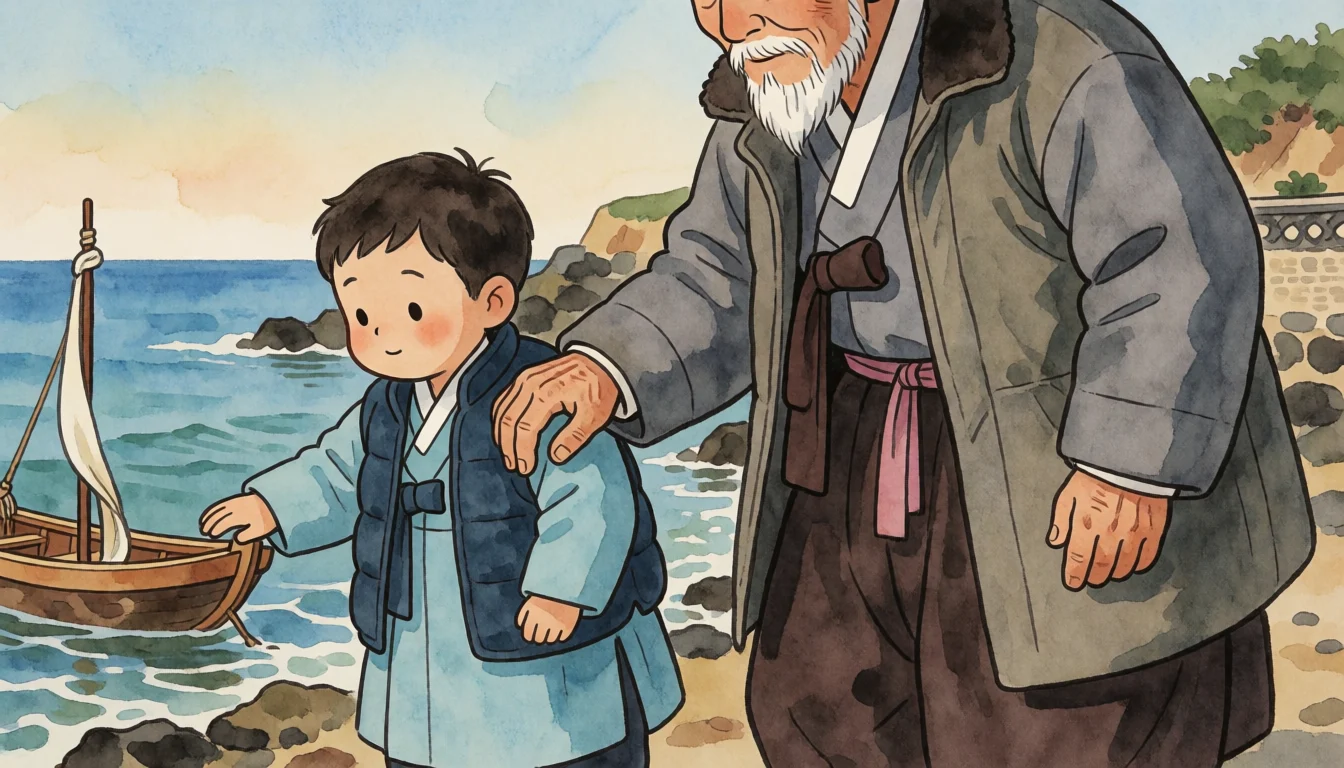
Grandpa smiled warmly and patted Doyun’s shoulder. Working together, the two of them straightened the horse-head-shaped wooden log and firmly secured the supports so the small mast of the baebangseon stood tall and straight. Beads of sweat formed on their brows despite the biting sea breeze.
The Fifteenth Farewell and Prayers Set Out to Sea
Before long, the full moon day of the Yeongdeung month dawned. Chilmeridang filled with villagers as the shamanic ritual for both the resident tutelary gods and the wandering Yeongdeung deities unfolded with solemnity and joy. After paying respects to the shrine’s main tutelary god, the farewell ceremony to send off Grandpa Yeongdeung and his retinue reached its peak.
As the rites drew to a close, the villagers headed down to the shore, led by the baebangseon that Doyun and his grandfather had carefully prepared. Even facing the churning waves beyond the horizon, the baebangseon stood proudly with the mast Doyun had tied.
“Now, Doyun. Your devotion is loaded onto that boat as well. Let’s put our hands together so Grandpa Yeongdeung has a comfortable journey home.”
Doyun’s small hand overlapped his grandfather’s wrinkled one. As the two of them pushed the baebangseon in time with the ocean swell, the little boat sliced through the water, leaving white foam in its wake as it glided out into the open sea.
And it was truly a wondrous thing. As the baebangseon drifted far out until it became a mere speck, the fierce winds that had shaken the village for days began to subside, carrying a soft breath of spring. Gazing at the calm blue sea, Grandpa wrapped a warm arm around Doyun’s shoulders, and Doyun smiled brightly, leaning against his grandfather with a reassured heart.
The Nature and Customs of Jeju Chilmeridang Yeongdeunggut
The Jeju Chilmeridang Yeongdeunggut is an important village ritual in Jeju that closely aligns with seasonal rites praying for an abundant fish catch. In Jeju, the lunar second month is called the “Yeongdeung Month,” during which Grandpa Yeongdeung arrives, travels across various places, and departs on the fifteenth day of the second month. Chilmeridang is the shrine where the farewell rite is held as Yeongdeung departs, and the ritual itself centers around the meeting and parting of the resident tutelary god and the wandering deity.
Joseon-era texts such as the Dongguk Yeoji Seungnam (Jeju-mok Customs section) and Kim Ik-seok’s Haesang Ilsa (Yeondeungje Festival section) record the traditions of welcoming the deity on the first day of the second month and sending off the boat on the fifteenth (known as the Yeondeungje or Yeongdeungje). When initially designated as an Important Intangible Cultural Property, it was called “Chilmeridang-gut,” but it is now formally known as “Jeju Chilmeridang Yeongdeunggut.”
Ritual Tools and Regional Transmission
The ritual utilizes twelve wooden poles, a horse-head-shaped wooden log (decorated with silk), and a boat-shaped baebangseon complete with a mast. Additionally, Jeju features the oral myth related to the Yeongdeung deity, the Yeongdeung Daewang Bonpuli (from Hansu-ri, Hallim-eup, Jeju City), which tells of Hwang-yeongdeung saving fishermen, her body being divided by the one-eyed people, and the resulting memorial customs.
Depending on the region, Suwon-dang has traditionally held large welcoming rituals for the Yeongdeung deity, while Sosong (Udo), Seongsan, and Hansu-ri preserve traditions related to the partitioning of the deity’s body and local memorial rites (the Udo New Year’s Eve rite, the February 1st Bikkulmul, and the Seongsan-myeon Yeongdeungje on February 5th). In the central and southern regions of Korea, beliefs regarding Grandpa/Grandmother Yeongdeung bringing a daughter-in-law or daughter—and associated tales of bountiful harvests, droughts, or rain—are also widespread.
Related Location: Chilmeridang
Chilmeridang was originally located in Geonip-dong, but was relocated toward Sarabong after the construction of Sanji Port disrupted the area.
Modern Transmission
Today across Jeju, Yeongdeung rituals are actively transmitted throughout the entire island from early to mid-February, alongside New Year’s *gwase-gut* rituals.
The Boundary Between Creative Fiction and Fact
The dialogues of the characters, daily commotions during ritual preparations, and shifts in emotional states appearing in this content are fictional creations designed to aid understanding. Historical elements recorded in texts, such as *yakmahui* (acrobatic horse plays), are no longer extant today, making their precise origins difficult to ascertain. Therefore, legendary oral traditions must be clearly distinguished from historical and folkloric facts.
🎨 Color This Story