With the start of winter just around the corner, an unseasonal late-autumn heatwave lingers, leaving young Dohyeon anxious as he watches his grandfather chop wood. This story explores the proverb “Autumn heat and an old person’s health”—known in classical terms as chunhan-nogeon—and the quiet wisdom it holds.
Settle in and listen to the story at a gentle pace before you begin reading.
The Axe Raised Under the Late Autumn Sun
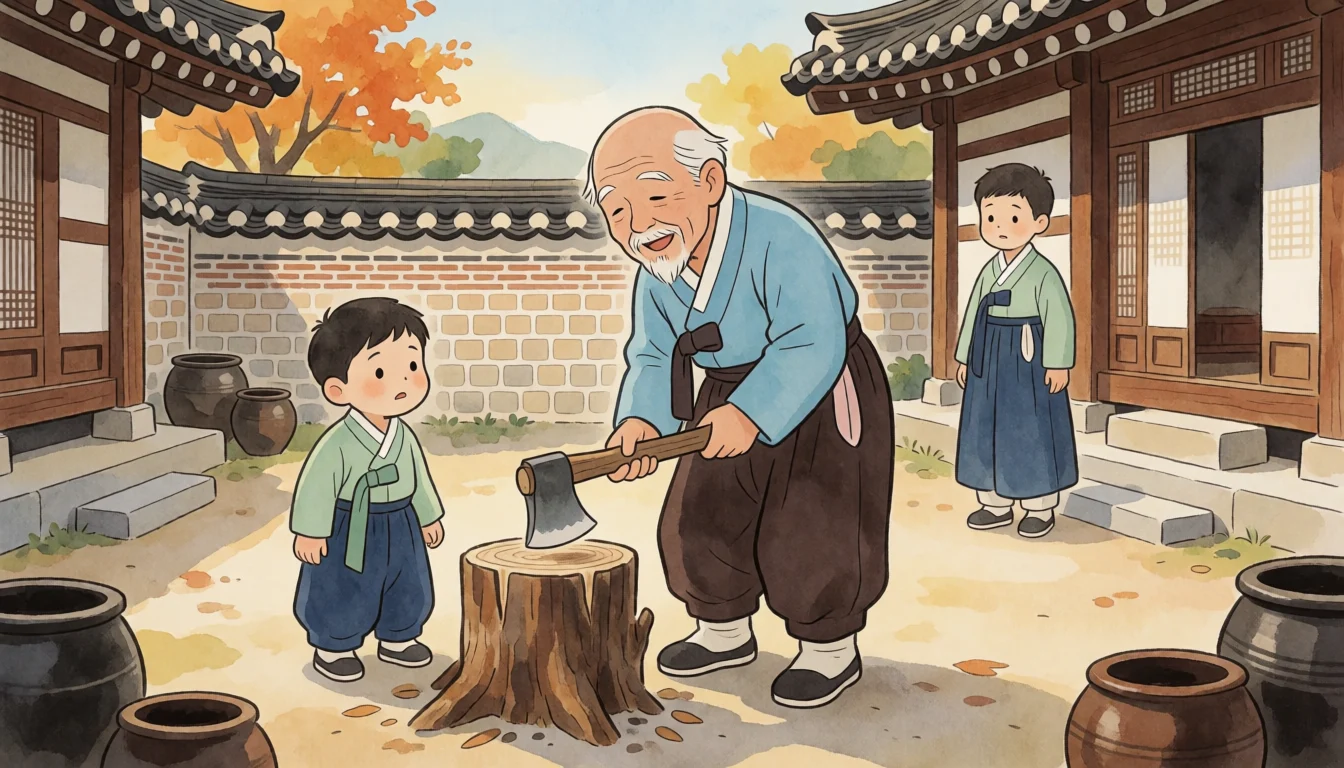
Even though Ipdong—the official start of winter—was right around the corner, a scorching sun beat down from the sky as if it were the height of summer. In a corner of the courtyard, before a towering stack of logs, a thick oak trunk split apart with a sharp crack.
“How’s that, Dohyeon! Doesn’t your old grandfather still have plenty of strength in his arms?”
Grandfather rolled up his sleeves, wiped the sweat beading on his forehead, and chuckled heartily. He had already split three or four logs in a row, his grip on the axe steady and unhesitating. Yet, as Dohyeon watched from nearby, his eyes were filled with quiet worry. Though his grandfather looked brimming with energy at a glance, Dohyeon could see his knees trembling slightly beneath the heavy, labored sound of his breathing.
“Grandfather, it’s unusually hot today. You can finish the firewood later; why don’t you step into the shade and rest?”
“No, no. For some reason, my body feels light as a feather today. On a day like this, I ought to knock out all our winter firewood in one go!”
Grandfather swung the axe high into the air with a flourish and hoisted another thick oak chunk onto the chopping block.
A Chilling Warning Left by Ancient Texts
Dohyeon squatted down beside the woodpile, swallowing hard. Suddenly, words from an old text that his village scholar had once shared flashed through his mind.
Compiled by Hong Man-jong during the reign of King Seonjo in the Joseon Dynasty, the Sunoji notes that chunhan-nogeon—literally meaning “spring cold and an old person’s health”—is a phrase describing how a person’s vitality has begun to fade. Similarly, the Songnamjapji observes that spring cold, autumn heat, and an elderly person’s health all share a common trait: none of them last long. It was an ancient warning that no matter how warm and robust something might outwardly appear, its underlying foundation is frail, and its energy can vanish in an instant.
‘Is grandfather’s strength right now really genuine vitality?’
Dohyeon’s heart raced as he watched the axe blade flash down toward the oak log. Just as late-autumn heat can turn to biting winter wind without warning, the exhaustion bound to follow an elderly person’s sudden burst of energy felt all too predictable.
“Grandfather, you really shouldn’t push yourself like this. If you keep sweating like that, what are you going to do when the sun goes down?”
“You worry too much, boy. Fine, we’ll stop right before sunset. I’ll split the wood, and you can carry it over and stack it under the eaves. What do you say—will you lend a hand until then?”
Grandfather flashed a sweat-streaked grin and struck a bargain, leaving Dohyeon with little choice but to nod. If he couldn’t break his grandfather’s stubbornness, staying close by to look after him was the next best thing.
Shadows and Chilly Winds Descending on the Courtyard
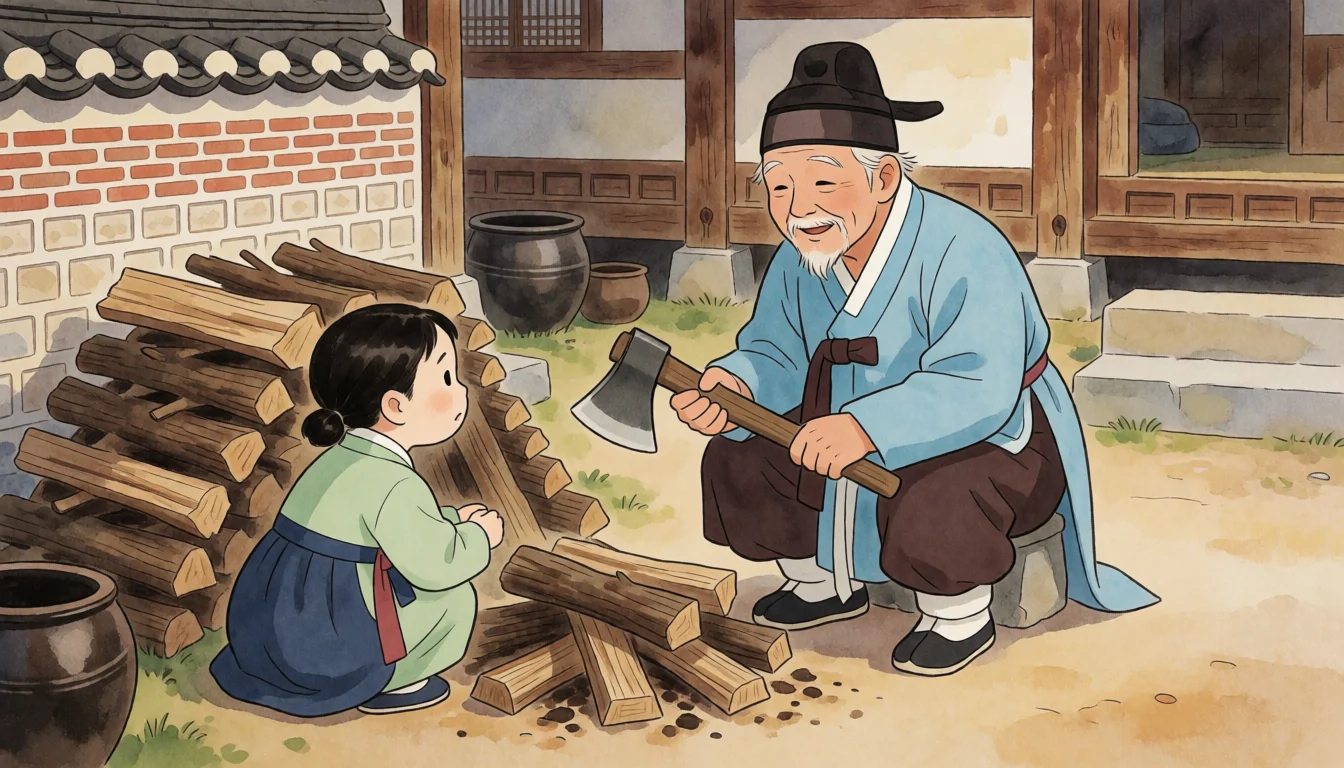
All afternoon, the two of them bustled about the courtyard. The late heat showed no sign of letting up, and grandfather gleefully brought the axe down again and again. Dohyeon gathered armfuls of split firewood and neatly stacked them beneath the eaves. Though his lower back ached and his arms throbbed, he kept moving briskly to honor his promise to stay by his grandfather’s side.
And then, just as the red sun began to dip low behind the western hills, the texture of the air shifted in an instant.
The uncomfortably sticky warmth vanished as if washed away, and a sharp, biting wind rushed into the courtyard from the northern ridge. A needle-like chill pierced right through their sweat-soaked clothes.
“Ugh……!”
At that exact moment, a sharp groan escaped grandfather’s lips as he raised the axe. The blade stopped halfway, wedged crookedly into a half-split log. His legs buckled, and leaning heavily on the handle of the axe, he bent over as if sinking into the earth. The beads of sweat on his forehead instantly turned into a chilling gooseflesh.
A Warm Evening Sharing Body Heat
“Grandfather!”
Dropping the firewood in his arms, Dohyeon dashed into the room like lightning. He grabbed a thick coat folded neatly atop the chest of drawers and raced back out to the courtyard.
“Please put this on right away. Let me help you over to the eaves.”
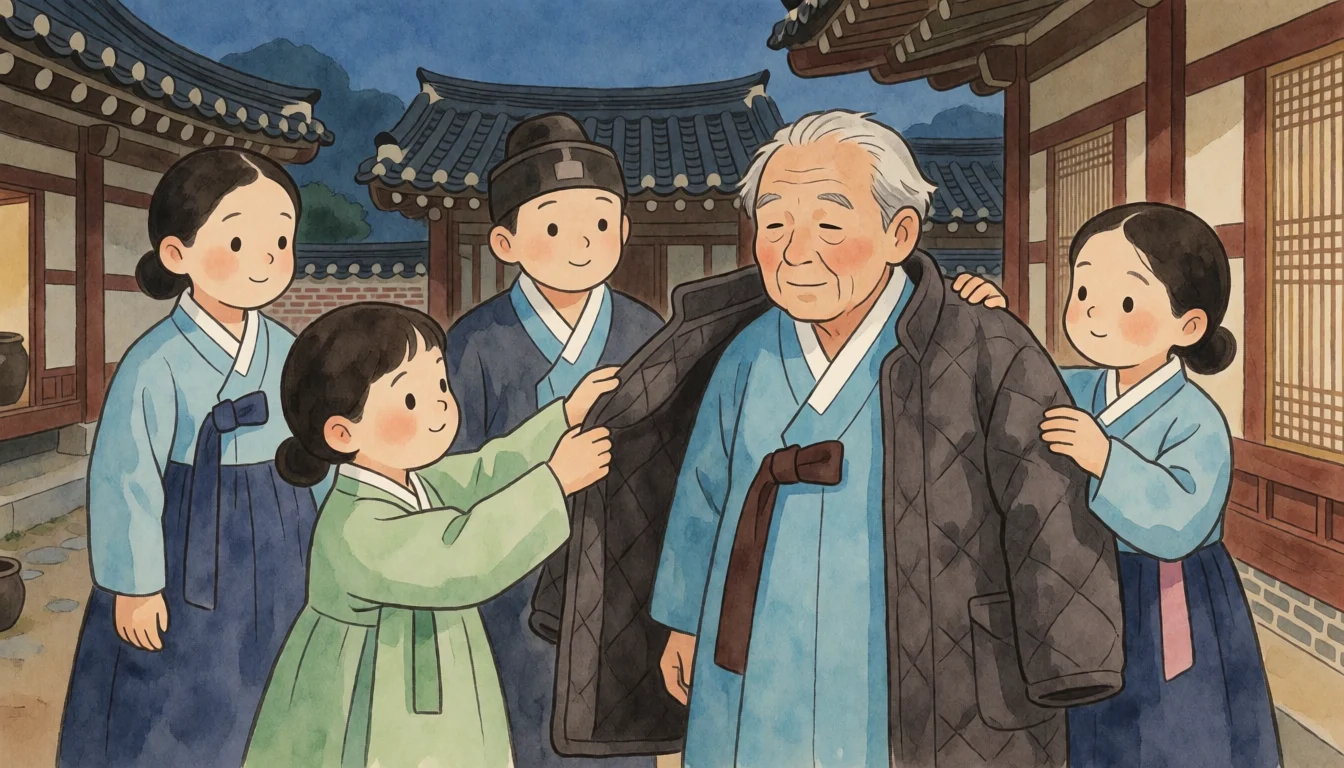
Dohyeon carefully draped the heavy coat over his grandfather’s trembling shoulders. Grandfather pulled the collar tight with cold hands and suppressed a dry cough.
“Ah, well…… just a moment ago, my whole body was bursting with strength, but one gust of wind drains all my energy away. Just as you said, an old man’s vigor is truly fleeting.”
Rubbing his lower back, grandfather offered a sheepish, bitter smile. All his daytime bravado was completely gone, leaving only the poignant vulnerability of an elderly man humbled by the shifting seasons. After seating his grandfather safely on the wooden pyeongsang bench, Dohyeon diligently gathered the remaining scattered wood across the yard, determined to fulfill his promise to finish the work before sunset.
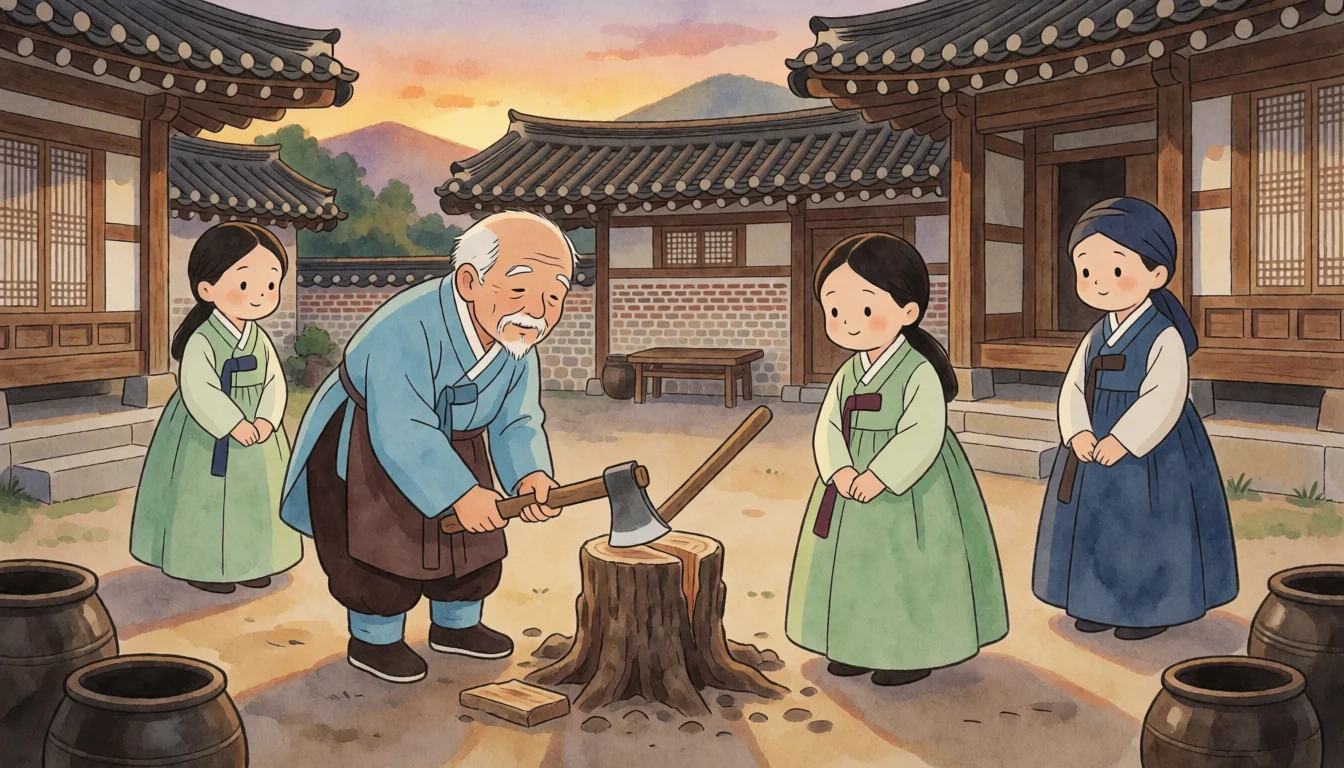
Once the courtyard was tidy, the two of them stepped into the cozy, heated ondol room. Outside the window, a bitter early-winter night wind rattled the paper window lattice, but inside, the room was filled entirely with the warm glow of looking after one another.
Autumn Heat, Elderly Health, and the Meaning of the Proverb
The proverb “Autumn heat and an elderly person’s health” captures the idea that even if an autumn day feels warm, there is no telling when the cold might suddenly strike; similarly, even if an elderly person seems healthy, their vitality is already waning and will not last. It carries a cautionary message: do not let your guard down based on immediate appearances, but instead anticipate the changes to come.
Similar expressions passed down through generations include “You cannot trust a warm autumn day or an old man’s strength,” “Spring cold and an elderly person’s health,” and “You cannot trust winter weather or an old man’s strength.”
Teachings Recorded in Historical Texts
The Joseon-era text Sunoji addresses this concept under the entry chunhan-nogeon (“spring cold and elderly health”), explaining that it refers to “declining vitality.” Additionally, the Songnamjapji notes under its own chunhan-nogeon entry: “Spring cold, autumn heat, and an elderly person’s health—these three things never last long. Originally said by Ouyang Xiu, the character for ‘health’ (geon, 健) here is a phonetic shift from ‘bone’ (gol, 骨).”
Lessons Passed Down to Today
The proverb reflects the profound wisdom of our ancestors, who understood the dramatic shifts of the seasons and the fundamental laws of human life. Serving as a warning against complacency during seasonal transitions, its lessons continue to offer deep insights into health and self-care today.
The Boundary Between Fiction and Historical Fact in the Story
In this narrative, the scenes where young Dohyeon helps his grandfather chop wood amidst the late-season heat, and where grandfather’s energy gives way to a sudden chilling wind at sunset prompting Dohyeon to drape a coat over him, are fictional storytelling devices created to illustrate the proverb’s meaning. The specific actions and dialogue of the characters are not historical facts; rather, the authentic historical elements are the proverb itself and the references recorded in classical texts like the Sunoji and Songnamjapji.