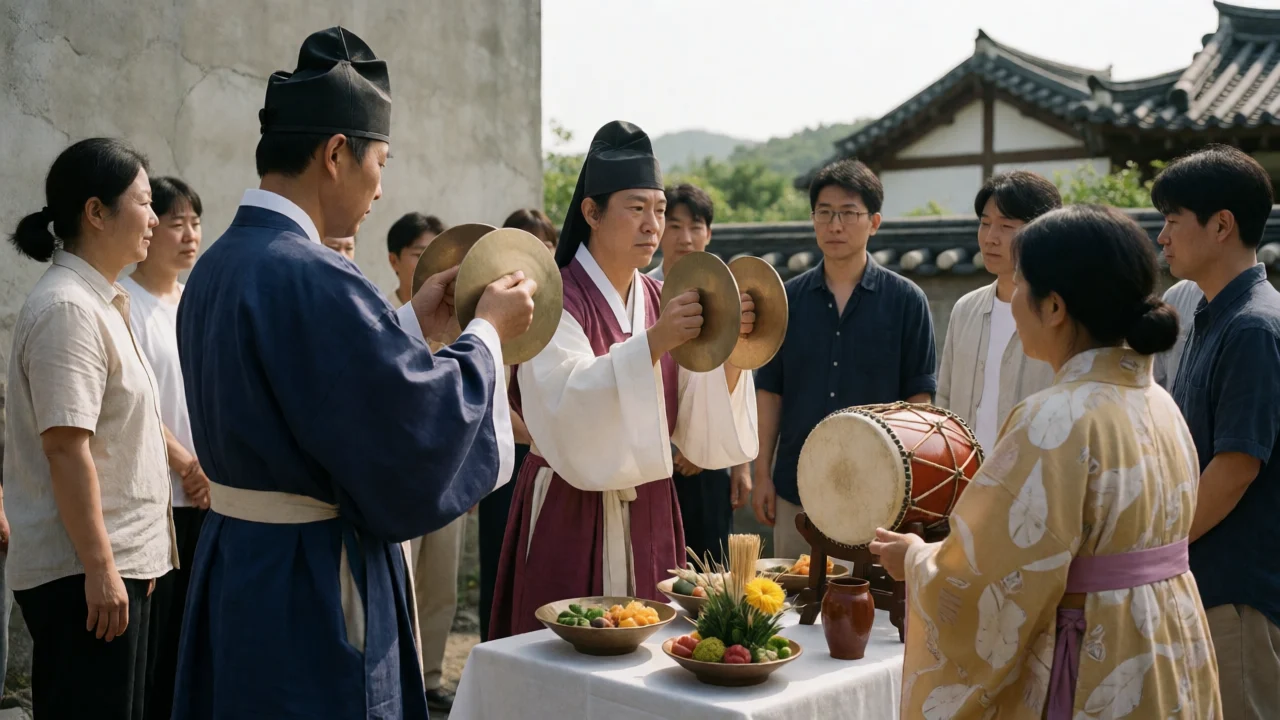
Through Jeju Island’s Buldomaji rituals and grand shamanic rites (keun-gut), the myth of Saengbul-halmang-bonpuli recounts how the birth-goddess overseeing human conception and childbirth came to be enshrined, reflecting a historical shift between indigenous and imported deities.
Settle in and listen to the story at a gentle pace before you begin reading.
The Song of Buldomaji Echoing Across Jeju Island
On the windswept island of Jeju, whenever families prayed for a safe pregnancy and smooth childbirth, they would hold grand rituals or perform the Buldomaji rite. As the rhythmic beats of gongs and drums faded into the quiet chanting of the shaman, people would hold their breath and listen. Within those ancient verses lay the bonpuli—the sacred myth telling how the birth-goddess came to watch over human conception and birth. It is an ancient tale of a deity who crossed unfamiliar seas meeting another who descended from the heavens, a story that slowly unfolds within the haunting melody.
The Dragon King’s Daughter in a Cast-Iron Box
A long time ago, the daughter of the Eastern Dragon King faced banishment for committing a grave offense against her parents. Overwhelmed by despair, she clung to the hem of her mother's robe and pleaded tearfully.
“Mother, though I have sinned greatly, I beg you to grant me a way to survive. I will go to the human world and do whatever is asked of me.”
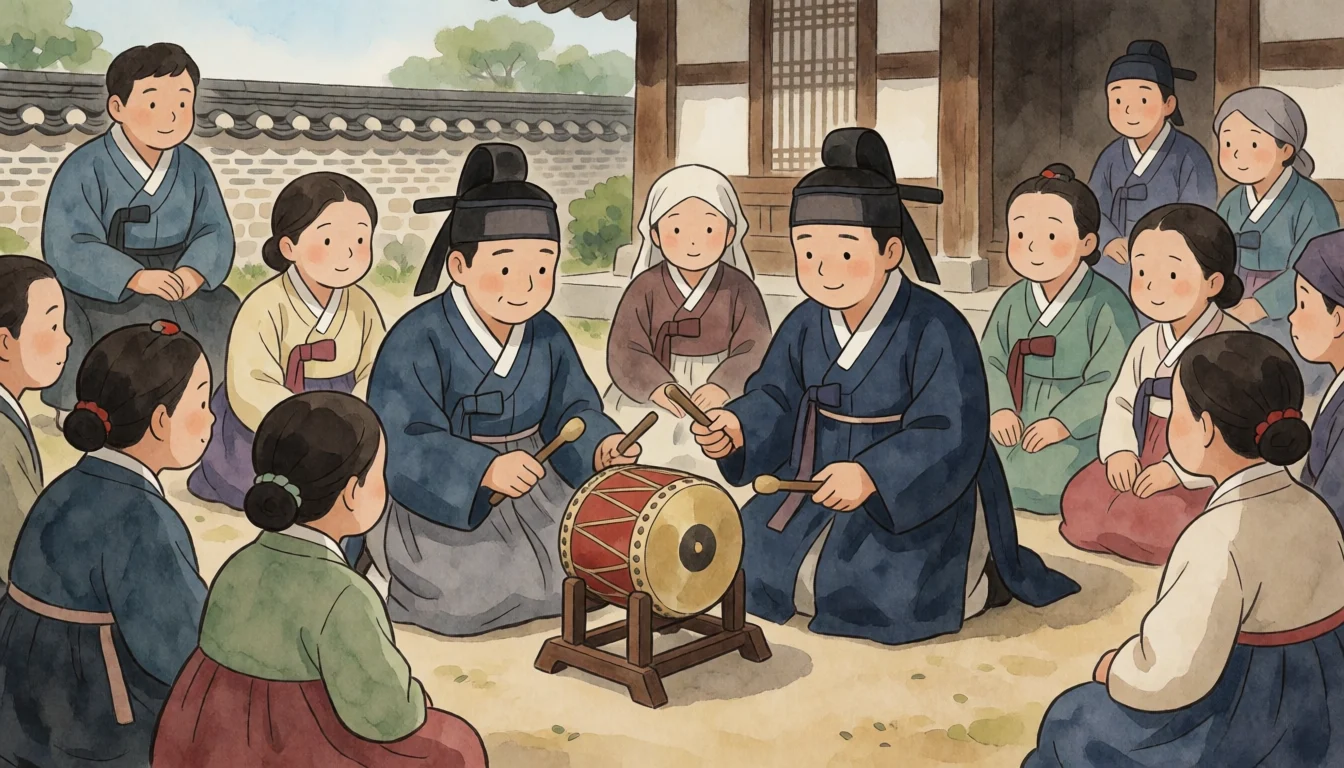
After her desperate appeals, the princess was granted the sacred duty of the birth-goddess: to help humans conceive, bear, and raise children. However, her journey to the mortal realm meant being locked inside a cold, iron box and set adrift across the sea. Day after day, the only sound she heard through the sealed lid was the muffled pounding of the waves. At last, the drifting iron box washed ashore at a mortal water's edge.
Lim Boru-ju’s Touch and New Life
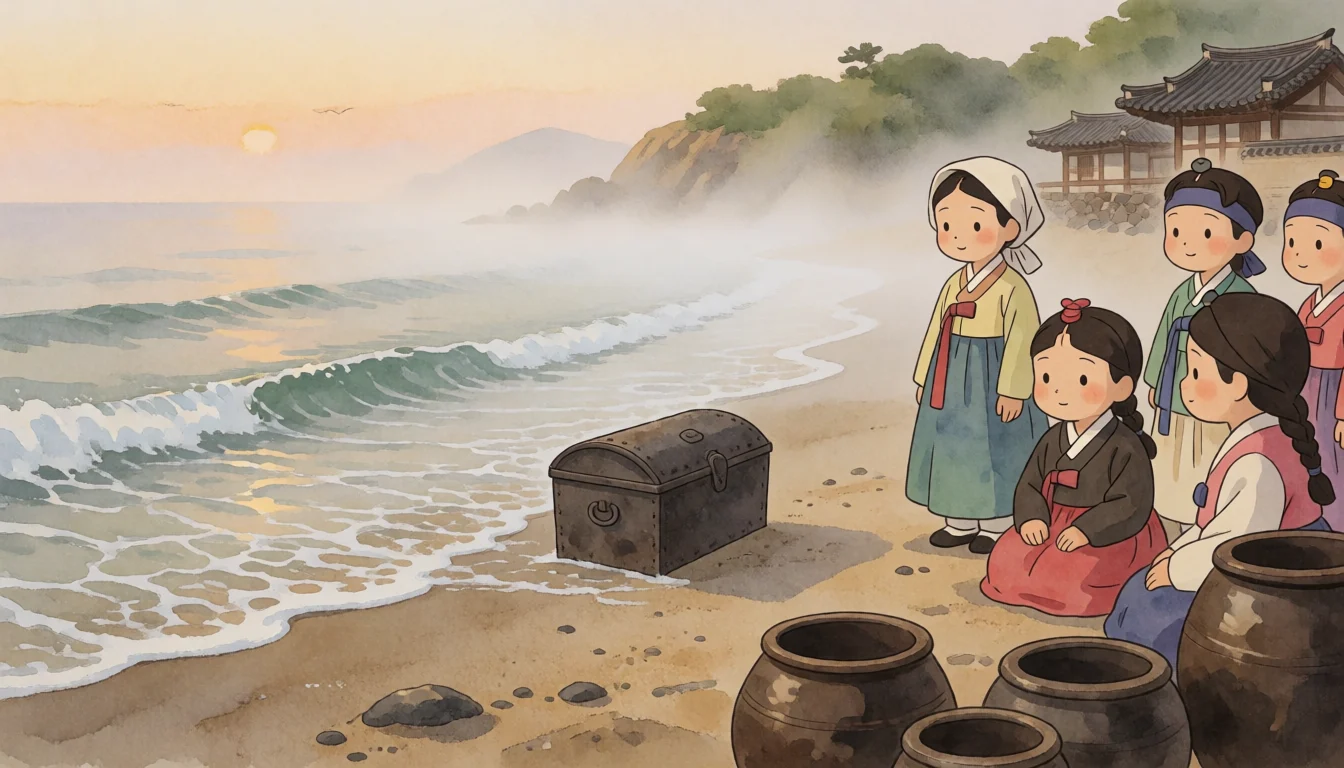
A local scholar and noble, Lim Boru-ju, happened to be walking by the shore. Startled by the sight of a massive iron box wedged into the sand, he stopped in his tracks. When a strange, mystical energy began to seep through the seams, Lim Boru-ju pushed against the heavy lid with trembling hands.
“Is anyone inside?”
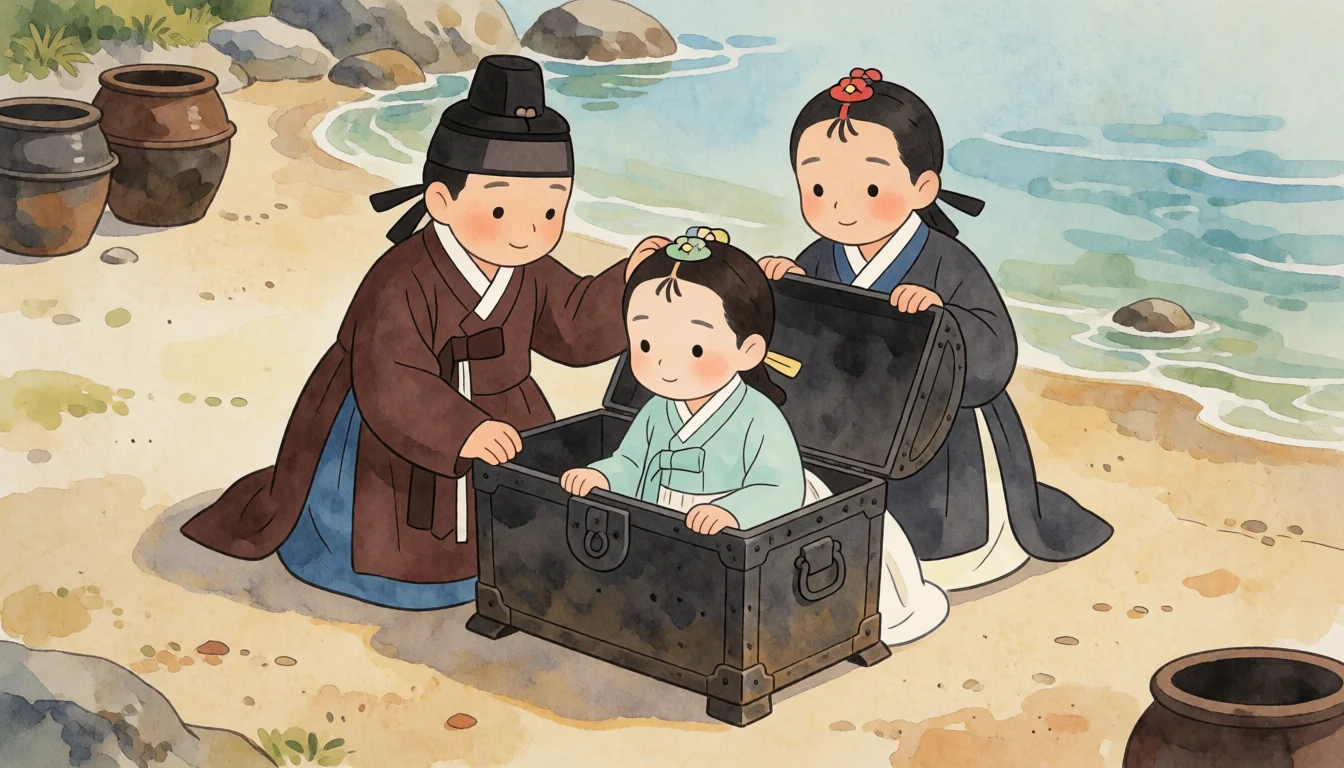
With a creaking groan, the lid opened to reveal the serene and refined daughter of the Eastern Dragon King. Grateful to the man who had rescued her, she followed Lim Boru-ju back to his home and, as a token of her gratitude, blessed his wife with a child. Soon, the household was filled with the joyful news of a new life on the way.
An Unyielding Knot and a Looming Crisis
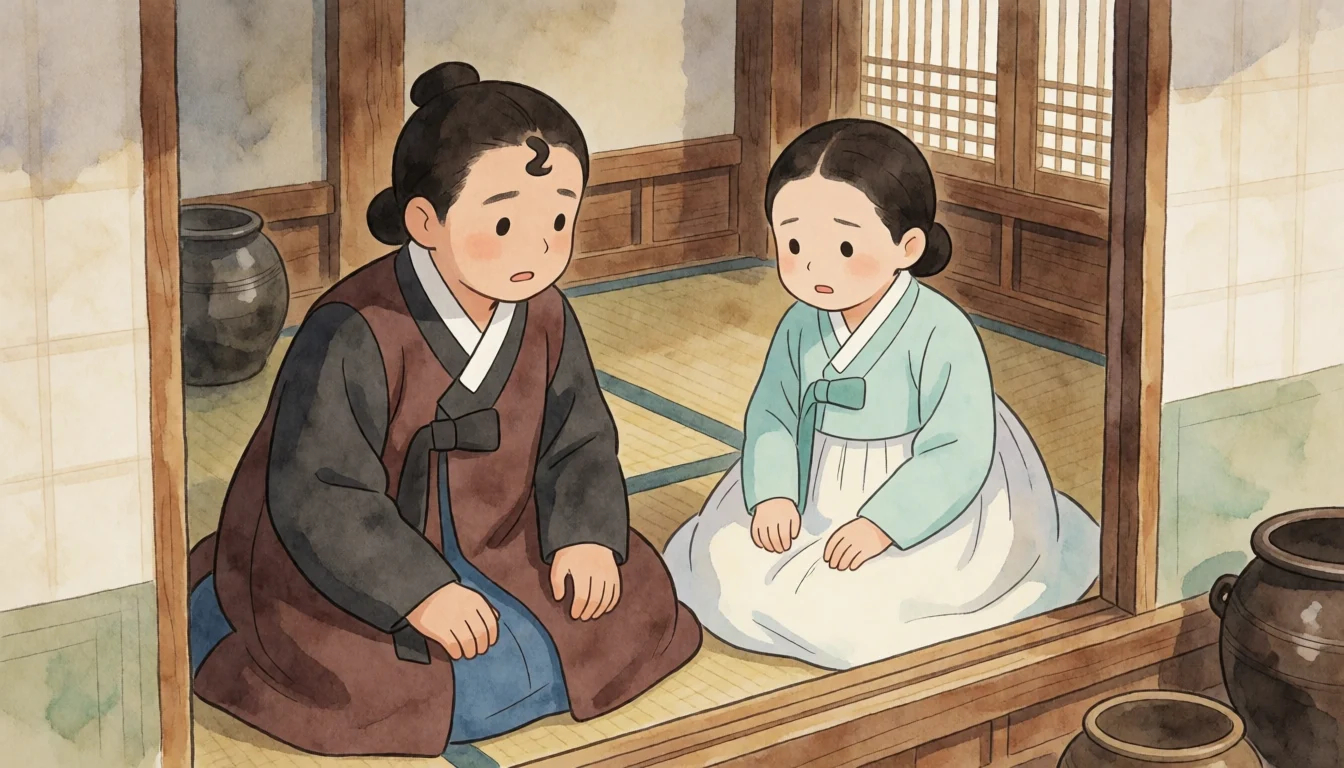
However, when the months had passed and the time for delivery finally arrived, a terrible crisis struck. The expectant mother’s abdomen swelled tightly, and her groans deepened, yet the baby showed no signs of coming out. The dragon king’s daughter paced anxiously back and forth across the room, her face drained of color.
“What is happening? Please, do something!”
Lim Boru-ju cried out in desperation, but the princess could only shake her head with trembling lips.
“I learned how to bring a child into the womb, but I was never taught how to bring one out into the world…”
It was a moment of life-or-death peril where both mother and baby stood at the edge of the abyss.
A Cry Reaching the Heavens and the Jade Emperor’s Decree
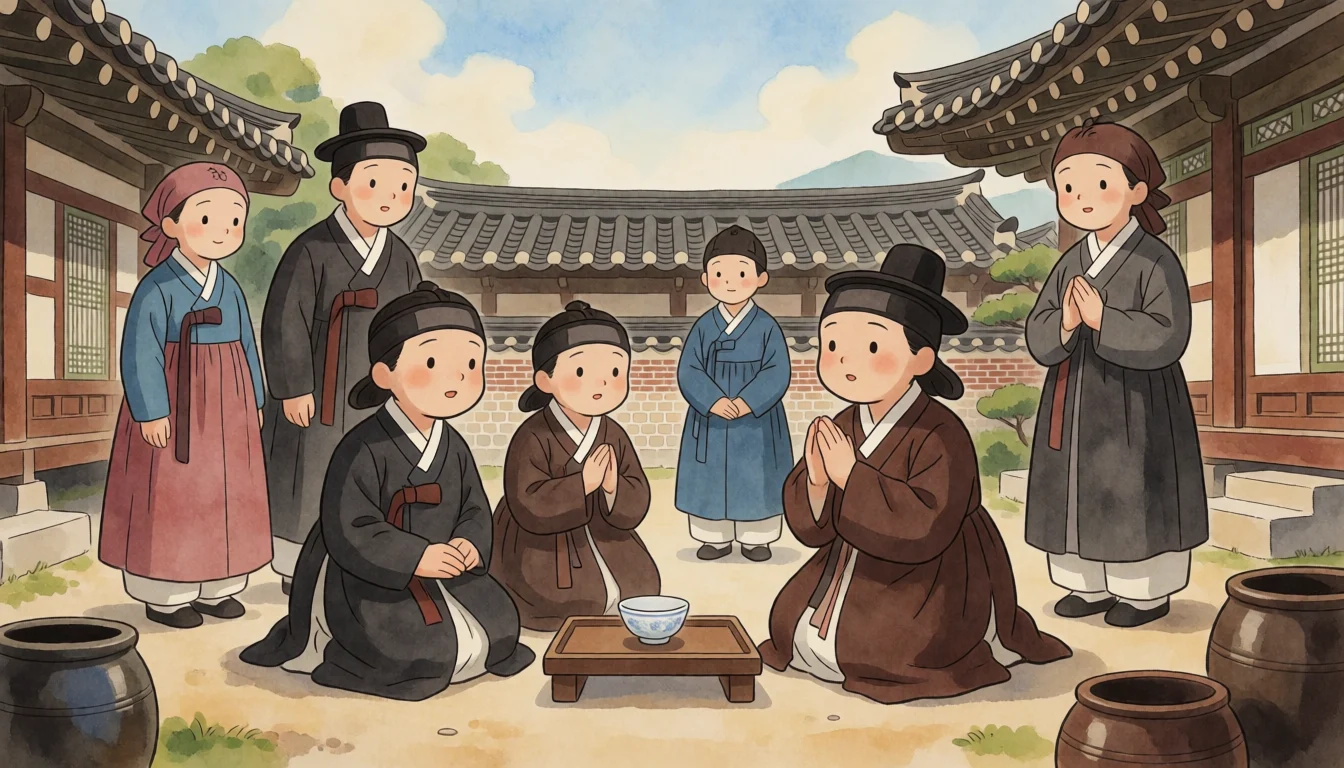
Driven to despair, Lim Boru-ju rushed out into the courtyard, set out a bowl of pure water, and prostrated himself toward the heavens. He wept and prayed frantically to the Jade Emperor to save them. His desperate plea finally pierced the heavenly palace.
The Jade Emperor looked around at his ministers and asked,
“A mortal mother and child are in mortal peril in the human world; whom shall we send to save their lives?”
At that moment, the Heavenly King of Earthly Records stepped forward and spoke,
“Myeongjinguk’s daughter, the child of Shakyamuni, is wise and benevolent; she is well-suited for the task.”
Nodding, the Jade Emperor summoned Myeongjinguk’s daughter, instructed her in all the principles of pregnancy and childbirth, and sent her down to the mortal realm.
The Meeting of Two Goddesses and a Flower-Cultivation Wager
When Myeongjinguk’s daughter descended upon a beam of light and arrived at Lim Boru-ju’s house, only ragged, labored breathing could be heard from within the room. As the two goddesses stood face-to-face, the air in the room grew tense. The dragon king’s daughter, who had claimed her place first, stood her ground with a wary gaze.
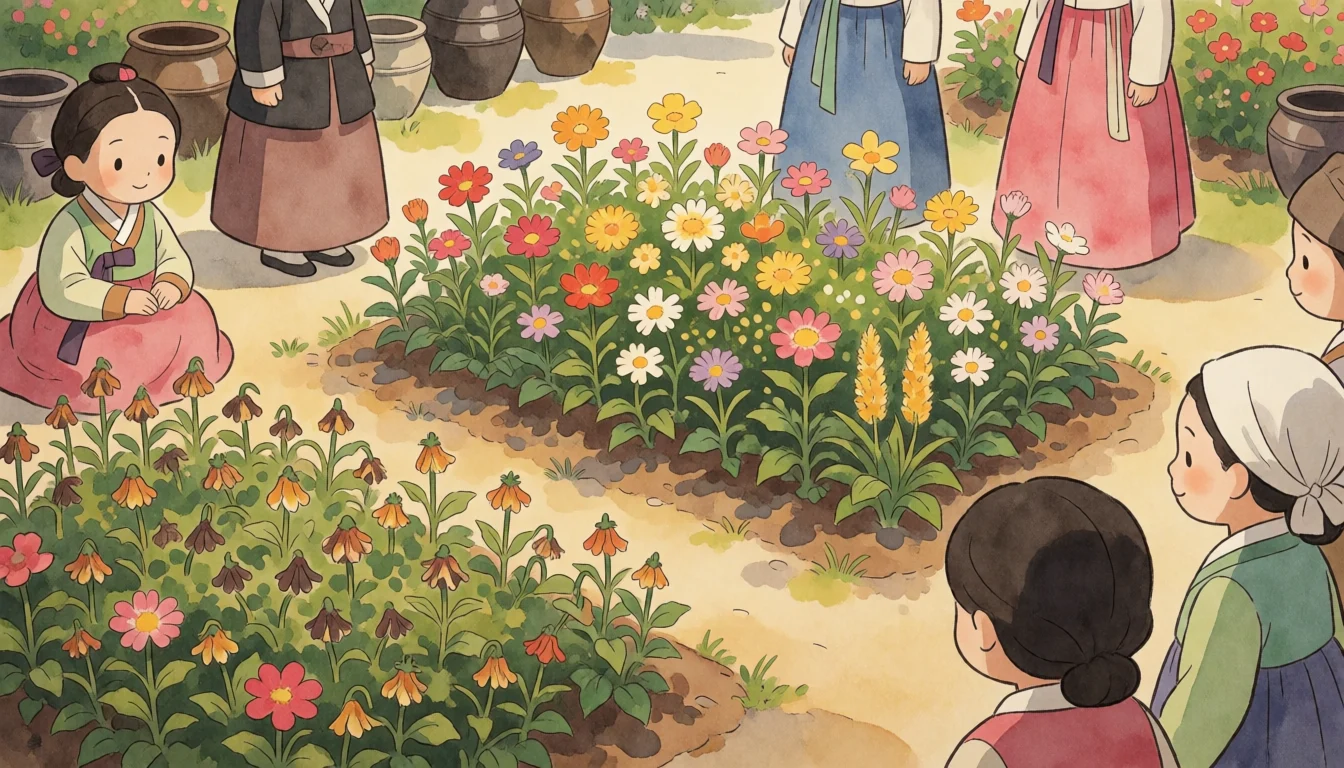
Then, the Jade Emperor’s decree echoed between the two divine beings: to determine the true master worthy of caring for human life, they must each plant and cultivate a flower in a contest. The two goddesses leveled the soil in the courtyard, planted flower seeds side by side, and began watering them with utmost care.
The Flourishing Flower and the Withered Bloom
As time passed, a striking difference began to emerge in the two goddesses' flowerbeds. In the plot tended by Myeongjinguk’s daughter, sturdy stalks reached joyfully upward, bursting into countless lush, vibrant blossoms known as the “flourishing flowers” (beonseong-kkot). A dazzling aura of life radiated in all directions.
In contrast, the flower stalks in the dragon king’s daughter’s plot withered and snapped, leaving only drooping, dried-up “golden-thread wool flowers” (geumnyuul-kkot) hanging their heads in defeat. The outcome was unmistakable, and right then and there, Myeongjinguk’s daughter was designated as the Supreme Birth-King of this world.
Warm Consolation After Defeat
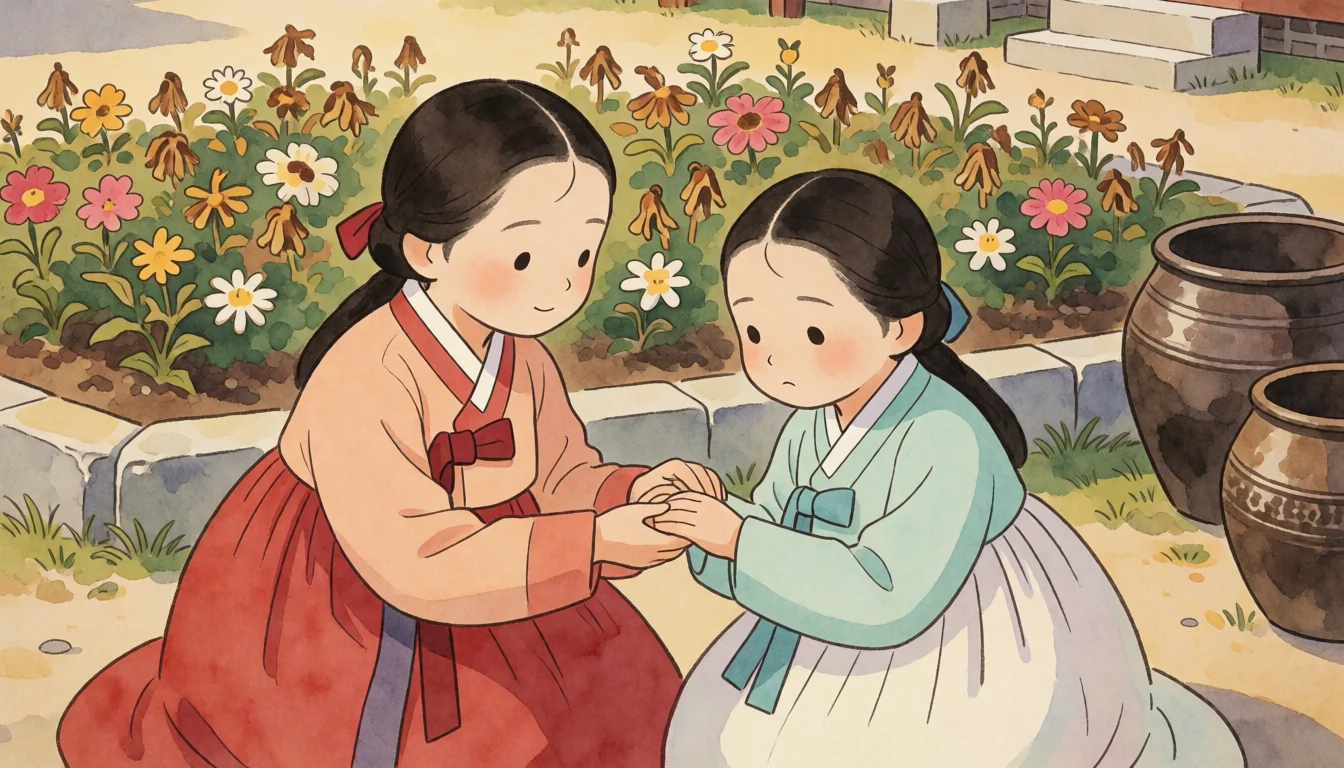
Defeated in the contest, the dragon king’s daughter gazed down at her withered flowers, shedding tears mixed with sorrow and resentment. Having crossed treacherous seas inside an iron box just to embrace and nurture children, she felt as though she had lost everything.
Watching her quietly, Myeongjinguk’s daughter stepped forward and gently wrapped her hands around the loser's cold fingers.
“How could I not know the hardships you endured? Yet human childbirth allows for not a single error. Go instead to the netherworld and become the underworld birth-goddess, caring for the souls and children there.”
Soothed by that warm touch, the dragon king’s daughter gradually eased her grief and nodded in silence.
Guarding the Path of Life from Their Respective Realms
Myeongjinguk’s daughter immediately went to the mother and applied the methods of childbirth she had learned from the Jade Emperor. As if a tightly sealed door were suddenly unlocked, the mother’s agony subsided, and at last, a robust baby’s cry filled the room. Lim Boru-ju fell to the floor in tears of overwhelming gratitude.
With this, Myeongjinguk’s daughter became the Saengbul-halmang of this world, helping conceive and raise healthy children, while the dragon king’s daughter crossed over to the netherworld to become the Underworld Grandmother (Jeoseung-halmang). Though they came to reside in different realms, they shared the responsibility of nurturing life.
To this day, Jeju shamans perform rituals such as Buldomaji or Manura Baesong, chanting the tale of the two grandmothers through their sacred songs. Behind the joyous birth of a child, the profound story of these two deities—quietly holding their posts in this world and the next—still flows gently onward.
Meaning and Background of Saengbul-halmang-bonpuli
The Saengbul-halmang-bonpuli is a shamanic narrative handed down in Jeju Island that tells the origin story of the birth-goddess responsible for human conception (potae) and childbirth. In the story, the dragon king’s daughter and Myeongjinguk’s daughter participate in a flower-cultivation contest, ultimately dividing their roles into the Underworld Grandmother and the Supreme Birth-King of this world.
Beyond its mythological narrative, this bonpuli holds significant folkloric meaning. Scholars interpret it as a reflection of how an indigenous deity was displaced and supplanted by an incoming, foreign-origin deity. Furthermore, elements such as designating Myeongjinguk’s daughter as the daughter of Shakyamuni show clear traces of Buddhist assimilation.
Oral Transmission within Rituals
The Saengbul-halmang-bonpuli continues to be transmitted today in close connection with actual rituals. It is primarily recited during Buldomaji—a rite invoking blessings for conception and childbirth—and is also chanted in separate rituals like Manura Baesong, preserving its living context within shamanic ceremonies.
The Boundary Between Legend and Historical-Folkloric Fact
Elements in the tale—such as the dragon king’s daughter crossing the sea in an iron box, the mediation of the Jade Emperor and the Earthly Heavenly King, and the flower-growing contest—belong to the realm of orally transmitted myth and legend. These narratives themselves cannot be taken as objective historical facts.
Nevertheless, this bonpuli holds vital folkloric value, offering insight into cultural adaptation processes such as shifts in deity identities and the integration of Buddhism within the Jeju region.
🎨 Color This Story