On a day when traditional rhythms echoed through every alleyway, a young boy panicked after spilling rice in a corner of his courtyard—only to carefully prepare a ritual offering table topped with spooled thread and freshly harvested grain. Step into the geollip collection and traditional rites of the Nami General’s Shrine Festival in Yongmun-dong, Yongsan-gu, Seoul.
Sounds Echoing Over the Yongmun-dong Hills
Nestled on a hillside in Yongmun-dong, Yongsan-gu, Seoul, stands a shrine dedicated to General Nami. Designated as Seoul Intangible Cultural Heritage No. 20, the Nami General’s Shrine Festival is deeply woven into the daily lives of local residents under the familiar name of the “Yongmun-dong Bugundang-gut.”
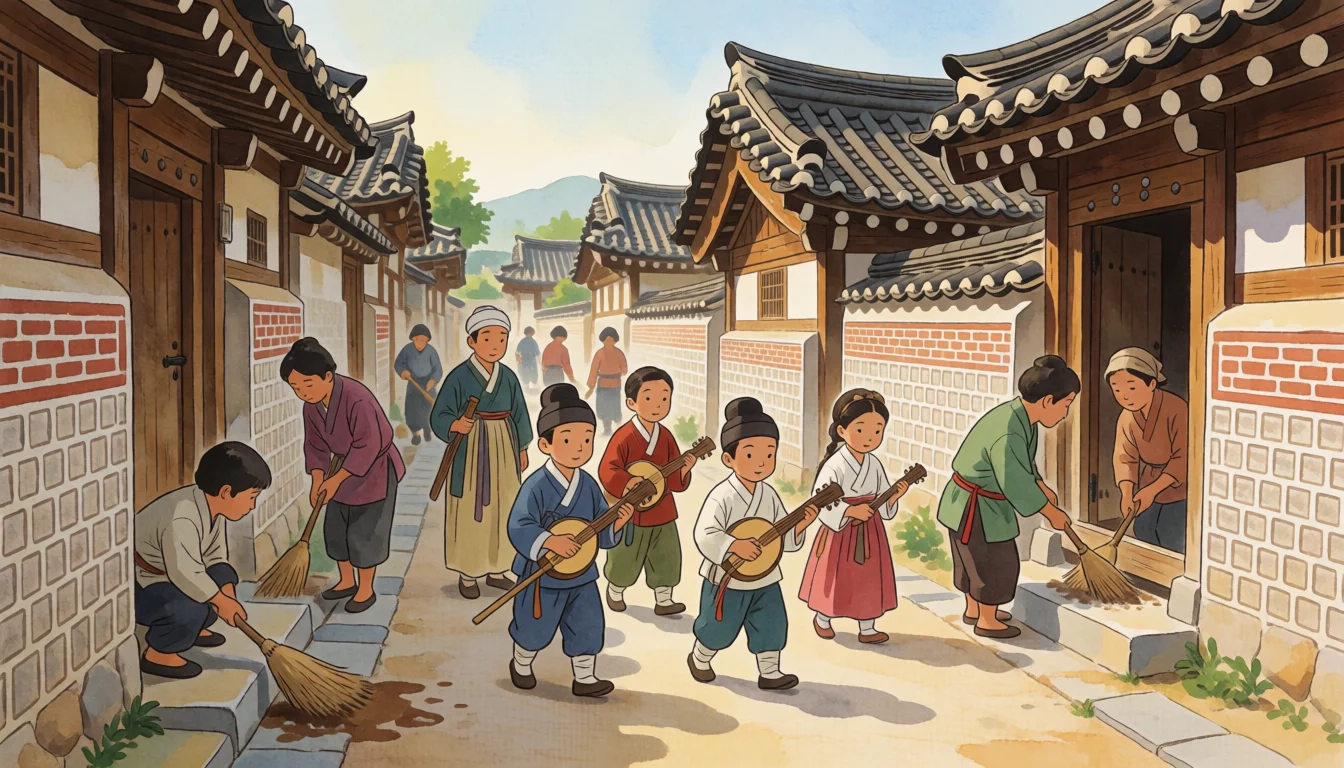
As the festival approaches, Yongmun-dong buzzes with preparations for the celebration in every alley. This is because of geollip, a tradition where a percussion troupe takes the lead in visiting homes to collect offerings for the memorial ritual. Residents meticulously sweep and clean their gates, eagerly preparing to pray for peace and well-being in the coming year.
The Woodpile and Mother’s Request
Yet on that brisk, bustling morning, a twelve-year-old boy named Dori sat with his chin in his hands in a corner of the courtyard, letting out deep sighs. Having left early for the fields, his mother had parted with a firm request before stepping out the gate.
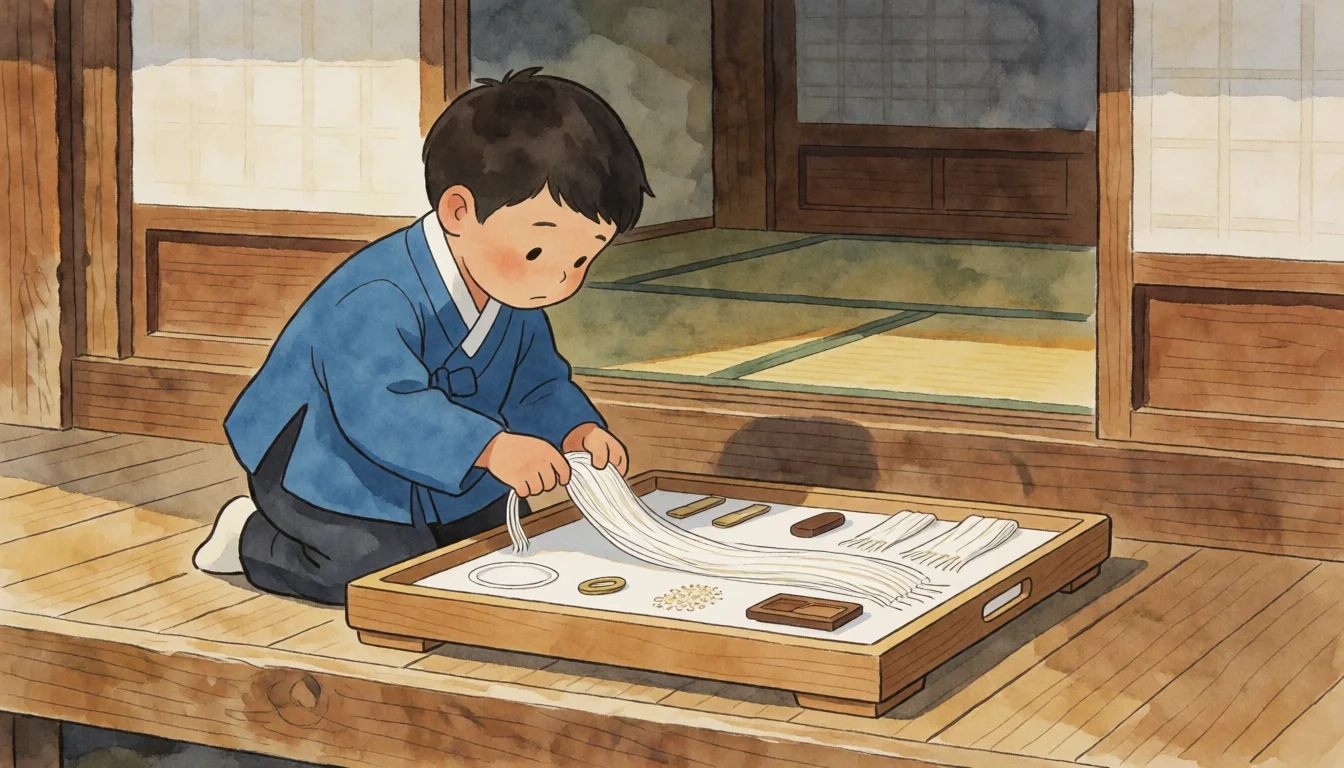
“Dori, the elders from the percussion troupe will be coming around for the geollip today. Don’t forget to line a ritual table neatly with Korean mulberry paper, and place rice and spooled thread on it according to the number of people in our family. And make sure you chop and stack all the firewood in front of the guesthouse before sunset.”
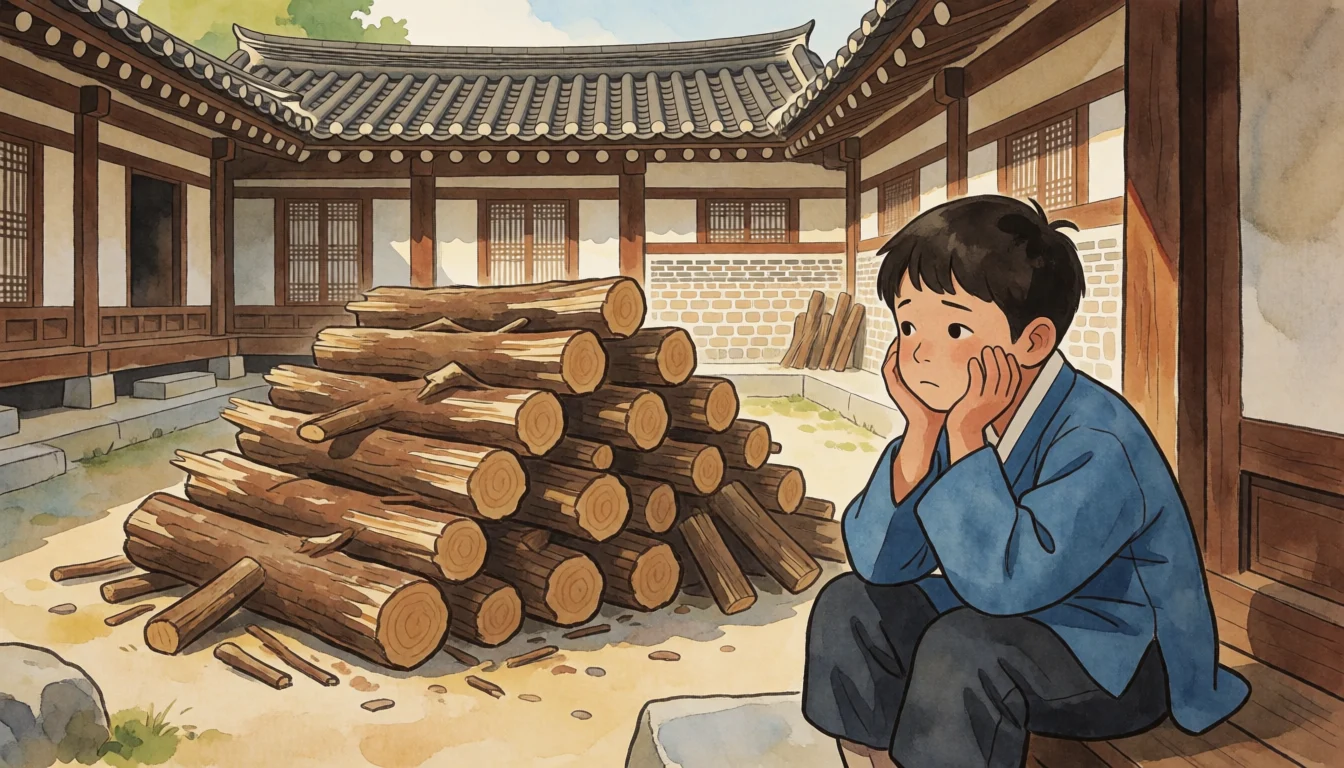
Recalling his mother’s words, Dori looked out at the courtyard, where logs were piled up like a daunting mountain. Chopping all that wood would take well past half a day, and already, the rhythmic beats of the percussion troupe were drifting up from the lower alleyways.
White Rice Spilled in the Dirt
“Oh well, I’d better knock out the firewood first and then set the table!”
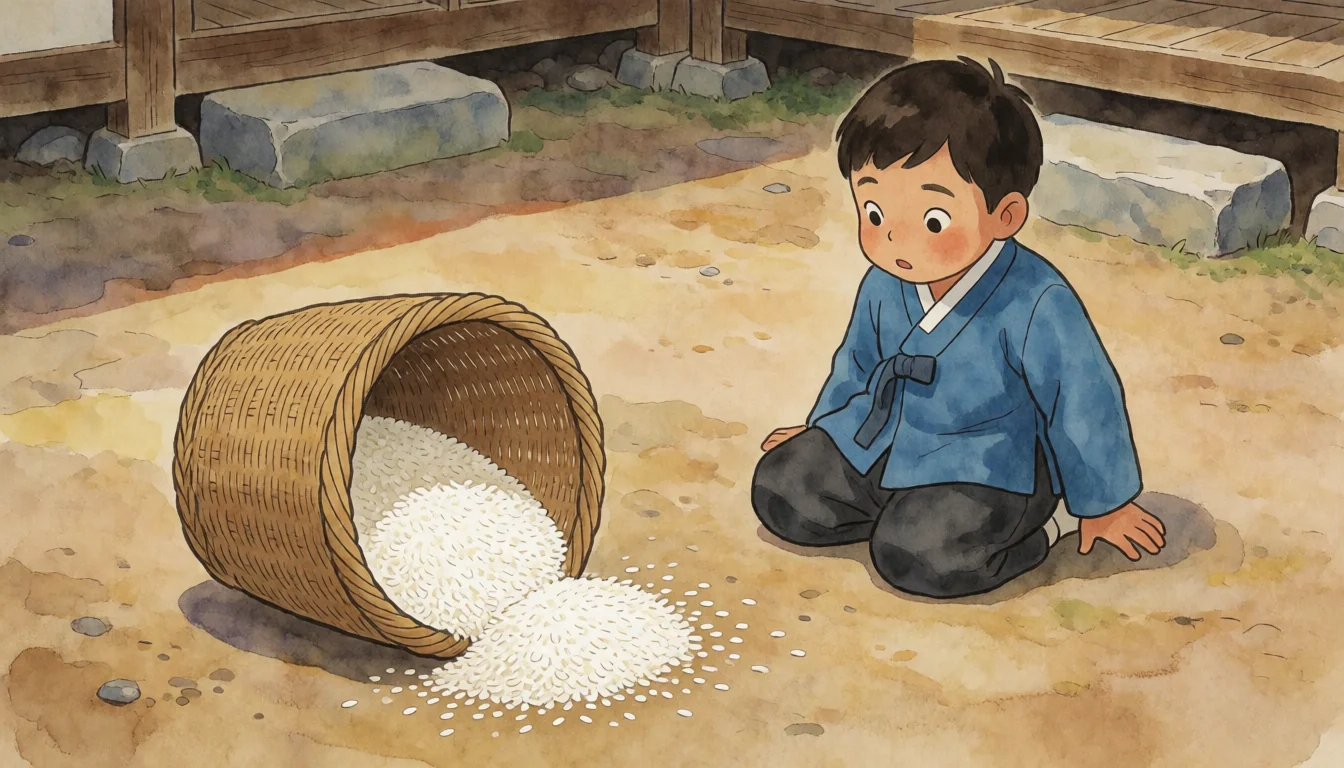
Dori rolled up his sleeves and snatched up the axe. As his pace quickened with every heavy thud of splitting wood, his mind raced, tangling his own feet. Hurrying past the grain basket tucked beneath the wooden veranda, the tip of his axe handle accidentally clipped the edge.
With a soft rustle and a cascade of clatter, the precious rice meant for the ritual offering spilled out white across the dirt courtyard.
“Oh no, what do I do?!”
Dori turned pale and sank right down onto the spot. As his trembling hands tried to scoop up the grains mixed with dirt, the sound of gongs ringing up from the lower alley drew closer, making his heart hammer against his ribs.
Grandmother Mak-rye’s Warm Touch
“Dori, what on earth are you making such a fuss about in the courtyard?”
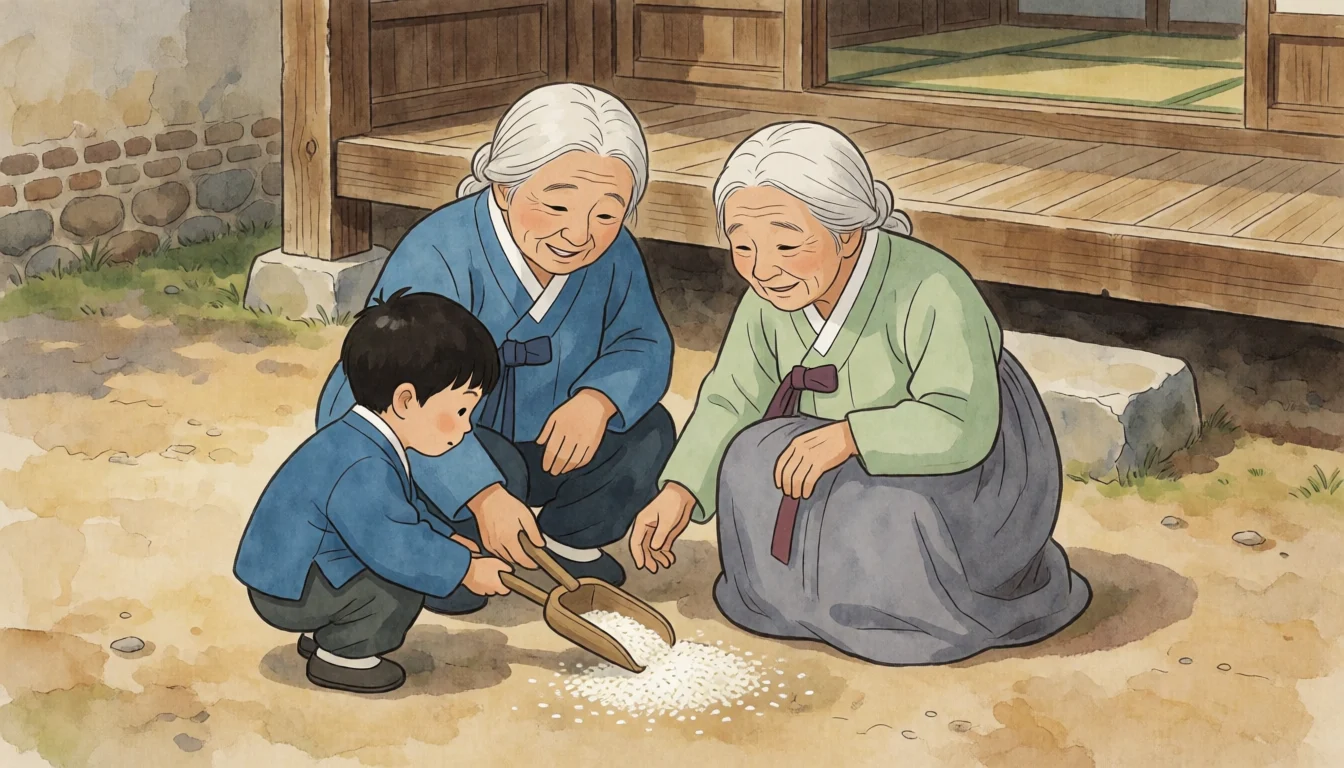
Mak-rye, an elderly neighbor, poked her head through the gap in the wicker gate and stepped inside. Seeing Dori holding dirt-stained rice with tear-filled eyes, she burst into a warm chuckle, walked over, and squatted down beside him.
“Grandmother, I couldn’t even finish chopping the wood… and I spilled the rice. The geollip troupe will be here any minute, and I’m so scared Mother will scold me.”
Gathering the dirt-covered rice gently into a gourd ladle, the grandmother smoothed his hair and consoled him in a gentle voice.
“Listen to me, child. A geollip isn’t about coming around to punish anyone. It’s like a village celebration where everyone pools their sincerity to offer to the General and pray for our family’s peace through the year. There’s no need to rush and panic. When you fret all by yourself like this, things only get tangled up.”
Her warm hand lightly brushed across Dori’s dirt-smudged shoulder.
The Wisdom of Sharing Tasks
Encouraged by Grandmother’s tender gaze, Dori suddenly called out to his younger brother, who was inside playing with a spinning top.
“Hey, come on out and help your older brother!”
Dori no longer insisted on shouldering everything all by himself. He had his brother carry the freshly chopped firewood under the eaves and stack it neatly, while he scooped a fresh, clean batch of rice from the storage jar into the gourd ladle. With the two of them working in tandem, the mountain of firewood was soon tidily arranged.
Next, Dori brought out a clean ritual table and laid a sheet of white mulberry paper smoothly across it. He placed freshly harvested rice and a few coins on top, and just as his mother had instructed, arranged clean white spools of thread matching the exact number of family members—Grandmother, parents, Dori, and his younger brother.
Welcoming the Centipede-Footed Neurimgi
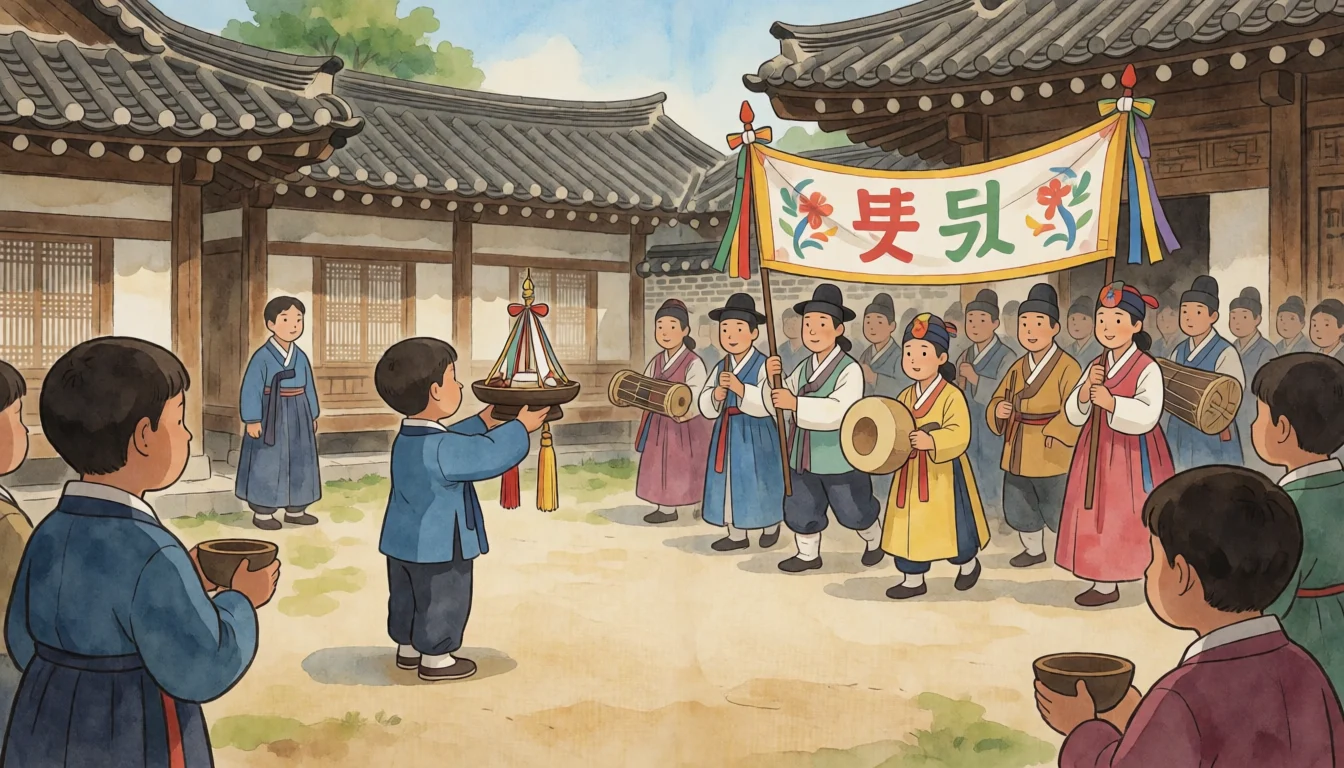
Just as the courtyard cleanup finished, the loud clatter of gongs and small cymbals erupted just outside the front gate. Finally, led by a grand neurimgi banner with long, centipede-like fringes streaming down, the percussion troupe wound through the alleyway and poured brightly into Dori’s courtyard.
“We tread down the earth’s spirits and pray for blessings from the Bugun deity; may peace and abundance fill this household!”
To the lively, cheering well-wishes of the troupe’s lead musician, the drums and gongs rang out with thrilling rhythm. Dori respectfully raised the neatly prepared ritual table with both hands.
The elders of the percussion troupe smiled warmly as they looked upon the clean spools of thread and grain arranged for each family member on the table. At that moment, as he wiped the sweat from his brow, a bright look of relief and pride bloomed across Dori’s face.
Nami General’s Shrine Festival and Historical Background
The Nami General’s Shrine Festival is designated as Seoul Intangible Cultural Heritage No. 20 and is also known as the ‘Yongmun-dong Bugundang-gut’. It is a traditional village festival that evolved into a community celebration by taking the tragic death of the historical Joseon-era figure General Nami (1441–1468) as its spiritual foundation, enshrining him alongside various general shamanic deities.
According to the shrine’s origin lore, General Nami recruited and trained soldiers in Yongsan and met his tragic end at Saenamteo along the Han River, prompting the establishment of the shrine. Originally located at Danggogae in Wonhyoro 2-ga, the shrine was moved to its current location in the early 1900s after the General reportedly appeared in a villager’s dream.
Enshrined Deities and Ritual Offerings
Inside the Nami General’s Shrine in Yongmun-dong, Yongsan-gu, various portraits and icons are enshrined, including a portrait of General Nami, the Bugun Daegam couple, General Choe Yeong, Jeong Chu-jeong and his wife, the Mountain Spirit couple, the Earth Guardian, Cheonsin Daegam, and a blind couple. This reflects a broad embrace of village guardian faiths. The ritual table is prepared according to Confucian ceremonial standards with rice cakes, wine, fruits, vegetable dishes, and soups.
Key Ritual Procedures
On the day before the festival begins, the ‘Kkot-bad-a-ogi’ (flower-receiving) ritual is held at the Sancheon-dong Bugundang to bring back flowers. This signifies welcoming a female deity from Sancheon-dong, representing the symbolic union of the Yongmun-dong and Sancheon-dong Bugundang shrines.
Prior to the main event, the ‘geollip’ collection is conducted throughout Yongmun-dong. A percussion troupe led by a neurimgi banner with centipede-like fringes visits households to collect donations. Residents set up paper-lined ritual tables with money, grain, and spooled thread corresponding to the number of family members to pray for domestic peace.
The shrine ritual follows Confucian ceremonial procedures—group bows, initial libation, secondary libation, final libation, reading the prayer, offering more wine, and concluding bows—followed by a shamanic gut (including rites for spiritual cleansing, inviting spirits, generals, ancestors, and various deities). After the rites, the ritual host, brewmaster, and village elders hold the ‘Saryeje’ to give thanks and apologize for any shortcomings, and after the grand festival concludes, a simple rite is performed at General Nami’s tomb in Namjeon-ri, Bibong-myeon, Hwaseong. This shares the same context as other Han River Bugundang rituals (such as Seobinggo, Dongbinggo, Bogwang-dong, Hannam-dong, and Great Han River Bugundang-gut).
Modern Transmission and Changes
The Nami General’s Shrine Festival has undergone various changes in modern times. The main event, originally held on the first day of the tenth lunar month, has been shifted to the solar calendar. Notably, since the mid-1990s, the flower-receiving event has been expanded into a Lantern Parade where over 100 glowing lanterns march through Yongmun Market to the Sancheon-dong Bugundang as an eve-of-festival event, boosting resident participation and its festive character. Additionally, a newly created ‘General’s March’ reenactment portrays General Nami’s historical departure to suppress rebel forces.
Boundary Between Legend and Fact
The founding background of the Nami General’s Shrine and the early 1900s relocation story prompted by the General’s appearance in a dream are long-standing legends. Furthermore, the specific personal anecdotes and minor mishaps of the characters in the story are creative elements rather than historical facts. Conversely, the designation of the festival as Seoul Intangible Cultural Heritage No. 20 in 1999, the specific ritual procedures such as geollip, flower-receiving, Confucian shrine rites, shamanic gut, and Saryeje, as well as the modern shift to the solar calendar and the lantern parade, are empirically verified historical and folkloric facts.