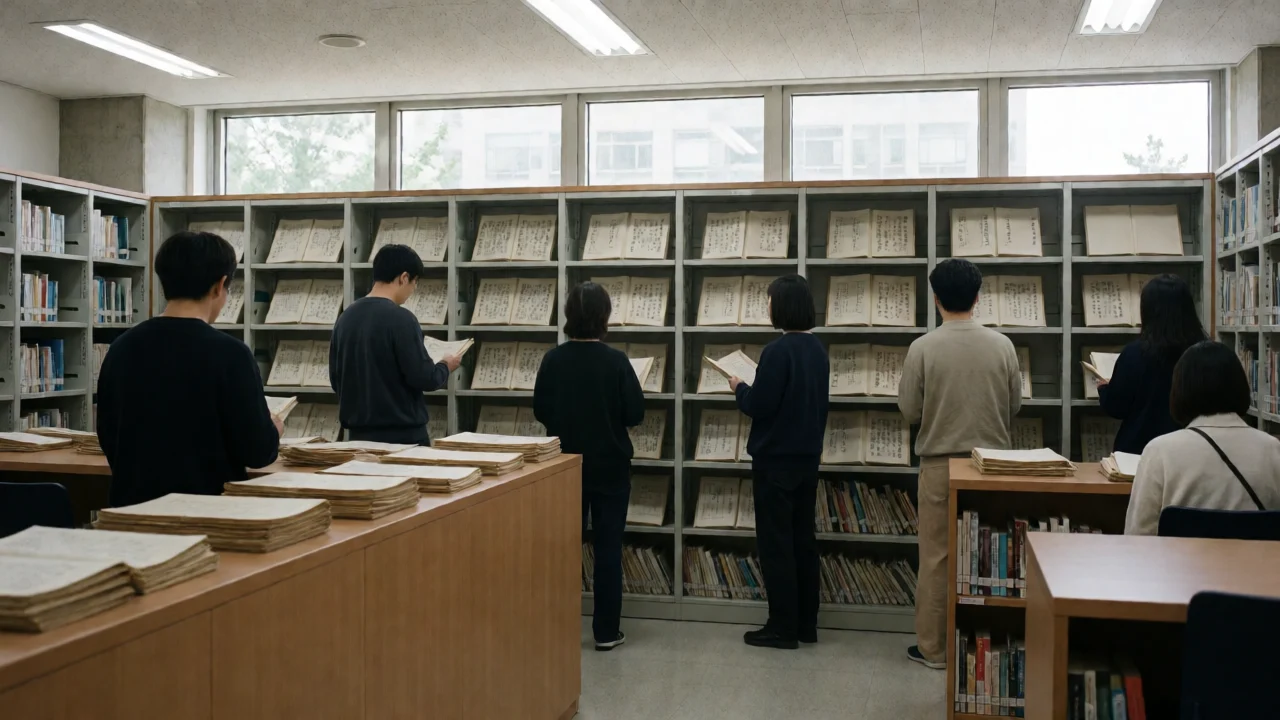
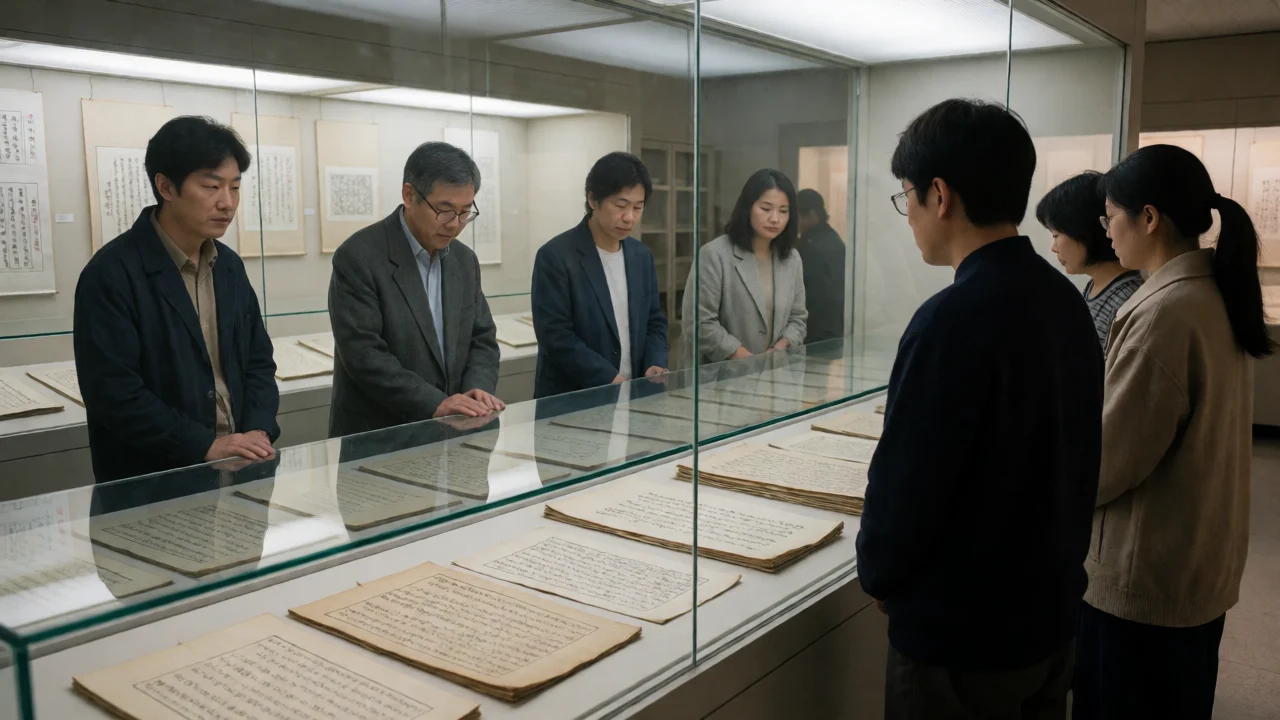
A mischievous young man holds the character for "ask" and sets out to test a remarkably accurate fortune-teller, sparking a delightful commotion! Discover the fascinating folklore and origins of pajajeom, the traditional art of reading destiny by deconstructing Chinese characters.
Settle in and listen to the story at a gentle pace before you begin reading.
Reading the Future by Splitting Letters
Long ago, people believed that every Chinese character held the deep principles of the world and a person’s destiny. To catch a glimpse of what lay ahead, they would read a character as a whole or break it apart piece by piece—a form of divination known as pajajeom (character-splitting divination). Naturally born from word games that combined and deconstructed characters, it took deep root as a custom fueled by people’s curiosity about the future and a mystical belief in the power of written words.
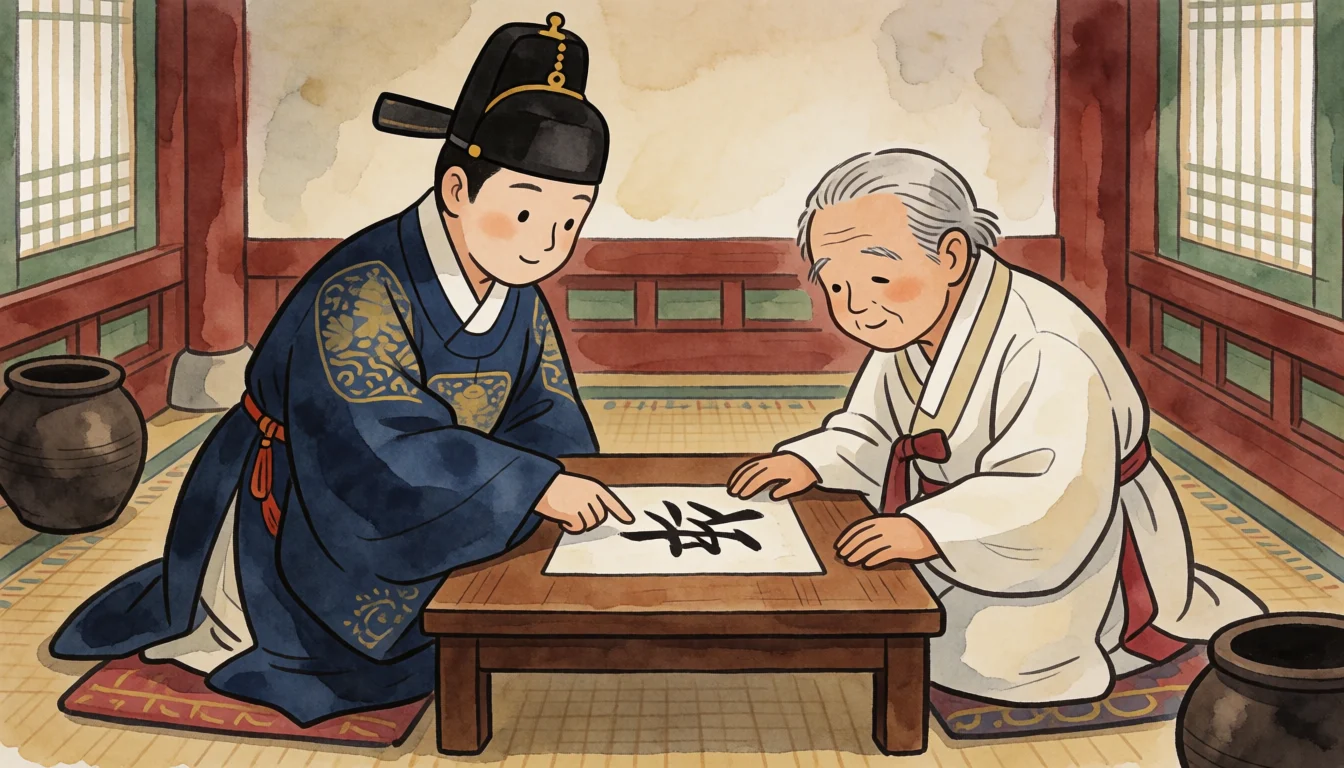
Folklore even tells a charming anecdote about King Sukjong going out in disguise and happening upon a remarkably accurate pajajeom diviner. When the king drew the character for "ask" (mun, 問), the diviner pointed out that the character features the mouth (gu, 口) nestled inside the gate (mun, 門), which forms the character for "monarch" (gun, 君) no matter how you look at it—instantly exposing the visitor’s noble identity. Whether this story ever truly happened is anyone’s guess, but its delightful wit and the clever double meanings hidden within characters have kept the tale alive through generations.
Dolsoe’s Mischievous Test
Near a bustling marketplace tavern, a modest divination tent covered in coarse straw was constantly crowded with people. Word had it that the elderly fortune-teller inside could name a visitor’s family lineage and background just by looking at a single character.
"Ha! Telling someone’s destiny from a single stroke? Sounds like total nonsense to me—just someone reading expressions and talking in circles!"
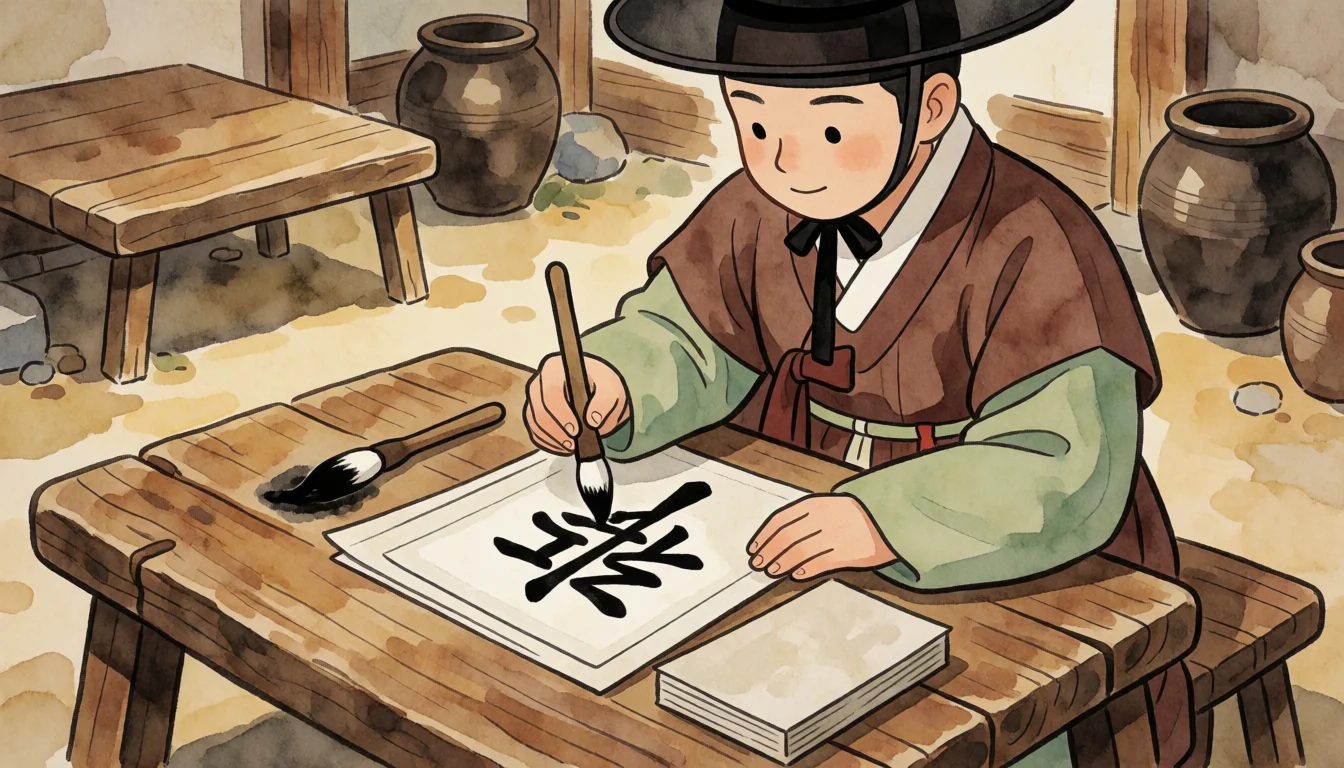
Dolsoe, a young man notorious in the village for his quick wits and mischievous streak, scoffed the moment he heard the rumors. Without realizing he was walking right into his own trap, he resolved to put the renowned fortuneteller in his place and take him down a peg.
Sitting in a corner of the tavern, Dolsoe dipped a brush heavily into black ink. On a scrap of old paper, he boldly scrawled a single character: the character for "ask" (mun, 問). Tucking the paper deep inside his jacket, he broke into a grin.
"They say this character can turn a king into a beggar or a beggar into a king. Let’s see what nonsense he spins when he looks at a fellow like me!"
A Meeting of Gazes at the Threshold
A short while later, Dolsoe deliberately slouched his shoulders, rubbed dirt onto his sleeves, and shuffled into the divination tent. He was convinced that looking shabby and dejected was the only way to trick the fortune-teller completely.
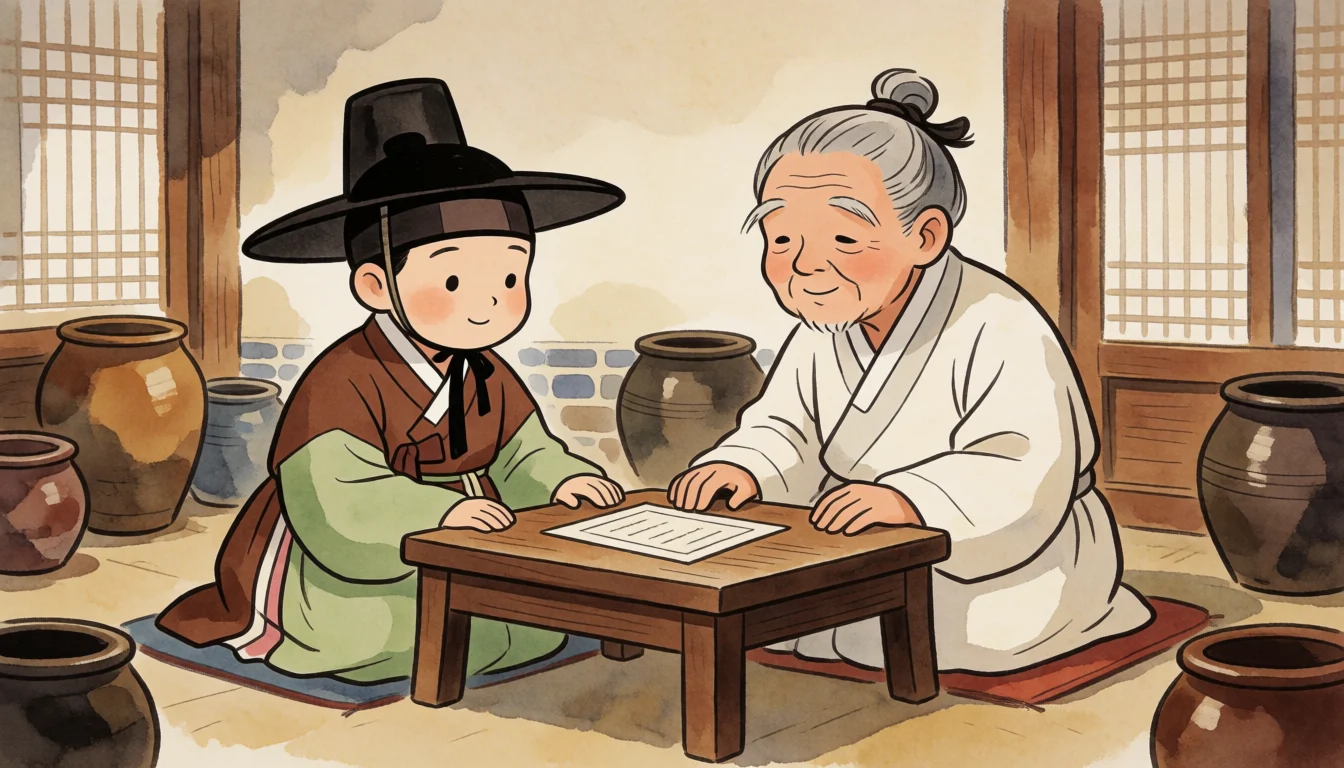
Inside, an elderly diviner with snow-white hair sat neatly upon a worn reed mat, his eyes gently closed. As Dolsoe abruptly pushed open the door, the fortuneteller slowly opened his eyes halfway, looked straight up at him, and offered a soft smile.
"Young man, it seems your mind is itching with a question."
At the diviner’s low, calm voice, Dolsoe feigned indifference and let out a dry cough. Then, he yanked the crumpled paper from his pocket and slapped it down onto the table with a thud.
"I heard all the talk and came to see for myself! Tell me straight—what kind of fate is written in this single character?"
Dolsoe stuck his chin out defiantly, secretly counting the seconds until the fortuneteller would look flustered.
The Plight of the Mouth Trapped in the Gate
Without rushing, the fortuneteller slowly traced the tip of his dry finger over the character for "ask" (mun, 問) written on the paper. Then, clicking his tongue lightly, he tilted his head.
"Ah, what a peculiar character you’ve managed to pick."
Dolsoe inwardly cheered. Is he going to say my beggar’s appearance means I’m doomed to beg for scraps, or is he going to flatter me into thinking I’m some high-ranking official? But the fortuneteller’s words completely missed Dolsoe’s expectations.
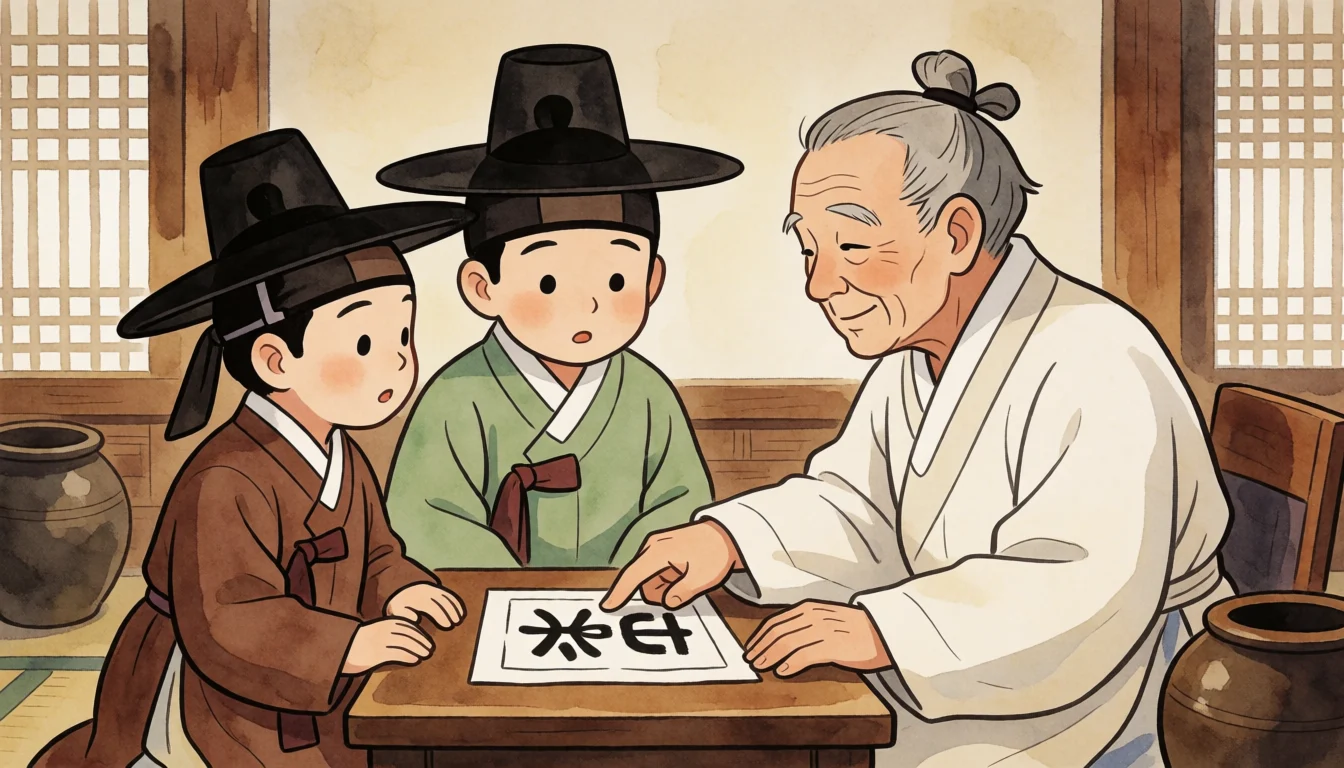
"If you break this character down carefully, isn’t the character for ‘mouth’ (gu, 口) trapped right inside the character for ‘gate’ (mun, 門)? People might use this character when asking for directions outside the main gate, but your character looks rather like someone sticking just their lips out over a neighbor’s courtyard wall to eavesdrop."
Dolsoe opened his eyes wide in astonishment.
"What? Eavesdropping over a wall?"
The fortuneteller chuckled and continued.
"You’ve hidden your true intentions to test my skills, leaving only your cheeky mouth sticking out to wag. What is that if not the plight of a tongue trapped inside a gate? So, rather than asking about your future, you’re tangled up in your own clever traps, unable to move an inch!"
Shame Replacing Playfulness
Every single word from the fortuneteller felt as though he were reading the inside of Dolsoe’s mind and poking right at it. Dolsoe’s face flushed bright red in an instant, like a ripe persimmon.
"N-No… that’s not it, I just thought the character was fascinating…"
As Dolsoe stammered, tongue-tied, the fortuneteller stared intently into his eyes and gently admonished him.
"Characters are vessels that hold a person’s inner heart. If you sincerely seek guidance about the future, the right path will reveal itself; but if you try to deceive and test others, your hasty and shallow cleverness shines right through the gaps in the strokes. Aren’t you running around so eager to get ahead that you fail to notice your own true path right beneath your feet?"
At those words, Dolsoe’s heart sank. All the times he had failed to listen to others until the end, interrupted impatiently, or botched things with petty tricks flashed before his eyes like a revolving lantern.
Dolsoe could no longer harbor any thoughts of playing tricks on the fortuneteller. Dropping his arrogant attitude, he felt a genuine and profound sense of shame for his frivolous behavior.
A New Day Begun with Calm Steps
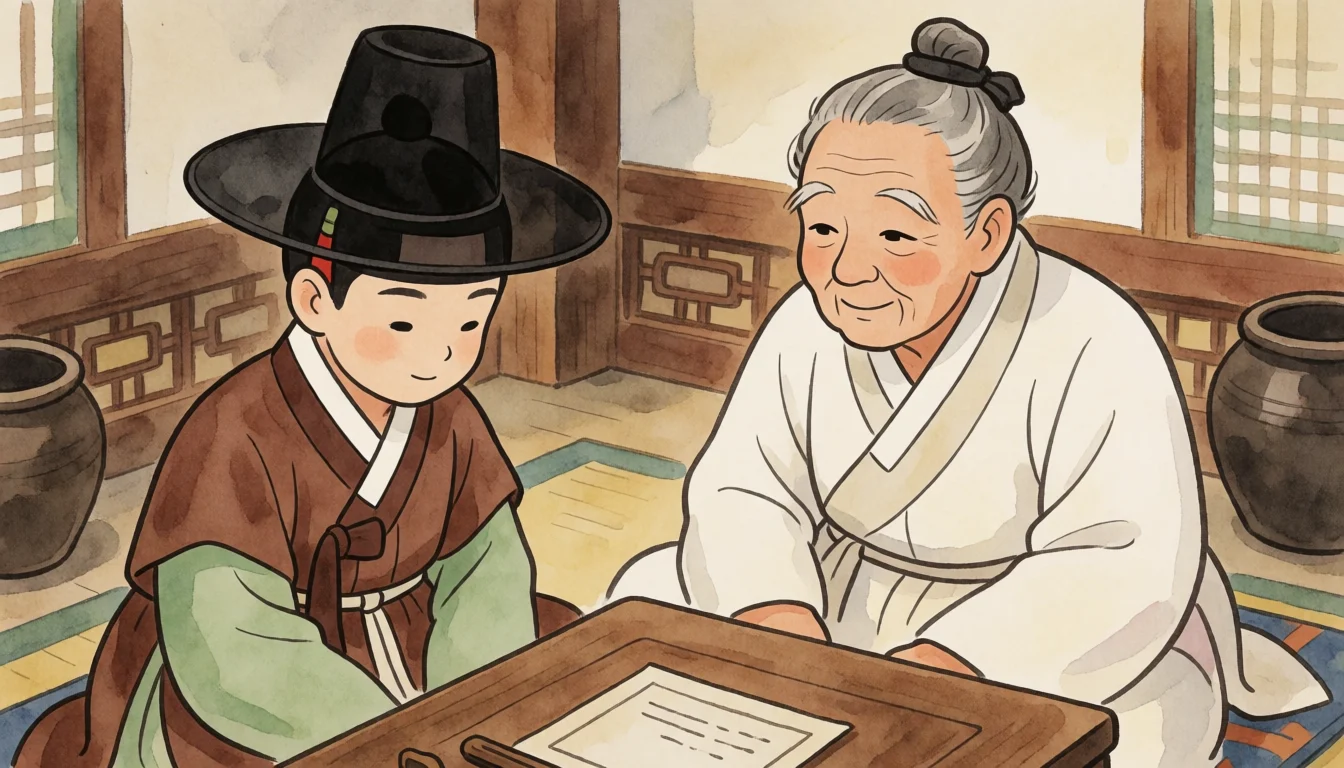
Carefully folding the paper on the table with both hands and tucking it into his pocket, Dolsoe bowed deeply to the fortuneteller.
"Elder, I was foolish. From now on, I won’t play petty tricks to test people. I will stop rushing and calmly examine my own heart in everything I do."
Only then did the fortuneteller nod with a warm, benevolent smile.
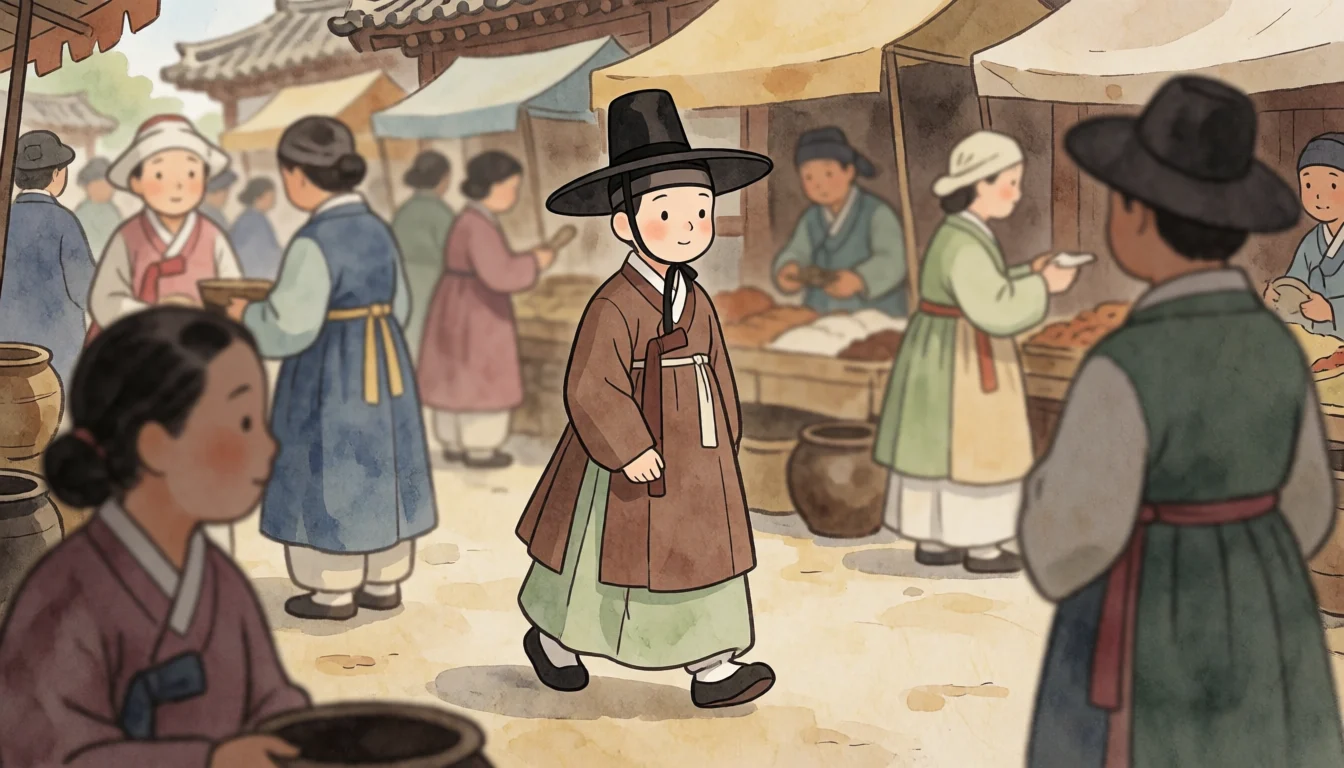
That day felt a little different. By the following morning, the marketplace tavern was still as noisy as ever, but Dolsoe’s steps—once always rushed and busy meddling in other people’s affairs—were remarkably composed. When someone spoke to him, he listened attentively to the very end, and before asking anything, he took a breath to reflect on his own actions first. When the villagers asked him, "What on earth made Dolsoe so dignified all of a sudden?", Dolsoe just scratched his head and burst into a cheerful laugh. It was a truly delightful day when the deep principle of pajajeom—which uses broken characters to pierce into the human heart—transformed a young man’s hasty habits into a calm and wise life.
Definition and Origin of Pajajeom
Pajajeom is a type of character-based divination (munja-jeom) used to foretell the future by interpreting or dissecting Chinese characters. Such folklore and customs are rooted in human psychology—the desire to know future events—combined with the belief that written characters carry profound meaning. It is believed to have originated from word games that involved splitting and combining characters.
Folktales and Transmission Aspects
Related folktales sometimes feature historical figures like King Sukjong or Park Mun-su as protagonists. For instance, a well-known story recounts King Sukjong meeting a pajajeom diviner while traveling in disguise, drawing the character for "ask" (mun, 問), and having his identity interpreted. However, the exact historical veracity of such anecdotes cannot be verified. Various alternate versions exist featuring figures like King Taejo, King Seonjo, Prince Suyang, or Kim Jong-seo instead of King Sukjong, and sometimes a blind fortuneteller appears in place of the usual diviner.
Pajajeom is no longer actively transmitted as everyday divination or seasonal custom today, but it is preserved in historical and folkloric records through past character-divination culture and folktale materials.
Notice on the Boundary Between Fact and Fiction: Anecdotes featuring historical figures such as King Sukjong and Park Mun-su in the text are folktales handed down through literature and oral tradition, and have not been verified as actual historical facts. Pajajeom should be understood as a type of traditional character divination and a cultural element within folklore.
🎨 Color It Yourself