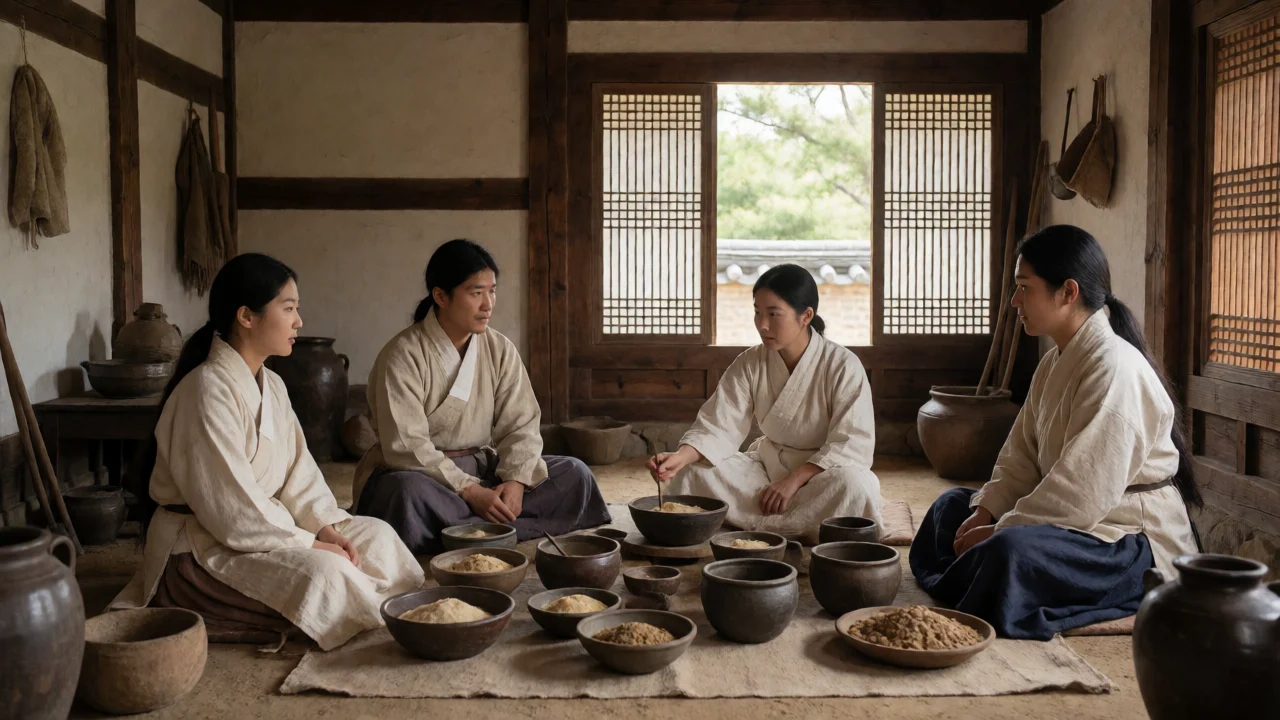
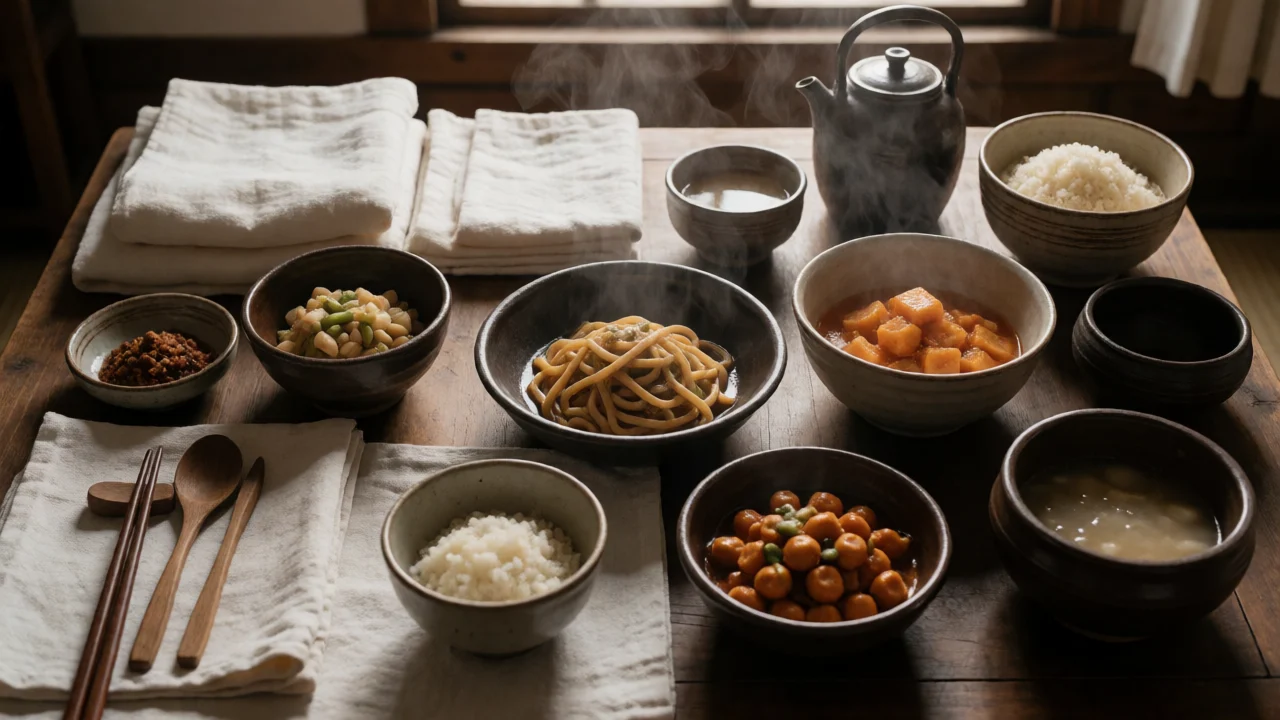
A sharp, biting wind sweeps across the landscape, cracking the thick ice over a frozen pond. Discover the story of yonggyeong, our traditional agricultural divination born from the ancient belief that a dragon hidden beneath the water has ploughed the fields.
Settle in and listen to the story at a gentle pace before you begin reading.
Heading Toward the Frozen Gonggeomji Reservoir
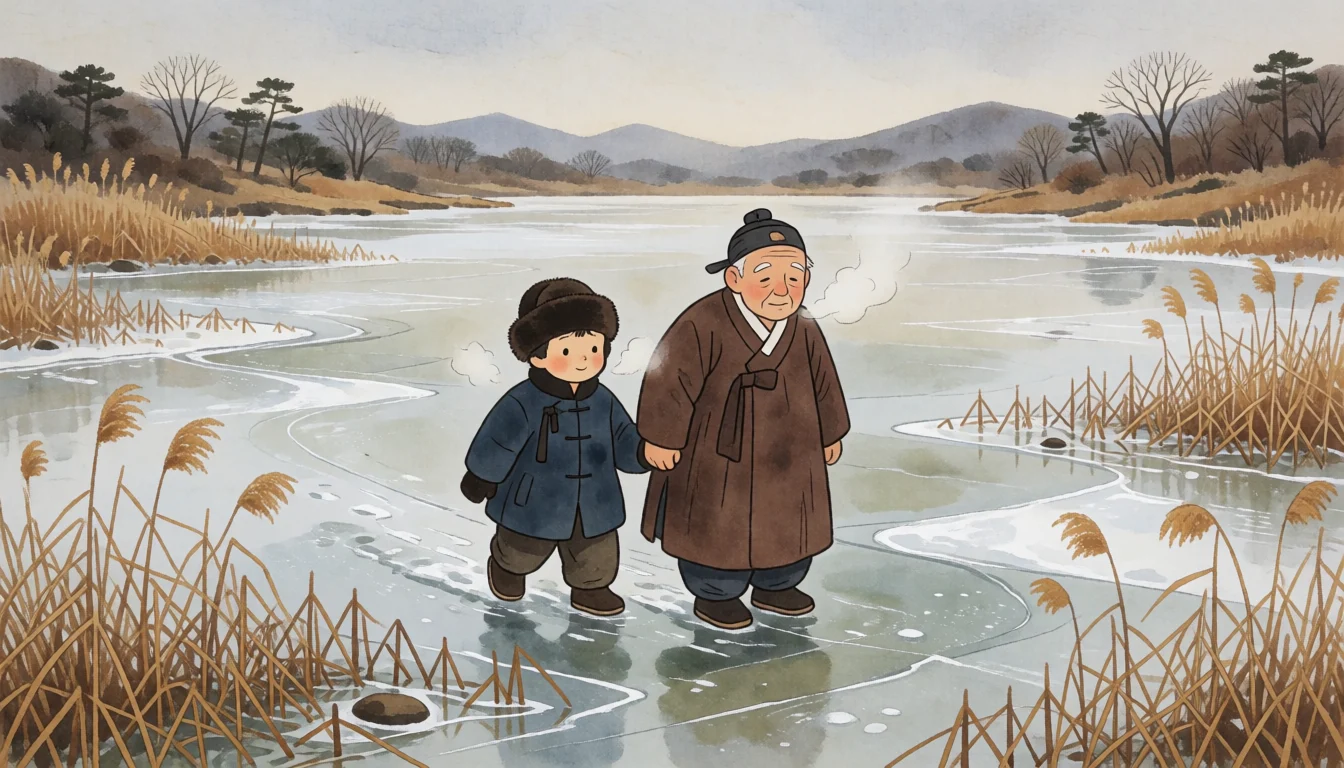
It was a day when a biting frost chilled the fingertips right through one’s clothes. The surroundings of Gonggeomji Reservoir in Sangju were dead quiet, blanketed in white frost and rustling dry reeds. Twelve-year-old Dolsae, pulling his furry winter hat down tightly, hurried after the thick coat flaps of his grandfather, who walked ahead with a squint against the wind.
“Grandfather, why on earth did you want to come out to a frozen pond in this freezing weather? Every time the wind blows, my cheeks feel like they’re going to snap off.”
Dolsae blew into his hands to warm his white puffs of breath and grumbled, but Grandfather stopped, turned back with a gentle smile, and said,
“Well now, the elders of old used to say that when this pond freezes solid, a dragon emerges to plough the fields. We have to see which direction the ice split to know what kind of harvest this year will bring. That’s what we call yonggyeong.”
“A dragon ploughs the fields on the ice? On this big, freezing sheet of ice?”
Dolsae’s eyes went wide with disbelief as he looked back and forth between his grandfather and the stark white water surface.
The Solid Sheet of Ice Echoing with Deep Cracks
Reaching the edge of the pond, a vast sheet of thick ice with a bluish tint stretched out before them. Dolsae cautiously stepped onto the surface and scanned the icy floor from end to end. Thanks to the fierce cold that had persisted for days, the ice was frozen solid without a single gap.
“Grandfather, no matter where I look, I don’t see any sign of where a dragon passed. It’s just a plain, transparent sheet of ice.”
Frustrated, Dolsae stamped his foot on the ice, and a deep, heavy echo—thud-boom—resounded from deep underwater, rippling in all directions. Startled out of his wits as if lightning had struck, Dolsae grabbed his grandfather’s sleeve in a flash.
“Ho ho, you rascal. That’s just the ice breathing. No need to rush. A dragon’s ploughing doesn’t reveal itself easily just because a person is impatient.”
Grandfather tapped the ice surface with his wooden branch cane and calmly gazed at the center of the water.
A Clear Water-Path Splitting the Center
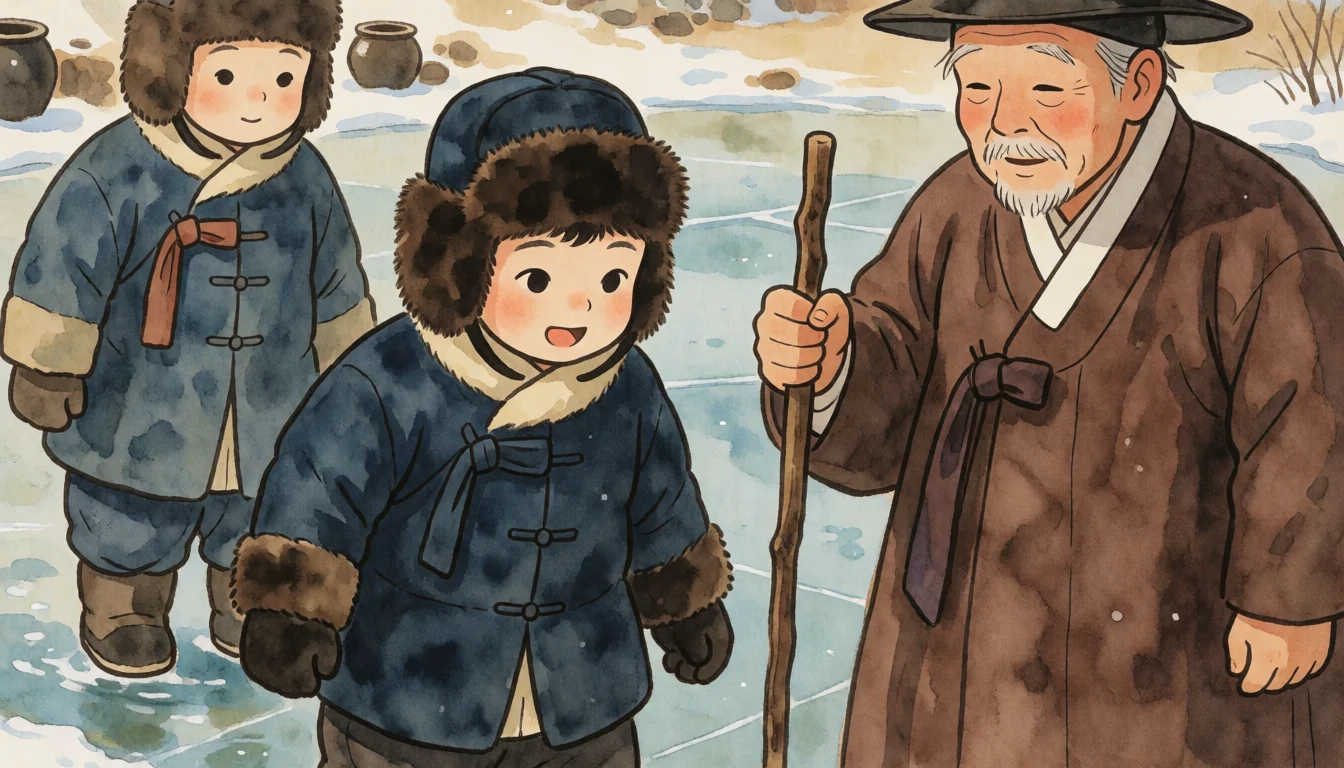
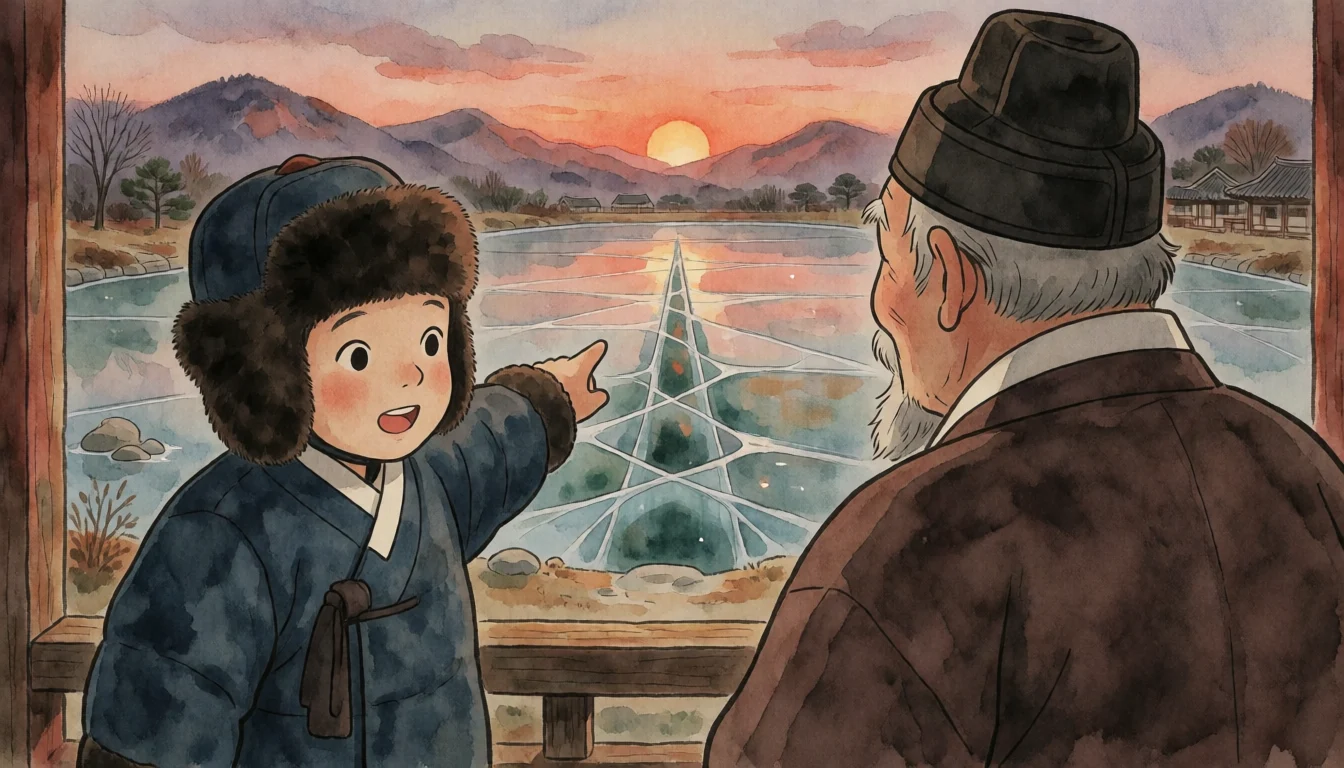
It was around the time when a red sunset was slowly sinking beyond the mountain ridge. With his cheeks flushed red from the bitter wind, Dolsae didn’t give up and walked a little further toward the inner part of the reservoir. Right at that moment, a thin white line began beneath his feet, stretching cleanly toward the center of the pond.
“Grandfather! Come look over here! The ice has split wide open!”
At Dolsae’s cry, Grandfather strode over, bent down, and peered closely. Right across the middle of the ice sheet, a long, deep fissure had clearly revealed itself, looking as though someone had dragged a plow right through it.
“Isn’t this a truly remarkable sight? It has sliced right through the heart of Gonggeomji so cleanly. Old sayings tell us that when the middle of a reservoir splits like this, the fields that year will have plenty of water, and the rice grains will ripen plump and thick.”
“Then does that mean our village will have a great bumper crop this year?”
At Dolsae’s sparkling gaze, Grandfather nodded with a satisfied expression. Spellbound by the wondrous sight—as if a dragon had truly surged up from the water to plough the ice—Dolsae froze in his tracks.
Hurrying Toward the Ox in the Barn
Dolsae wanted to linger, running his fingers along the icy crevice to take a closer look. But the sun had completely dipped below the distant mountain ridge, and twilight was beginning to deepen.
“Dolsae, let’s head home now. It’s January, after all—shouldn’t we go fix a warm midnight snack for our ox?”
Hearing Grandfather’s words, Dolsae snapped back to reality. Around this time of year, preparing a steaming bowl of warm grain mash—sojuk—as a late-night meal for the ox that worked tirelessly on the farm all year was a major chore for the household.
“Ah, that’s right! Nurungji must be waiting with an empty stomach in the barn! Let’s hurry, Grandfather.”
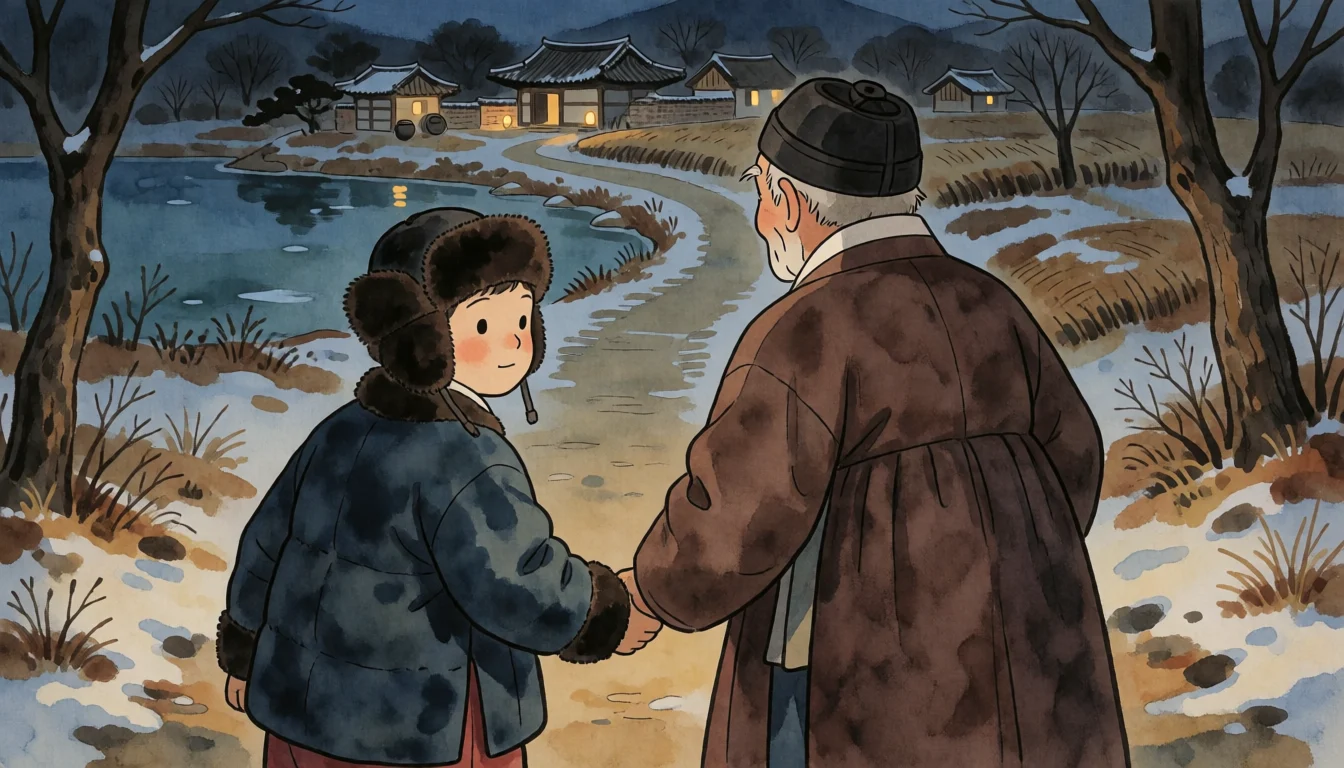
Swallowing his regret at leaving the wondrous ice behind, Dolsae took his grandfather’s hand and quickened his pace toward home.
Rising Steam and Warm Laughter
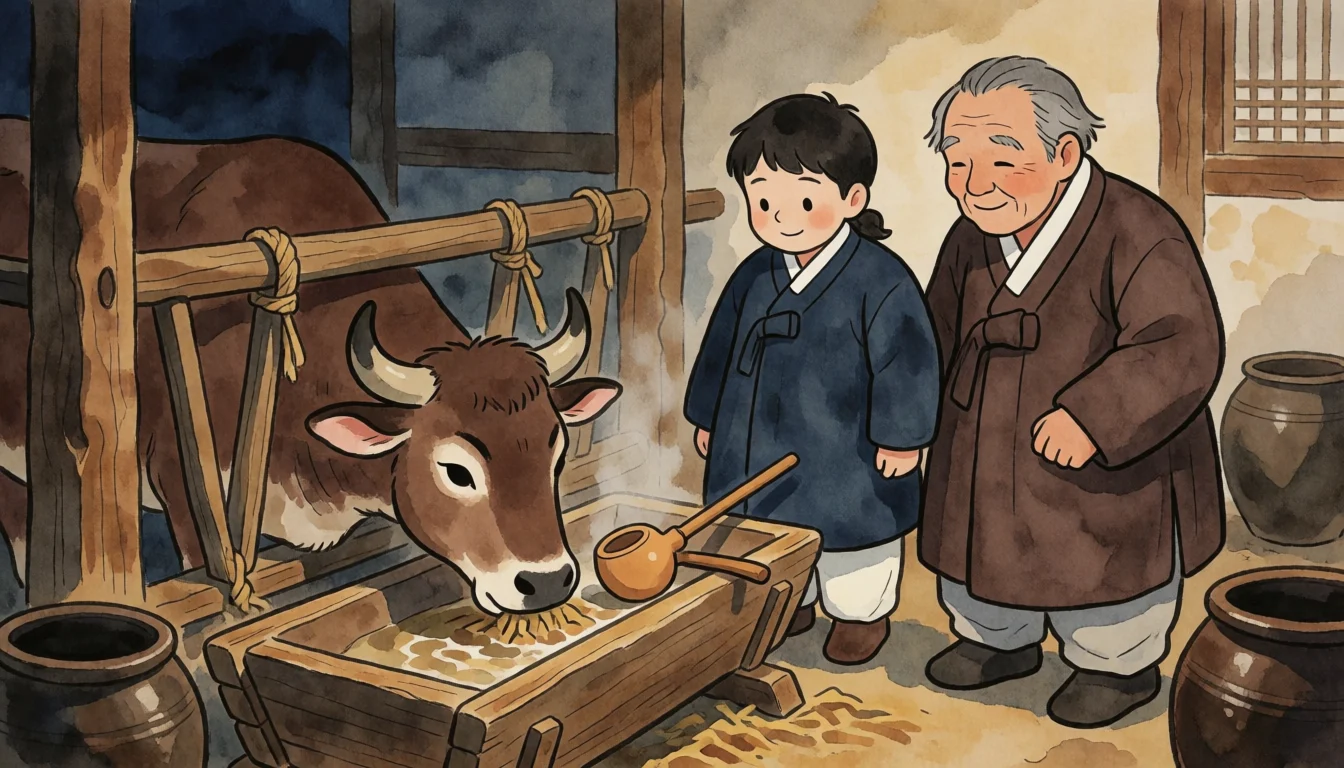
As soon as they stepped into the kitchen, Dolsae loaded straw and chaff generously into the stove and lit the fire. The firewood crackled, and a savory aroma of ox mash drifted through the cracks of the iron pot lid. Scooping up a well-cooked batch of sojuk with a gourd ladle, he ran out to the barn, where Nurungji blinked its large, gentle eyes in welcome and let out a low “moo.”
“There you go, I cooked it nice and soft so you can muster as much strength as the Gonggeomji dragon we saw today.”
When Grandfather poured the steaming mash into the manger, Nurungji blew out puffs of breath and eagerly emptied the trough. Seeing that hearty appetite, Dolsae burst into a shy giggle.
“Grandfather, judging by the way our Nurungji is eating this mash, it’s going to plough the paddies even more fiercely than a dragon.”
“Indeed it is. Since we saw the ice path ploughed by the dragon of Gonggeomji, I’m sure we’ll share a great harvest with this fellow this year.”
Inside the barn of the rural village as winter evening settled, cozy laughter blossomed warmly alongside the savory scent of rice straw.
Definition and Meaning of Yonggyeong
Yonggyeong (literally “dragon ploughing”), also known as “dragon’s ploughing,” is an agricultural divination method used to forecast a good or poor harvest based on the direction and shape of cracks forming on the frozen surface of a reservoir or pond around the winter solstice. Handed down for thousands of years through empirical experience, this folk custom is deeply tied to winter climate and water management, which were essential for farming societies.
Regional Traditions and Historical Records
The custom of yonggyeong has been passed down through historical records and traditions tied to reservoirs across various regions of Korea.
- Sangju Gonggeomji, Gyeongsangbuk-do: Recorded in Go Sang-an’s Taechonjip, this folk tale tells of locals observing how the ice cracked when a dragon allegedly ploughed across the surface, using it to divine the following year’s harvest.
- Hapdeokji in Hongju, Chungcheong-do: Every year during the freezing period around the 14th day of the first lunar month, the ice sheet cracks; if the center splits, it portends a bumper crop, while cracking only near the edges signifies a poor harvest. This was called “goblins walking the pond.” In areas of Chungcheongnam-do, a custom remains of feeding oxen a warm night-meal of sojuk on this night.
- Waryongji (Namdaeji) in Yeonandoehobu, Hwanghae-do: A representative site where yonggyeong phenomena occurred, recorded in texts such as the Veritable Records of King Taejong, Dongguk Yeoji Seungnam, and Yeollyeosil Gisul. During King Taejong’s reign, officials were ordered to hold rituals here every spring and autumn, and discussions regarding reservoir preservation were documented under Kings Sejo and Seongjong. An anecdote regarding a black dragon during the reign of King Munjong of Goryeo is also preserved.
- Other Regions: Records related to yonggyeong are also confirmed at Namji in Miryang, Gyeongsangnam-do, and Seoktongji in Anak, Hwanghae-do.
Meanwhile, King Seongjong of the Joseon Dynasty expressed skepticism, noting that “the term yonggyeong is bizarre and absurd and cannot be believed,” showing that skeptical views existed even at that time.
Modern Transmission Aspect
Although yonggyeong is a traditional agricultural divination passed down through Joseon-era literature and folk materials, it is no longer directly practiced as an everyday custom today. However, it holds historical significance as a trace of agrarian culture, reflecting how our ancestors sought to interpret the order of nature and pray for abundant harvests by observing winter climates and reservoir conditions.
The Boundary Between Story and Historical/Folk Facts
In the narrative above, specific characters like “Dolsae” and his “grandfather” near Sangju Gonggeomji, their conversations on the ice, and the domestic details of feeding sojuk to the barn ox are fictional narratives created to enhance the reader’s understanding.
Conversely, the folkloric definition of yonggyeong using ice cracks to divine harvests, specific regional case studies in literature like Sangju Gonggeomji, Hapdeokji, and Waryongji, the lunar January 14 traditions at Hapdeokji including feeding sojuk, and historical records found in texts like the Veritable Records of King Taejong and Taechonjip are all grounded in actual historical documents and folkloric research.
🎨 Color It In Yourself