Amidst the fierce chill of Daehan, when the thin layer of ice on the courtyard cracks, old man Mandol shares a stark proverb with his grandson. We encounter the attitude of self-reliance forged by our forebears through harsh trials.
Settle in and listen to the story at a gentle pace before you begin reading.
The Frozen Fields and the Bitter Cold
Even in the dead of winter, around the periods of Sohan and Daehan, fierce cold waves would sweep down relentlessly from Siberia. The weather was biting and dry, making it easy for a stray spark to cause a major fire, and combined with drought, the barley shoots planted in the fields would freeze stiff.
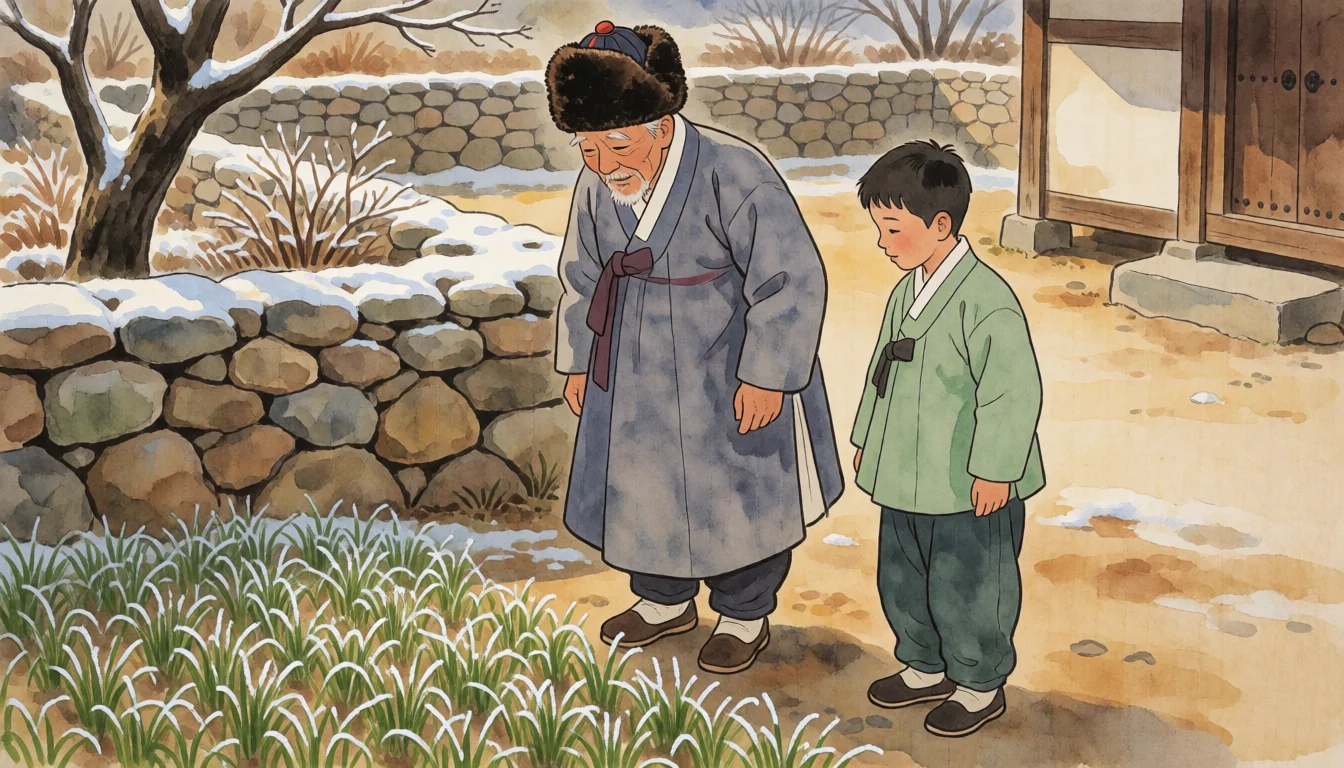
Up in his mountain village, old man Mandol pulled his furry winter hat deep down and stepped out into the courtyard just as dawn broke. The dishwater bucket had frozen solid to the bottom overnight from the howling night wind, and the barley shoots at the edge of the field were crouched, shivering in a deep blue-green chill. Mandol sighed softly as he carefully inspected the earthen ridge. “If this harsh cold destroys all the shoots, we’ll be in trouble.” Fretting over whether the winter crops would be damaged, he looked around the storage jars and the shed, when his eyes caught the still-closed paper door of the main room.
Protesting Under the Quilt and a Cold Refusal
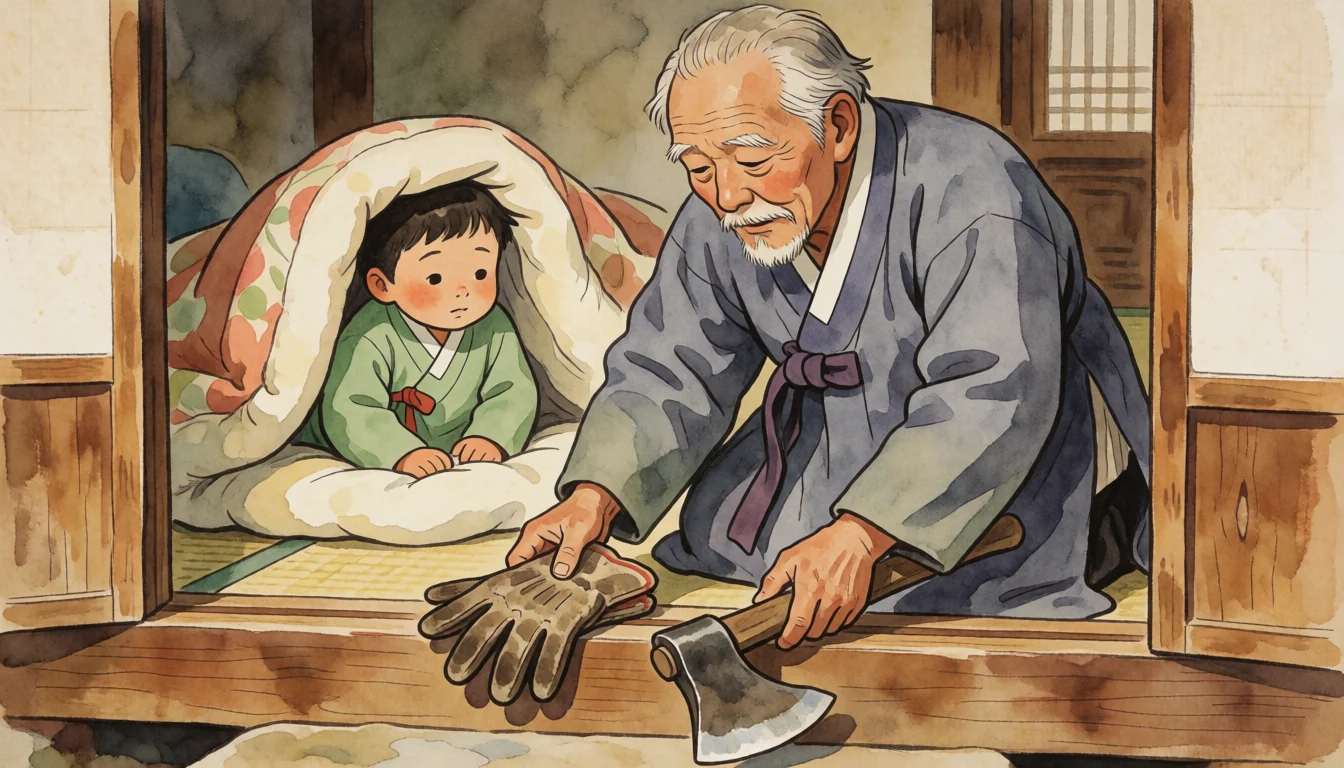
Inside the room, his twelve-year-old grandson, Dori, was curled up with a thick cotton quilt pulled all the way over his head. When the old man yanked the door open, a blast of icy wind rushed in, causing Dori to shrink his entire body and pull the quilt tighter.
“Grandfather, please close the door! The floor is like a sheet of ice, and my very bones feel chilled to the marrow. Stoke up a roaring fire in the furnace, won’t you? Please?”
Mandol didn’t bat an eye; he simply tapped his walking stick sharply against the floorboards.
“Get up. The firewood is out, and all you do is complain about the furnace while lying there? If you don’t move yourself to warm up, you won’t survive this winter.”
“It’s freezing, so how am I supposed to chop firewood? Get the fire going first, and then I’ll get up.”
Seeing his grandson make excuses and bury his head back under the covers, the old man clicked his tongue. To survive in a harsh world, one has to take care of oneself; he couldn’t just let slide an attitude that looked exclusively to others for help the moment it got a bit chilly. Mandol pulled a pair of worn work gloves and a heavy iron axe from the shed and dropped them with a thud right on the threshold.
A Small Commotion in the Barnyard
Pouting, Dori reluctantly stepped out into the courtyard. The cold wind slapped mercilessly against his cheeks, bringing tears to his eyes. Dragging the axe behind him, Dori walked over to the stack of firewood beside the shed and hoisted a frozen block of oak onto the chopping stump.
“A little axe-wielding like this—I can easily split it!”
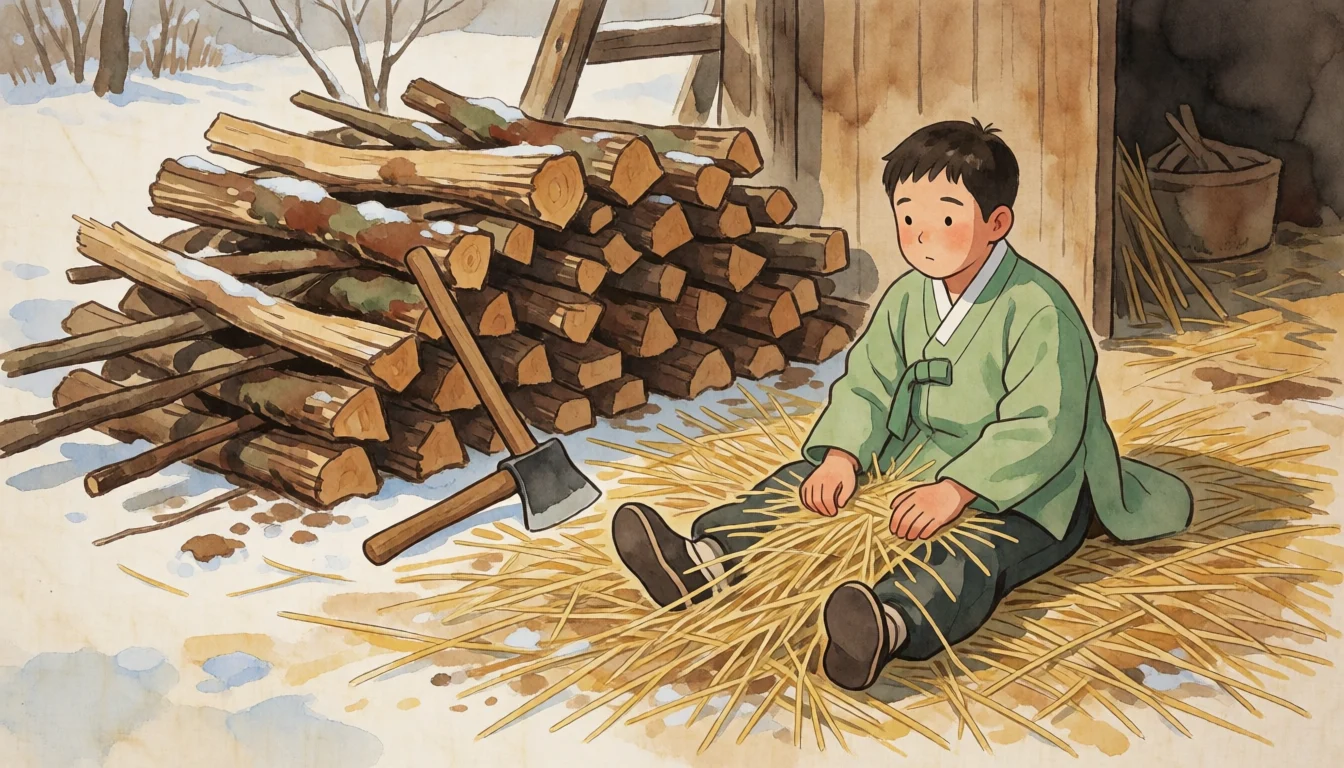
Dori swung the axe down with all his might, but the glancing blow deflected and struck squarely against a neatly stacked bundle of straw next to it. The straw stack collapsed in a heap, and frozen branches scattered wildly across the courtyard.
Covered in straw and landing heavily on his bottom, Dori felt a wave of sorrow well up. “Ouch, my back! It’s freezing! If I freeze to death shivering out here in this cold, will Grandfather take responsibility?”
Someone Who Dies Abroad During Sohan and Daehan Doesn’t Even Get a Memorial Service
Old man Mandol, who had been tidying up the courtyard, walked over and looked down at Dori. His voice was calmer and colder than the biting northern wind.
“Dori. An old saying goes, ‘Someone who dies abroad during Sohan and Daehan doesn’t even get a memorial service.’ Another says, ‘Don’t even wait for someone who leaves the house during Sohan and Daehan.’ Do you know what those sayings mean?”
Dori looked up with wide eyes, his heart sinking at the harsh words. Not even offering a single spoonful of rice to the dead—how could such a cruel thing be said?
“It means that the harsher the bitter cold strikes, the more firmly you must tend to your body and mind to survive. Anyone who shifts their work onto others, sits back helplessly, and freezes to death will find no one to pick them up. If you don’t know how to pull yourself through a crisis with your own strength, how will you ever live in this harsh world? Though it sounds cruel, it is a formidable warning that you must stand on your own two feet and protect yourself.”
Swallowing hard, Dori met his grandfather’s firm gaze, dimly realizing that the scolding wasn’t meant merely to mistreat him.
Taking the Axe Handle Into One’s Own Hands
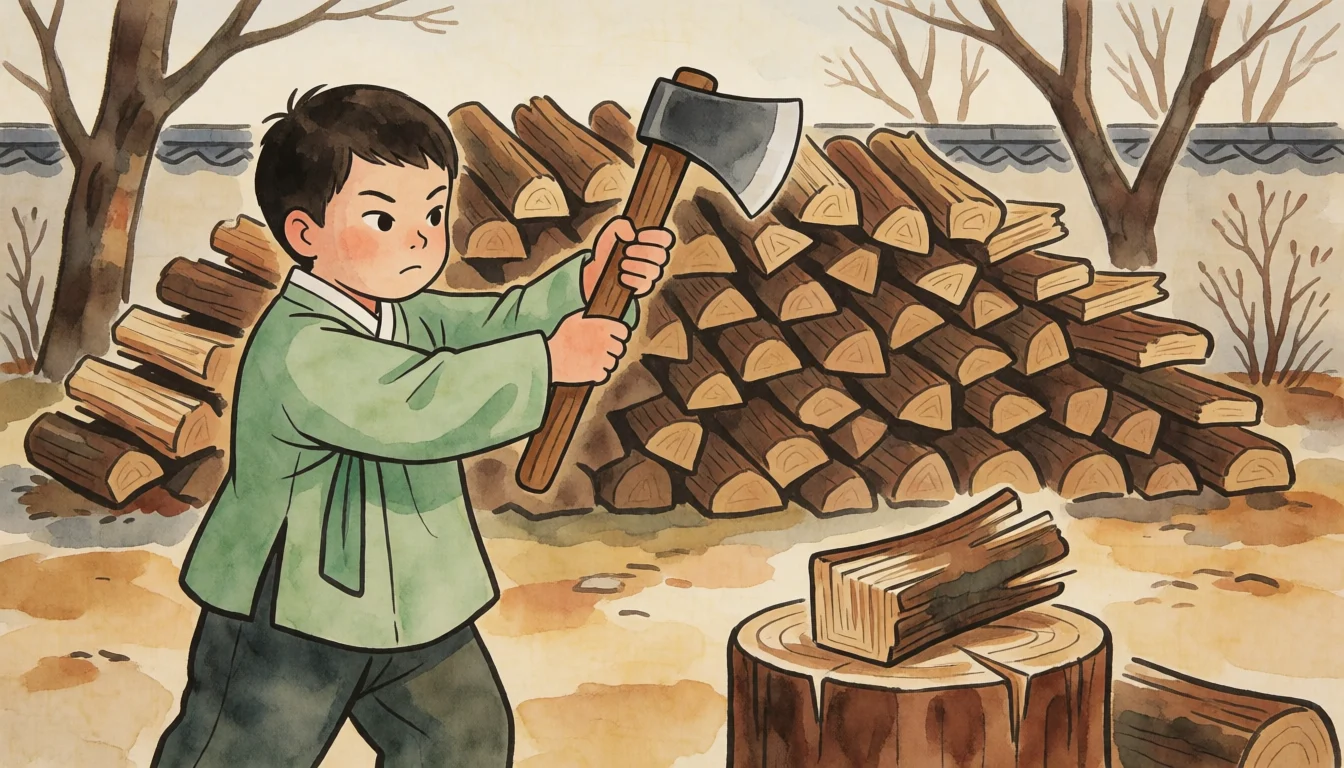
Dori dusted the bits of straw from his clothes and stood up. Blowing warm breath onto his frozen hands, he readjusted his gloves and neatly pushed the scattered straw back against the wall. Then he selected a piece of firewood and stood it upright on the wooden block so it wouldn’t wobble.
“You’ll see. I’ll light the fire with my own strength and make the room warm.”
Grasping the axe handle tightly, Dori took a deep breath. He raised his arms high, targeted the grain of the wood, and swung down. With a crisp crack, the wood split neatly into two halves. Strangely enough, after repeating the axe-swinging four or five times, beads of sweat began to form on his forehead, and the biting wind no longer felt frightening. A warming heat was rising from deep within his body.
Warmth Kindled Together
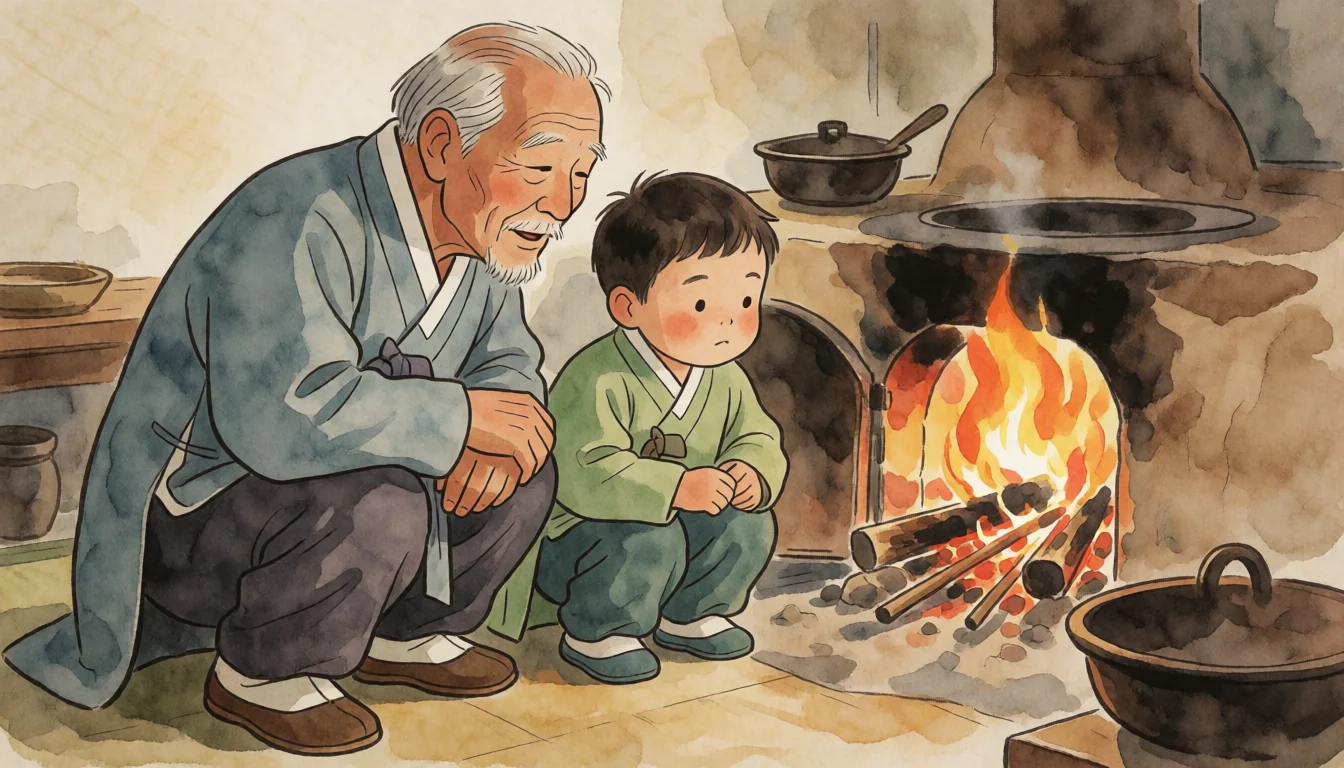
Old man Mandol quietly approached, gathered the firewood Dori had split, and loaded it onto an A-frame carrier. Grandfather and grandson walked side by side carrying the split firewood to the mouth of the furnace. Dori gathered dry kindling, pushed it deep into the hearth, and struck a flint to catch a spark. Finally, a red flame caught onto the firewood and blazed brightly.
The warm fire flushed both of their chilled cheeks. Dori wiped the sweat from his forehead with his sleeve and grinned broadly.
“Grandfather, I’m not cold at all anymore. Should I go chop some more firewood?”
“Ha-ha, you rascal. That’s enough; let’s go inside and eat.”
Sitting across from each other on the warm floor of the heated room, the two shared a bowl of steaming barley rice. Although the fierce northern wind from Siberia still raged outside, a solid strength capable of easily weathering any winter crisis was taking root within the boy who had sweated and kindled the fire with his own hands.
Climate and Crop Damage During Sohan and Daehan
Even in the dead of winter, the periods of Sohan and Daehan are marked by intensely cold days driven by the fierce Siberian high-pressure system. Due to dry weather and frequent droughts, this period often caused severe damage to winter crops such as barley.
Meaning and Pragmatic Use of ‘Someone Who Dies Abroad During Sohan and Daehan Doesn’t Even Get a Memorial Service’
A representative proverb from this bitter cold is, “Someone who dies abroad during Sohan and Daehan doesn’t even get a memorial service.” A similar proverb often used alongside it is, “Don’t even wait for someone who leaves the house during Sohan and Daehan.” These proverbs were used to urge people to take special care of their health during the freezing Sohan-Daehan period to avoid dying, while also conveying that those unable to handle their own tasks would receive no hospitality and must overcome difficult crises on their own. In other words, they served as a pragmatic device to instill a sense of duty in those with weak bodies or minds to become strong, conveying a strong will to achieve and overcome.
Transmission Patterns in Literature
This folkloric perception of midwinter cold can also be found in literary works. In Han Seung-won’s novel Our Hometown in the Southern Sea, the folk awareness guarding against the harsh cold is glimpsed through the passage: “People would say that ghosts who froze to death during Sohan and Daehan couldn’t even get a bowl of rice in the water, successfully dodging the terrifying midwinter cold.”
Modern Instructional Meaning
Proverbs related to the harsh cold of Sohan and Daehan are no longer directly practiced as specific rituals or seasonal customs today. However, their meaning remains alive in everyday language as a metaphor for the life attitude and lesson that when faced with severe trials or difficult crises, one must overcome them through one’s own strength rather than relying on others.
The specific dialogue between Grandfather Mandol and his grandson Dori, the axe-chopping commotion, and the daily narrative of lighting the furnace in the main text are literary creations (fictions) designed to help readers understand. They are merely devices to explain the pragmatic meaning of self-reliance and overcoming inherent to the proverb, and should not be mistaken for actual historical events or the direct origins of specific customs. Objective facts are limited to the climatic characteristics of the Sohan-Daehan period and the instructional meaning of the proverb.
🎨 Color It Yourself