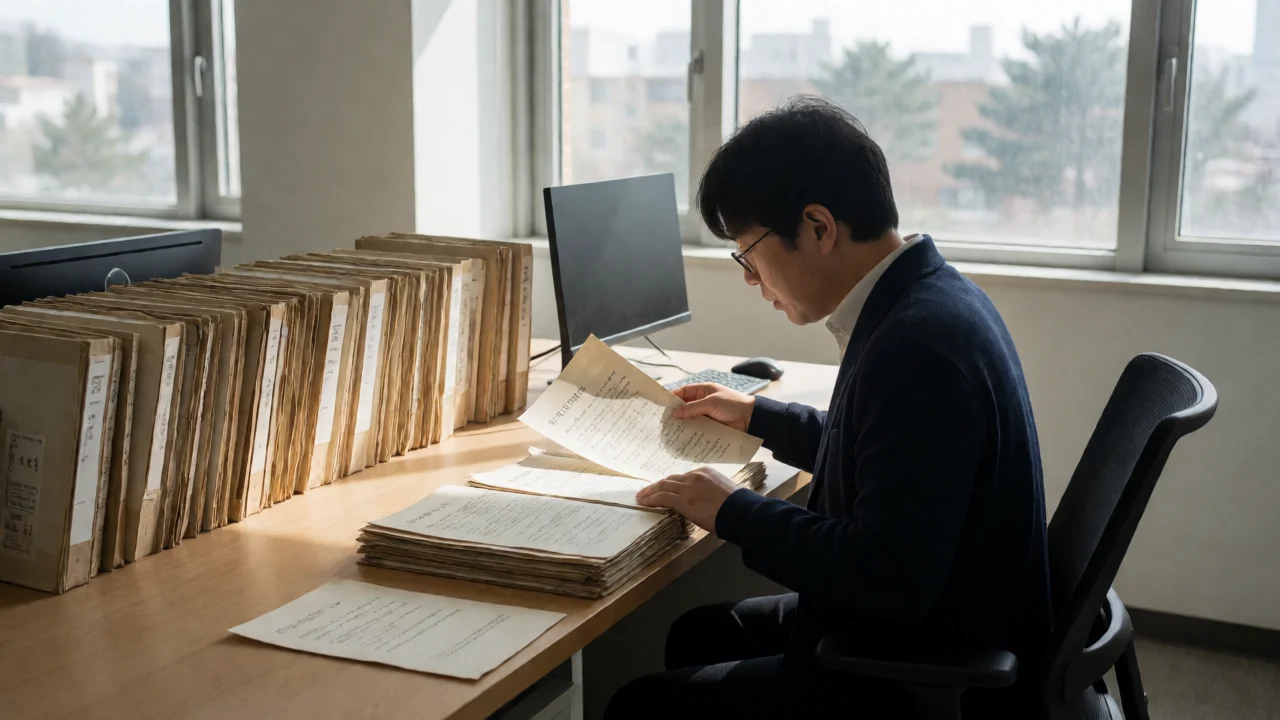
As preparations for the lunar New Year rituals get underway, Deokbae trims sheets of traditional mulberry paper, or hanji, inscribed with the names of everyone in the village—and their livestock. When a sudden gust of wind scatters the white papers into the air, we explore the deep cultural meaning of soji, the traditional folk ritual of burning paper to cleanse impurity and offer prayers.
Settle in and listen to the story at a gentle pace before you begin reading.
White Paper Blanketing the Ritual Courtyard
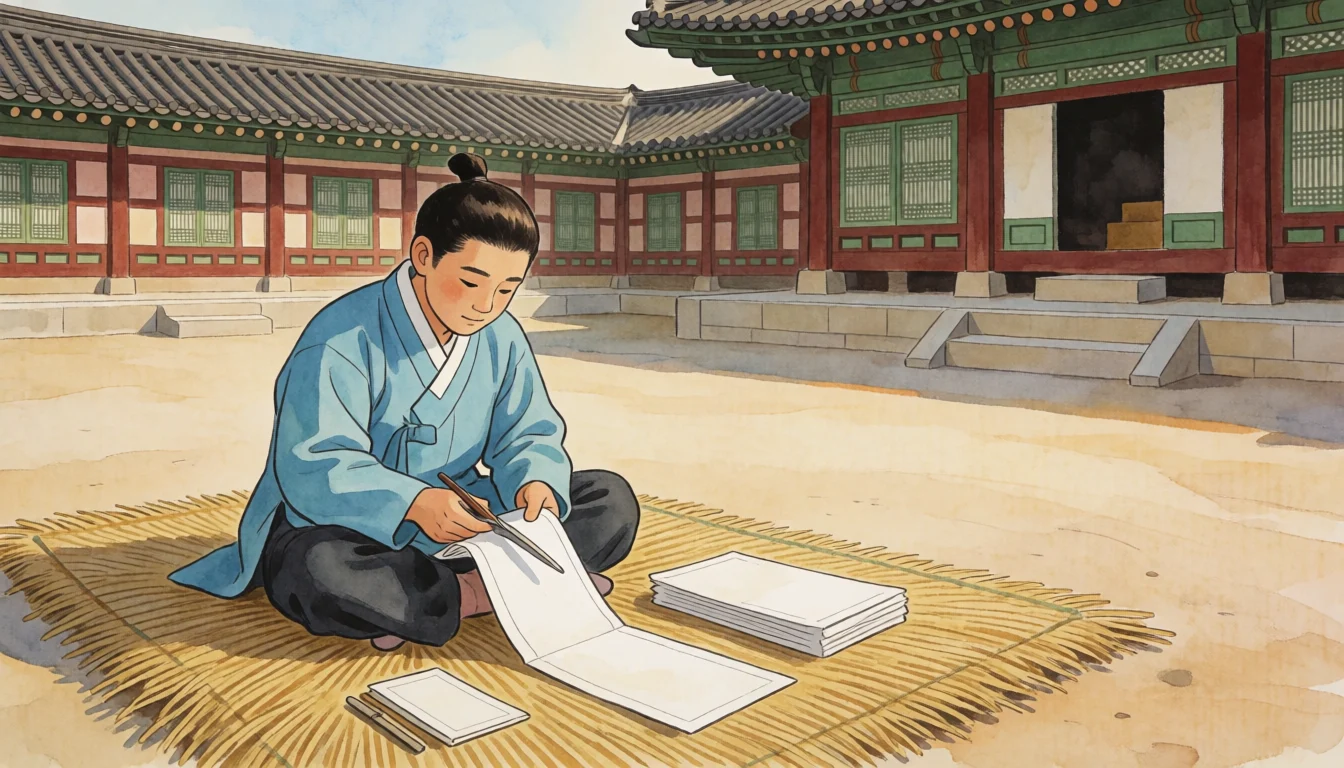
Since ancient times, our village has welcomed the lunar New Year by offering sincere devotions to the heavens and the local deities. Neatly cutting hanji into precise rectangles and burning them with utmost care is known as soji. This ritual served as a bridge—washing away impurities to purify the sacred space and carrying the villagers’ earnest wishes straight to the gods. But on this particular morning, young Deokbae was already hard at work in a corner of the ritual courtyard.
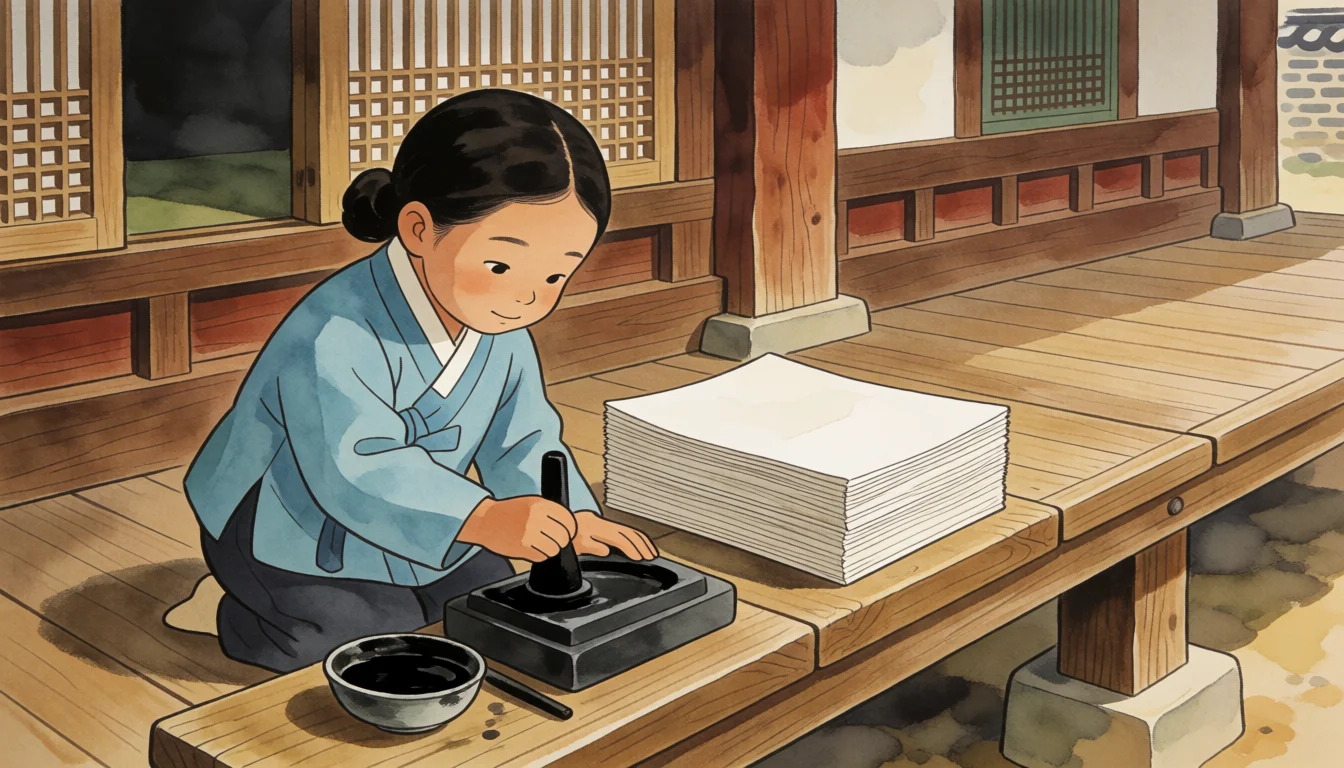
He had laid out straw mats on the ground and was carefully measuring and cutting white paper to record the names of the entire village. There was the daedong-soji, which listed every single villager individually, and the uma-soji, intended to pray for the health and abundant breeding of the village’s invaluable cows and pigs.
"You’ve got nimble hands there, Deokbae," an elder remarked, pausing with a light cough as he walked past the courtyard. "Even so, words offered to the ancestral spirits require your heart in every single stroke. Take your time and write carefully."
Deokbae nodded briskly. "Don’t you worry, Elder! I’ll have the lineage rosters for every family and the names of the cattle in the barns finished down to the last detail before lunch!"
Raising his voice, Deokbae dipped his brush deep into the inkwell. Yet, truth be told, his mind was already fluttering ahead to the village festival, making his footsteps itch with excitement.
Blended Ink and Tangled Names
Whenever work is rushed, mistakes are bound to slip through. Deokbae had barely finished the gaksongbaji-soji roster—meant to encompass all the diverse family names of the village—when he hastily moved his brush over to the calf barn registry sitting right beside it, eager to finish quickly and grab a piece of rice cake at the marketplace.
"Kim’s household, Park’s household… and Nureongi, Spotty… whoops!"
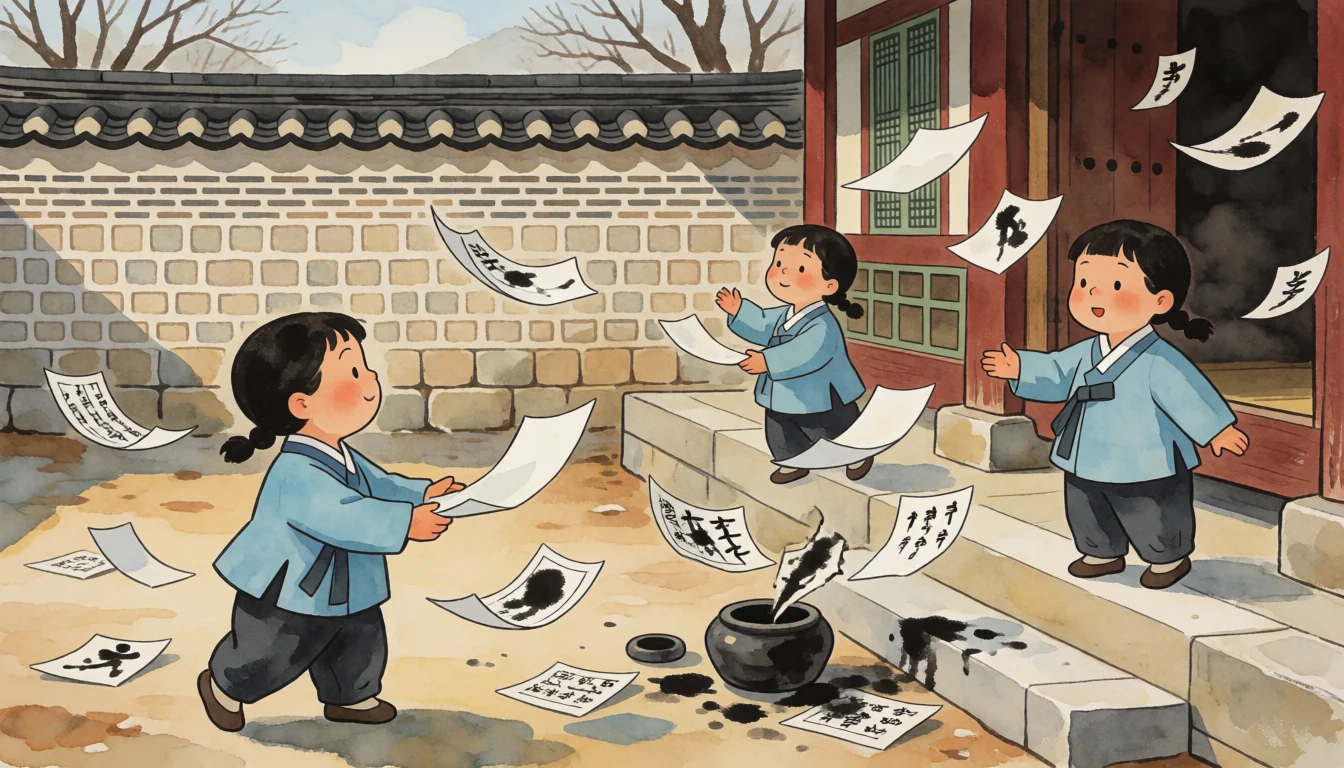
Before the ink had even dried, he whipped the paper around and accidentally clipped the corner of the inkstone. The stone wobbled, splashing black ink across the desk. Startled, Deokbae lunged forward, and his flailing arm knocked over the entire stack of daedong-soji and livestock papers, sending them tumbling into a chaotic mess.
"Oh no, what a disaster! Did this paper belong to the ox from that house, or was it Elder Lee’s name from across the village?"
Beads of cold sweat rolling down his forehead, Deokbae dropped to the floor and scrambled to gather the scattered sheets. But today had other plans. A biting late-winter wind suddenly whipped up a small whirlwind in the corner of the courtyard, catching the damp hanji pages and scattering them across the yard like a flurry of white butterflies.
An Encounter with Elder Chunsam
"Hey, catch those papers! The papers are flying away!"
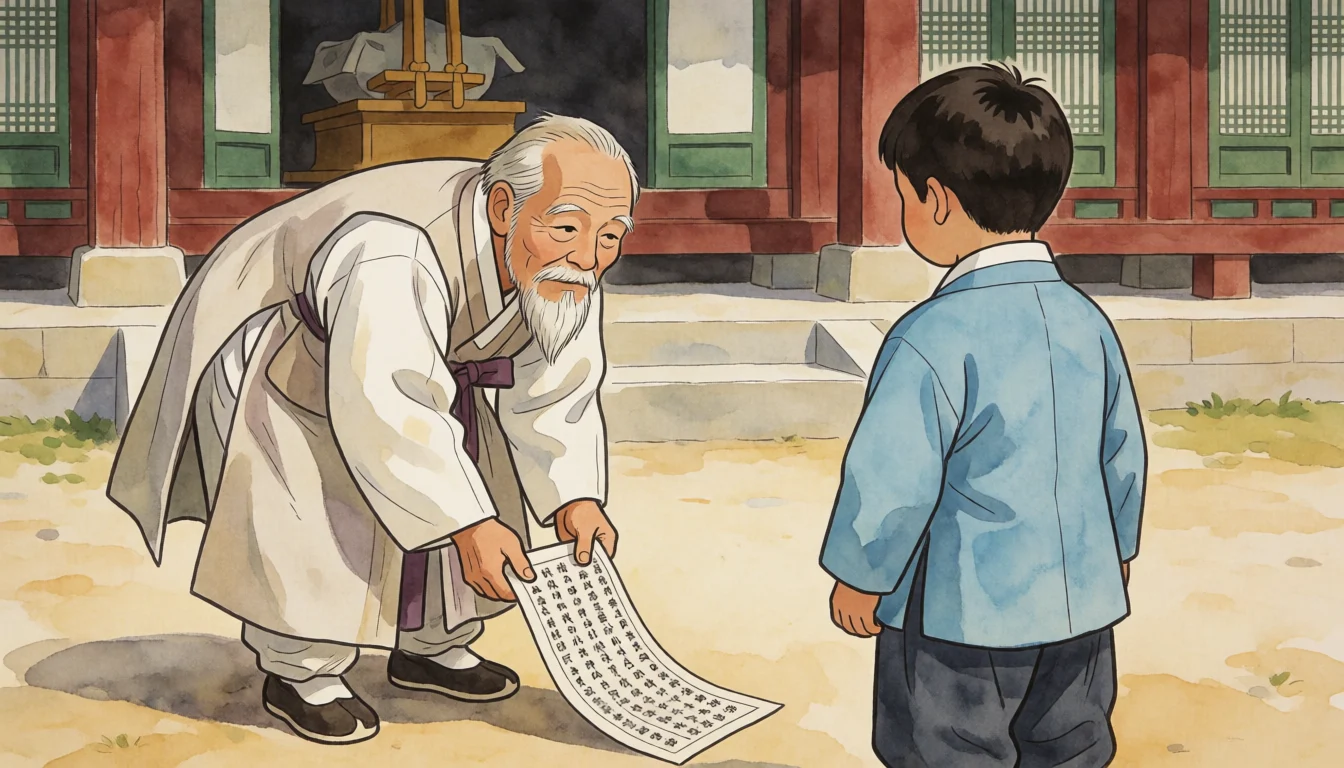
Barely mindful of his rubber shoes slipping off, Deokbae dashed frantically around the courtyard, trying to snatch the papers out of the air. But the harder he reached, the more the wind-borne sheets slipped away, fluttering behind the jars and over the low stone wall. Just then, as Elder Chunsam pushed open the door of the ritual hall, a single white sheet of paper drifted down and landed right at his feet.
The elder slowly bent down and picked it up. Scrawled across the paper was the name "Nureongi," bizarrely overlapping with a smeared family name from the neighboring village. Chunsam’s eyebrows twitched as his piercing gaze locked onto Deokbae.
"Deokbae, you rascal. I thought it was starting to snow in the courtyard, but what on earth is the meaning of this?"
Clutching three stray papers to his chest, Deokbae froze. His face turned as red as a ripe persimmon, leaving him no room for excuses.
"Well… Elder, it’s not what you think. A sudden gust of wind just…"
"Don’t go blaming the wind," Chunsam interrupted, his voice steady and low. "Looking at the messy state of the writing on these papers, it’s crystal clear where your mind was wandering. Performing soji is an act of sincere devotion where humans and gods connect their hearts and wash away impurity. How could you handle sacred papers with such a scattered and careless mind?"
Chunsam’s firm, measured words finally forced Deokbae to drop his head in shame.
Brushing Away Impurity to Take Up the Brush Anew
Elder Chunsam gazed quietly at Deokbae for a moment before letting out a deep sigh. He walked over to the wooden platform by the courtyard and motioned for Deokbae to join him.
"Come sit down," Chunsam said. "Even when performing an exorcism ritual to banish evil, you must first sweep away unclean things and purify the space before you can welcome the spirits. A person’s heart is no different. Fretting over spilled ink won’t fix anything; it will only tangle things further. Take a deep breath and clear your mind first."
Kneeling down, Deokbae laid the crumpled papers he had been clutching to his chest onto the wood.
"I’m truly sorry, Elder. I was in such a rush to get to the marketplace that I ended up scrambling all the registers. It was entirely my fault."
Seeing the young man confess his mistake without making excuses, the elder’s stern expression gradually softened. Chunsam tapped out his smoking pipe and offered a faint smile.
"Alright, since you’ve owned up to your mistake, that’s enough. Now, go fetch some fresh paper. The daedong-soji needs to properly include every single family in the village without omission, and the uma-soji is a prayer for the well-being of the animals that sustain our households this year. Let’s write them out again, pouring our utmost sincerity into every single stroke."
Deokbae hurried back inside the ritual hall, carefully cradling a fresh stack of hanji that had been stored neatly away. This time, without rushing, he ground the ink and steadied his breathing.
A White Flame Ascending to the Sky
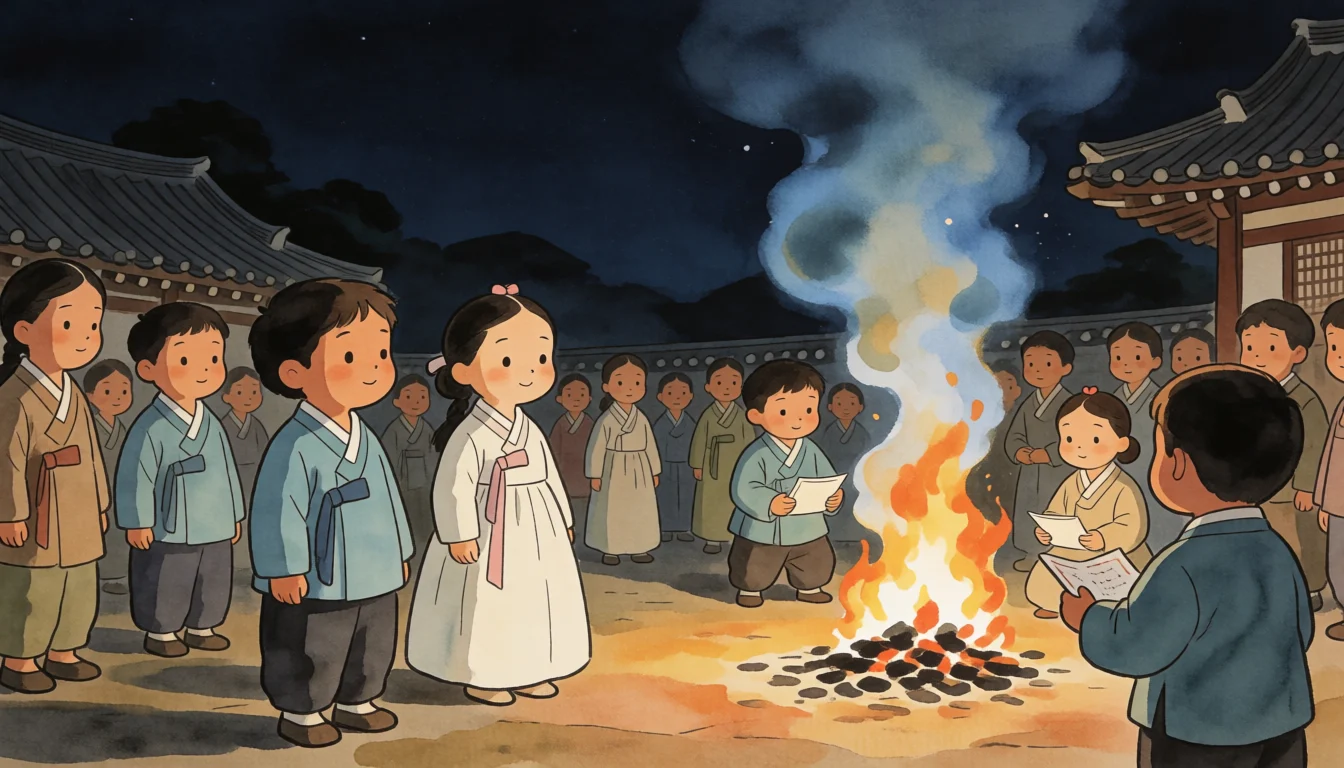
As twilight descended, the village ritual officially commenced. Villagers gathered one by one in the front courtyard of the ritual hall, gazing toward the altar with earnest expressions. Neatly placed there were the newly written hanji registers, carefully prepared by Deokbae and the elder.
After the elders leading the ritual recited the invocations and cleared away any impurities, the moment finally arrived for the soji burning. Elder Chunsam quietly motioned Deokbae forward.
"Deokbae, since these are papers infused with your devotion, you should support the flame close up."
With cautious hands, Deokbae touched a flame to the corner of a hanji sheet. A red flame embraced the white paper, beginning to burn. As the edges curled and the paper threatened to lift into the air, Chunsam gently nudged the rising ashes with the tip of a traditional fan. This was because people believed that soji had to burn completely without going out midway or leaving unburned scraps, ensuring that their wishes would reach the heavens without obstruction.
And what a wondrous sight it was. Amidst bluish smoke, the lightweight white ashes caught the wind and soared high into the night sky. Not a single speck of black soot remained; the paper vanished entirely into the void, dispersing in a clear, bright spark.
"Ah, it burns so well! This year, our households and livestock will be completely safe and peaceful!"
Bright laughter filled the courtyard. Alternating his gaze between his empty hands and the night sky, Deokbae let out a long breath of relief. Elder Chunsam tapped Deokbae on the shoulder and whispered in his ear:
"See that? When you put your heart into it, even the flames know the path to the sky. Next year’s paper cutting is your job again, you rascal."
Looking slightly embarrassed, Deokbae scratched his head and burst into bright laughter alongside the elder.
Definition and Function of Soji
Soji (燒紙) is a traditional religious and folk practice in which cut sheets of hanji are burned to transform ordinary time and space into sacred realms, communicating with deities to pray for the petitioner’s wishes. The paper used goes beyond a mere recording medium, acting as a sacred bridge connecting humans and the divine.
Historical Background and Types of Soji
The tradition of burning paper for purification took root as hanji became widespread; prior to this, burning incense or aromatic wood was more common. It is also likely influenced by the historical tradition of submitting petitions or memorials to government offices, adapting that framework for interacting with the spiritual realm. Additionally, historical examples of Donghak followers burning and ingesting pages from the text Gungeulga (궁을가) for ritualistic prayers have been documented.
Soji takes various forms depending on its purpose and target. These include daedong-soji (or dongmin-soji), performed during community-wide rituals to list individual residents’ names and pray for community well-being; gaksongbaji-soji, which encompasses diverse family names across the village; and uma-soji, which prays for the health and breeding of cattle and pigs, crucial assets in an agrarian society.
Regional and Ritual Transmission Patterns
Depending on the region and the nature of the ritual, soji is conducted through various procedures. In village shaman rituals (maul-gut) in Seoul, specific divine papers (singong) are used—such as sanji to summon mountain spirits, gamang-cheongbae for ancestral lineage spirits, and mulgoji for the Sangsan grandmother spirit—under the belief that the spirits use these papers as invitation cards to descend to the human world.
It is also performed in Confucian-style rituals or by pungmulpae (farmer’s percussion troupes) who read and burn invocations or ritual texts. In shamanic gut rituals, purification soji is performed during the bujeong-gut (impurity-cleansing rite) using items such as beans, lye water, red pepper powder water, and clean water. A folk custom called hwajeon-chigi involves waving soji around a person’s head to drive away evil spirits when someone falls ill or loses their senses due to malevolent forces. Notably, during the final stages of village rituals, blank soji is burned and lifted high, with its complete combustion—guided by a fan or another paper—regarded as the ultimate sign that wishes have been successfully granted.
Modern Cultural and Traditional Significance
Today, soji is recognized for its value as a unique religious and folk ritual through folklore, shamanic, and traditional ritual studies. Its historical and cultural significance as a medium that once prayed for community well-being and connected humans with the divine continues to be transmitted and studied through the documentation of intangible heritage and folk materials.
The Boundary Between Fiction and Actual History/Folklore in the Story
The specific dialogues between the young man Deokbae and Elder Chunsam in this fictional narrative, as well as everyday mishaps like papers scattering in the courtyard or the inkstone being knocked over, are literary fictions (fiction_only) designed to enhance reader understanding.
However, the underlying religious and folk functions of soji—using burned hanji to dispel impurity and pray to deities—alongside concepts like daedong-soji listing community names, gaksongbaji-soji for diverse family names, uma-soji for livestock, and the folk belief viewing complete combustion as an auspicious sign, are all firmly rooted in actual history and folk traditions.
🎨 Color This Story