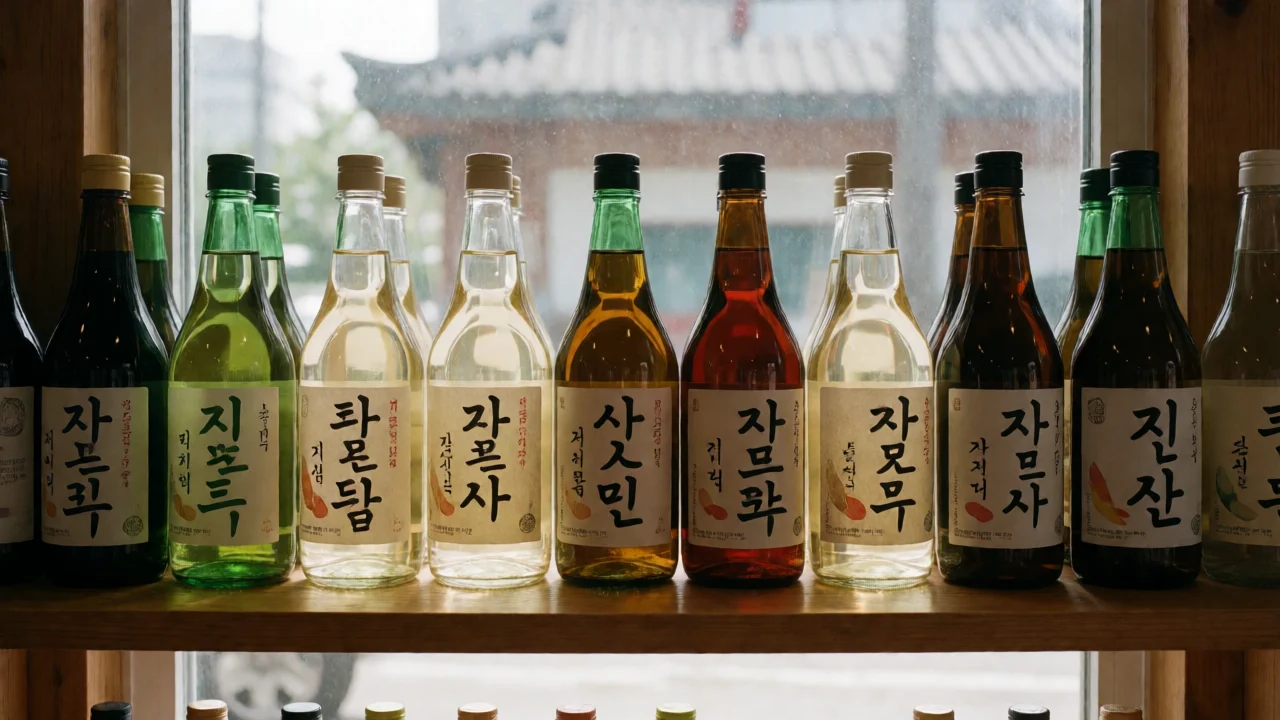
Born from a kitchen mishap where a mountain hearth’s fire ran too hot and reduced malt syrup into a rich, sticky brew, young Bonggu’s accidental yeot-takju captures the resilient spirit of folk brewing along the Baekdudaegan range.
Corn on the Mountain Slopes and the Stone Mill’s Hum
In the steep mountain valleys of Gangwon Province, where the rugged peaks of the Baekdudaegan tower like a natural fortress, wet-rice farming was a rare luxury. Instead, hearty crops like corn and potatoes became the lifelines of the local people. When late autumn winds began whistling down the gorges, mountain villagers would mix their hard-earned coarse grains with malted barley to brew a deeply nourishing folk liquor known as yeot-takju.
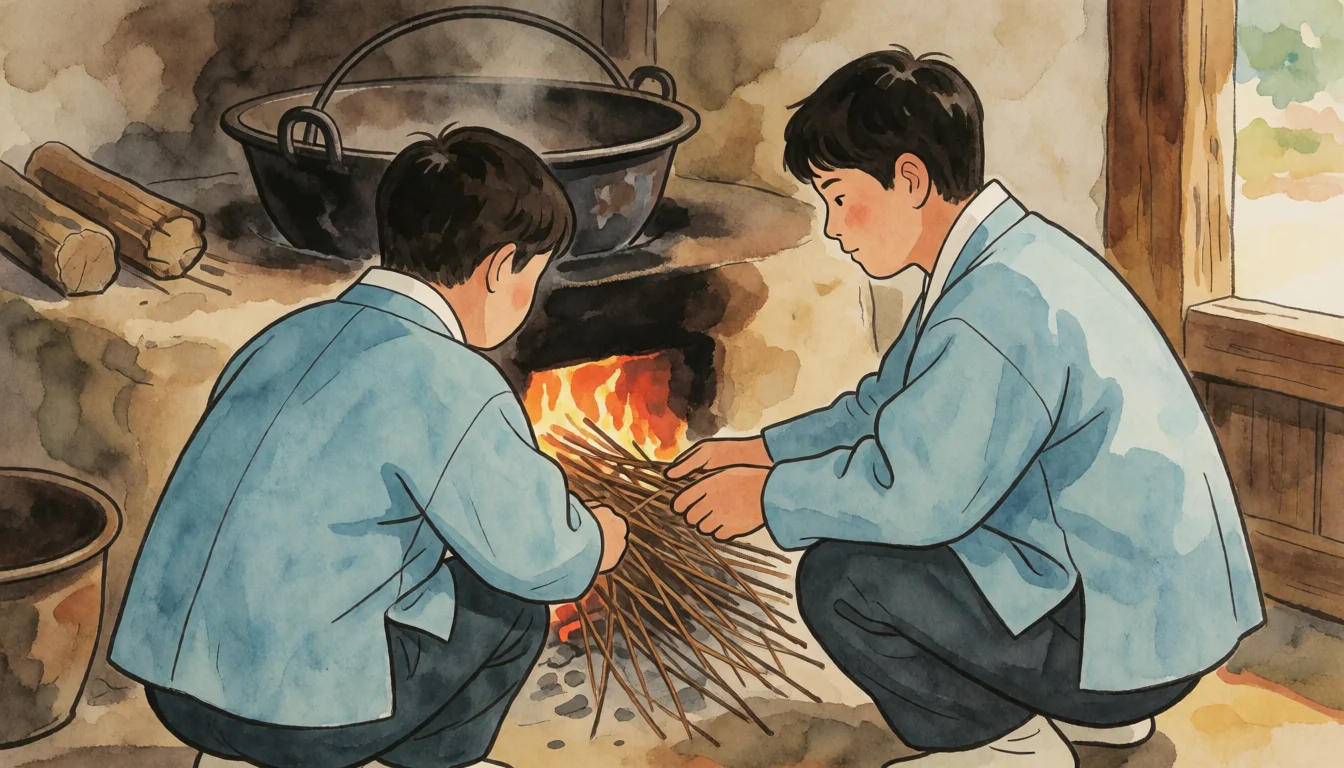
On one such crisp morning, a young village man named Bonggu set out to prepare a batch of takju to share with the village elders and neighbors who had helped with the harvest. Tossing yellow corn kernels into the rumbling stone mill alongside malt powder, he ground them down into a fine meal. The kitchen soon filled with the earthy, comforting scent of raw grain. Bonggu poured plenty of water into a large cast-iron cauldron, emptied the ground grain inside, squatted before the hearth, and slid dry pine twigs into the crackling fire.
“The grain needs to break down completely to draw out that rich, sweet nectar,” he murmured to himself. “That’s how we get a clear cheongju for ceremonies and a hearty takju to share in the fields. Even if my hands are a bit clumsy today, I’ll just have to pour extra care into it.”
Watching the sweet, steamy vapor drift through the lid’s cracks, Bonggu smiled with hopeful anticipation.
Syrup Overboiled in the Hearth
Fire, however, rarely listens to human patience. While Bonggu stepped outside for a moment to secure the straw mat spread across the courtyard, the hearth’s oak firewood flared up into a roaring, blazing inferno that aggressively heated the cauldron.
“Oh no, what is that burning smell!”
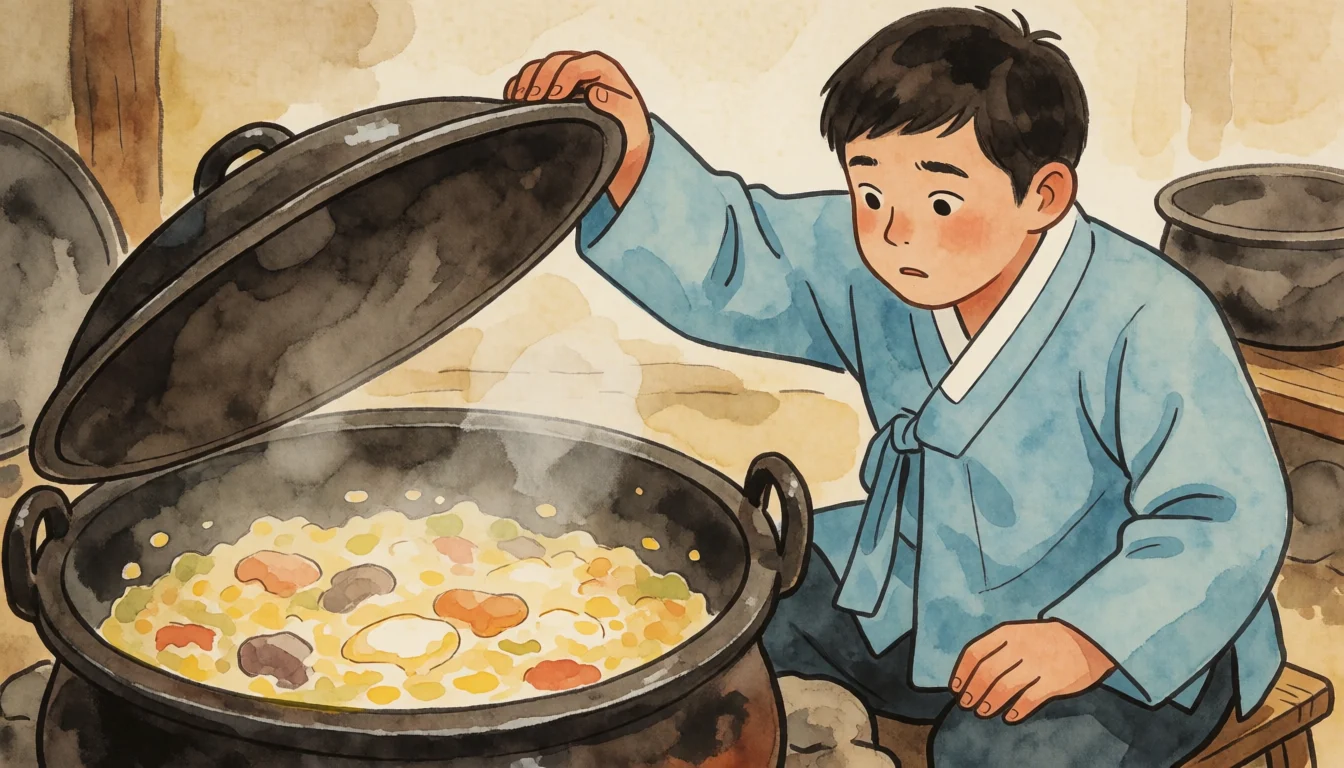
Panicking, Bonggu rushed back inside and yanked off the lid. A thick wave of dense malt syrup aroma rushed out in a scorching gust. Instead of gently fermenting into a smooth mash, the intense heat had reduced the sugary liquid into a thick, gooey paste that clung stubbornly to his wooden ladle.
“This is a disaster. To get clear rice wine, we need a fluid mash to strain through a bamboo strainer, and diluting this sticky mess into proper takju will be impossible…”
His hands trembled as he gripped the ladle. The corn was too precious to simply throw away, yet the syrup was far too heavy and dense to use as a normal brewing base.
Grandma Makrye’s Unexpected Hint
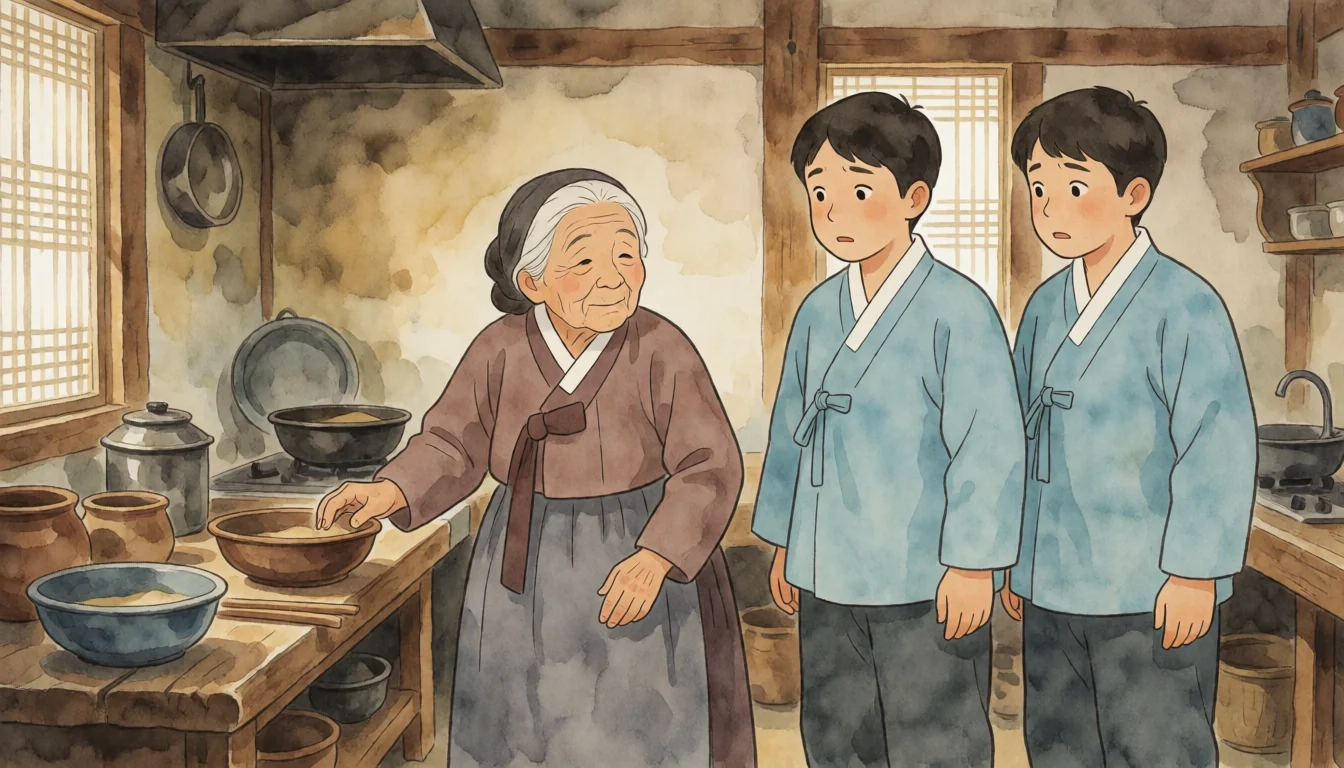
Just as he stood dejectedly in the courtyard, scraping the bottom of the cauldron in despair, the wicker gate creaked open and his neighbor, Grandma Makrye, walked in. Peering straight into the pot, her eyebrows twitched with amusement.
“Well now, Bonggu, are you boiling down syrup to sell pumpkin taffy at the market, or are you trying to brew alcohol?”
“Grandma, the fire got way too out of hand, and all the liquid boiled away. There’s no way a strainer will yield clear wine, and even adding water won’t fix this sticky tangle. I think I have to throw the whole thing out.”
As Bonggu made a miserable face, the elderly woman dipped her fingertip into the sticky sweet glaze left inside the pot and tasted it. Instead of scolding him, she burst out laughing.
“Why on earth would you throw away such precious corn? Out here in the mountains, not a single grain of food goes to waste. Once it cools down to a lukewarm temperature, just mix in a generous amount of crushed nuruk (fermentation starter) and set it in a brewing jar. If you ferment this thick, concentrated syrup with an extra round of starter, you might just end up with a flavor you’ve never tasted anywhere else.”
Half-doubting yet desperate, Bonggu followed her advice, mixing the cooled, gooey syrup with nuruk before carefully sealing it inside a traditional earthenware jar.
Secret Transformations Within the Brewing Jar
He tucked the jar away into the warmest corner of the floor and wrapped it snugly in thick layers of straw. For days, Bonggu haunted the space beside the jar, his heart pounding with anxiety over whether it would turn sour or solidify into unyielding paste.
Finally, on the morning he had marked on his calendar, Bonggu cautiously removed the traditional Korean paper seal from the jar. The moment he did, an aroma rushed out that made his eyes snap wide open.
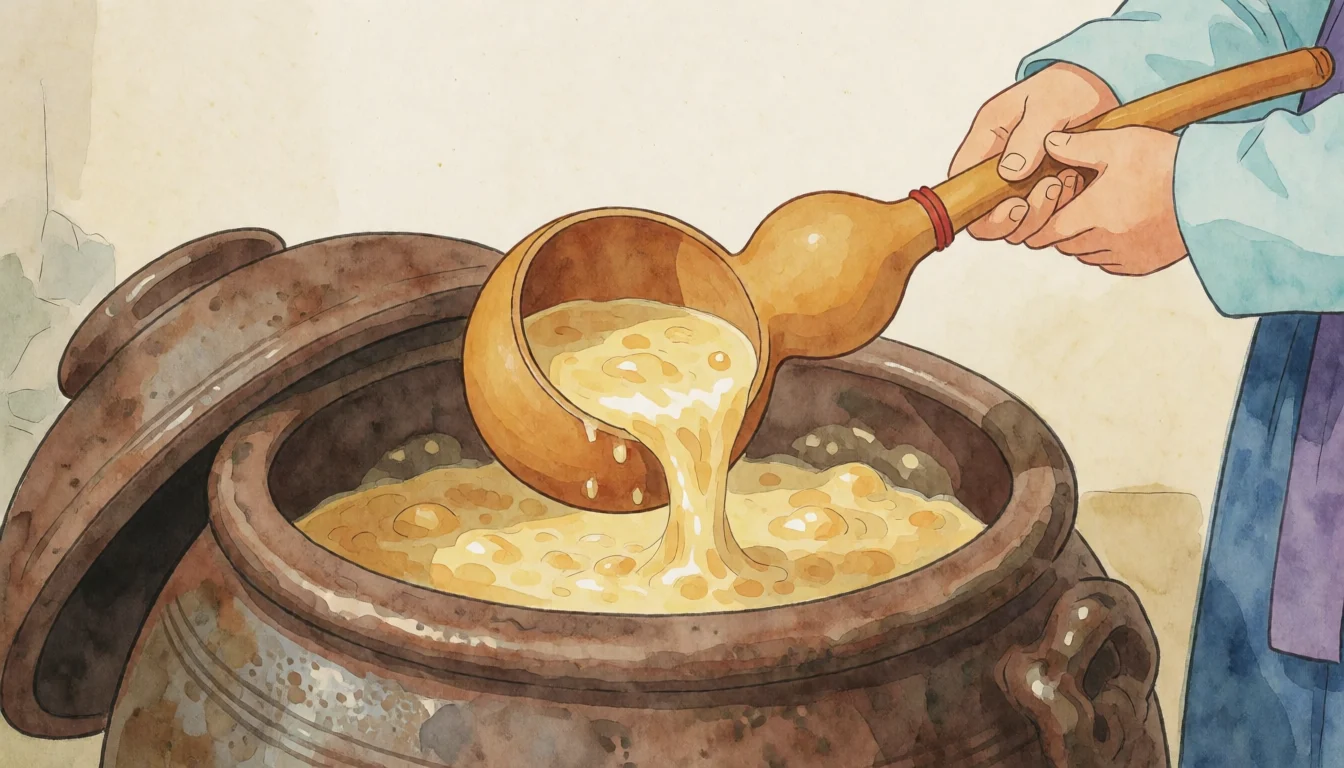
It wasn’t a dull, sour funk, but a sharp, spirited kick followed by the deep, comforting sweetness of concentrated malt syrup. Scooping up some of the liquid with a gourd dipper, a heavy, corn-colored takju poured out smoothly. When Bonggu touched it to his lips for a cautious taste, his eyes widened even further. Even though it carried a heavier alcoholic punch down the throat than standard makgeolli, the finish left a lingering, candy-like sweetness that clung delightfully to the tongue.
“Ah… I thought it was a total failure, but who knew that syrup boiled down to the brink could hold such a deep, concentrated flavor?”
Though he failed to harvest the clear, pristine cheongju meant for ancestral rituals, this intensely rich, second-fermented takju possessed a startling character all its own.
The Sweet Lingering Resonance on the Porch Edge
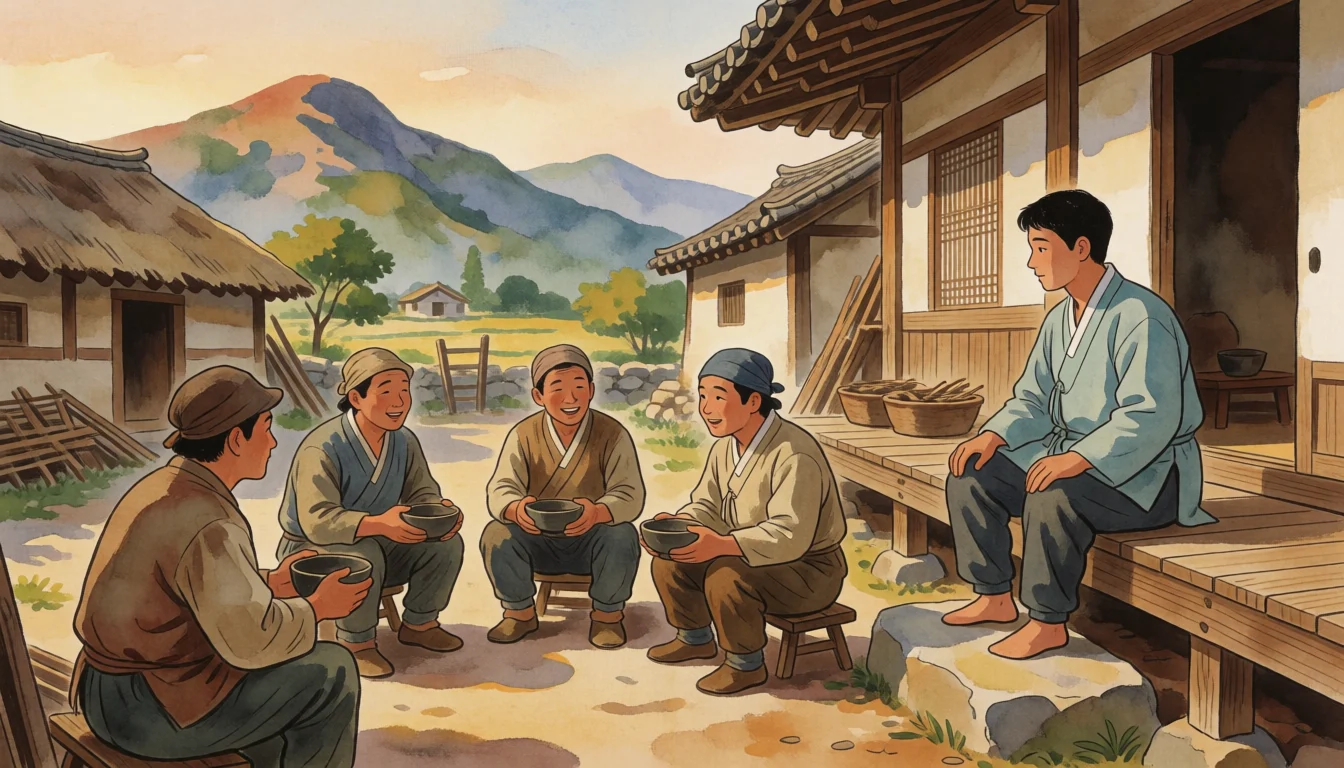
That afternoon, the village laborers, completely exhausted from clearing stones and felling timber on the sloped fields, gathered in Bonggu’s courtyard. Their shoulders seemed weighted down by a thousand pounds of dust and fatigue. Bonggu fetched a large bronze bowl, mixed the thick, strained takju with the right amount of crisp spring water, and carried it out to the wooden porch in a brimming gourd dipper.
“Bonggu, this looks awfully dark! Let’s see how it tastes.”
One of the workers grabbed a rustic ceramic bowl and gulped it down. The moment he lowered the bowl, a sharp cough of surprise erupted through his rough beard, instantly followed by a burst of admiration.
“Well, look at this! The first sip hits with a sharp kick, but the aftertaste is sweet as market-day taffy! It feels like strength is shooting straight back into my legs!”
The laborers sitting around the yard burst into laughter, clinking their bowls together. Bonggu glanced over at Grandma Makrye, who was smiling softly from the corner of the porch, and quietly raised a cup in her honor. For mountain folk carving out a living from harsh, steep slopes, a single bowl of this rich, sweet yeot-takju—born even from a hearth fire’s mistake—offered the warmest possible comfort for a hard day’s work.
Yeot-takju is a traditional folk liquor characterized by its high alcohol content and distinct sweetness. It is brewed in high-altitude inland regions centered around the Baekdudaegan range—such as Jeongseon and Taebaek in Gangwon Province, and Bonghwa in North Gyeongsang Province—using coarse grains like corn, potatoes, sorghum, and millet alongside malted barley. Valued as one of the most indigenous alcoholic beverages born from the lives of mountain settlers whose agriculture relied on highland crops rather than rice paddies, it also serves as an important resource for studying traditional Korean brewing techniques that incorporated malt-based saccharification methods.
While yeot-takju does not appear explicitly in ancient historical texts, it is documented in modern-era compilations such as The General Survey of Korean Folklore, Traditional Folk Liquors of Korea, and Master Liquors and Famous Brews. Depending on the main ingredient, it is often referred to as corn liquor, potato liquor, or sorghum liquor. Traditional consumption customs dictated that clear cheongju obtained via a bamboo filtering basket from a second-fermented batch of yeot-takju was reserved for ancestral rites and welcoming guests, while the cloudy takju diluted with water was shared among laborers during farmwork.
Various regional recipes and names have been passed down: Hongcheon’s Okseonju is a corn-based distilled liquor; Chuncheon’s Hanokroju mixes a glutinous rice and nuruk starter with corn saccharification liquid for aging; Wonju’s Yeotsul combines roasted nuruk and cooked rice during the production of Hwanggol malt syrup; Ulleungdo’s Yeot-takju adds a second-fermented mash of corn and malt powder to a base of non-glutinous rice and raw potato; and Gangneung’s Cheongju involves steeping a mesh bag of cooked rice blended with fresh pine needles into malt syrup.
Today, various brewing styles and traditional lineages continue to thrive across Gangwon Province, preserving unique highland fermentation customs through regional specialties like Hongcheon’s Okseonju, Samcheok’s corn dongdongju, Chuncheon’s Hanokroju, Wonju’s Yeotsul, and Gangneung’s Cheongju.
Specific anecdotes in the narrative—such as young Bonggu’s hearth-fire miscalculation and Grandma Makrye’s advice—are creative fictions crafted to shape the story. However, it remains a historical and folkloric fact that yeot-takju is a sweet, high-proof folk liquor brewed using coarse grains and malt in the high-altitude regions of the Baekdudaegan, that clear cheongju and cloudy takju were consumed separately based on purpose, and that various distinct regional brewing traditions have been handed down across Gangwon Province.
🎨 Color It Yourself