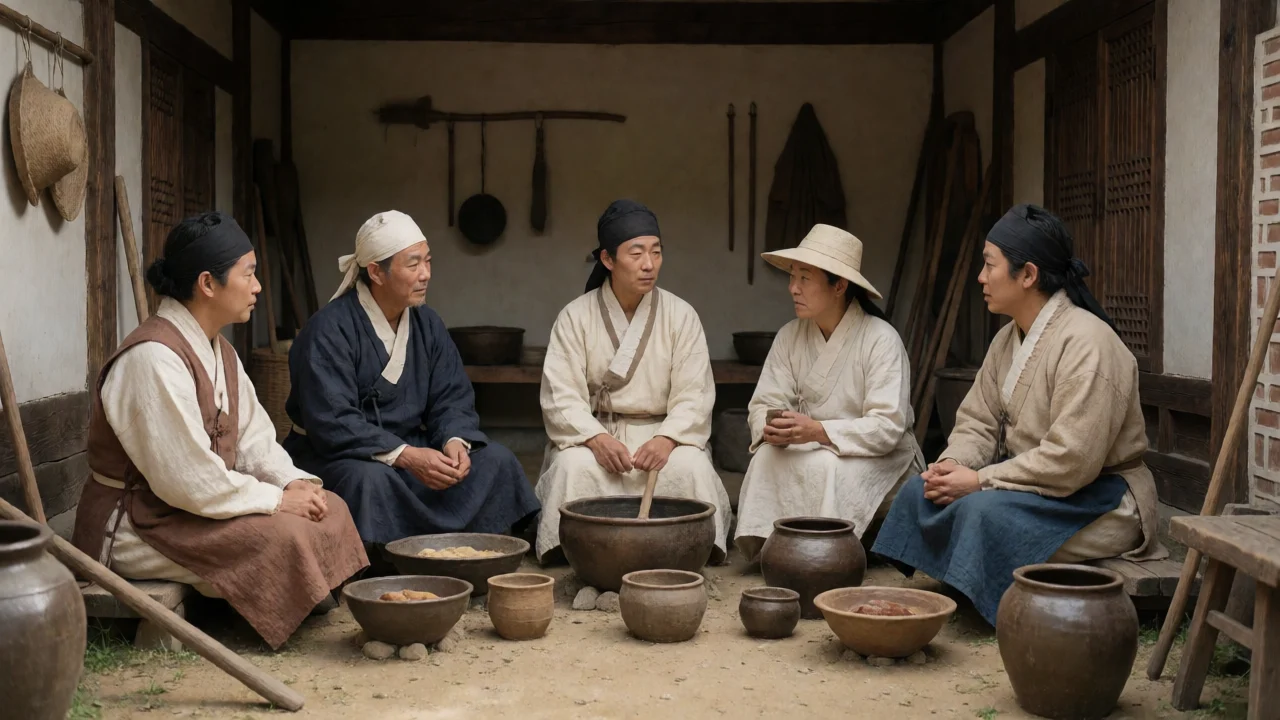
For ages, a wooden spinning wheel has stood quietly at the edge of the wooden porch. Discover the history and mechanics of this traditional tool that effortlessly draws endless strands of white cotton yarn from a fluffy mass.
Settle in and listen to the story at a gentle pace before you begin reading.
An Ancient Wooden Wheel That Spins White Cotton into Thread
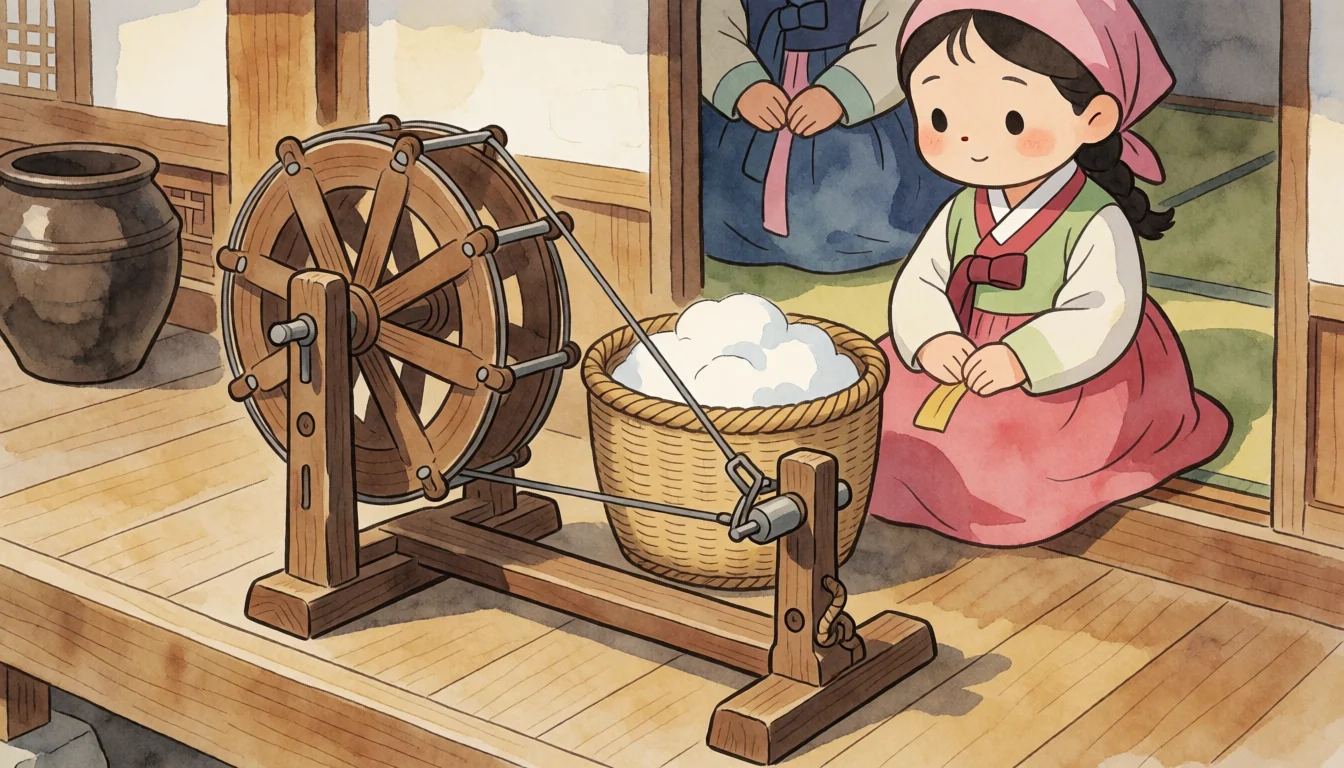
The spinning wheel—known by cozy regional names like bangcha, swaechacha, wigeo, munlae, or mulli—is our traditional implement for refining soft cotton or wool and twisting them into fine, durable yarn. Legend has it that the name is tied to the story of Mun Ik-jeom, who brought cotton seeds back from the Yuan Dynasty during the Goryeo period.
Long before that, since prehistoric times, our ancestors used clay or stone spindle whorls, a practice that gradually evolved into this spinning wheel. When you gently turn the large wooden wheel by hand, the iron spindle spins rapidly, weaving the cotton into a smooth, single strand of thread. Even today, in the realm of traditional craft preservation, it remains a precious tool used for spinning cotton yarn or adding twists to fine silk thread.
Two People Seated Together at the Porch Edge
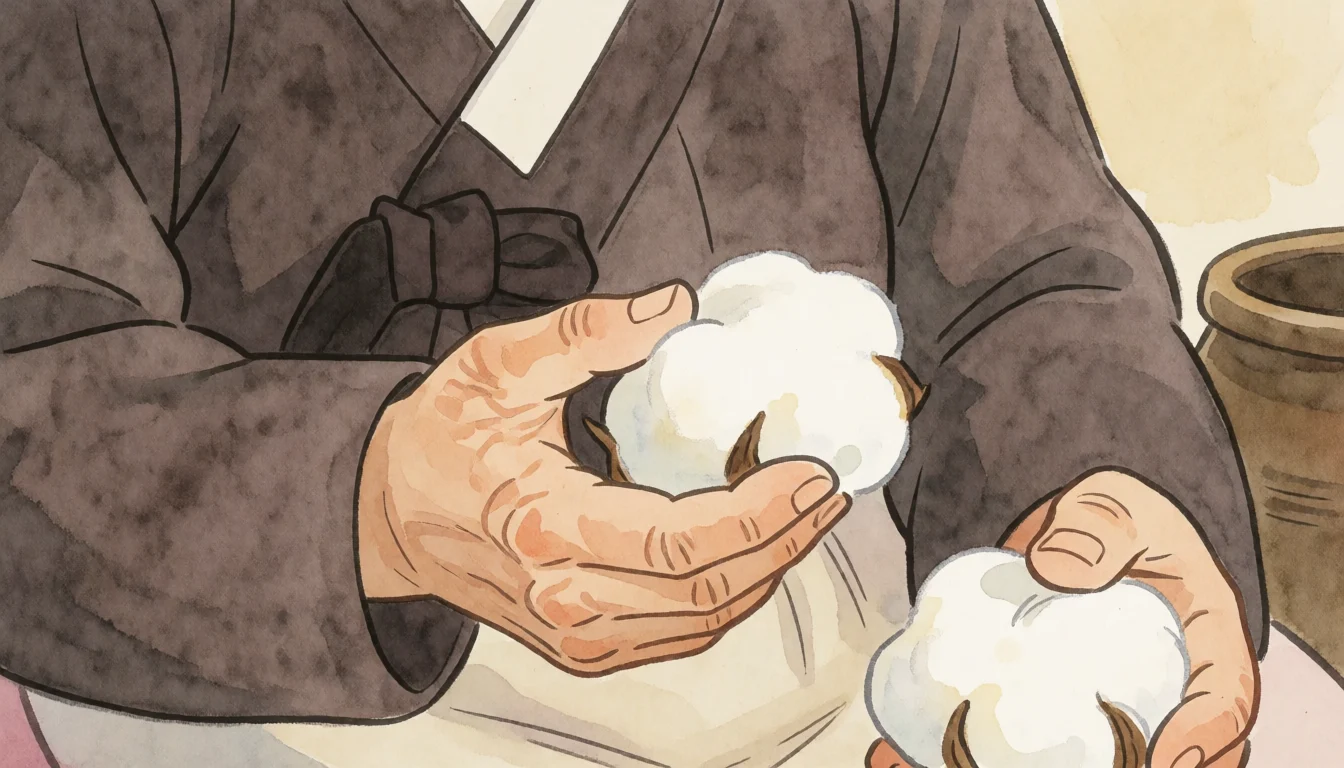
It was a day when the late autumn sunlight slanted deep into the corner of the wooden porch. Right beside a basket piled high with soft, white cotton was a well-worn, glossy oak spinning wheel. Damin sat on the floor, resting his chin in his hands, watching with bright eyes as his grandmother handled the cotton.
“Grandma, can’t I try turning the spinning wheel handle today? It looked so easy just watching you.”
Grandmother narrowed her eyes behind her reading glasses and smiled softly.
“Well, spinning thread is something you can’t truly know just by watching—you have to feel it in your fingertips. But Damin, if you approach the spinning wheel with an impatient heart, it will act up and rebel. Go ahead, take a light grip on the handle.”
Thrilled, Damin crawled forward on his knees and carefully grasped the polished wooden knob.
A Backward-Turning Wheel and Tangled Thread
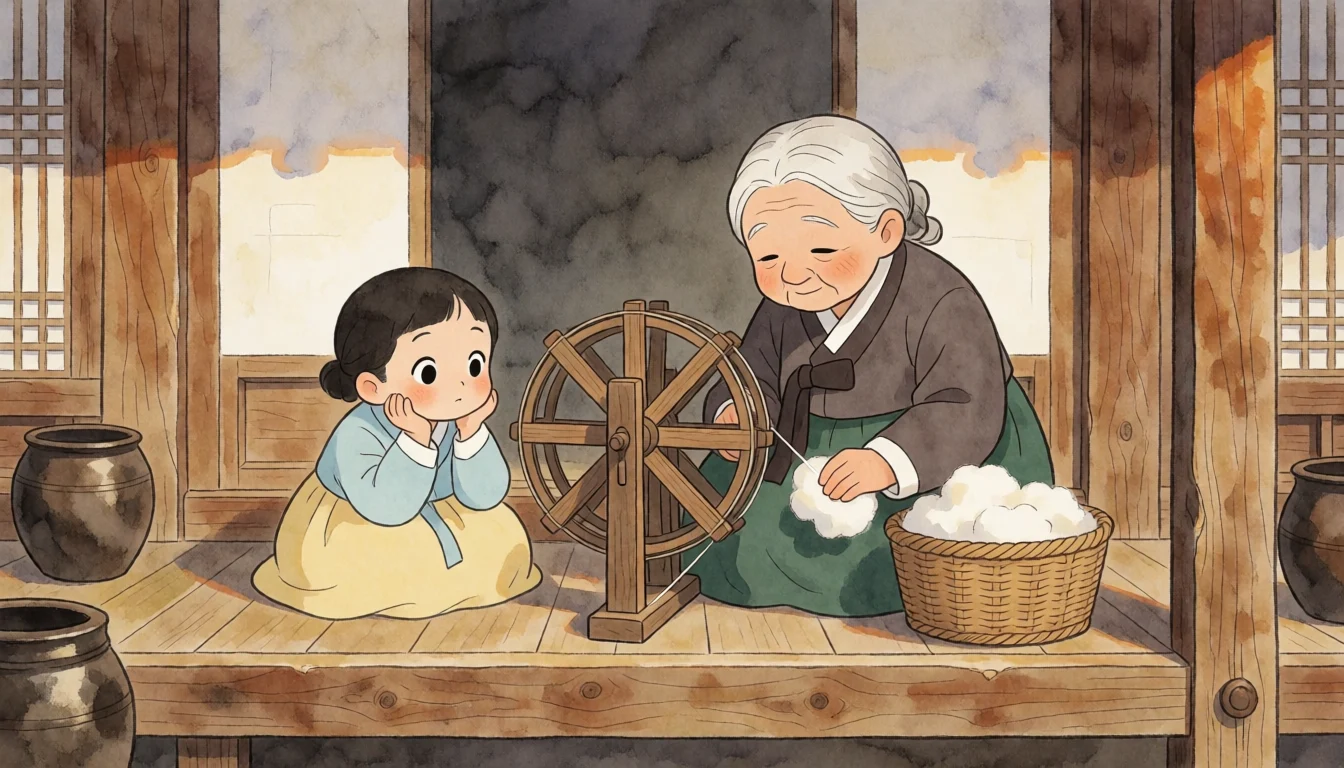
Without realizing it, Damin gripped the handle too tightly. As the wheel spoke made a smooth rotation and the iron spindle gave a clear ring, Damin grew even more impatient. Thinking, ‘I need to draw out the thread just like Grandma does!’, he abruptly jerked his hand in reverse, spinning the wheel counterclockwise.
“Oh, no!”
With Grandmother’s sharp cry, the tightly stretched thread jerked to a sudden halt. Instead of turning clockwise and twisting neatly to the right, a harsh reverse twist forced its way into the thread, causing fuzz to bristle at the tip of the spindle. In an instant, the thread wrapped haphazardly around the spindle rod, clumping into a thick, tangled knot.
Cold Silence and a Careful Touch
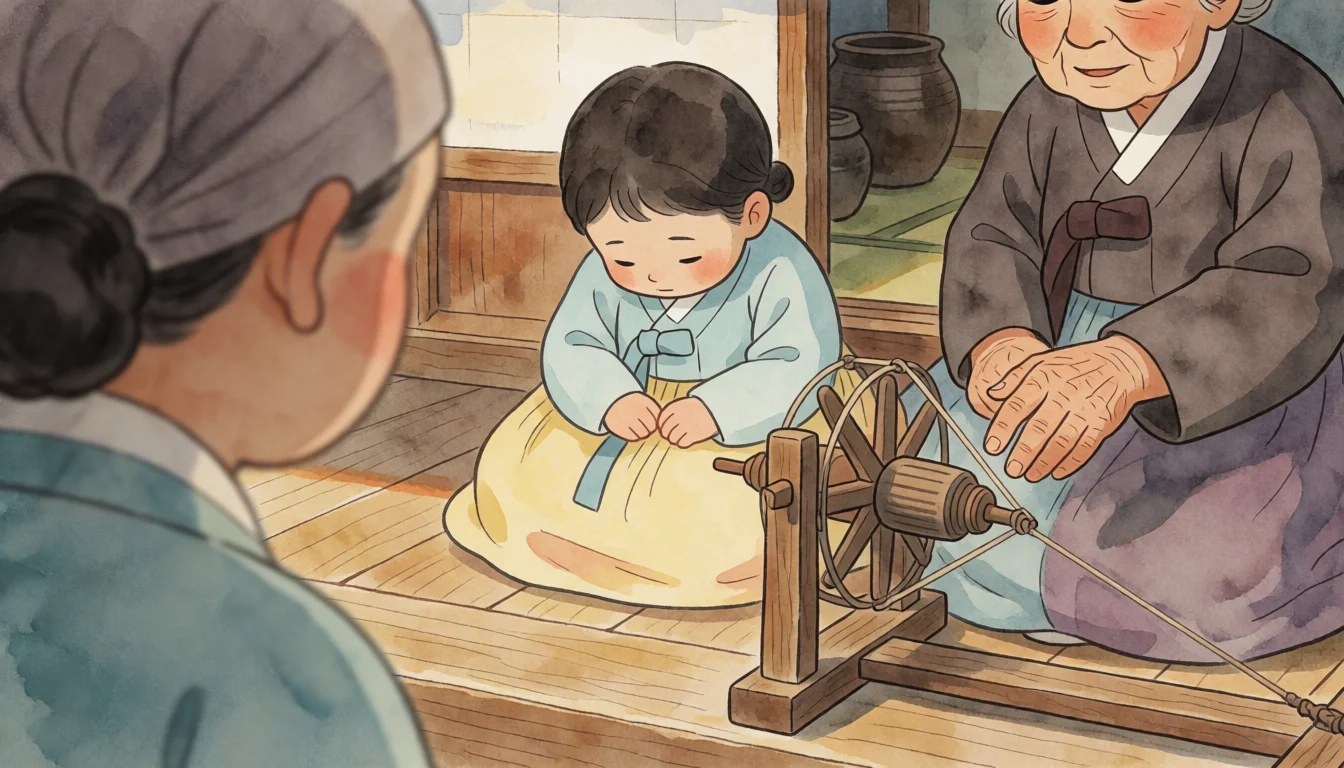
Damin immediately let go of the handle, his heart sinking as his lips trembled. He figured he was in for a fierce scolding because a whole skein of painstakingly spun cotton thread had turned into a total mess. Sitting with his head bowed and his knees tightly clutched, he heard footsteps echo across the porch followed by Grandmother’s weathered hands reaching toward the spindle.
“Grandma… I’m sorry. I must have turned it too hard, and the wrong way.”
Grandmother didn’t scold him. She simply slid her reading glasses down to the tip of her nose and gazed quietly at the tangled knot. After a brief silence, a small sigh escaped her lips, but it wasn’t a sigh of blame toward Damin.
The Logic of Rotation Remembered by Fingertips
With fingernails as delicate as tweezers, Grandmother carefully coaxed and unraveled the tangled strands of thread. Then, she took Damin’s trembling hand and gently placed it back onto the spinning wheel knob.
“The spinning wheel never lies. When you turn the wheel clockwise, the thread twists firmly to the right; when you turn it the other way, it loosens or tangles to the left. Depending on which way you apply force, the grain of the thread changes entirely.”
Grandmother’s wrinkled hand warmly enveloped the back of Damin’s hand, slowly guiding the wheel around. As they did, a smooth tension came alive once again at the tip of the spindle, and the tangled knot smoothly unraveled.
The Warmth Hidden Behind a Scolding
Damin suddenly looked up at Grandmother’s face. Whenever she sat in front of a loom or a spinning wheel, she usually looked so strict that not even a needle could pass. There had been plenty of times when he felt hurt, thinking she did nothing but nag whether she was fluffing cotton or winding thread.
Yet, looking closer, he noticed white calluses and faint scars etched across the palms of her hands. It wasn’t because she was afraid her clumsy grandson would break the thread that she had rushed him; rather, she had always raised her voice out of worry that he might cut his fingers on the needle-sharp thread or hurt them on the spinning spindle. Damin’s nose suddenly stung as he finally realized the anxious care hidden beneath her blunt teachings.
Spokes Matching Their Breath Once More
“Grandma, I’ll do it slowly this time. Clockwise, and nice and gentle.”
Damin rolled up his sleeves and straightened his posture. As Grandmother lightly pinched and drew upward a mass of cotton with her left hand, Damin smoothly pushed the spinning wheel handle upward with his right hand. Accompanied by a low, rhythmic creak and whir, the wheel traced a smooth circle.
Letting go of his greed and trusting his hands to the flow of the wheel, the fine strands emerging from the edge of the cotton magically twisted together, becoming a white, even thread that steadily wound onto the iron spindle. The sound of their breathing blended with the hum of the wheel, flowing together in a steady rhythm.
A Sunset-Lit Porch and a Single Skein of Leftover Thread
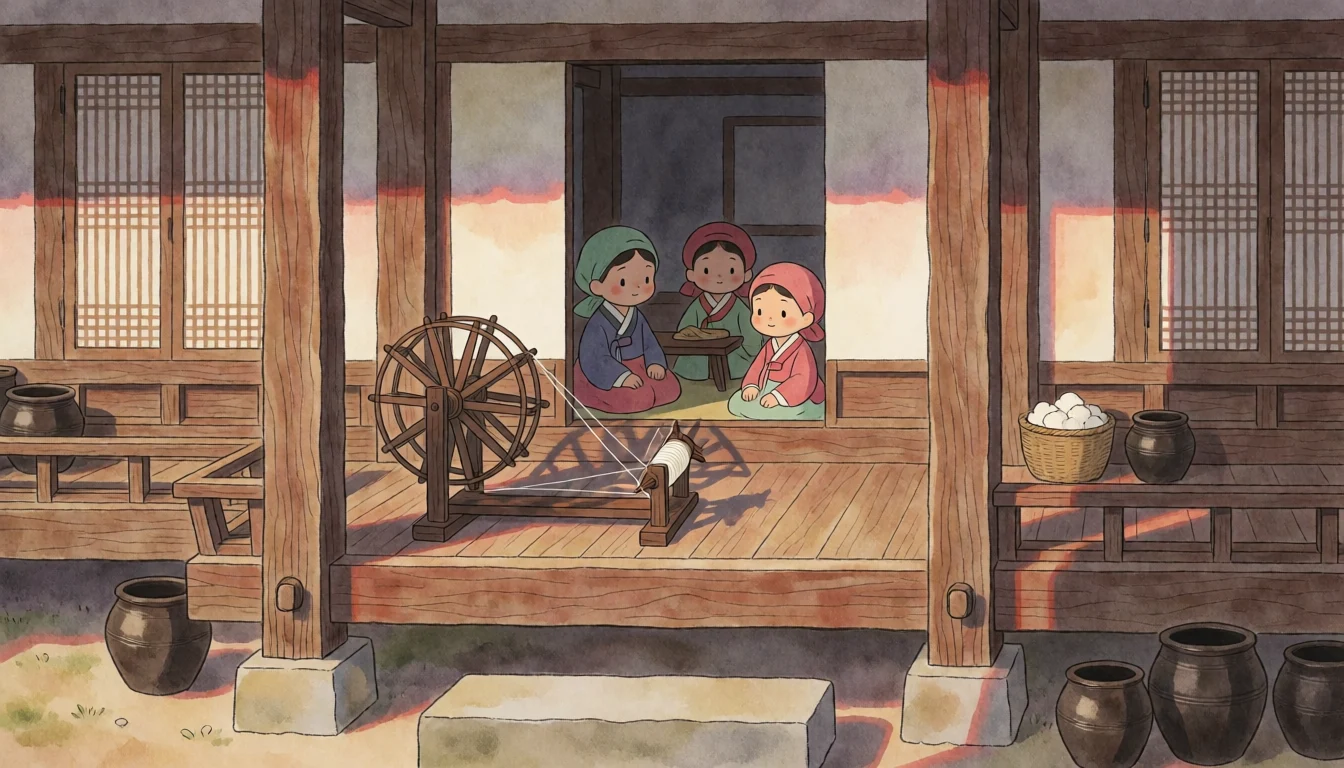
Before long, a reddish sunset glow poured deep across the porch, casting long shadows across each spoke of the wheel. Having weathered the midday commotion, a neatly finished skein of cotton thread rested cozily atop the spindle. Though the spot where it had tangled and unraveled in the middle was slightly uneven, even that flaw felt like a warm part of the story.
Damin let go of the wheel and looked down at his aching palm. All he had to show for a whole day’s effort was a skein of thread no bigger than his hand. Looking at the immense time spent by ancient people who turned that wheel tens of thousands of times just to make a single set of clothes, and looking at his grandmother’s bent back—she who could no longer sit long before the wheel due to fading strength—a tender lingering warmth quietly filled Damin’s heart.
At the edge of the porch, a clear late autumn breeze still drifted by, and a gentle fondness mingled with lingering bittersweet warmth settled softly over the spot where the two had sat side by side.
Definition and Names of the Spinning Wheel
The spinning wheel is a traditional device used to spin fibers like cotton or wool into yarn, or to add twists to thread. Historical records confirm names for the spinning wheel such as bangcha, swaechacha, wigeo, munlae, mulle, mulne, and mulli.
Origin Period and Etymological Legends
Scholars infer that the spinning wheel gradually replaced the spindle whorls used since prehistoric times. Additionally, etymological theories regarding its name are widely linked to Mun Ik-jeom (1329–1398) of the Goryeo Dynasty.
Operating Principles
The twist of the yarn produced by a spinning wheel varies depending on the direction of rotation. Turning the wheel clockwise produces a right-twisted thread, while turning it counterclockwise produces a left-twisted thread.
Regional Structural Variations
The structure of spinning wheels varies by region. In areas like Namhae, Geochang, and Samcheok, wheels featuring two to three linked spindles were used to twist hemp yarn. Meanwhile, in the weaving traditions of ethnic Koreans who migrated to China, spinning wheels with six spindles have been documented.
The Spinning Wheel in Modern Traditional Crafts
Today, the spinning wheel is primarily utilized in the field of traditional crafts. It remains useful for creating cotton yarn in traditional weaving processes, adding twists to silk and hemp yarns, and drawing down thread, thus keeping traditional techniques alive.
Boundary Between Fact and Fiction
The daily porch life of the grandson and grandmother in the story, the commotions and conversations experienced while learning how to use the spinning wheel, and the grandmother’s internal emotions are fiction created to aid reader comprehension. The definition and names of the spinning wheel, the etymological legends associated with Mun Ik-jeom, the twisting principles based on rotation direction, regional differences in the number of spindles, and its modern use in traditional crafts are all grounded in historical facts.
🎨 Color It Yourself