In March, when peach blossoms bloom in delicate splendor, young Dori sets out to make *hadonggaeng*—a savory pufferfish soup—using prized pufferfish fresh from the Hangang River. But a momentary distraction leads to a tense, kitchen-shaking misstep in this seasonal folk tale.
Hangang Pufferfish Arriving with the Peach Blossoms
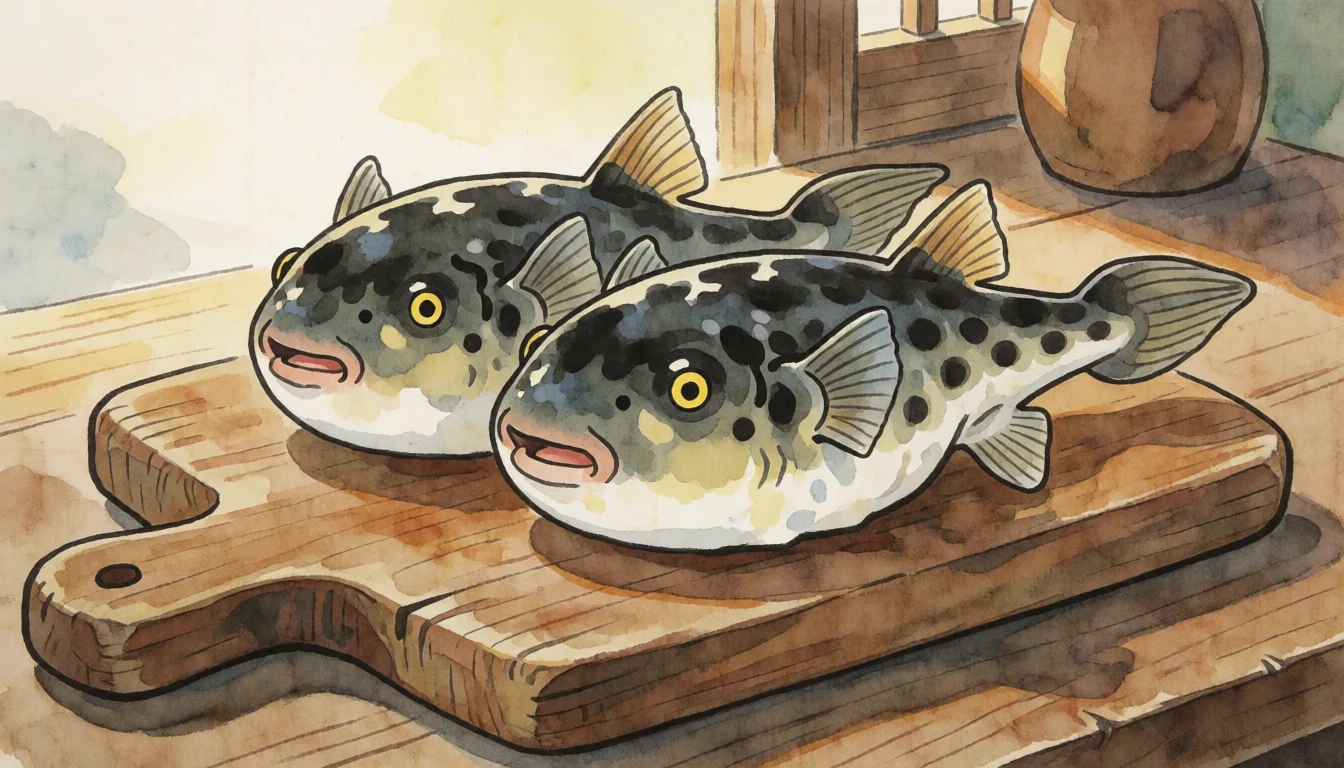
By March, when peach blossoms still clung stubbornly to their branches, villagers made hurried trips to the Hangang River ferry. This was when the pufferfish, affectionately called *hadong* (literally “river pig”) for their plump, round bodies resembling piglets, reached their absolute peak of fatness and flavor. The historic seasonal text *Dongguk Sesigi* (“Record of Korean Seasons”) specifically lists *hadonggaeng*, or pufferfish soup, as an essential delicacy of the third lunar month.
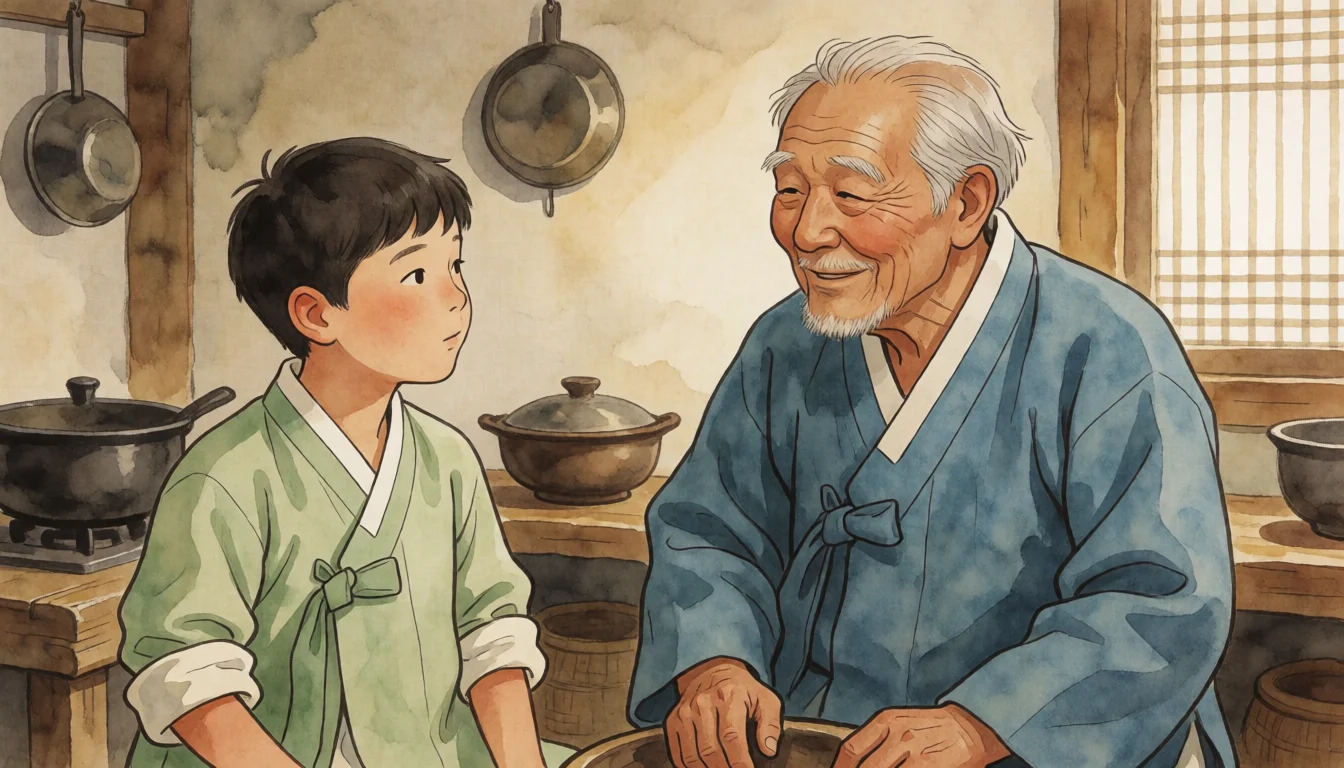
On a mild spring day when the river breeze felt especially soft, Dori’s kitchen was bustling from early morning. Dry firewood crackled cheerfully beneath the large cauldron, and two sleek, slippery pufferfish fresh from the Hangang lay belly-up on the cutting board. Ten-year-old Dori, his sleeves rolled up, stood glued to his grandfather’s side.
“Grandfather, is what we’re making today really that famous *hadonggaeng*?”
Grandfather turned to Dori with crinkling eyes and a warm, good-natured smile.
“It is indeed. Centuries ago, the scholar Heo Gyun noted in his *Domundaejak* that the pufferfish of the Hangang River are second to none. But because their exquisite flavor comes hand in hand with a deadly poison, even the slightest slip in preparation can lead to disaster. You must keep a sharp eye on the detoxifying ingredients beside the cutting board, Dori.”
A Crossed Wire in the Kitchen Corner
“Leave it to me, Grandfather! Fresh green water celery, alum, and sesame oil, right?”
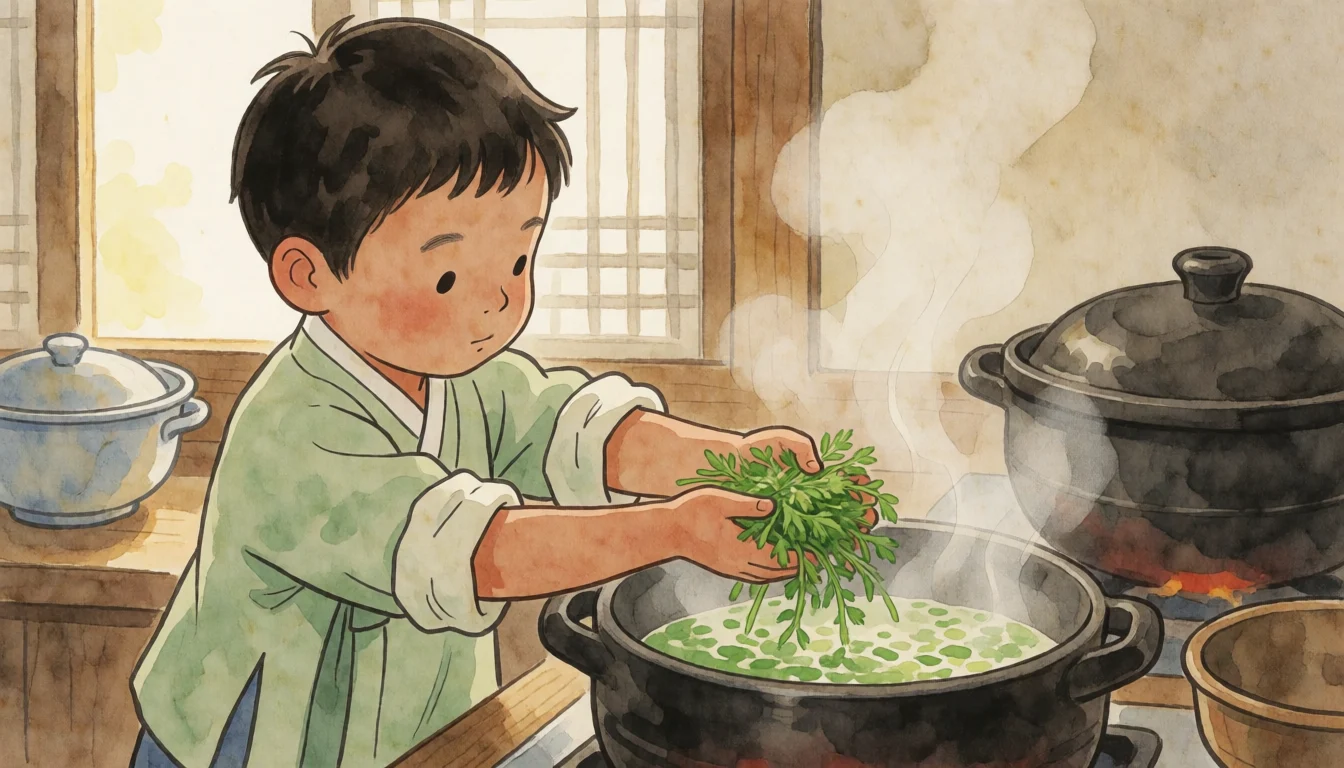
Dori puffed out his chest and proudly washed a full basket of vibrant green water celery (*cheongminari*). Just then, his mother’s voice called out from the veranda where she was scrubbing the wooden floorboards. Flustered and eager to rush back to the cauldron, Dori hurried over—and accidentally bumped into the small ceramic bowls lined up next to the cutting board.
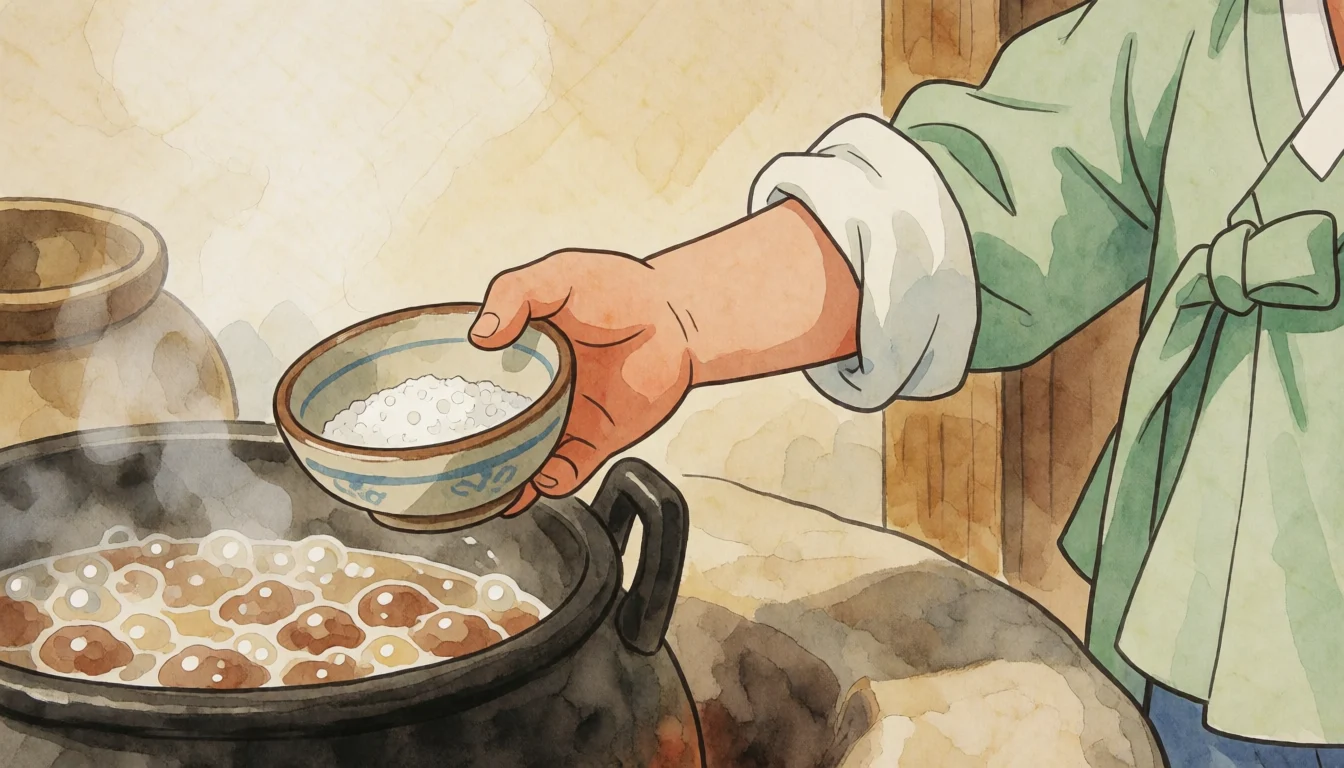
According to the proper sequence, the pufferfish flesh should have been sliced and gently seared in sesame oil first. Instead, in his rush, Dori nearly dumped the unseasoned raw cuts straight into a pot of boiling water. Worse yet, where he should have reached for the alum powder designed to neutralize the fish’s bitterness and toxins, his hand grabbed the salt jar instead.
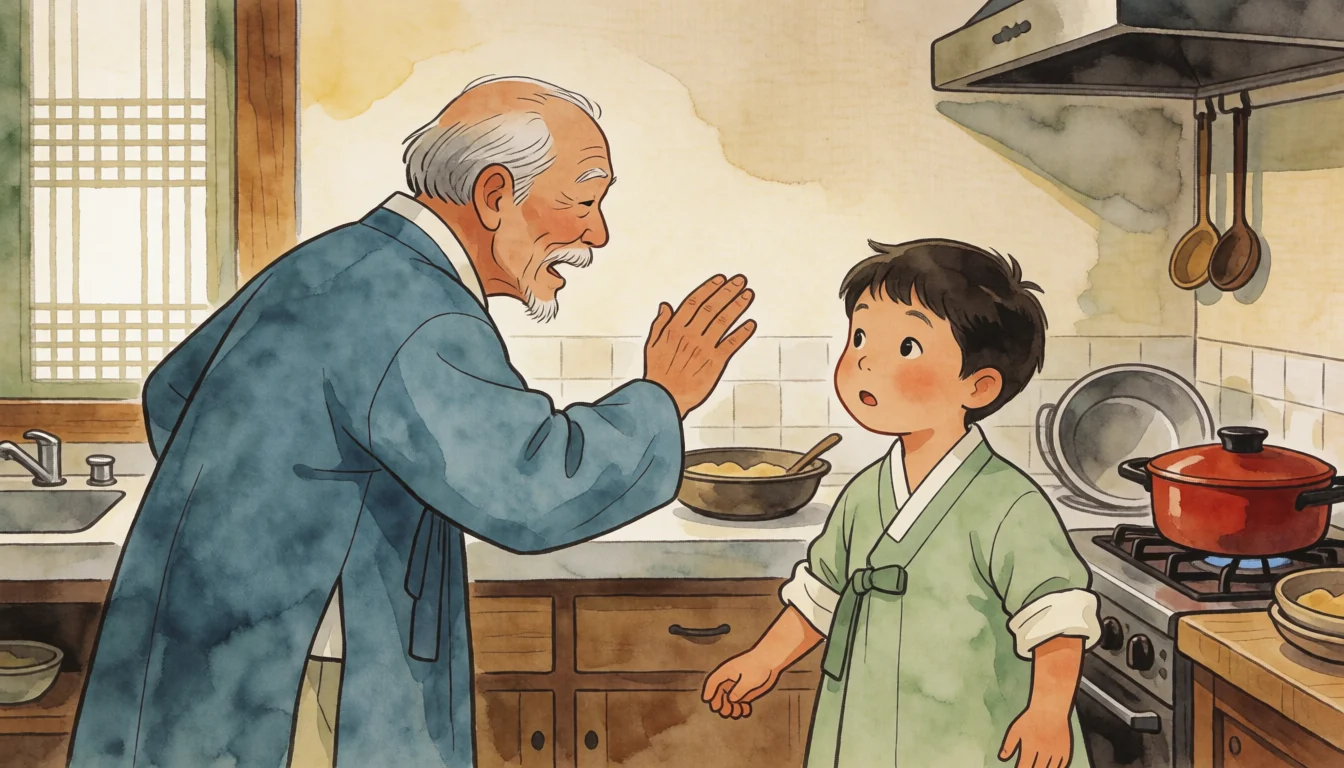
“Whoa there, Dori! Stop right where you are!”
Grandfather’s thunderous voice rang out just as he stepped into the kitchen to check the fire, freezing Dori in his tracks. The small porcelain dish in his hand rattled with a sharp *clack*.
“Grand-Grandfather! Wasn’t this supposed to be… salt?”
“You’ve turned the entire procedure upside down! Hangang pufferfish flesh may be sweet, but it carries a fierce poison. You cannot simply toss it into water however you please. Without the wisdom of proper detoxification, this cherished spring dish won’t be a treat—it will bring catastrophe upon our household.”
The Wisdom of the Oil Pan and Green Water Celery
Dori’s face flushed bright red. His heart hammered in his chest at the thought of how close he had come to ruining the family’s spring meal.
“Grandfather, what should I do with these pieces now? Do I have to throw them all out?”
Grandfather gave Dori’s trembling shoulder a reassuring, heavy pat.
“Throw them out? Why on earth would we do that? We simply need to set things right. When cooking *hadonggaeng*, you must carefully slice the flesh and sear it golden in sesame oil first. Sesame oil, fresh water celery, alum, and salted tiny shrimp aren’t listed in the recipe by mere coincidence. They are the remedies our ancestors discovered to tame the poison and nourish the body.”
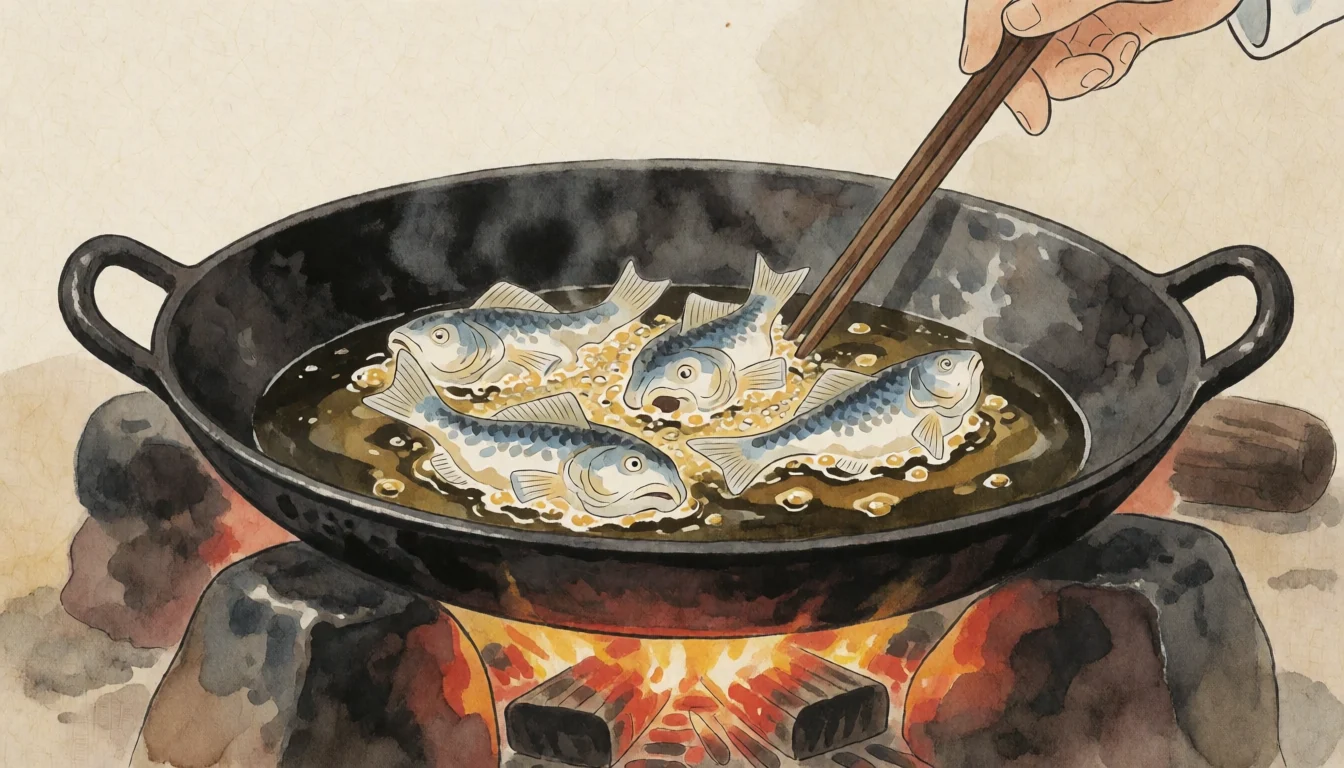
Dori let out a long breath and firmly closed the cauldron lid. He poured a generous amount of savory sesame oil into the iron skillet. With a lively sizzle, the pale pufferfish chunks began to dance and brown in the oil. Following his grandfather’s exact instructions, Dori carefully applied the alum, piled on crisp, fresh water celery, and set it all back into the pot with a clear broth seasoning.
Before long, the kitchen was filled not with fishy odors, but with a clean, deeply savory aroma.
A March Delicacy and a Sudden Warning
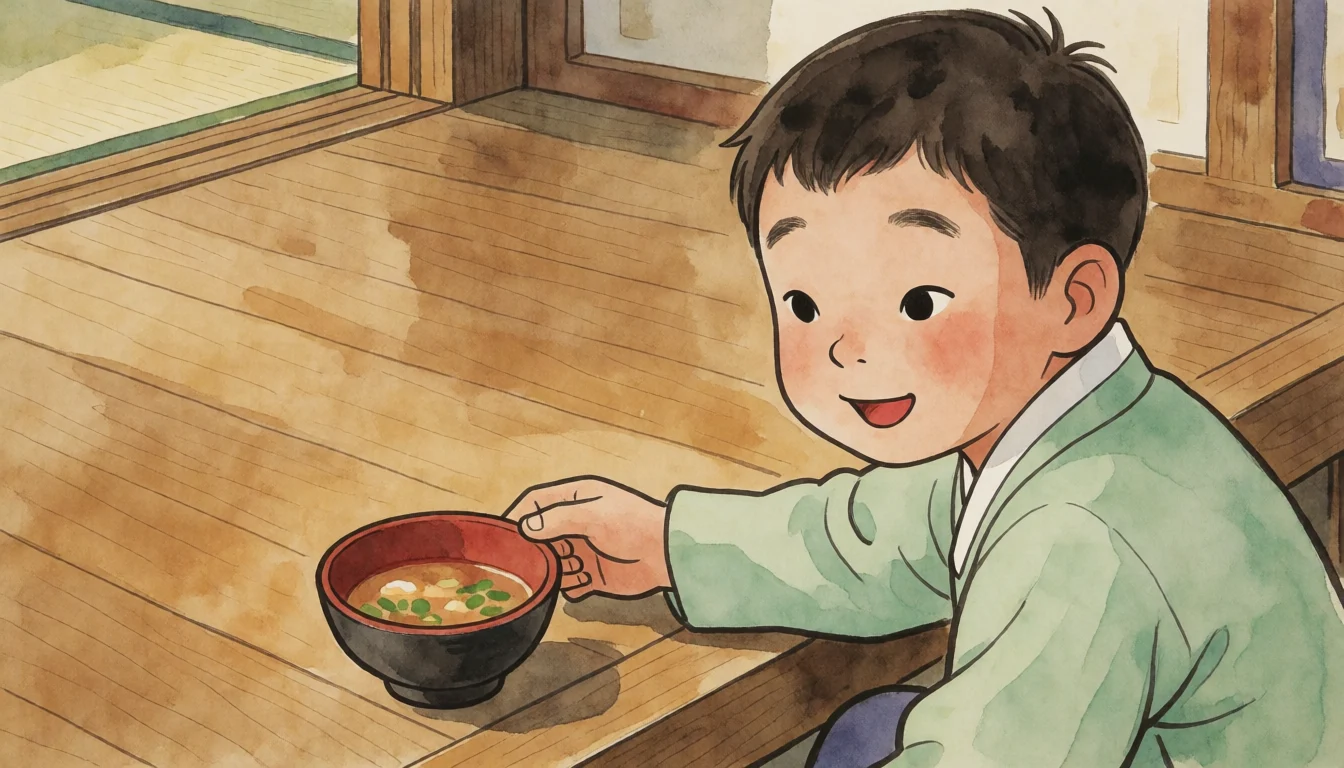
When the *hadonggaeng* was finally brought to the table, vibrant green water celery floated like a painting atop the clear broth, instantly whetting everyone’s appetite. The tender, milky-white pufferfish meat grew sweeter with every chew. After polishing off an entire bowl while wiping away his sweat, Dori gave his belly a satisfied pat.
“Grandfather, that is so remarkably refreshing! I can feel the energy of spring surging through my whole body.”
Looking to finish up with a refreshing sip, Dori naturally reached for the gourd of scorched-rice water (*sungnyung*) resting in the corner of the veranda.
“I had such a hearty, bracing bowl of soup—now I just need a cup of warm *sungnyung* to finish it off.”
At that exact moment, Grandfather—who was clearing away the dining table—darted forward like lightning, caught Dori by the wrist, and waved his hands frantically.
“No, Dori, you mustn’t!”
Dori blinked in surprise, freezing mid-motion.
“What? Even *sungnyung*? Can’t I even have a single sip of water after finishing the soup?”
“Certainly not! The ancient rules for preparing and eating pufferfish strictly forbid drinking *sungnyung* afterward. We went to great lengths to suppress the poison and nourish your body with sesame oil and water celery—do you intend to wash all those beneficial effects away by drinking scorched-rice water?”
Holding the empty gourd with a bewildered look and scratching his head, Dori caused the rest of the family gathered in the room to burst into laughter. Beneath the shade of peach blossoms swaying in the spring breeze, the kitchen mishap that morning transformed into a warm, joyful memory over a delightful bowl of March *hadonggaeng*.
Pufferfish soup (*Hadonggaeng*) is a traditional seasonal dish enjoyed during the third lunar month, made primarily with pufferfish. The term *hadong* (河豚) combines the characters for river (*ha*) and pig (*don*), originating from the creature’s plump appearance and behavior, resembling a “piglet of the river.”
Records of pufferfish soup appear in various medical texts and literary works. The earliest direct record of the soup itself is found in Yu Deuk-gong’s 《Gyeongdo Japji》 (Record of the Capital). Additionally, 《Dongguk Sesigi》 documents *hadonggaeng* as a seasonal delicacy of the third lunar month, before peach blossoms fall. Other classic texts—such as 《Bencao Gangmu》 (Compendium of Materia Medica), 《Dongui Bogam》 (Mirror of Eastern Medicine), 《Domundaejak》, 《Sanrim Gyeongje》 (Farm Management), 《Jeungbo Sanrim Gyeongje》, 《Gyuhap Chongseo》 (Women’s Encyclopedia), and 《Buin Pilji》 (Essential Knowledge for Women)—also feature accounts of *hadong* and *hadonggaeng*.
Traditional cooking and detoxification methods involved boiling or searing sliced pufferfish in sesame oil, paired with ingredients like fresh water celery, seasoned oil (*yujang*), alum, sesame oil, and clear sauce. Water celery, sesame oil, salted tiny shrimp (*gonjaengijeot*), and alum were specifically used to neutralize toxins, and drinking *sungnyung* afterward was strictly avoided.
Regional variations in pufferfish characteristics were also noted. According to Heo Gyun’s 《Domundaejak》, pufferfish caught in the Hangang River area offered the best flavor but carried high toxicity leading to frequent fatalities, whereas pufferfish from the Yeongdong region lacked the rich flavor of the Hangang variety but were safely non-toxic.
Detailed culinary customs and seasonal dining cultures associated with pufferfish soup have been passed down through historical literature. However, because specific modern transmission patterns or regional changes lack extensive documentation, the primary significance lies in understanding the historical value and culinary wisdom of this traditional food culture as recorded in past texts.
The dialogue between Dori and his grandfather in the story, the kitchen mishap involving a confusion between salt and alum, and the episode where Dori instinctively reaches for the *sungnyung* gourd only to be stopped are fictional elements created to help readers better engage with the narrative.
On the other hand, the etymology of *hadong*, its status as a third lunar month seasonal dish recorded in 《Dongguk Sesigi》 and 《Gyeongdo Japji》, the culinary and detoxifying uses of fresh water celery, sesame oil, alum, and salted tiny shrimp, the post-meal taboo against *sungnyung*, and the regional characteristics of Hangang versus Yeongdong pufferfish described in 《Domundaejak》 are all firmly grounded in rigorous historical literature.
🎨 Color This Story