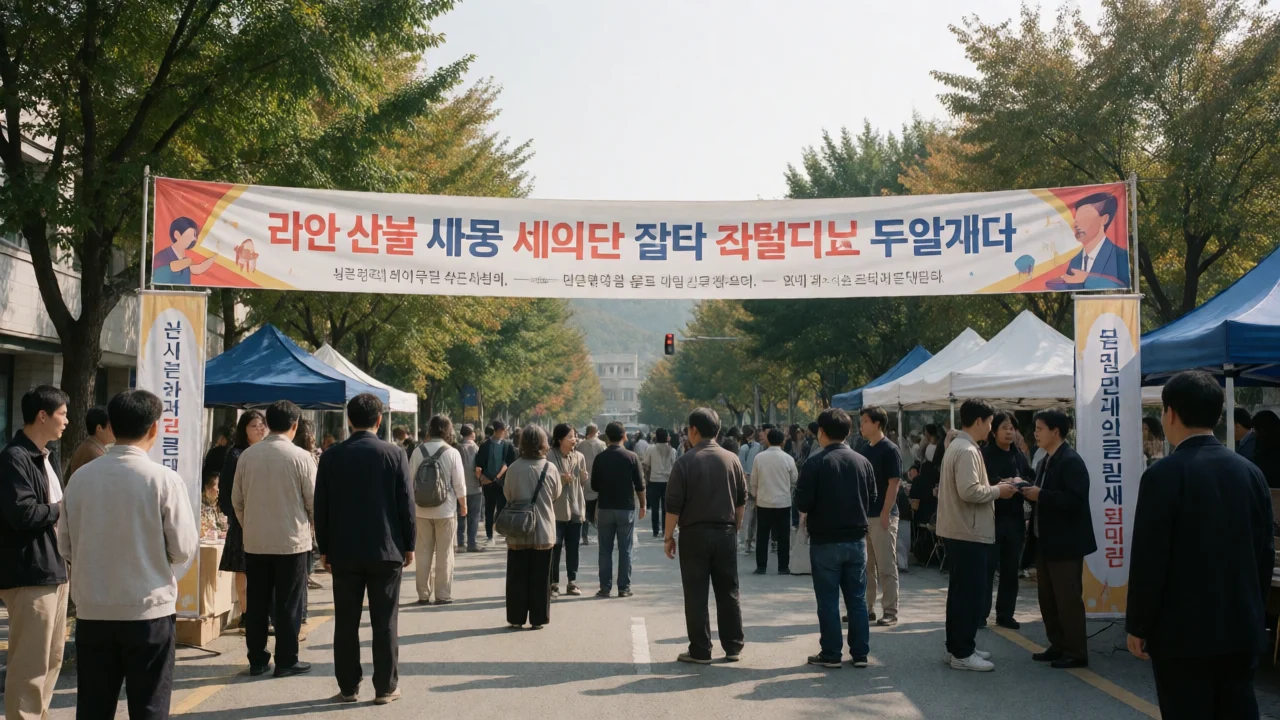
Discover the story of Gangwon Province’s Taebaek Festival, held since 1982, the ancient Taebaeksan Cheonje ritual dating back to the Silla dynasty, and the traditional toe-u custom of leaving an ox unattended before the mountaintop shrine without looking back.
Settle in and listen to the story at a gentle pace before you begin reading.
The Blue Ox and Travelers on the Autumn Taebaek Trail
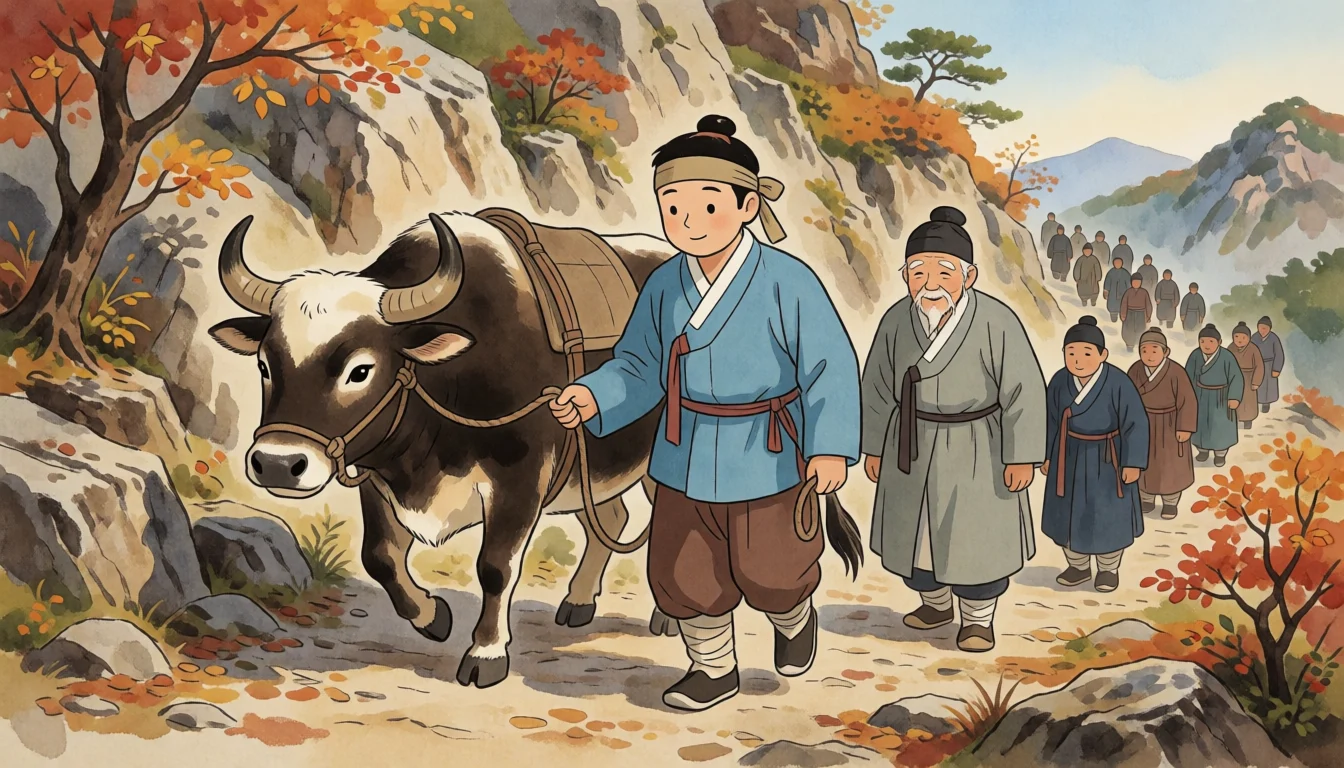
It was a day when the crisp October wind swept through the valleys of Mount Taebaek. A long procession of people gathered to prepare for the autumn ancestral rites on this sacred mountain—where grand national rituals have been held since the Silla dynasty and local residents have offered their devotions each spring and autumn. At the very front of the procession strode a sturdy ox with sleek, glossy fur: the legendary cheongu, or blue ox, mentioned in ancient records.
Sandol, a young villager, gripped the reins tightly and caught his breath. He wiped away his sweat, keeping pace to ensure the ox didn’t stumble on the steep mountain path.
"Elder, do we still have two more ridges to cross before we reach the shrine?"
Elder Kim, following closely behind, chuckled, the sound of his straw shoes rustling against the earth.
"My boy, your breathing is louder than the ox’s! That fellow is a precious offering destined for the heavens, which is why its gait is so dignified. There’s no need to rush; let’s take our time."
At these words, Sandol gave the ox’s sturdy back a light tap and smiled. Much like the mythical blue ox offered as tribute to the state during the reign of King Pasa, the animal marched resolutely up the sacred mountain path without a shred of fear.
The Reins Before the Shrine and the Taboo of Toe-u
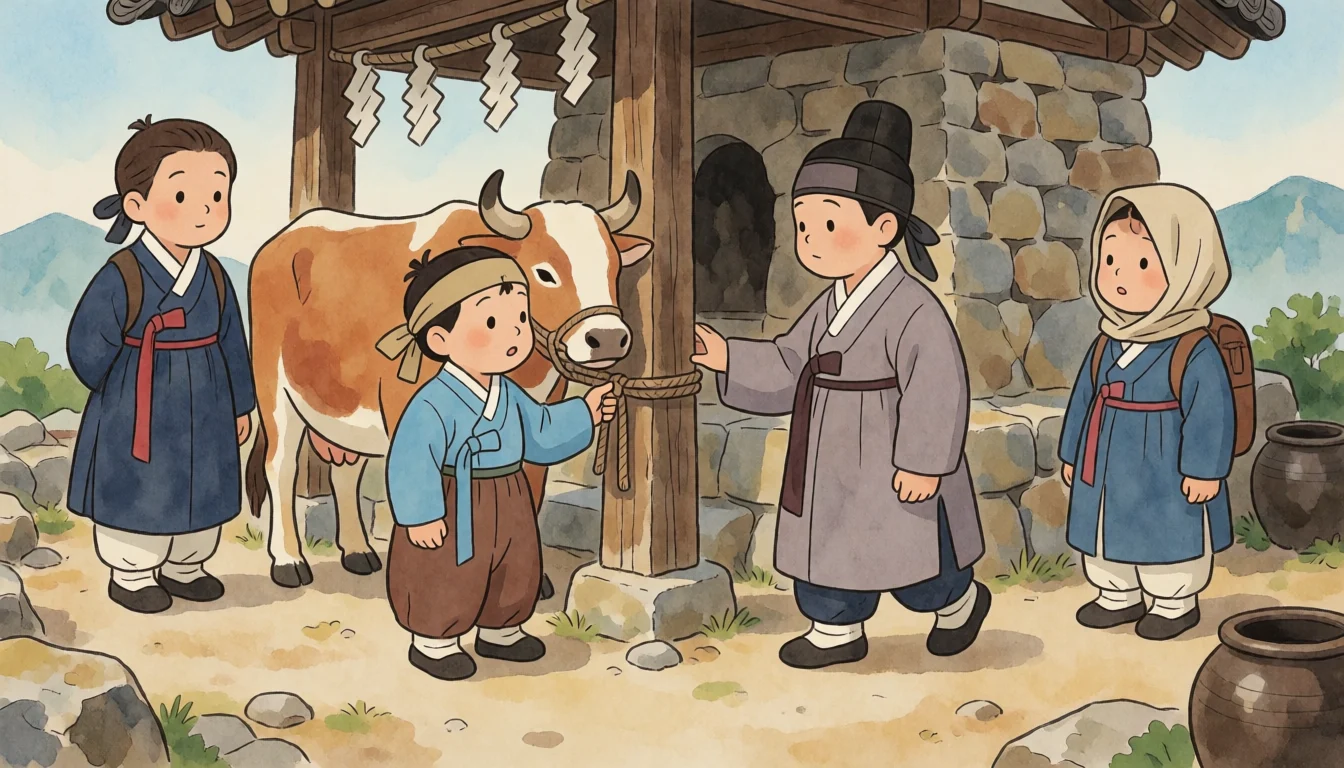
At last, they reached the shrine at the summit. A chilling mountain wind whistled across the rough stone altar. After tidying the altar and offering a quiet prayer, Elder Kim called Sandol over.
"Sandol, now we must perform toe-u, following the ancient customs recorded in the Heobaekdangjip. We must tie the ox securely to the post in front of the shrine and head back down immediately."
Sandol blinked his round eyes in surprise.
"Pardon? You mean we’re leaving the ox here all by itself?"
"Indeed. Once the ox is tethered, you must never look back. We are to walk straight down to the village, observe a period of mourning and restraint for three days, and on the third day, return to lead the ox back down. That is the ancient law."
Swallowing hard, Sandol tied the reins securely to a wooden pillar in front of the shrine. The ox blinked its large, gentle eyes and stared intently at Sandol. Elder Kim patted Sandol’s back and turned away first.
"Come now, walk forward and do not look back."
Rolling Mountain Fog and Heavy Footsteps
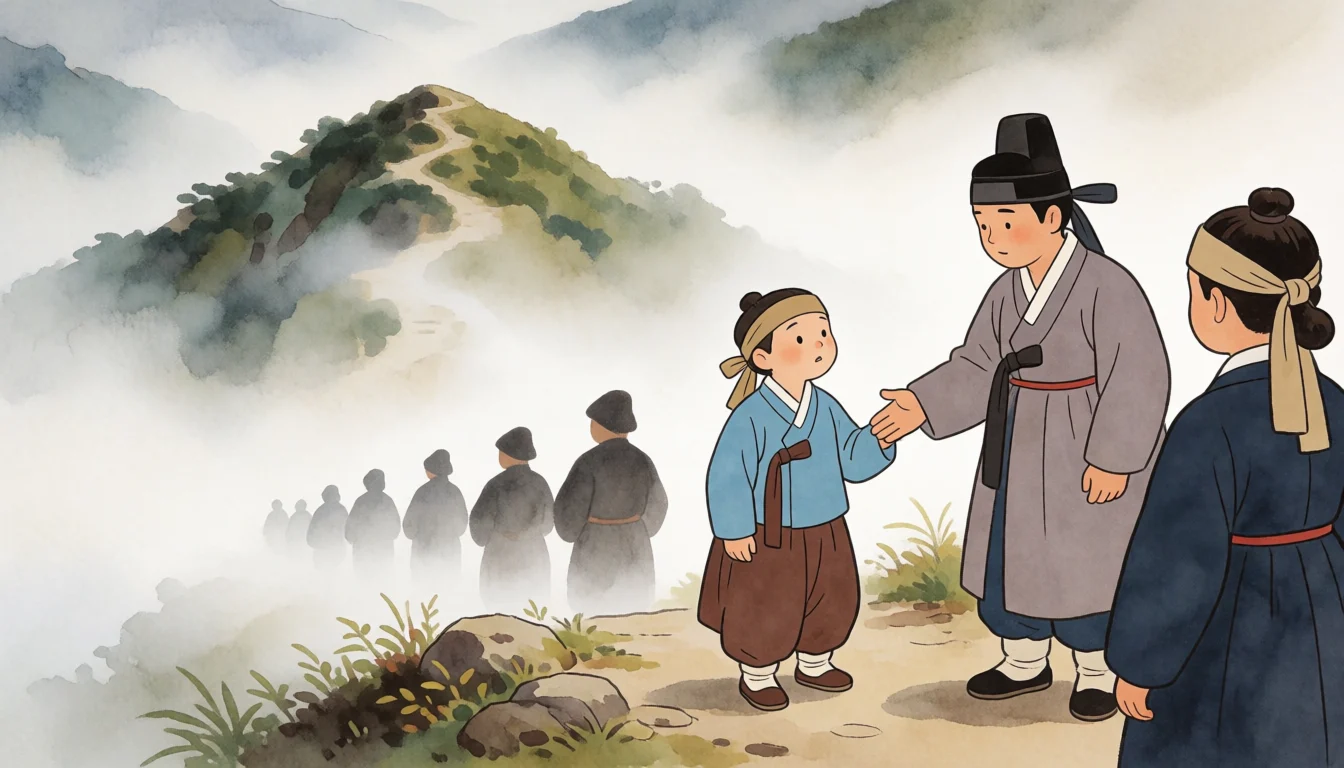
However, no sooner had they begun their descent than a thick, pale fog surged up from the base of the mountain. In an instant, the dense mist swallowed the ridge, obscuring even the backs of the people walking ahead. As the chilling dampness soaked into his collar, Sandol felt his heart sink.
What if a wild beast appears on this high peak? The weather is so foul, and we’re leaving the ox alone for three whole days…
The back of his neck tingled unbearably. He longed to turn his head and glance back up at the mountain ridge, but the strict taboo against looking back kept his eyes pinned to his own footsteps, leaving him restless and distressed.
"Elder, the fog is getting too thick. What if the ox panics, unties its reins, and bolts? Let me run back up just for a moment to check the knots."
When Sandol stopped, Elder Kim waved his hand firmly.
"No, Sandol. The moment you look back, your action ceases to be a devotion and becomes doubt. Quicken your pace."
With no other choice, Sandol bit his lip and dragged his heavy legs down the mountain.
The Meaning Held in the Three-Day Wait
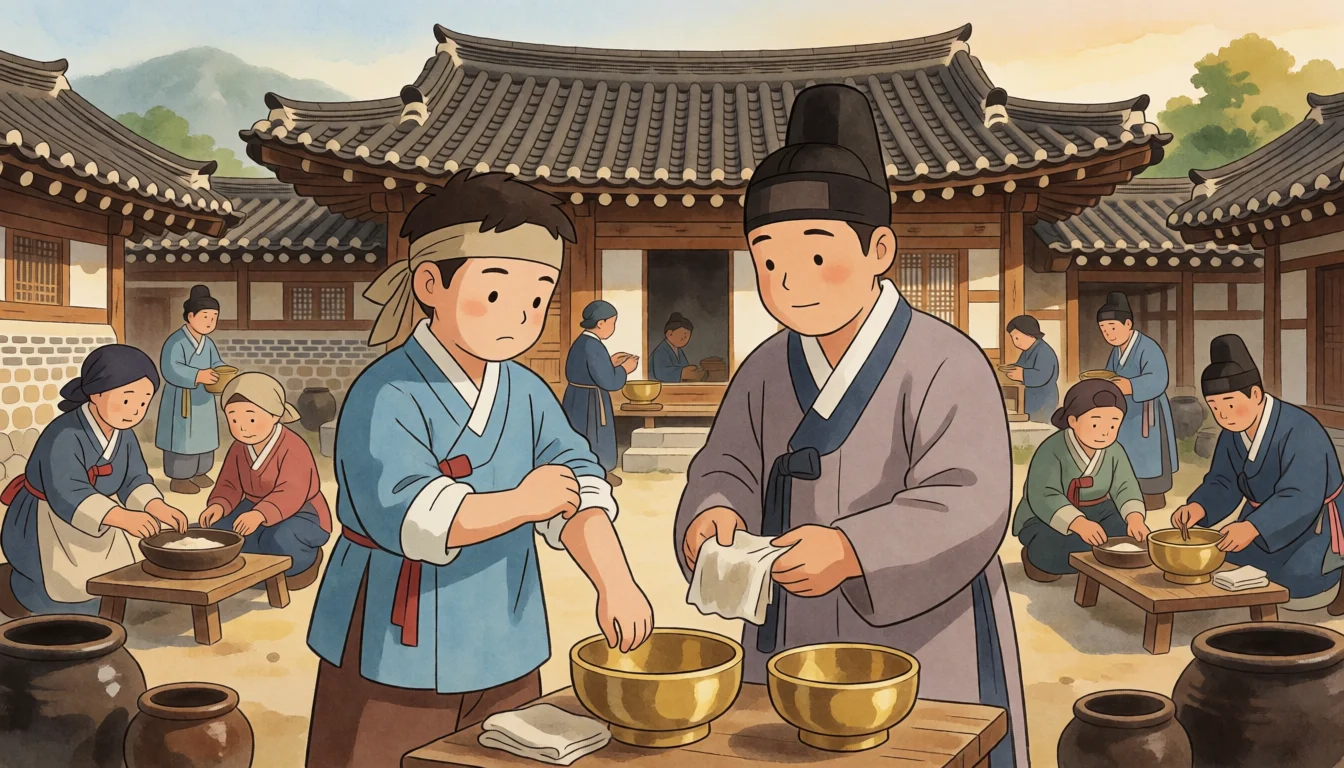
Though they returned to the village courtyard, Sandol spent the entire night tossing and turning. The next day, as he paced back and forth while continuously gazing toward the mountain peak, Elder Kim, who was cleaning ritual vessels in the courtyard, called out to him.
"Sandol, are you going to wear a trench into the edge of the courtyard all day? Come over here and help me polish these brass bowls."
Approaching hesitantly, Sandol spoke with a troubled heart:
"Elder, I am so worried about the ox left all alone that I can’t focus on any work. Why on earth must we abandon the animal for three full days?"
Elder Kim rubbed a bowl with a wisp of straw and answered calmly,
"It is not abandonment. Leaving the ox at the summit is an act of putting aside our hasty impatience and greed down at the foot of the mountain. During those three days, we share meals with our fellow villagers while worrying for the ox, tend to the offerings, and unite our hearts in sincere devotion. It is a time to let go of the urgency of wanting immediate results with our own hands."
Hearing this, Sandol looked around. The village women were meticulously preparing ritual food, and the young men were polishing the sacrificial utensils for the Cheonjedan altar, wiping away their sweat. The scattered efforts of the villagers were coming together as one for the sake of the ritual.
"I was foolish," Sandol admitted. "For the sake of the ox as well, I will diligently help with the village chores for the remaining time."
Rolling up his sleeves, Sandol spent the next three days chopping firewood, carrying offerings, and devoting himself wholeheartedly to the community.
The Cleared Mountain Ridge and the Warmth of the Cheonjedan Altar
At last, on the morning of the third day, the autumn sky opened up high and clear, as if the fog had never existed. Led by Elder Kim and the ritual officiants, Sandol climbed Mount Taebaek with a light step.
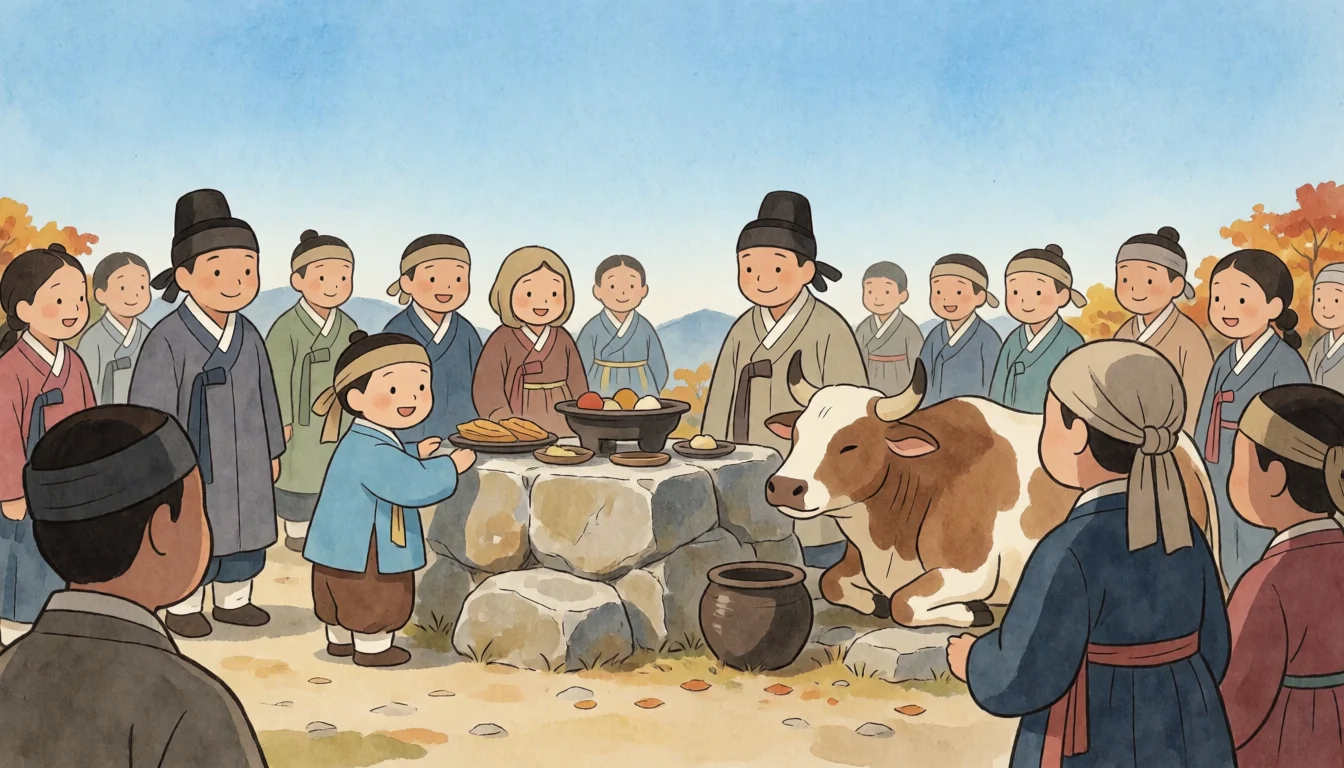
When they reached the vicinity of the Taebaeksan Cheonjedan altar—designated as Important Folk Cultural Heritage No. 228—Sandol’s eyes widened. Beneath the pine tree in front of the shrine, the blue ox was resting comfortably against a rock, chewing its cud in leisure. Seeing Sandol approach, the animal let out a gentle, welcoming puff of breath from its nostrils.
"You’re safe! You waited so well."
As Sandol threw his arms around the ox’s neck, Elder Kim smiled with deep satisfaction.
"Look at that. When the village unites its sincerity for three days, even the mountain responds."
Placing the meticulously prepared offerings upon the altar, the entire village gathered around to offer a solemn and heartfelt ritual to the heavens. Through three days of patient waiting without looking back, the villagers comforted one another’s hard work and shared deep, harmonious laughter. It was a moment where the ancient devotion to the heavens, passed down since the Silla dynasty, seamlessly blossomed into the warm, unifying spirit of today’s Taebaek Festival.
Historical Origins of the Taebaeksan Cheonje and Rituals
Rituals dedicated to heaven on Mount Taebaek are an ancient tradition recorded as far back as the Three Kingdoms period. According to the Samguk Sagi (History of the Three Kingdoms), in the fifth year of King Ilsong’s reign (October, winter), the king traveled north and personally performed a Cheonje ritual on Mount Taebaek. Furthermore, the Dongguk Yeoji Seungnam (Augmented Survey of the Geography of Korea) records that during the reign of King Pasa of Silla, an altar was built atop Mount Taebaek, a blue ox (cheongu) was offered as a sacrifice to heaven, and the event subsequently became an official state medium-tier ritual.
Later, the Cheonwangdang (Taebaek Sansa shrine) was built at the summit, where nearby residents from Gyeongsang and Gangwon provinces held rituals in spring and autumn. During the national hardships of the late Korean Empire, the focus of the ritual shifted to Dangun to inspire national consciousness, and it has been held annually on Gaecheonjeol (National Foundation Day) ever since. Major rituals conducted on Mount Taebaek include the Taebaeksan Cheonje, Danginje, Sanshinje, and the Memorial Ritual for Industrial Warriors.
The Taboo Custom of ‘Toe-u’ Recorded in Joseon Dynasty Literature
Seong Hyun’s Heobaekdangjip records a unique custom associated with the Mount Taebaek rituals. Known as toe-u ("returning the ox"), the tradition involved building a shrine at the summit for ancestral rites, tethering an ox in front of the shrine, descending without looking back, and returning three days later to drive the ox back down.
Establishment of the Taebaek Festival and Civilian-Led Operation
Held every October in Taebaek, Gangwon Province, the Taebaek Festival is a representative comprehensive regional festival. Following the promotion of Taebaek to city status in 1981, fragmented cultural and arts events were integrated, and the first Taebaek Festival was held in 1982.
The festival is hosted by the Taebaek Festival Committee and organized by the Taebaek Cultural Center, the Taebaek branch of the Korean Federation of Art and Culture Organizations, and the Taebaek branch of the Korean National Artists Association, operating in a civilian-led format. The Cheonjedan altar where the Cheonje is performed is designated as Important Folk Cultural Heritage No. 228.
Citizen Harmony and the Succession of Folk Culture
Today, the Taebaek Festival is held every October as a local and civic festival aimed at fostering solidarity and harmony among citizens while preserving and developing traditional folk culture.
The young man ‘Sandol’ introduced in the main text, his inner conflicts, the weather changes along the descent, and the dialogues between characters are fictional narratives created to enhance reader understanding, based on the toe-u custom recorded in Seong Hyun’s Heobaekdangjip and historical records of blue ox sacrifices from the Silla dynasty.
Conversely, the historical records of the Silla-era Taebaeksan Cheonje (Samguk Sagi, Dongguk Yeoji Seungnam), the Joseon-era records of the toe-u custom in Heobaekdangjip, the Taebaeksan Cheonjedan (Important Folk Cultural Heritage No. 228), and the history and character of the Taebaek Festival—which has been operated in a civilian-led manner since its inaugural event in 1982—are firmly grounded in historical and cultural facts.
🎨 Color It Yourself