Through the mishap of an apprentice named Dori—who mistook a paper water bottle for a wooden vessel and doused it in lacquer—we explore the history and diverse material varieties of traditional Korean lacquerware, tracing back to the Bronze Age.
Settle in and listen to the story at a gentle pace before you begin reading.
Misaligned Errands and a Bustling Morning
Early in the morning, a traditional lacquerware workshop from the Joseon dynasty was filled with the pungent yet subtle fragrance of natural lacquer (*ottchil*). The workshop’s artisans moved briskly, crafting precious lacquerware ordered by the upper classes. Master Oh, an experienced veteran, inspected a barrel of lacquer and gestured toward Dori, an apprentice standing near the doorway.
“Dori, go grab the structural core frame from the back room so we can smooth the grain and prep for coating. We need to finish the base work before the sun climbs to its peak.”
“Yes, Master! I’ll make sure it’s sturdy and lay the lacquer on thick!”
Dori answered with brisk enthusiasm and dashed to the back corner. However, while Master Oh had intended for him to retrieve the wooden core frame known as *moktae*, an overeager Dori’s eyes fell first upon a water bottle made from tightly twisted mulberry paper (*jitae*).
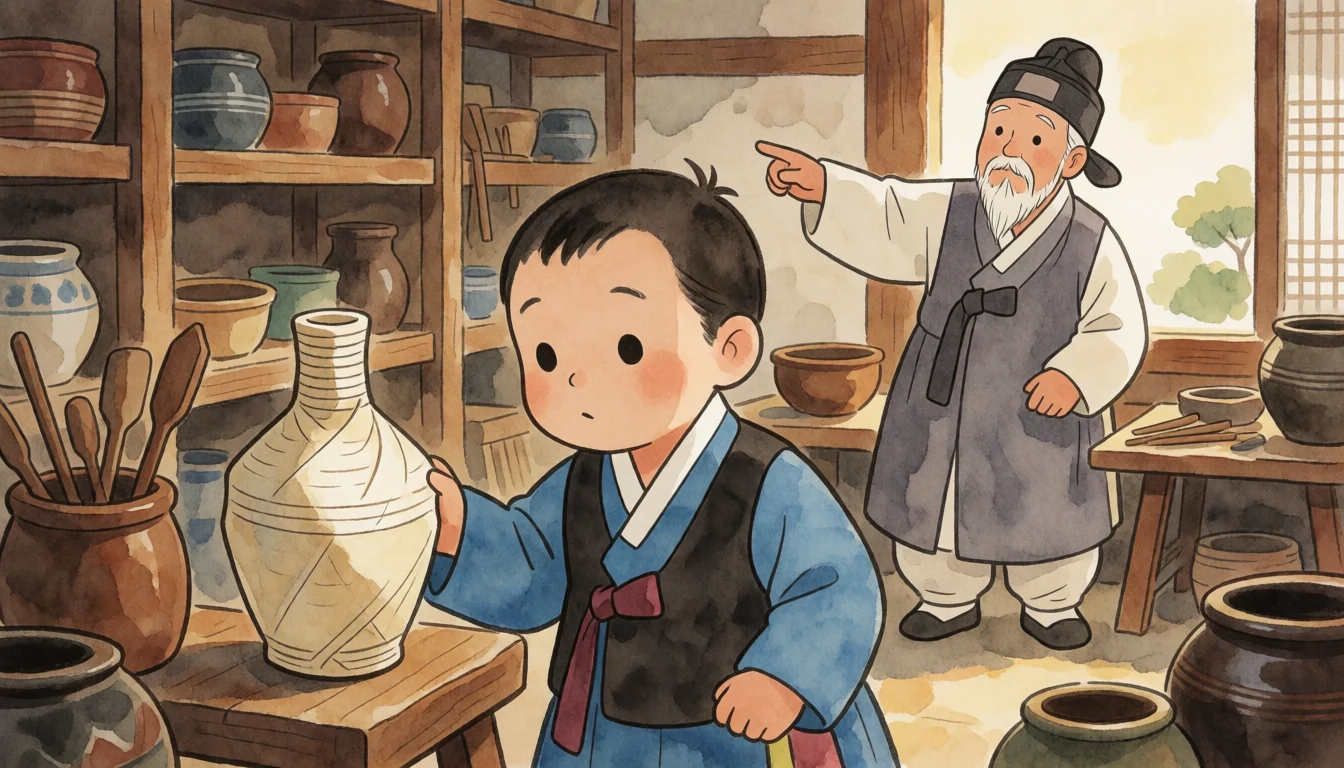
Sandpaper and Lacquer Spatulas on a Paper Bottle
Sitting down at his workbench, Dori rolled up his sleeves. Picking up a rough carving knife as if he were shaping a wooden bowl, he began aggressively scraping the surface of the tightly bound paper vessel.
“That’s odd. It’s much too light for wood, yet the grain is remarkably tough. Did Master say this was thoroughly dried aged timber?”
Frowning in mild confusion, Dori picked up a brush and scooped up a generous dollop of sticky, dark lacquer. The moment the pitch-black coating touched the paper-woven surface, the mulberry paper drank it up like a sponge. Panicking, Dori tried to spread the lacquer into a thicker coat, but his hand slipped. The lacquer bowl rattled against the edge of the workbench, sending black droplets flying in all directions.
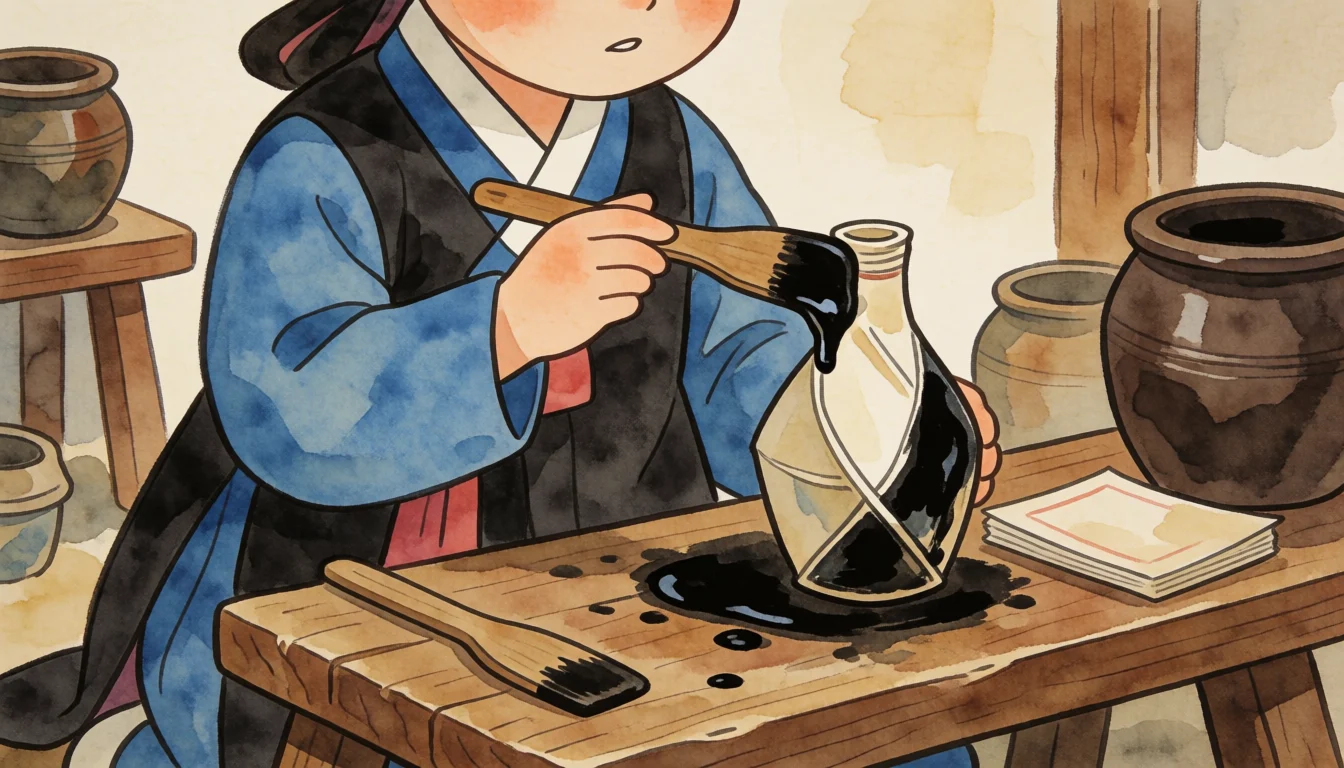
The Workshop Floor Thrown into Turmoil
“Oh no, the lacquer’s spilling!”
Dori lunged forward in terror, but it was already too late; dark lacquer was bleeding across the straw mat beneath the workbench. As he scrambled to grab a towel, his feet tangled together, sending him crashing backward onto his seat. Wooden spatulas and brushes scattered around him with a loud clatter.
“Dori, what on earth is going on in there!”
Master Oh’s heavy footsteps echoed from outside the door. Pale-faced, Dori frantically tried to hide the blotched, black paper water bottle in his lap. The room was an absolute disaster zone, littered with spilled lacquer and scattered tools.
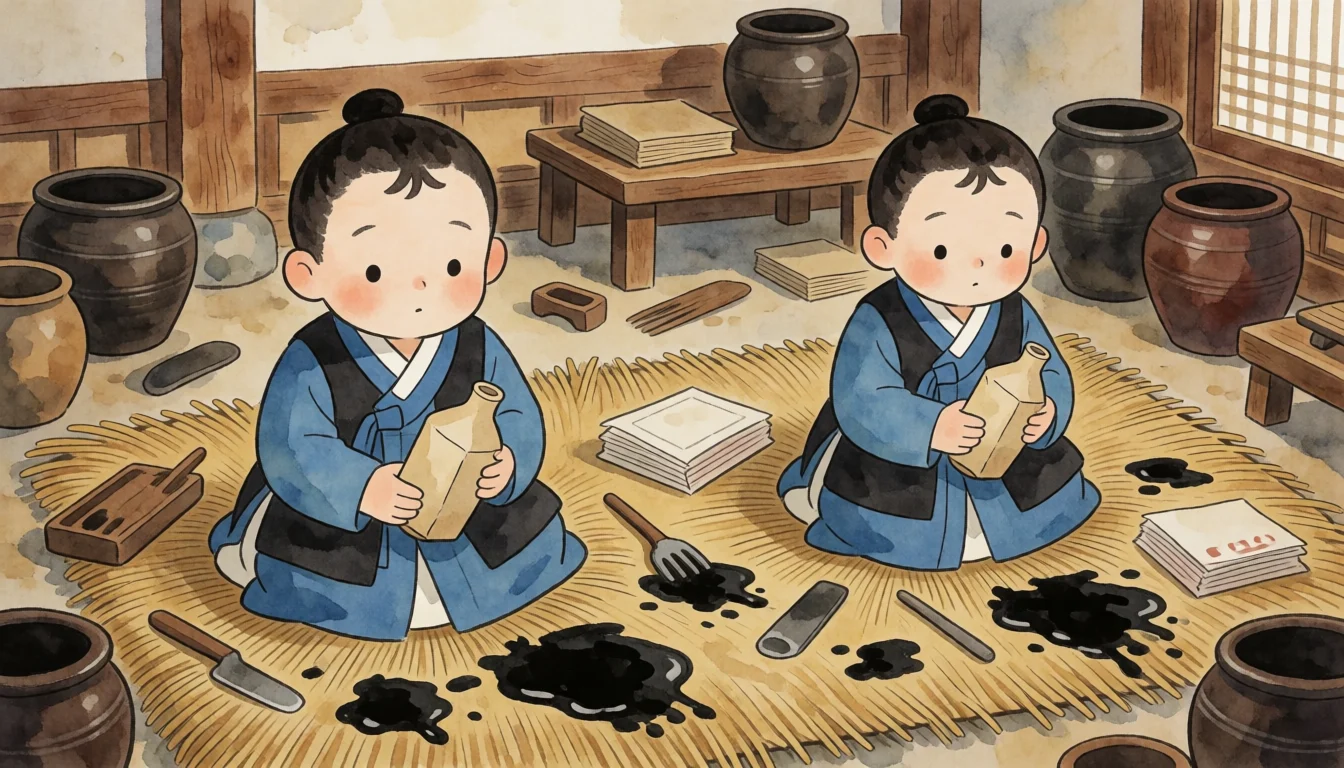
The Master’s Paused Step and Discovery
With a sliding rattle, the door opened and Master Oh stepped into the room. Seeing the chaotic floor and Dori trembling amid a mess of lacquer, the master’s eyebrows twitched.
“Master, I have… committed a grave sin! While trying to prep the wood, I—”
Trembling violently, Dori held out not a wooden bowl, but a paper artifact soaked through and stained pitch-black with lacquer. Instead of unleashing a fierce scolding, Master Oh took a step forward, practically snatching the object from Dori’s hands. He pressed his thumb firmly against the lacquer-soaked surface.
“You fool, this isn’t a wooden *moktae* frame at all. This is a *jitae* vessel woven from paper!”
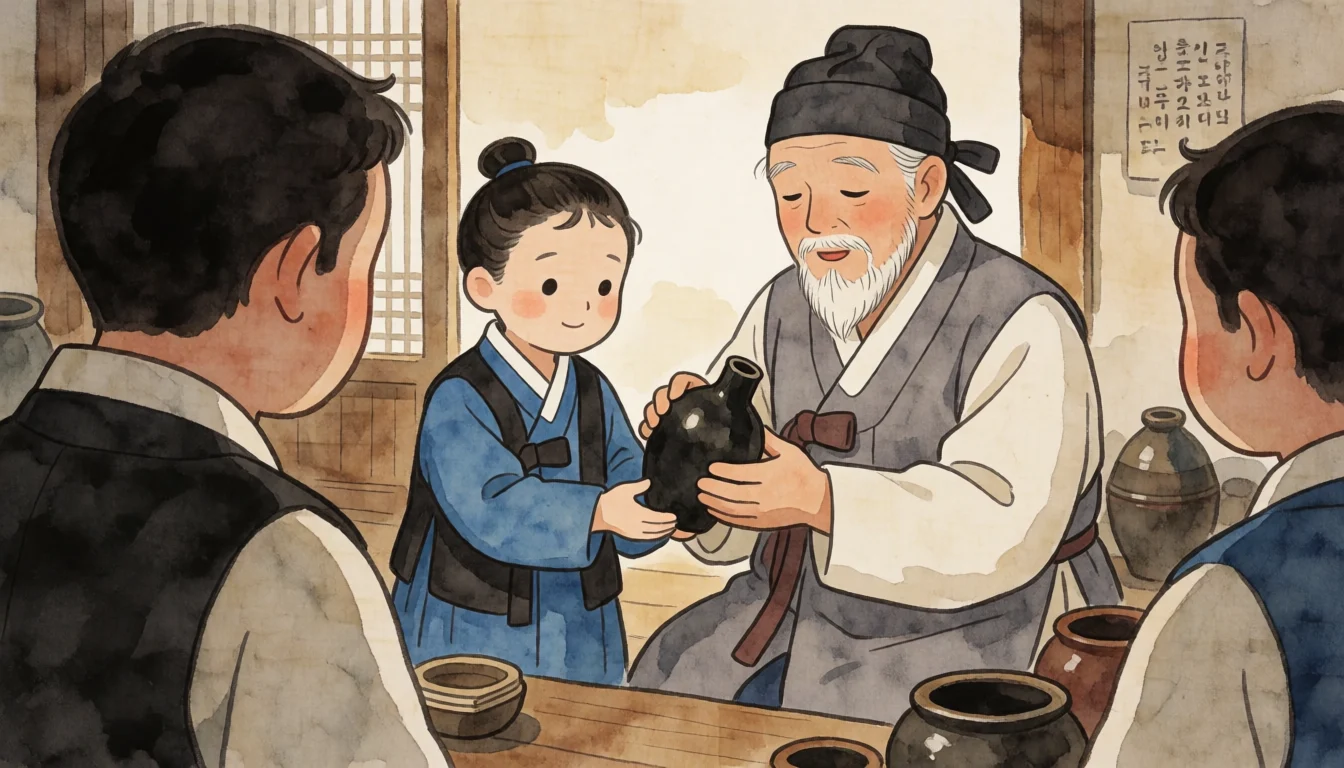
The Logic of Lacquer Embraced by Wood and Paper
Dori squeezed his eyes shut, bracing for an immediate tongue-lashing, but opened them a crack at the sound of the master’s calm voice. Holding the vessel up toward the sunlight, Master Oh spoke in a low tone.
“Applying fabric and lacquer to wood creates a *moktae*, which hides flaws and prevents warping. But a *jitae* made of twisted paper requires lacquer to penetrate deep down so that items like chamber pots or water bottles become as sturdy as iron.”
The master tapped lightly on the surface, where the lacquer had thoroughly seeped between the paper layers and begun to harden.
“Because of your clumsiness in dumping the lacquer on, it actually soaked right down to the very core.”
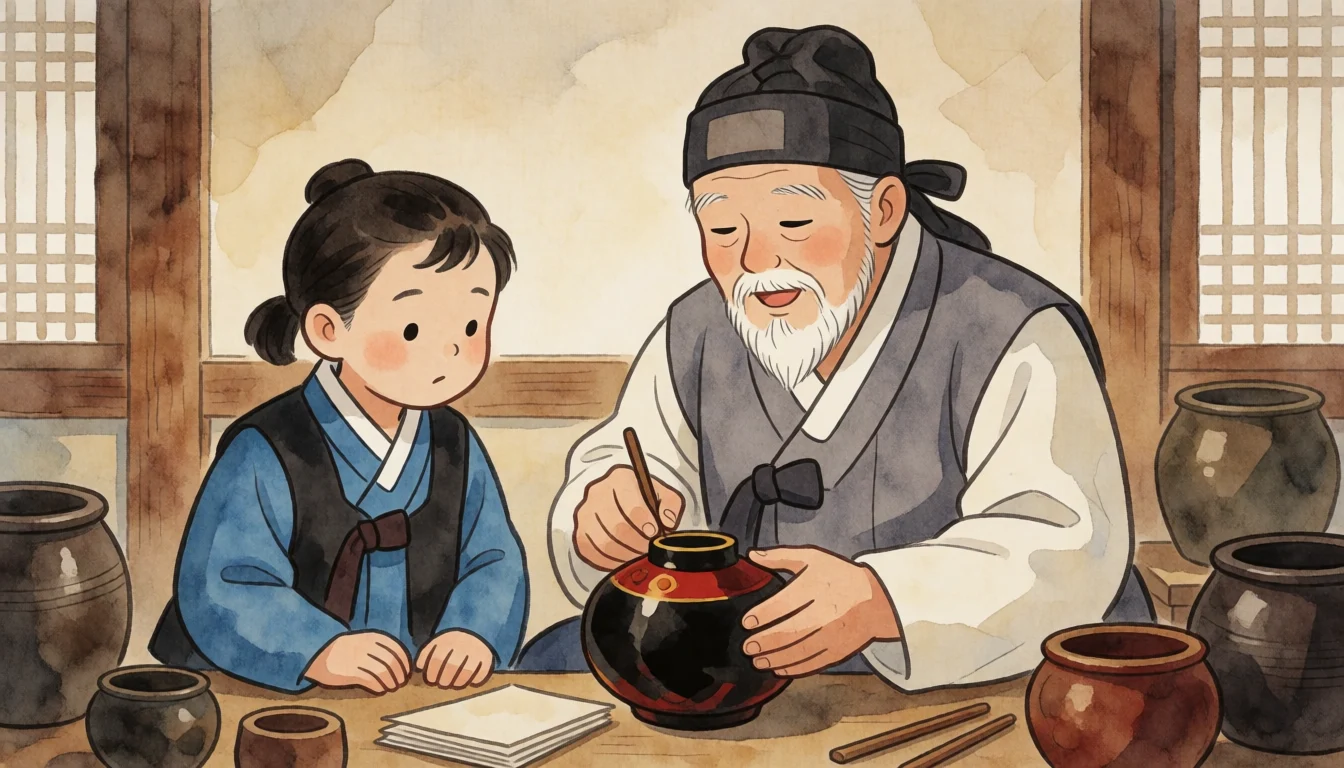
A Gentle Touch Transforming a Flaw into an Opportunity
“Master, does that mean we don’t have to throw this away?”
Dori asked with wide eyes. Master Oh let out a brief, dry cough and slumped down before the workbench.
“Throw it away? Why would we do that? We can simply patch the gouges you carved out with fine hemp cloth to reinforce the grain. Just like wrapping the seams of a wooden vessel in fabric, if we wrap this paper bottle and apply the lacquer evenly, it will end up tougher and sturdier than any ordinary lacquerware.”
“I’ll go cut the hemp cloth right away! I’ll clean the lacquer brushes, too!”
Driven by a fierce desire to make up for his mistake, Dori scurried to every corner of the workshop. Sitting side by side, master and apprentice placed fine fabric over the gouged spots and began meticulously applying additional layers of lacquer.
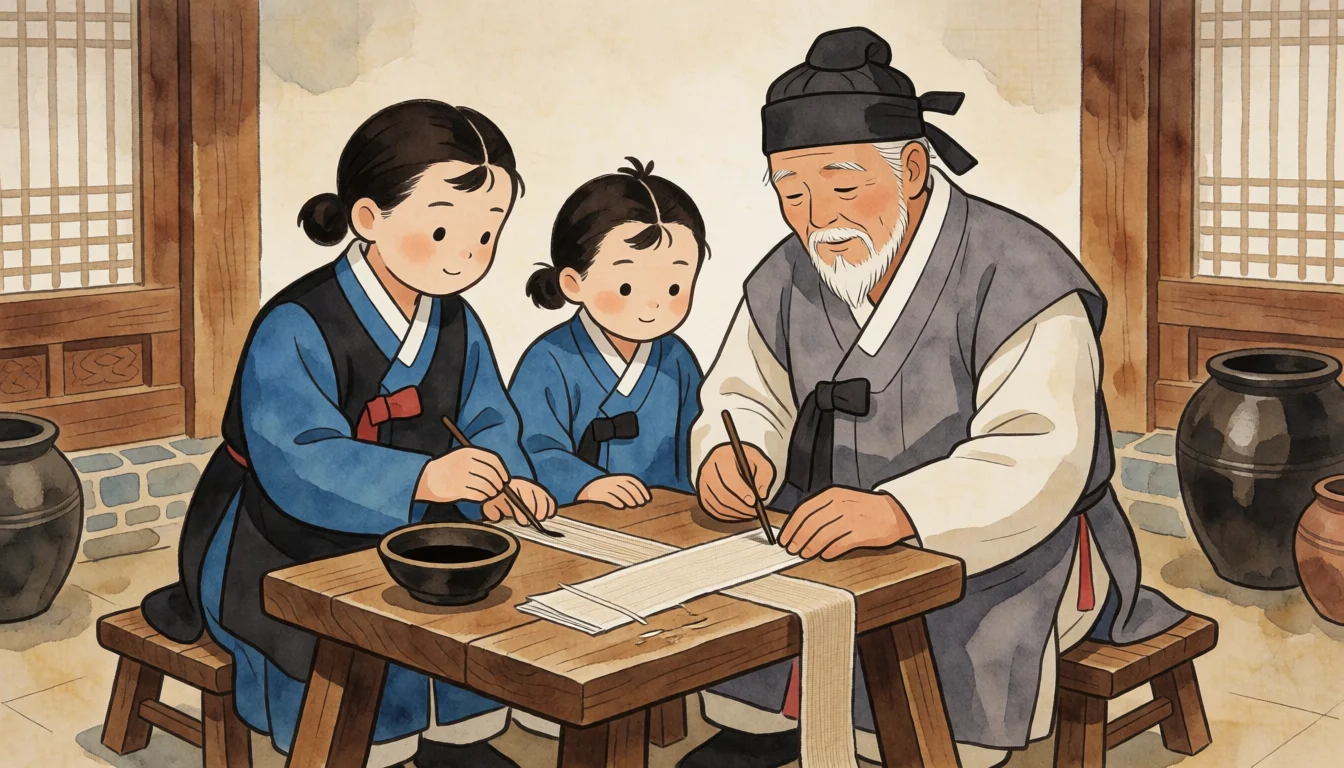
A Resilient Sheen Born Across the Night
Their hands did not stop moving until the oil in the oil lamp was nearly exhausted. By repeatedly letting the lacquer soak in, dry, and smoothing it over once more, the messy blemishes of the daytime vanished entirely. Though woven from paper, the vessel acquired a heavy, sturdy form capable of withstanding a strike from metal, crowned by a deep and subtle black luster.
“Look at this. The rugged breath of paper meeting the waterproofing of lacquer has created a water bottle sturdy enough that not a single drop of water can escape.”
As Master Oh stroked his beard with satisfaction, a wave of relief spread across Dori’s lacquer-smeared face.
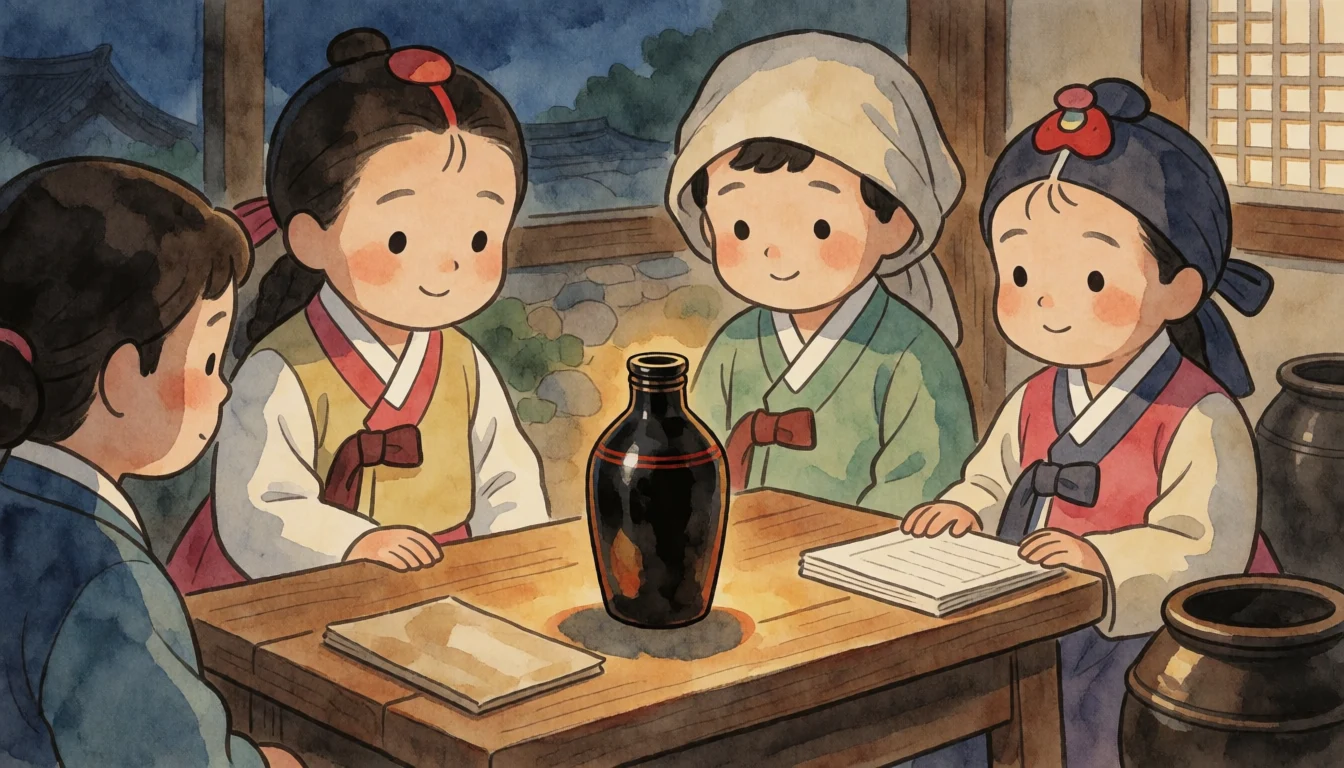
Cooling Teacups and Widespread Laughter
Before long, dawn broke, and clear morning sunlight streamed through the workshop lattice. The tools that had been scattered during the previous night’s chaos were back in their places, and right in the center of the workbench sat a neatly finished lacquer water bottle.
Master Oh poured warm tea into two crude earthenware bowls and pushed one toward Dori.
“There, you lost a lot of energy through the night, so wet your whistle. If you ever confuse wood and paper again, you’ll be on lacquer-barrel cleaning duty for a month. Understand?”
“Hehe, Master. Next time, I’ll keep my eyes wide open!”
As Dori beamed, cradling the teacup with both hands, a reluctant smile broke across the strict master’s face. Mingled with the savory aroma of tea, a pleasant, heartwarming burst of laughter chased away the lingering tension of the night.
Definition and Excellence of Lacquerware
Natural lacquer (*ottchil*) represents traditional coatings, offering exceptional moisture resistance and durability. The production of lacquerware on the Korean Peninsula dates back to the Bronze Age, with advanced techniques believed to have been introduced primarily through Lelang.
Historical Evolution by Era
The lacquerware culture of the Korean Peninsula evolved distinct characteristics from antiquity through the Joseon dynasty. During the Proto-Three Kingdoms period, lacquerware was identified at sites such as Namseong-ri in Asan, Sinchang-dong in Gwangju, and Dahori in Changwon, and was also excavated from tombs in Pyongyang, including Seokam-ri and Namjeong-ri. In the Three Kingdoms period, artifacts emerged from Imdang-dong in Gyeongsan, the Tomb of King Muryeong in Gongju, the Neungsan-ri Temple site in Buyeo, and tombs in Gyeongju, showcasing advanced techniques such as red lacquer (*juchil*) and yellow lacquer (*seokhwang*). The Unified Silla period saw the introduction of *pyeongtal* (flat-cut metal inlay) lacquerware at Donggung Palace and Wolji Pond in Gyeongju, marking the beginning of mother-of-pearl inlay (*najeon*). The Goryeo dynasty witnessed the golden age of najeon lacquerware alongside an increase in wood-core fabric-wrapped lacquerware (*moksimjeopichilgi*). In the Joseon dynasty, alongside the development of najeon, various materials such as paper (*jitae*), leather (*pitae*), and metal (*geumtae*) were utilized, though red and black lacquerware remained restricted to the royal family and upper classes.
Types of Lacquerware by Material
Lacquerware is classified according to the core material coated with natural lacquer:
- Moktae-chilgi (Wood-core / Wood-core fabric-wrapped lacquerware): Objects made by applying lacquer to wood, often wrapped in fabric to reinforce flaws and stabilize the wood’s properties.
- Namtae-chilgi: Lacquerware crafted over a bamboo framework.
- Dotae-chilgi: Lacquer applied over earthenware to provide waterproof functionality.
- Jitae-chilgi: Lacquer applied to paper; during the Joseon dynasty, twisted-paper craft items (chamber pots, water bottles, wine bottles) were lacquered to form sturdy structures.
- Pitae-chilgi: Lacquer applied to leather, used to craft items such as armor lamellae excavated from Gongsanseong Fortress in Gongju.
- Geumtae-chilgi: Lacquer applied to metal objects, such as those excavated from Seokam-ri in Pyongyang.
- Hyeopjeo-chilgi: Dry lacquerware formed by building layers of hemp cloth and lacquer over a mold.
Today, lacquerware forms a distinct field of contemporary craft, continuously adapting, developing, and being transmitted from the Japanese colonial period down to the present day.
The workshop mishap and specific anecdotes involving the apprentice Dori and Master Oh in the main text are fictional creations intended to aid the reader’s understanding, and do not represent actual historical events or specific historical figures. However, the historical evolution of lacquerware, material classifications, and the moisture-resistant and durable properties of natural lacquer are grounded in historical facts and documentary records.
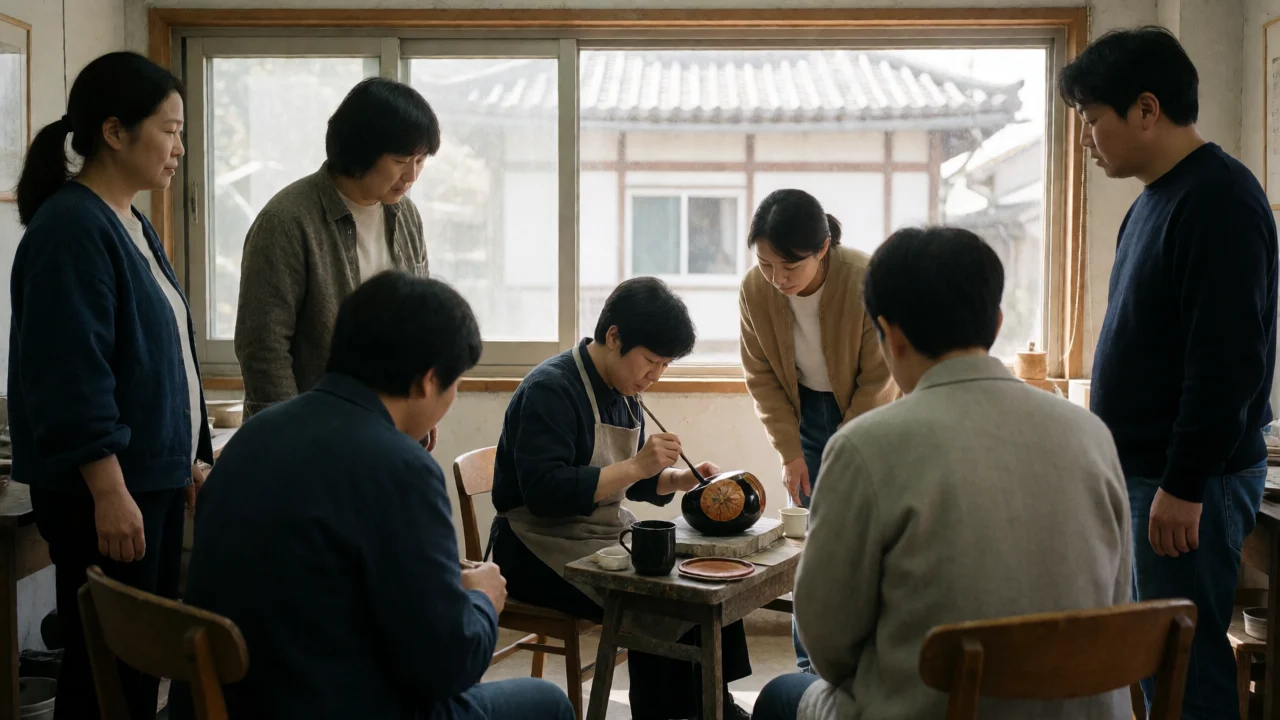
Related Locations
National Museum of Korea
Repository of metal-core lacquerware (*geumtae-chilgi*) excavated from Seokam-ri, Pyongyang, dating to the Lelang period.