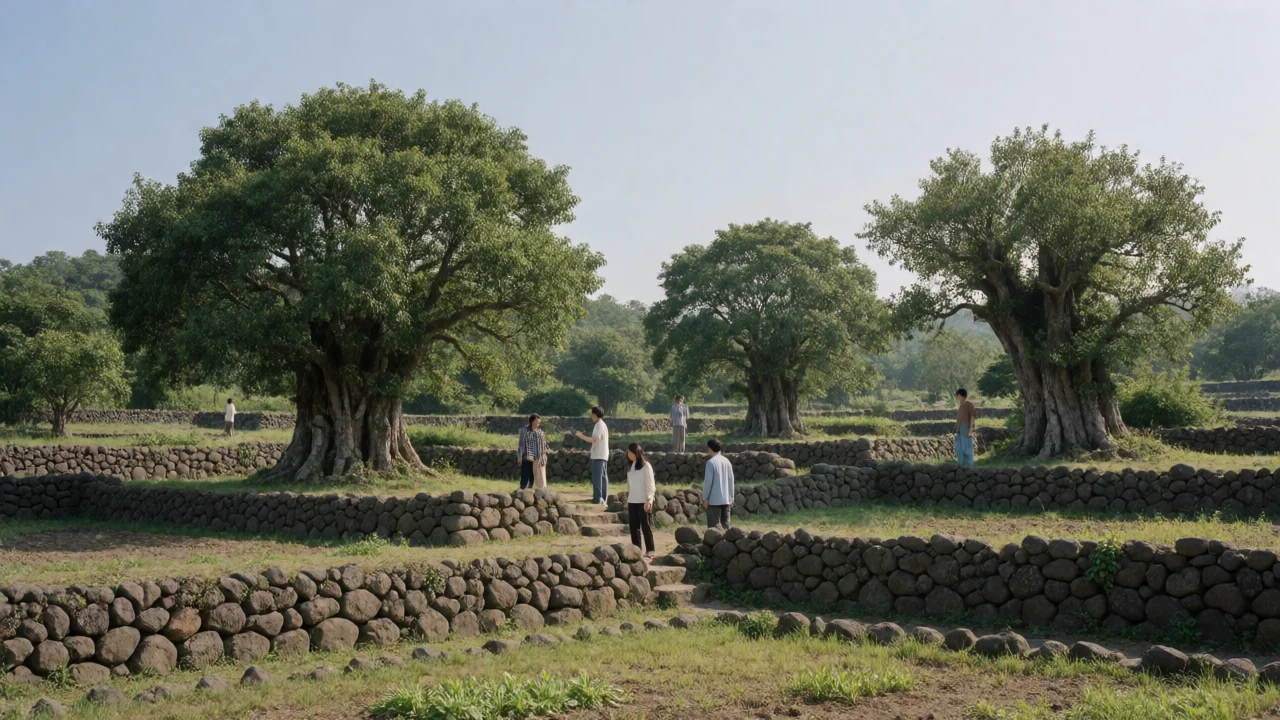
Passed down at the Tosan-bonhyangdang shrine in Jeju Island, the “Illweto-bonpul-i” myth tells a tale of a male and female deity’s marriage, their separation due to contrasting eating habits, and the mythological shift from the Baramut-to deity to the Illwoe deity worship.
Settle in and listen to the story at a gentle pace before you begin reading.
An Old Tale Etched into Tosan-bonhyangdang Shrine
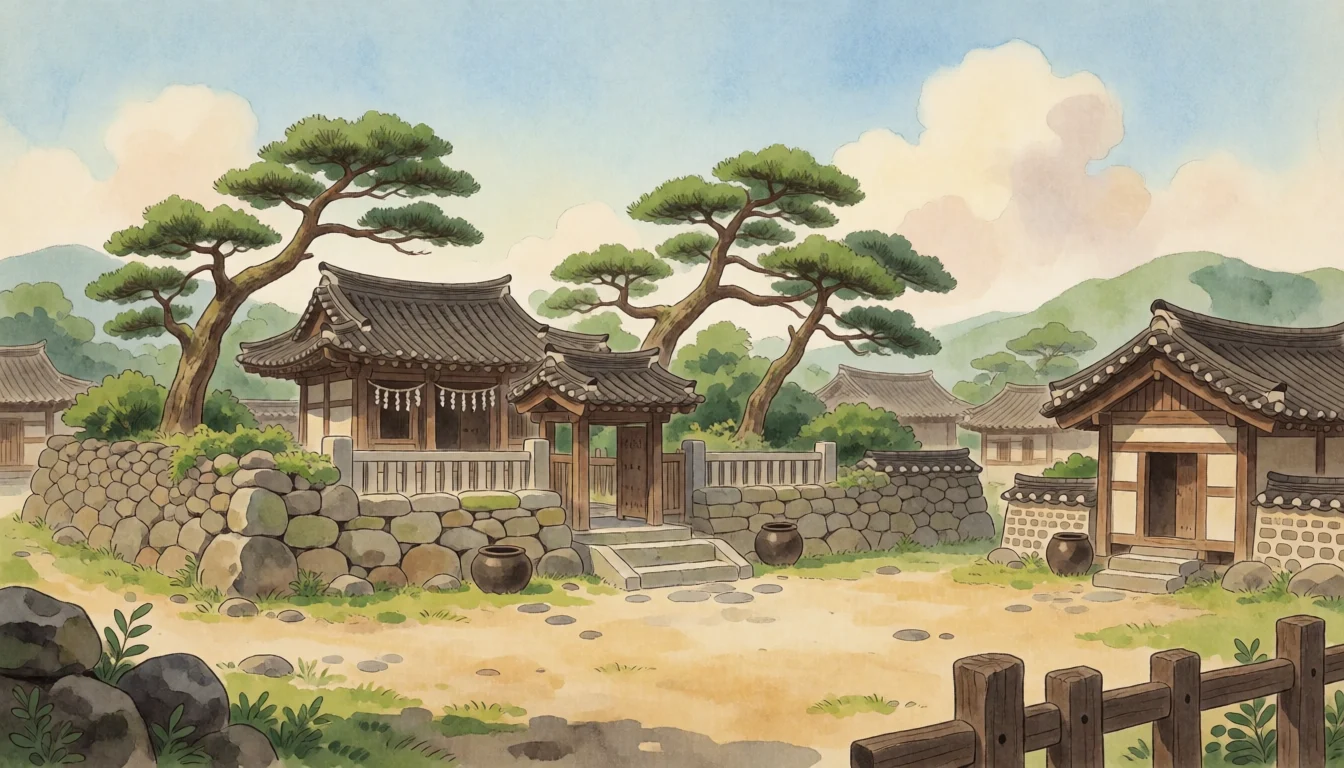
Nestled in the quiet village of Tosan in Seogwipo, Jeju Island, the Tosan-bonhyangdang shrine preserves the ancient lore of deities who crossed the winds and seas. Originally, the villagers served a local guardian deity known as Baramut-to, praying for peace and well-being. Over time, however, Illwoe faith took deep root, and the figure of Illweto gradually became more widely established.
This story—of a god and goddess who came together to build a home, only to drift apart due to different eating habits and personalities before finally finding their respective places—neatly captures the mystical currents of Jeju mythology. What kind of ironic yet warm tale lies hidden in their past?
A Guest Carried in an Iron Box
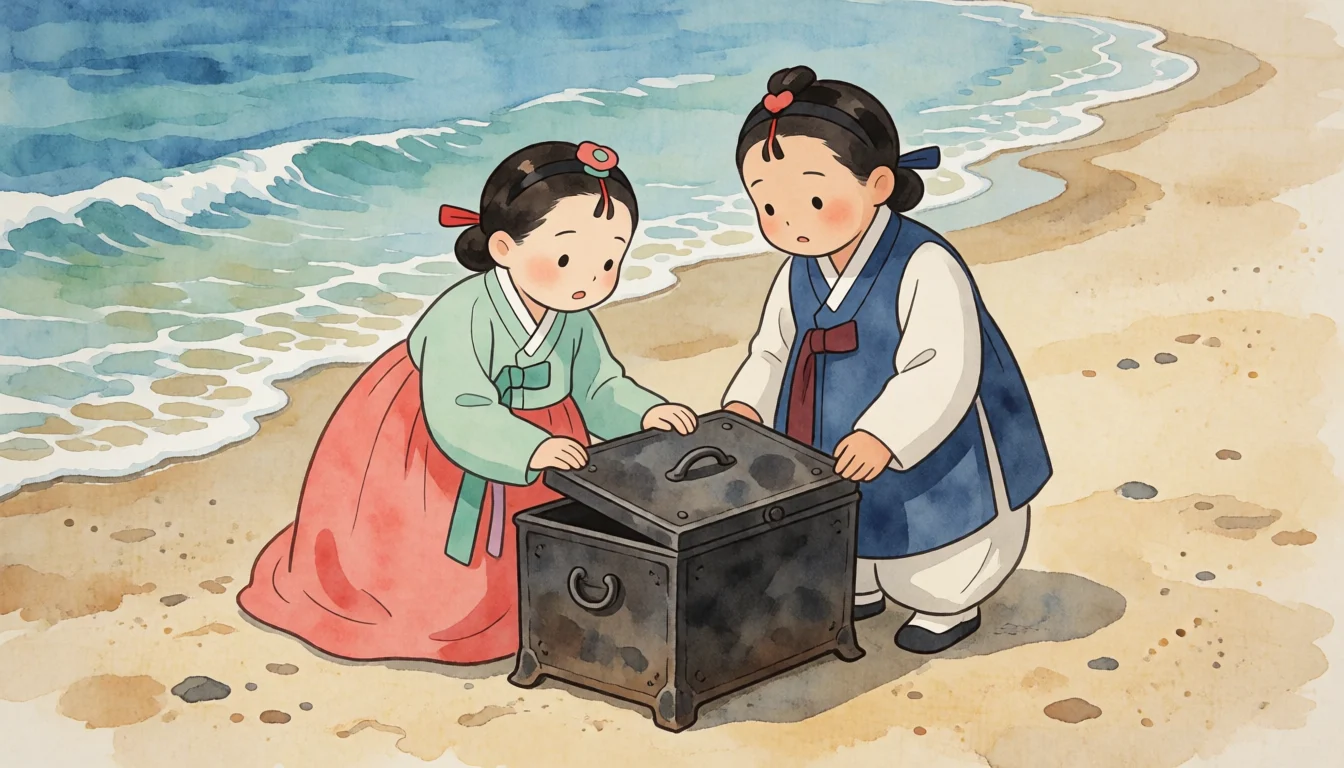
A long time ago, a male deity endowed with extraordinary strength, Baramut-to, was falsely accused by his father and sealed inside a large iron box, which was cast into the deep sea. Adrift on pounding waves, the box eventually reached the distant Dragon King’s Realm.
Maljat-ttal-agi, a young woman of the realm, discovered the heavy box washed ashore and slowly, hesitantly opened the lid.
“How on earth did you cross this deep sea all alone inside a box?”
As Maljat-ttal-agi asked with her eyes wide open, Baramut-to stepped out of the box, dusted off his robes, and replied stoutly,
“I was framed and cast adrift by the waves, but I survived.”
Attracted to each other’s extraordinary nature, the two were married. However, an unexpected commotion began to ripple through the peaceful palace: Baramut-to’s appetite was unimaginably colossal. As night fell and day broke, the palace granaries visibly emptied of rice and grain, causing the people of the Dragon King’s Realm to shake their heads in disbelief.
“At this rate, all the granaries in the kingdom will be empty!”
Unable to endure his overwhelming appetite any longer, the Dragon King’s Realm placed Baramut-to back into the iron box and banished him across the sea back to Jeju.
The Bean-Pod Wind and the Mystical Fan
Arriving in Jeju following Baramut-to, Maljat-ttal-agi encountered a rather noisy scene at the entrance of a village. Baramut-to’s mother was using a strong gust of wind to winnow soybean pods from the beans, but a stray pod blew straight into Maljat-ttal-agi’s eyes due to the sharp wind direction, causing a severe eye infection.
“Oh dear, my eyes burn and sting so badly I can’t see a thing!”
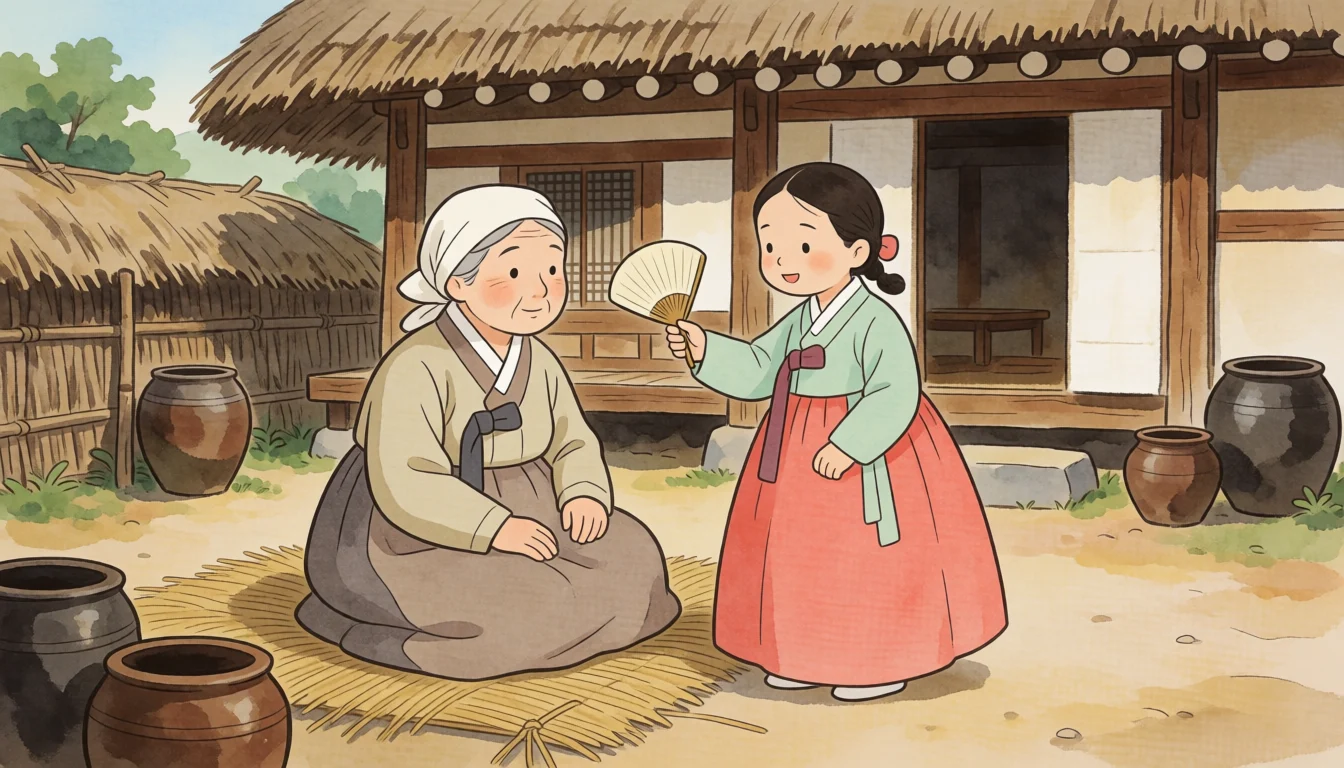
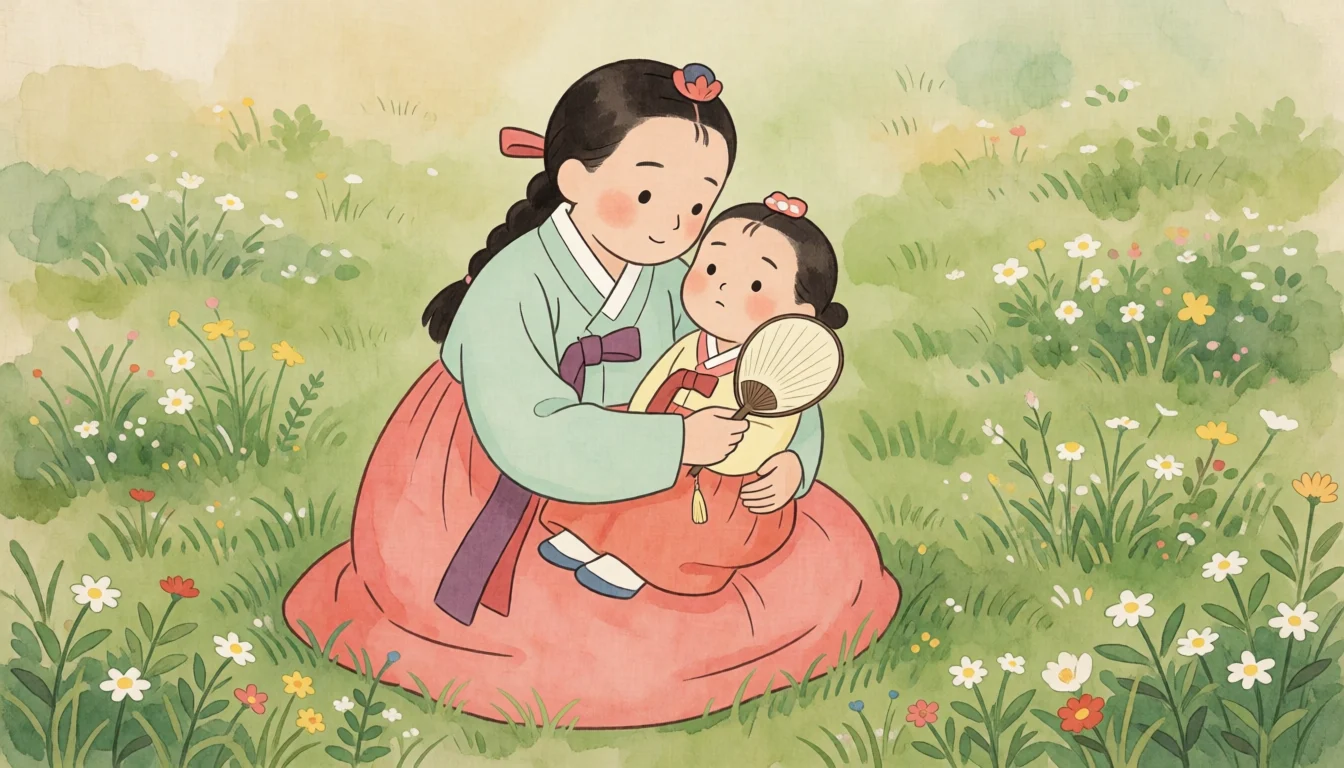
As the mother clutched her eyes and staggered, Maljat-ttal-agi hurriedly approached and pulled a small fan from her sleeve.
“Mother, please stay still for a moment. Let me look.”
Holding the fan lightly and chanting a spell while waving it three times, Maljat-ttal-agi felt a cool, clear energy wrap around her eyes, and the stinging speck vanished as if by magic. With her swollen eyes completely healed, the mother smiled brightly and grabbed her daughter-in-law’s hands tightly.
“What a truly gifted and kind-hearted daughter-in-law you are! How can I ever repay this grace? I will generously share my land and water with you.”
Footprint Water and an Ironic Misunderstanding
However, uneasy about the news of dividing the household shares, the senior wife secretly followed them to see how much land and water the mother-in-law was allotting to the new junior wife. Walking briskly for a long time under the scorching sun, she grew desperately thirsty.
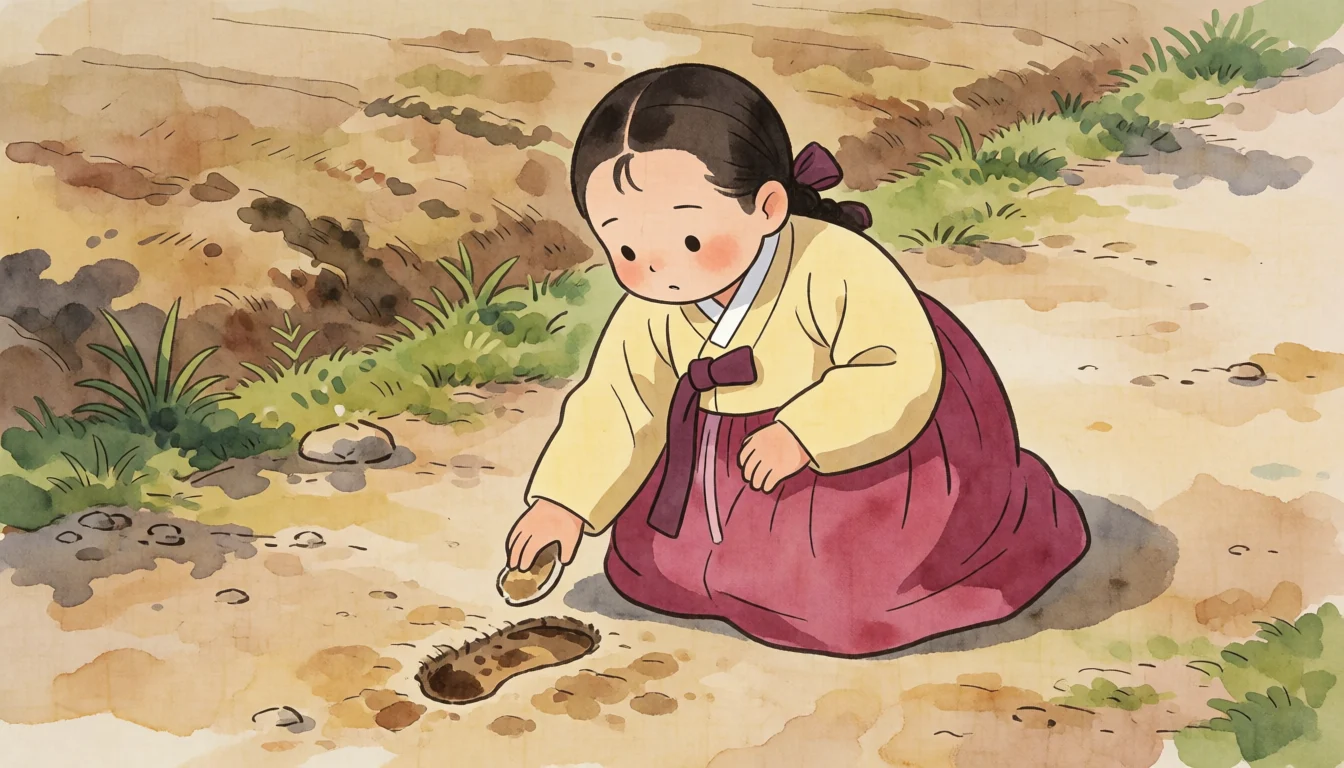
Scanning her surroundings frantically, the senior wife spotted a deep puddle on a muddy path—a small amount of rainwater collected in a large footprint left by a passing pig.
“Oh well, I’m dying of thirst, this is no time to worry about pride.”
She sat down with a thud and hurriedly gulped down the water. Unfortunately, a stiff pig hair mixed in the water poked her nostril and stuck to it. When she rubbed her nose to remove the hair and accidentally singed it slightly to check the smell, the savory, gamey scent of pork deeply permeated her clothes and fingertips.
Just then, Baramut-to returned from hunting, caught the strange scent, and shouted with a deeply furrowed brow:
“Why is this impure, gamey meat stench radiating from your body? Where on earth did you pick up such impurity?!”
“My lord, that’s not it at all! I was just so thirsty I drank footprint water, and a hair happened to stick to me.”
The senior wife waved her hands and urgently defended herself, but Baramut-to turned his head away with a flushed face.
“I don’t want to hear it! You cannot stay in our household with such an impure body. Go away immediately to distant Marado Island!”
And so, the senior wife was unfairly accused and forced into exile at the far end of the sea, Marado Island.
Tears of Marado and True Care
Heartbroken by her husband’s harsh treatment, the junior wife, Maljat-ttal-agi, could not simply remain silent. Though they had been distant, the fact that the senior wife—once a member of the same household—had been abandoned alone on a remote island weighed heavily on her mind. After making inquiries, the junior wife boarded a small boat, braved the rough waves, and headed for Marado.
When she reached the island’s shore, a faint sound of a baby crying drifted through the sound of the waves. Surprised, she ran over to find the senior wife giving birth to and cradling seven babies all alone on that rugged island. With a pale face, the senior wife, who had been surviving by picking snails, burst into tears upon seeing the junior wife.
“Why have you come all this way… I can manage by picking snails here, so please, at least take these poor children away.”
The junior wife grasped her wet hands and nodded deeply.
“Sister, put aside your resentment for now; I will raise these children with care. You have endured severe hardships, so now set your mind at ease.”
Carefully wrapping the seven babies in a carrying cloth, the junior wife turned her steps back toward Tosan. But upon reaching home, when she set the children down and counted them one by one, there were only six—one short!
“Oh no, I must have left one behind in the rough bushes!”
The junior wife ran back, her breath catching in her throat. Finding the last baby crying alone, scratched by thorns and silver grass, its eyes injured and red sores covering its body, her heart felt as though it were tearing. Gathering the baby into her arms and soothing its wounds with the warm spell of her fan, the inflamed skin and damaged eyes healed away as if melting in snow.
Though their relationship had been fractured by misunderstandings and conflict, the junior wife chose not to blame her husband’s indifference, instead embracing the ailing children. Eventually settling fully in Tosan, she remained firmly by the people’s side as the benevolent Illwoe deity who heals the pains and cleanses the flaws of young lives.
Illweto-bonpul-i is a representative village deity myth passed down at the Tosan-bonhyangdang shrine in Tosan-ri, Pyoseon-myeon, Seogwipo City, Jeju Island. This epic has a male and female deity’s marriage and separation due to dietary differences as its core plot, and is evaluated as a case of the spread of Songdang-line village deity beliefs and epics, which represent Jeju region’s deity worship.
At the Tosan-bonhyangdang shrine, deity worship centered on the original guardian deity “Baramut-to” was originally transmitted. However, as time passed and Illwoe faith emerged, the original guardian deity Baramut-to was gradually forgotten, and Illweto instead gained greater prominence. Through this process, one can glimpse the shift in the subjects of transmission and the central axis of belief.
The transmission aspects of “Illweto-bonpul-i” vary in detail depending on the version. Representative versions include the Shin Myung-ok version and the Ahn Sa-in version. While the Shin Myung-ok version leaves the context, division of divine duties, and seating somewhat unclear, it places relatively greater weight on the origins of Baramut-to and Maljat-ttal-agi of the Dragon King’s Realm. In contrast, the Ahn Sa-in version possesses a relatively coherent narrative context, featuring “Obaek-janggun’s Maljat-ttal-agi” as the junior wife. However, because the stories are intricately intertwined, confusion exists in the transmission process, and finding materials with complete contexts remains a notable characteristic.
Regarding today’s transmission aspects related to “Illweto-bonpul-i”, specific records of historical facts or modern adaptation processes, or evidence of regular transmission activities, have not been confirmed. However, as a branch of the mythic background and shrine epic transmitted centering around the Tosan-bonhyangdang shrine in Jeju Island, it holds significant documentary value for studying the trends of Jeju’s folk religion and deity beliefs.
The detailed descriptions introduced in the story above—such as the conversations inside and outside the iron box, the mother-in-law winnowing beans and the fan spell curing eye disease, the process of drinking pig footprint water and attempting to remove hair from the nostril, and the conversation on the shores of Marado—are creative (fictional) elements added onto the skeleton of the folktale to aid public understanding. Aside from the recorded folktale contents and the fact of shrine myth transmission at Tosan-bonhyangdang, magical and shamanistic efficacies or psychological portrayals among characters are not actual cultural facts.
🎨 Try Coloring It Yourself