On a clear, snowless morning of Daeseol, Dori and his grandfather share a warm story about the barley fields, introducing us to the seasonal customs of the 24 solar terms.
Settle in and listen to the story at a gentle pace before you begin reading.
Sunny Veranda and a Poem by Kim Hyung-soo
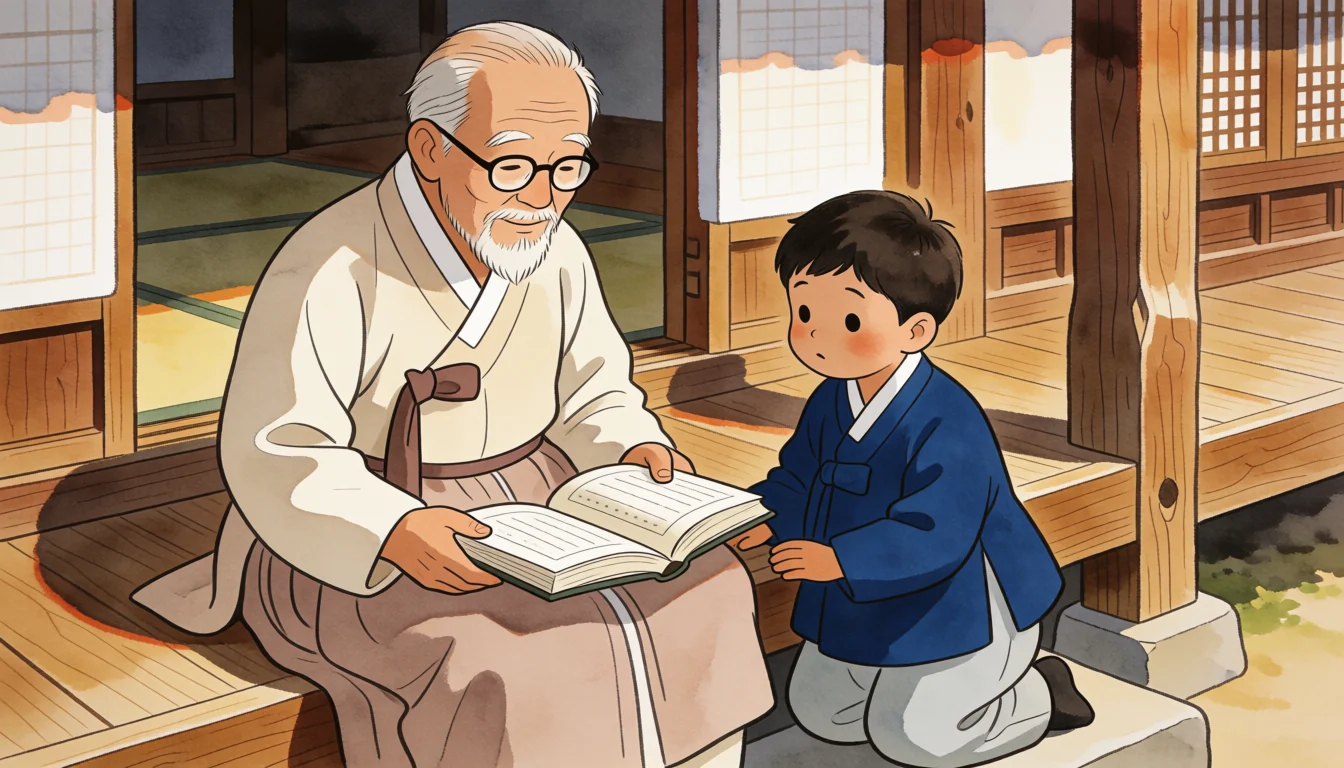
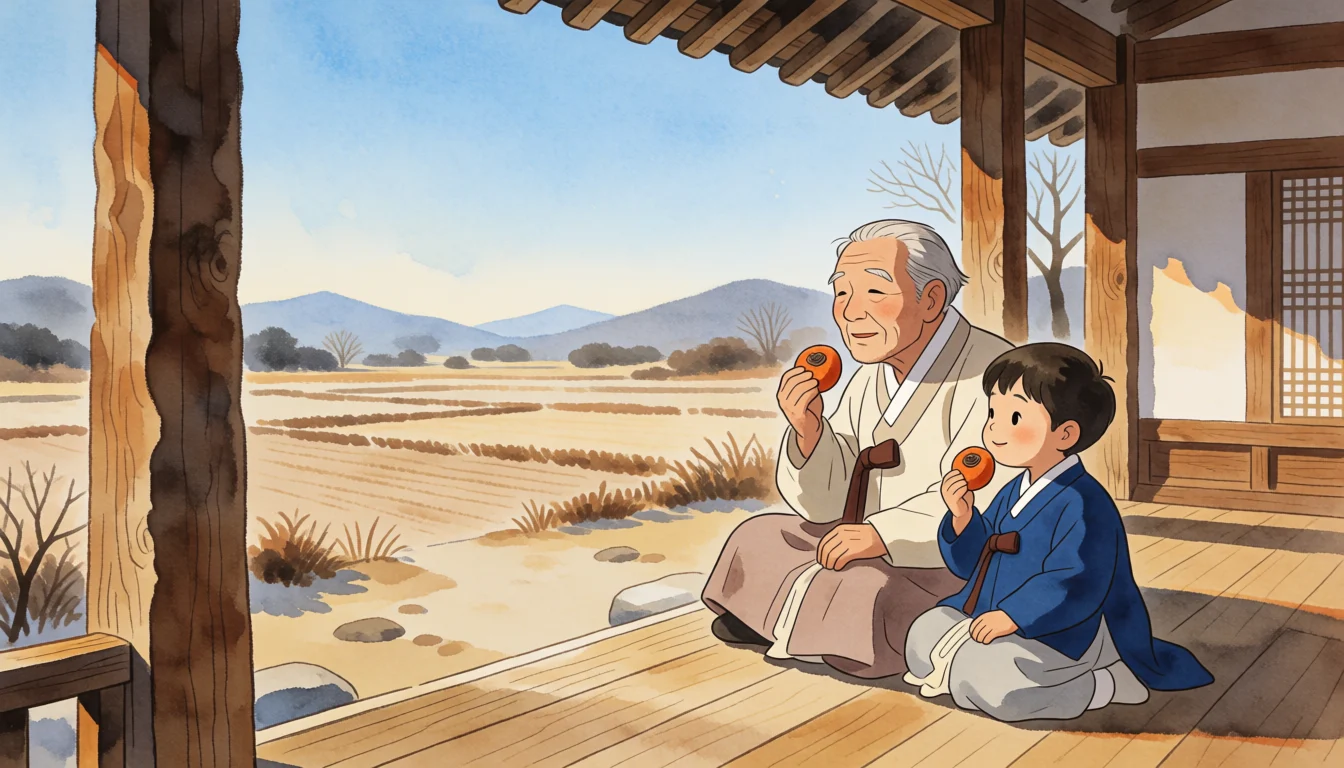
The morning of Daeseol, the twenty-first solar term, had broken. Although the outside wind stung the tip of the nose, a gentle, welcoming sunlight lay long and warm across the sunny veranda inside the courtyard. Midway between Soseol (Light Snow) and Dongji (Winter Solstice), this time in the eleventh lunar month was a quiet season when farmers, having wrapped up the year’s farming, could finally stretch their backs. With storage sheds overflowing with grain harvested through the autumn, it was a reassuring time without immediate worries about meals.
Grandfather sat with his reading glasses perched on the bridge of his nose, a book resting on his knees, softly chanting a poem. It was 『Nonggasibiwolsoksipyeon』 (Rural Customs for the Twelve Months) written by the scholar Sodang Kim Hyung-soo.
“Tigers find their mates, deer antlers drop of their own accord, and earthworms curl deep underground…”
Dori, who had been carving a wooden top at the edge of the veranda, snapped his head up. With his eyes growing wide at the mention of tigers and deer, the boy crawled on his knees right up beside his grandfather.
“Grandfather, it’s just cold outside right now! How do you know if a tiger is finding a mate or an earthworm is hiding?”
As Dori asked with sparkling eyes, Grandfather stroked his beard and let out a warm laugh.
“Even if you can’t see them, the earth and the animals find their own way to prepare for winter. Daeseol is precisely the time when earthworms burrow deep into the soil to avoid freezing and fall into a deep sleep.”
They Say Snow Is Barley’s Blanket
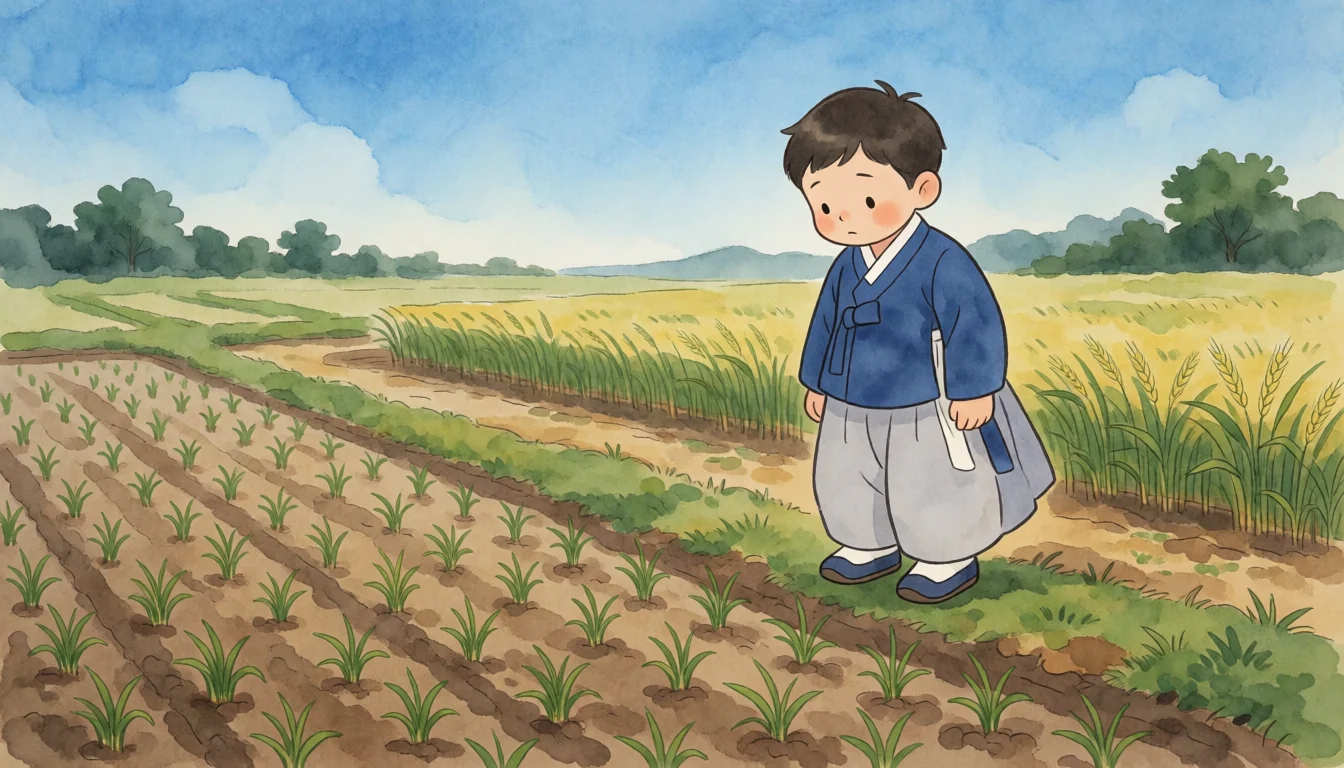
Dori gazed blankly at the field ridge beyond the courtyard. The green barley shoots, planted last autumn and now grown barely a finger-joint tall, seemed to shiver in the biting northern wind.
“But you know, Grandfather, today is ‘Daeseol’, which means ‘Great Snow’. The village elders said that snow acts as a thick cotton blanket for the barley. They say that if snow covers it thickly, it won’t freeze to death over the winter and will yield a bumper crop next year. So why is the sky just so blue and not a single flake of snow falling?”
At Dori’s question, Grandfather looked toward the distant mountains beyond the courtyard and explained patiently.
“The name Daeseol originally came from observing the weather in the North China region long ago. While heavy snow might fall there around this time, it is rare for our land to see a deluge of snow just because it’s Daeseol.”
“Then what about our barley? What if it can’t even wear a snow blanket and freezes solid facing this chilly wind bare-bodied?”
Urgency tinged Dori’s voice. Stamping his feet and looking piteously at the barley shoots in the field, the boy wore an expression of utmost seriousness.
The Child Who Ran with a Bundle of Straw from the Yard
Before Grandfather could soothe him any further, Dori bolted from the veranda and sprinted toward the shed. Piles of rice straw bundles, tied up after the autumn threshing, were stacked high inside.
‘If it doesn’t snow, I’ll just cover them with a blanket myself!’
Dori clutched a bundle of straw as big as himself in both arms and raced out to the field. The chilly wind beat against his forehead, but his grip on the straw was fierce. As soon as he reached the furrow, he cautiously knelt and began spreading the straw neatly over the green barley shoots.
“Just wait a little, I’ll keep you warm.”
However, the patch of land a single bundle of straw could cover was barely the size of a pair of shoes. Just then, a gust of wind blew by, scattering the carefully placed straw and sending it flying into the air. Dori ran back to the shed to bring another armful, but it was hopelessly inadequate to cover the endless, broad barley field.
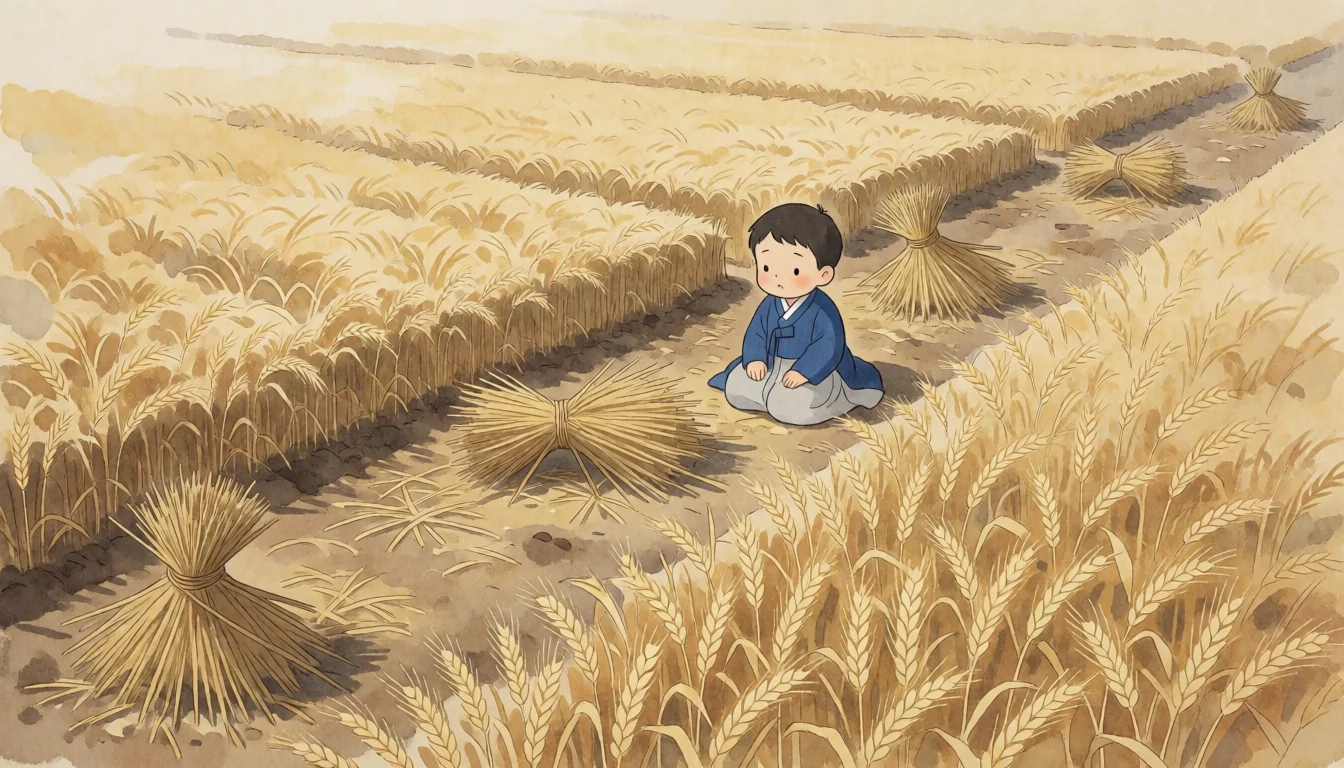
Tripping over a tree root on his fourth trip carrying straw, Dori slumped down right into the furrow. Gasping for breath as he looked up at the empty field, tears welled up in his eyes.
“It’s too wide… We don’t have enough straw, Grandfather…”
The Warm Breath Hidden in the Cold Soil
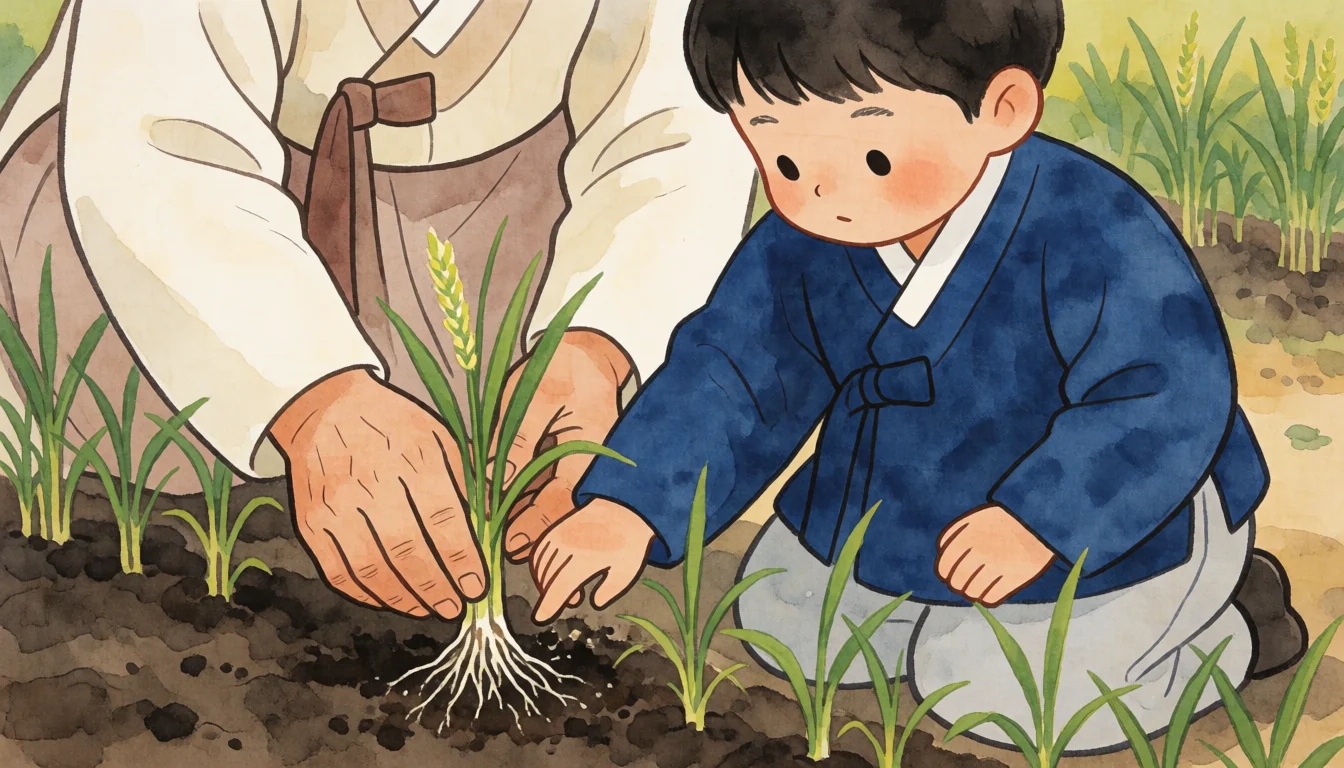
Grandfather, who had followed quietly behind, knelt low in the furrow and brushed the dirt from Dori’s knees. Then he gently took the boy’s small hand, wrapping his cold fingers in his own.
“Dori, try gently scratching the earth here with your hand.”
Not quite understanding, Dori used his fingertips to lightly scrape away the dry soil next to the green shoots. Although the surface felt stiff and frozen, once he reached the depth of a finger-joint, the surprisingly moist and gentle warmth of the earth touched his fingertips. Down there, the barley roots were gripping the soil firmly and white.
“Look. Even if the frosty wind blows on the surface, deep underground it is as warm as a mother’s embrace. The barley would be endlessly grateful for a snow blanket, but even if it doesn’t snow, it drives its roots deep and endures the winter with the earth’s warmth. Didn’t the earthworm we read about in the poem curl up tight in this deep soil to wait for spring?”
Dori quietly took in the damp, heavy scent of the earth touching his fingertips. The small shoots that he had thought were merely shivering in the cold were, in fact, firmly anchored deep beneath the ground.
“The barley is… much tougher than I thought?”
At Dori’s words, Grandfather smiled and nodded.
The Deep Stillness Embraced by the Winter Fields
Dori neatly gathered a few stray pieces of straw and laid them down on the field ridge. The impatience that had made him resent the sky or stamp his feet wishing for snow had vanished as if washed away. To embrace whatever came when it snowed, and to silently endure one’s season within the earth’s embrace even when it didn’t—that was the law of the fields.
Holding hands, the two walked back home together. Grandfather opened the door to the well-stocked storehouse and handed two sweetly dried persimmons into Dori’s hands. Sitting side by side on the sunlit veranda, nibbling on the persimmons and looking out at the fields, the landscape no longer seemed desolate as it had in the morning.
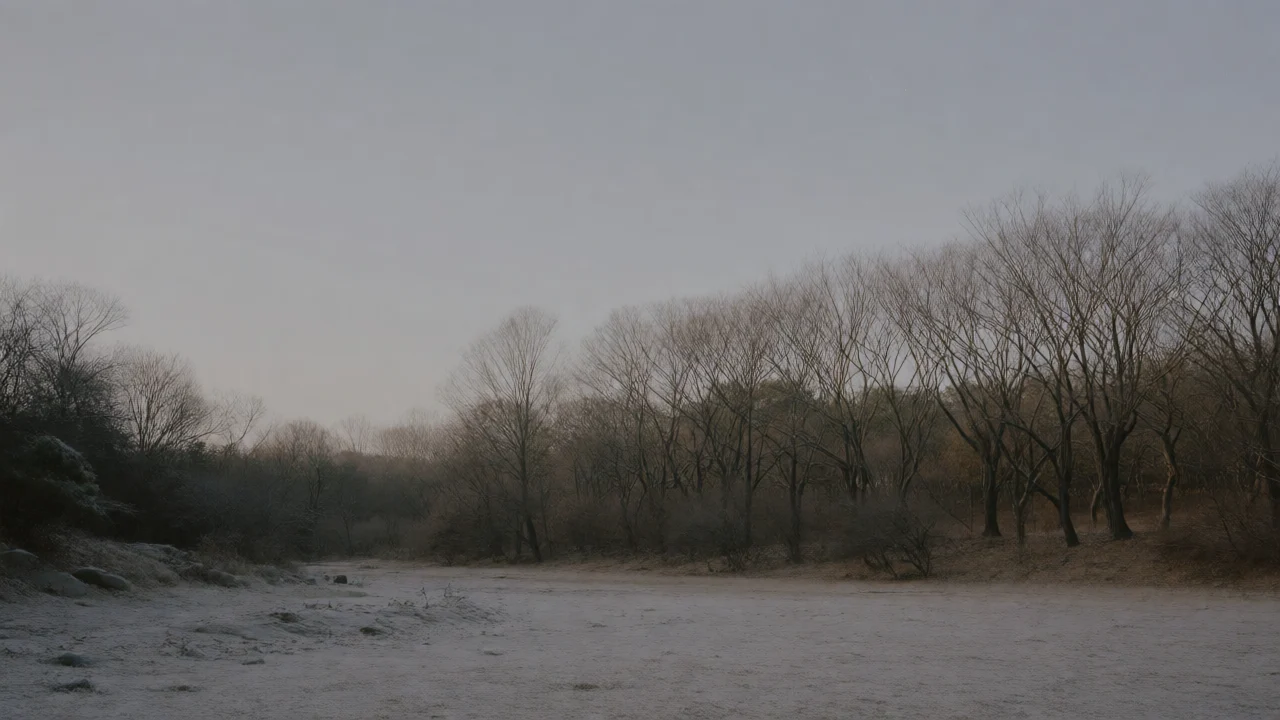
The sky remained clear without a speck of snow and the wind was cold, but beneath the dry soil, earthworms slept soundly and barley shoots cultivated an invisible strength. Much like a snow-covered winter, the fields of Daeseol—crouching down to prepare for spring on their own—were a tender blanket holding a vast embrace of their own.
Definition and Timing of Daeseol
Daeseol (Great Snow) is the twenty-first of the 24 solar terms, positioned between Soseol (Light Snow) and Dongji (Winter Solstice). In the solar calendar, it falls around December 7 or 8, when the sun reaches the celestial longitude of 255 degrees. In traditional East Asian reckoning, Lipdong and Soseol in the tenth lunar month, Daeseol and Dongji in the eleventh lunar month, and Sohan and Daehan in the twelfth lunar month are considered winter, whereas Western traditions view the period from the autumnal equinox until Daeseol as autumn.
Origin of the Name and Actual Climate
The name ‘Daeseol’ carries the meaning that snow falls most heavily. However, since this reflects the seasonal characteristics of the North China region—the birthplace and benchmark of traditional calendar systems—it cannot necessarily be assumed that Korea experiences heavy snowfall during this exact period.
Midwinter Farming Slump and Daily Life
The eleventh lunar month, along with Dongji, marks the heart of winter and serves as a quiet period (nonghan-gi) when farmers wrap up the year and prepare to welcome the new. It is also an abundant season when autumn-harvested grains are stacked high in storage sheds, freeing people from immediate worries about meals.
Natural Phenomena and Historical Records
In ancient China, the period from Daeseol to Dongji was divided into three five-day intervals (samhu). In the first interval, mountain bats do not cry; in the second, tigers mate; and in the third, dodders sprout. Additionally, in the mid-19th century, Sodang Kim Hyung-soo compiled 『Nonggasibiwolsoksipyeon』 (Rural Customs for the Twelve Months), which records natural phenomena and activities of the eleventh lunar month, such as tigers mating, deer shedding antlers, reed warblers falling silent, earthworms entering hibernation, shallot shoots sprouting, and dry springs stirring.
Beliefs and Proverbs Associated with Snow
A traditional belief holds that if heavy snow falls on the day of Daeseol, the following year will bring a bountiful harvest and a mild winter, though actual snowfall on this day is rare. Related to this is the proverb, "Snow is the barley’s blanket," meaning that heavy snow covers the barley to provide insulation, reducing cold damage and ensuring a bumper barley harvest.
Daeseol Today
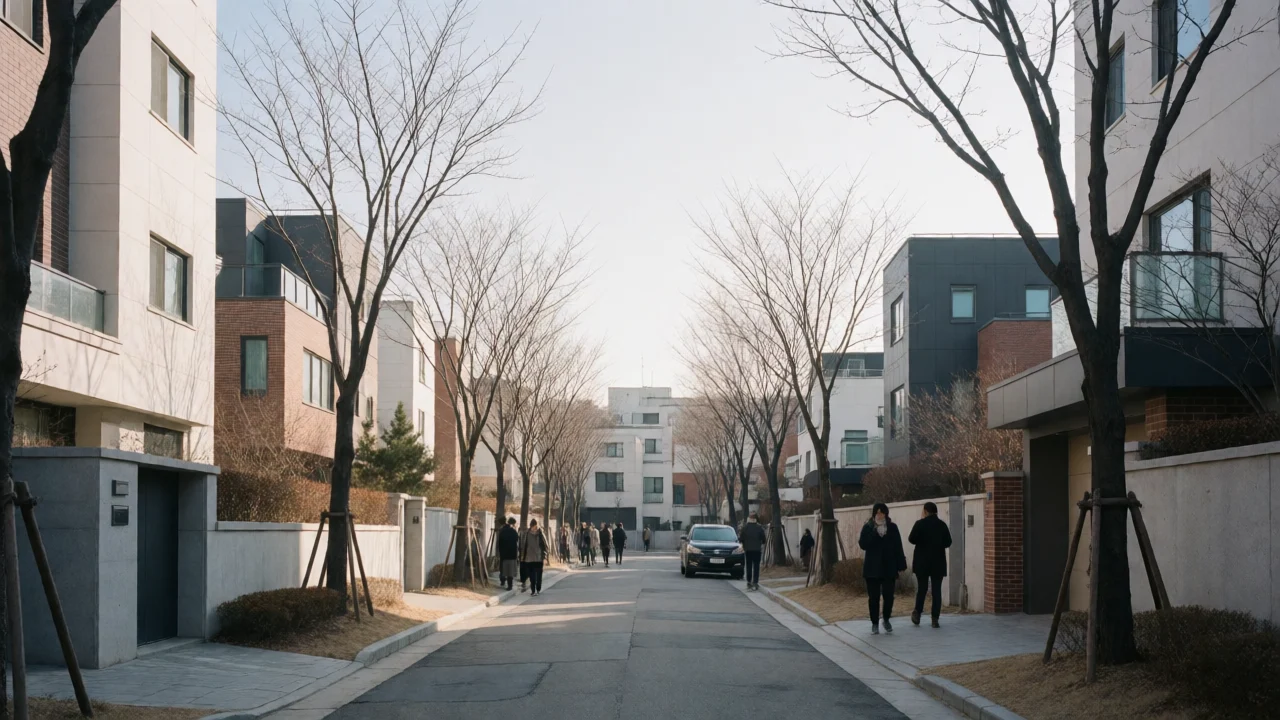
Today, Daeseol remains on the calendar as one of the 24 solar terms, signaling the deepening of winter. While it no longer functions as a direct guideline for agrarian society—such as enjoying the farming off-season or gauging barley crop yields as in the past—it survives as a seasonal custom that prompts us to reflect on the flow of seasons and changes in nature.

The Boundary Between Fiction and Fact
The narrative in this text—including Dori’s commotion trying to cover the barley field with rice straw and his conversations with his grandfather—is a creative reinterpretation based on traditional cultural motifs. The child’s anxiety over a lack of snow on Daeseol and the process of checking the soil’s warmth are fictional elements created for the progression of the story rather than recorded historical facts, and should be understood as distinct from actual history.