As the Korean Empire transitioned from a tributary state to a sovereign empire, even the tiniest threads on official caps and robes were strictly regulated. This story explores an imperial garment workshop working late by lamplight, alongside the broader introduction of Western-style uniforms.
Settle in and listen to the story at a gentle pace before you begin reading.
Needles Waking the Dawn of a New Empire
When the Korean Empire was proclaimed, the entire appearance of the nation underwent a meticulous overhaul. Seeking to cast off the trappings of a mere tributary state and project imperial majesty, regulations and attire were carefully redesigned according to the ritual text Daehan Yejon. While the Emperor wore the twelve-symbol crown and robes along with the yellow dragon robe, court officials had to update their ceremonial and court attire accordingly. In particular, the yanggwan—the official court cap worn over ceremonial robes—featured vertical raised ribs known as ryang, which strictly denoted the wearer’s official rank: seven ryang for the first rank, six for the second, five for the third, four for the fourth, three for the fifth, two for the sixth and seventh, and one for the eighth and ninth.
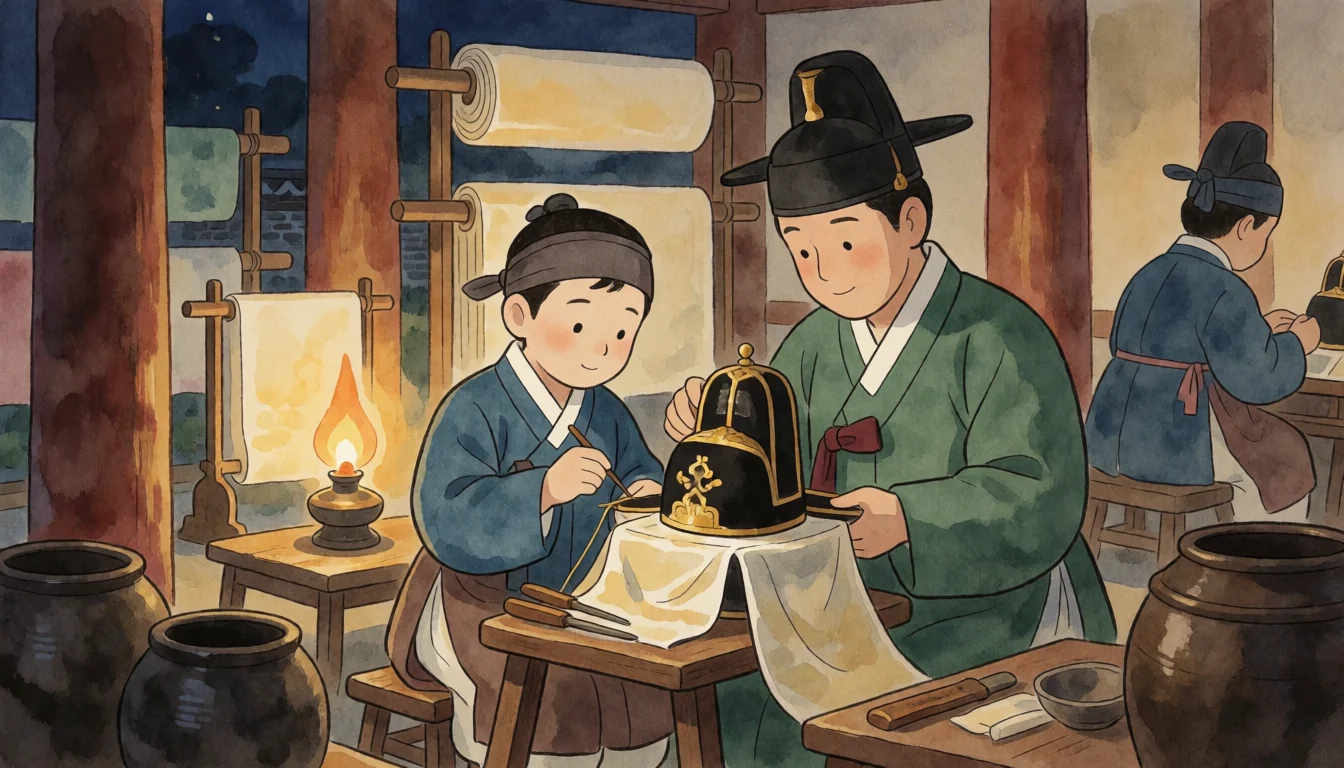
Consequently, the palace garment workshops knew no rest as grand state ceremonies approached. Stiffening the cap frames with starch, edging them with gold trim, and sewing on the precise number of ribs for each rank was grueling work that allowed for not a single error. Piles of urgent dispatch notes demanding delivery crowded the corners of the room, while the workshop echoed with the rustle of silk and the sharp snip of scissors.
Golden Threads Tangled in a Fog of Sleep
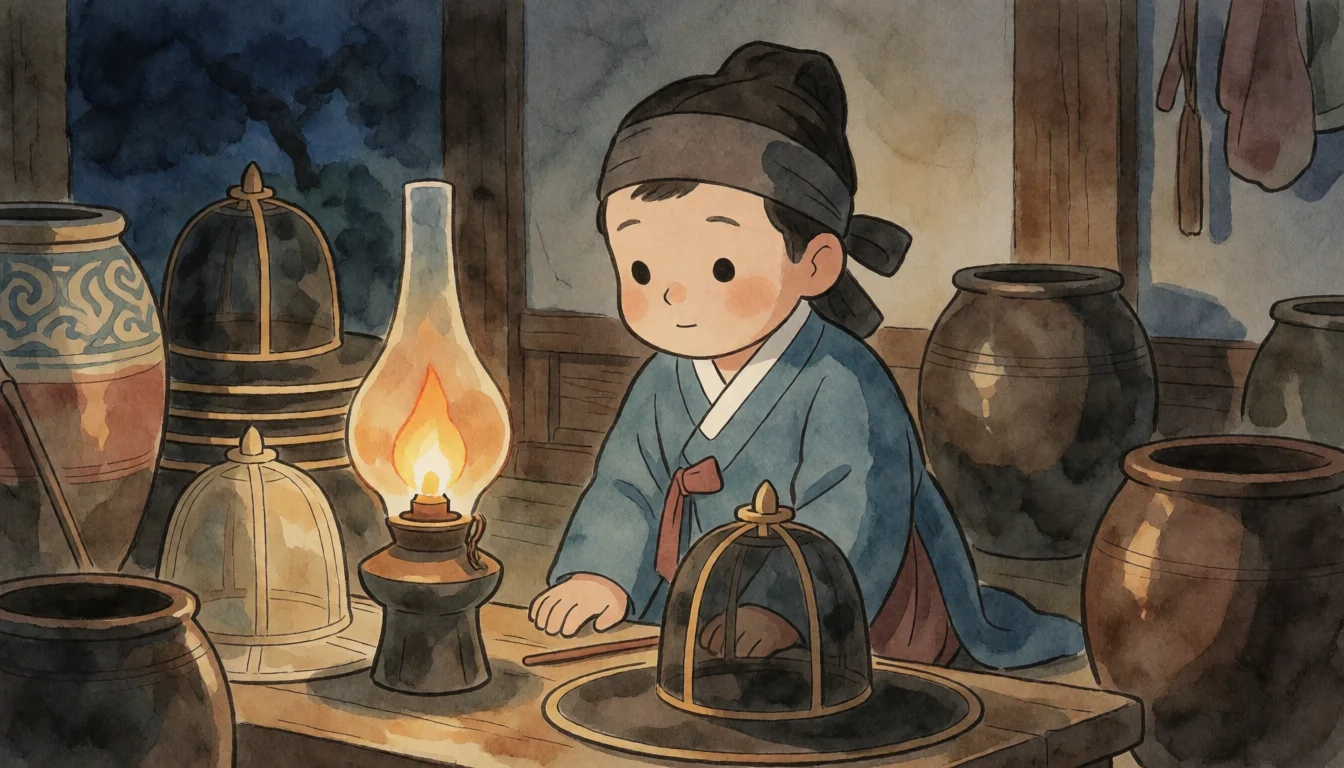
Minsu, a young apprentice in the workshop, rubbed his sore eyes, desperately trying to shake off waves of exhaustion. By day he ran errands and carried sewing materials; by night he helped with the final touches on the yanggwan, sewing the rank ribs under the dim glow of an oil lamp. The rank numbers spun endlessly in his head: seven for the first, six for the second, five for the third, four for the fourth… No matter how many times he recited them, his eyelids grew leaden and his fingertips began to wander aimlessly in the air.
"Minsu, these are the caps for the third-rank minister and the fourth-rank vice-minister attending tomorrow morning’s rehearsal," warned Master Official Oh in a low, stern voice. "A single misplaced stitch is a grave mistake, so check them thoroughly." Minsu bowed deeply. But past midnight, as the oil lamp flickered in the thick, smoky air, Minsu’s head suddenly nodded forward. Snapping awake, he hastily picked up his needle. In his hurried state, he swapped the five ribs meant for the third-rank cap with the four ribs meant for the fourth-rank cap—a blunder his drowsy eyes completely missed.
Morning Inspection and a Frozen Needle
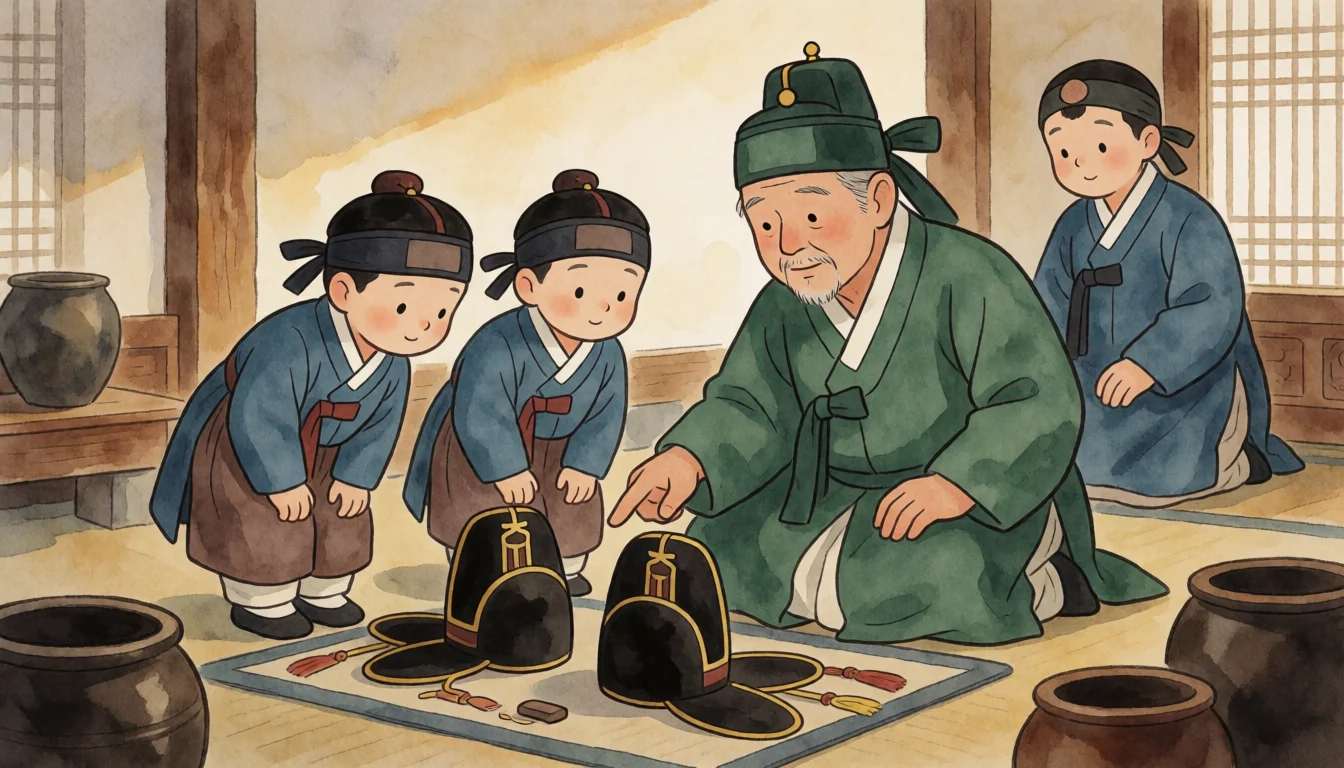
As dawn broke the next morning, the workshop door swung open. Master Oh adjusted his hat strings, neatly lined up the finished caps, and began to inspect them one by one. Minsu swallowed hard, following closely behind with a pounding heart. Master Oh’s sharp gaze paused at the third-rank cap, then shifted to the fourth-rank cap. His dark eyebrows knitted together fiercely.
"What is the meaning of this? The third-rank cap has four ribs, and the fourth-rank cap has five? Are you trying to flip the officials’ ranks upside down?!" Thunderous fury silenced the entire workshop. Minsu’s face turned ashen, and cold sweat streamed down his back. With the high officials soon arriving to don their attire, the entire workshop faced total disaster.
A Rhyme Blurted Out in Panic
Minsu bowed until his head nearly touched the floor, apologizing in a trembling voice.
"Master Oh, I deserve to die! I tried all night to memorize them, but with Western-style uniforms like the new officials’ dress codes and suits coming in, my head was spinning so much…"
"Western-style uniforms mixed up the rank ribs on officials’ caps? You don’t have the law codes in your head, just tangled threads!"
As Master Oh raised his ruler and clicked his tongue, a flustered Minsu blurted out a habit he usually sang to himself to chase away sleep.
"It’s just that… I made up a little chant: 'The seven-rib first rank rides high, the six-rib second rank follows nigh, the five-rib third rank takes its stride, and the four-rib fourth rank steps aside.' But I accidentally recited and sewed the back part backward as 'four-rib third, five-rib fourth', and……"
At Minsu’s flushed confession, Master Oh’s raised ruler froze mid-air. The old man’s stern lips twitched slightly before a suppressed puff of breath and a dry chuckle broke out.
"Good grief. Is that a song telling a third-rank minister to wear his hat and walk backward?"
A quiet snicker rippled through the tense room, instantly dissolving the crushing pressure.
Re-establishing the Law Side by Side Under the Lamp
The laughter was fleeting, and the fire on their heels remained. Minsu did not try to make excuses or shift blame. He immediately gathered his sewing kit and knelt respectfully before Master Oh.
"Sir, I will pull out the threads and redo them right now. No matter what, I will fix them according to regulation."
Master Oh gazed down at Minsu’s hands for a moment, then silently rolled up his own robe sleeves and sat down on the corner of the mat.
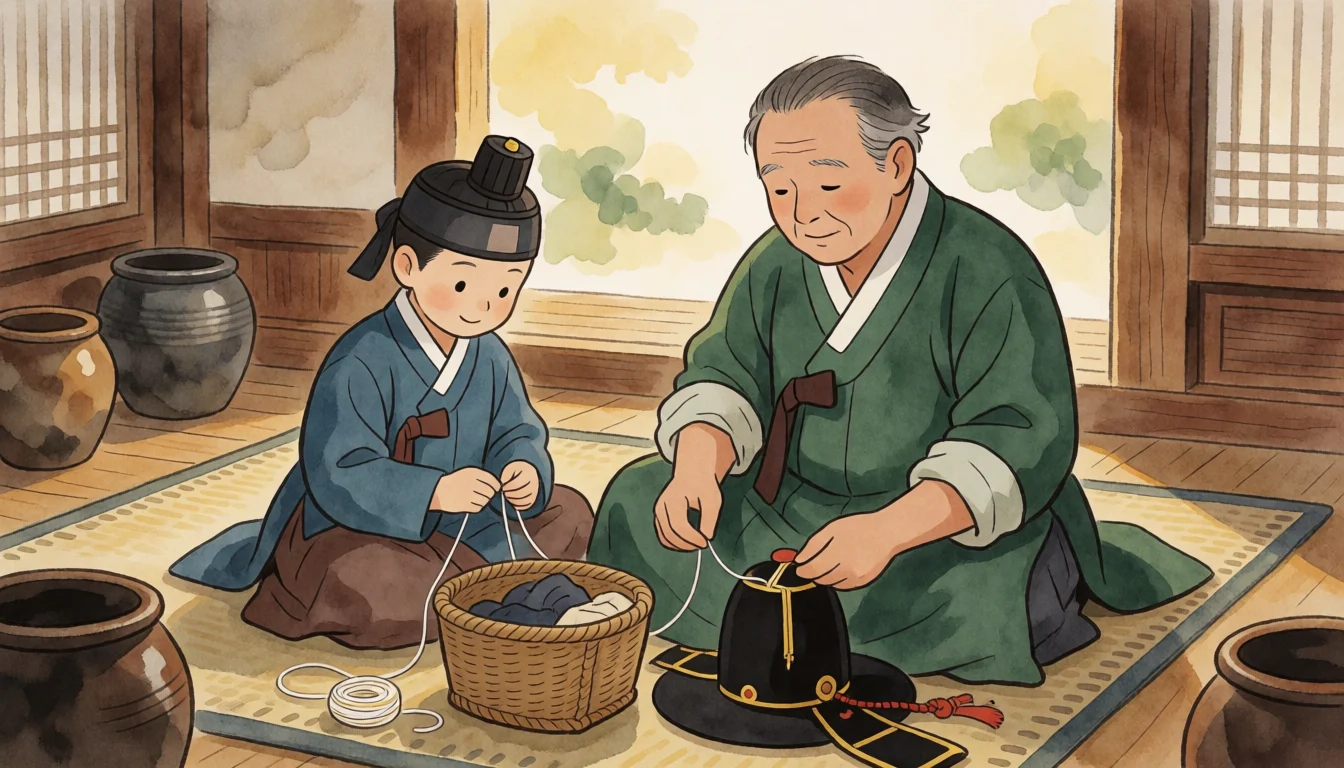
"Don’t just sing with your mouth—etch the law with your fingertips. Hand them over. I’ll pick out the old threads; you sew the third rank’s fifth rib properly with gold thread. A single misplaced line on a cap represents the dignity of the nation—how could we leave it crooked?"
Sitting side by side, the two worked their needles swiftly. Using the tip of a knife to carefully clear away the tangled threads, they meticulously restored five ribs to the third rank and four to the fourth rank, exactly as prescribed in the Daehan Yejon. Blending the veteran’s practiced touch with the young apprentice’s desperate devotion, the misaligned caps slowly regained their proper form.
Warmth in a Cold Teacup
By the time the drum signaling the rehearsal echoed across the distant palace courtyard, both yanggwan were packed into boxes with pristine, flawless dignity. Watching the officials proudly stride away wearing caps correctly fitted with the proper number of ribs for the third and fourth ranks, Minsu finally let out a long-held breath.
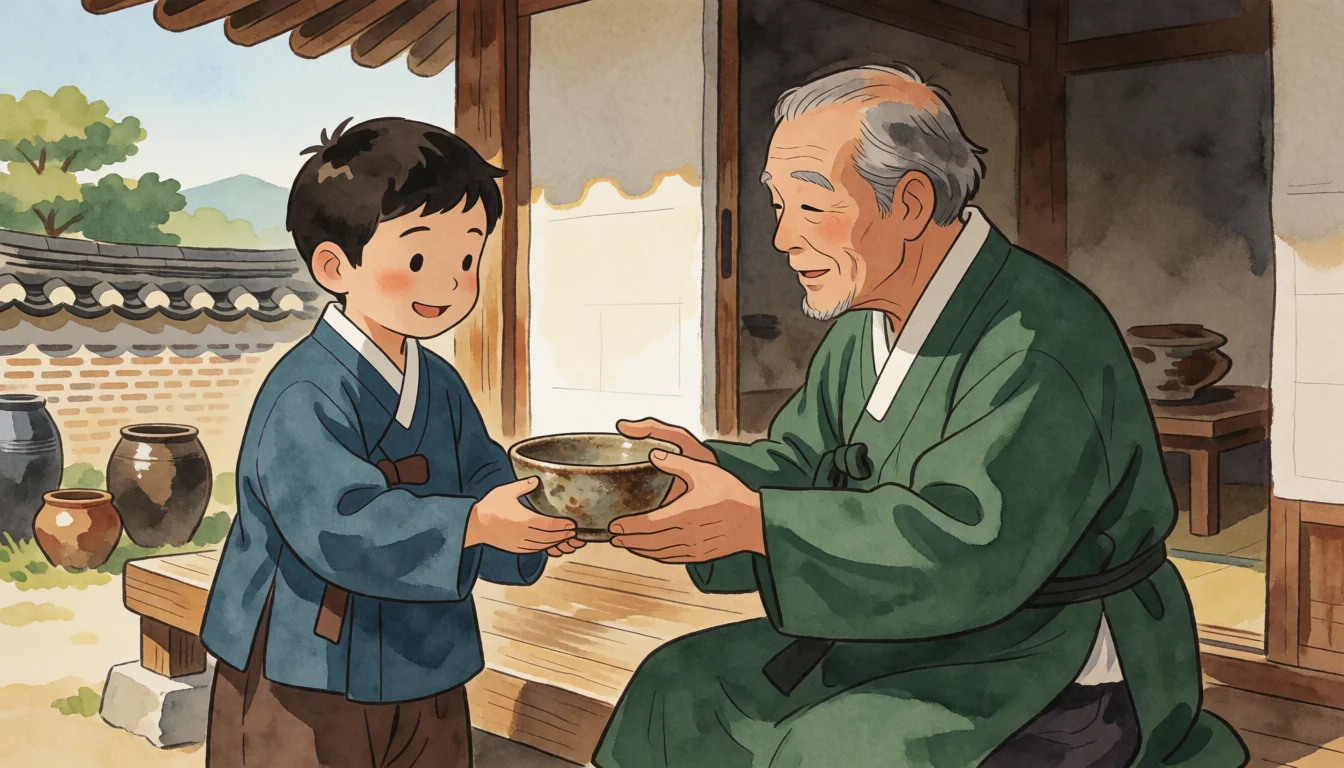
In the empty workshop after everyone had left for the event, Master Oh approached with a bowl of tea. It was rustic on the outside and already lukewarm, but to Minsu—whose mouth had been parched all night—it was a precious draught of dried-fruit tea.
"Drink up. Your throat must be parched from singing all night," Master Oh said gruffly, handing over the cup and giving Minsu’s shoulder a light tap.
"For a makeshift little ditty, the lines turned out straight enough. But if you ever put four ribs on a third-rank minister’s head again, I’ll tie your topknot to the ceiling beams, so keep that in mind."
At those words, Minsu scratched his head sheepishly and took a sip of tea as the two men’s quiet laughter gently drifted across the sunlit workshop floor.
During the Korean Empire, large-scale garment reforms were implemented to break away from the attire of a tributary state and establish imperial dignity. Traditional attire was regulated in the ritual text Daehan Yejon, establishing strict hierarchies for the emperor, crown prince, and officials.
The emperor wore the twelve-symbol crown and robes along with the yellow dragon robe, and Emperor Gojong and Emperor Sunjong wore twelve-ryang sovereign caps—a style not used during the Joseon dynasty. The crown prince wore a nine-symbol crown and robes with red dragon robes. The empress and crown princess wore deep blue ceremonial robes, with the empress wearing twelve-tier and the crown princess nine-tier versions.
In official court and ceremonial attire, the number of ryang on the yanggwan followed Ming dynasty standards: 1st rank 7, 2nd rank 6, 3rd rank 5, 4th rank 4, 5th rank 3, 6th-7th rank 2, and 8th-9th rank 1.
Alongside traditional reforms, Western-style uniforms were also introduced. In April 1895, the “Army Uniform Rules” and “Police Uniform Regulations” were promulgated, introducing Western-style uniforms for military and police officers for the first time. In 1900, Imperial Decrees No. 14 (“Civilian Official Dress Rules”) and No. 15 (“Civilian Official Ceremonial Dress Regulations”) shifted general civilian official attire to Western styles.
These changes were influenced by the status of the empire and the dawn of the Japanese colonial period, and around the time of the Eulsa Treaty in 1905, regulations were sometimes adjusted to set lower ranks compared to the Japanese imperial family.
The clothing systems related to the Korean Empire’s dress reforms are handed down through historical records, but specific details passed down as cultural explanations or traditions to this day do not have confirmed bases in recorded facts.
The characters of Minsu, the young apprentice in the palace garment workshop, and Master Oh, along with episodes like the sewing mistake and the rib-count rhyme, are fictional domestic narratives designed to convey the historical weight of the dress reforms. Conversely, the traditional clothing regulations recorded in the Daehan Yejon, the number of ryang on rank caps, and the promulgation of the “Army Uniform Rules” and “Civilian Official Dress Rules” are grounded in historical fact.
🎨 Color It Yourself