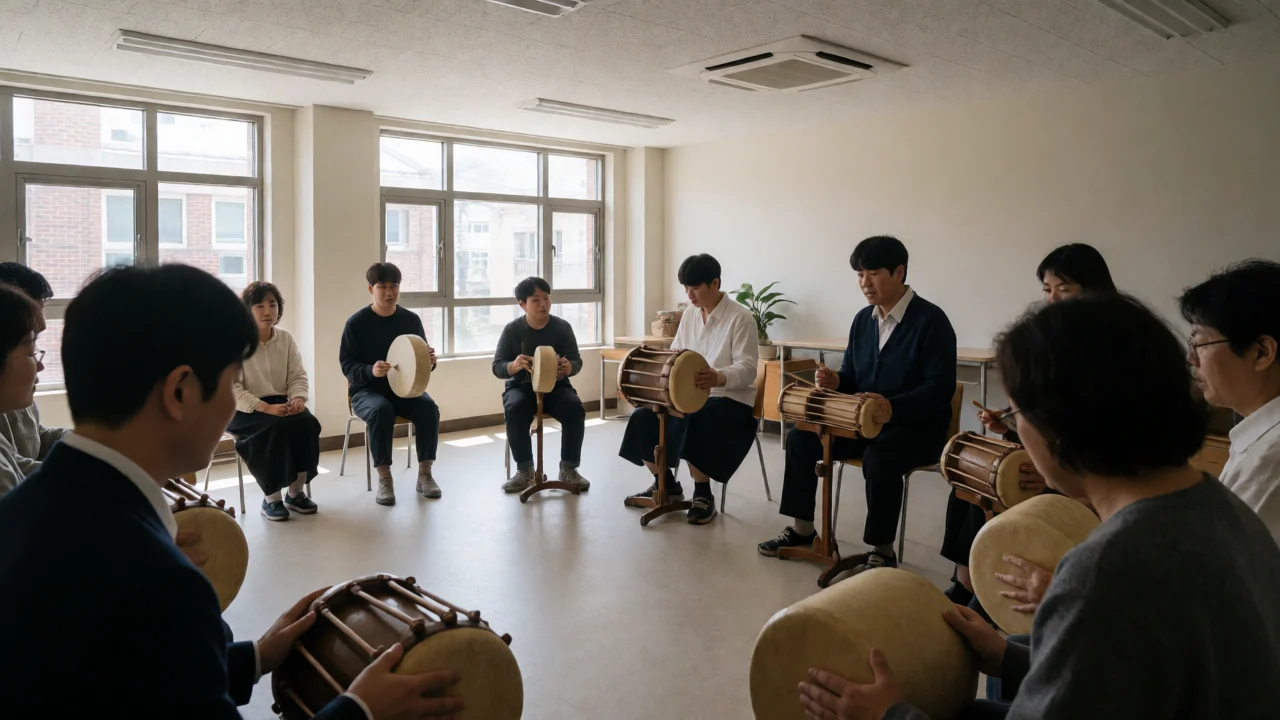
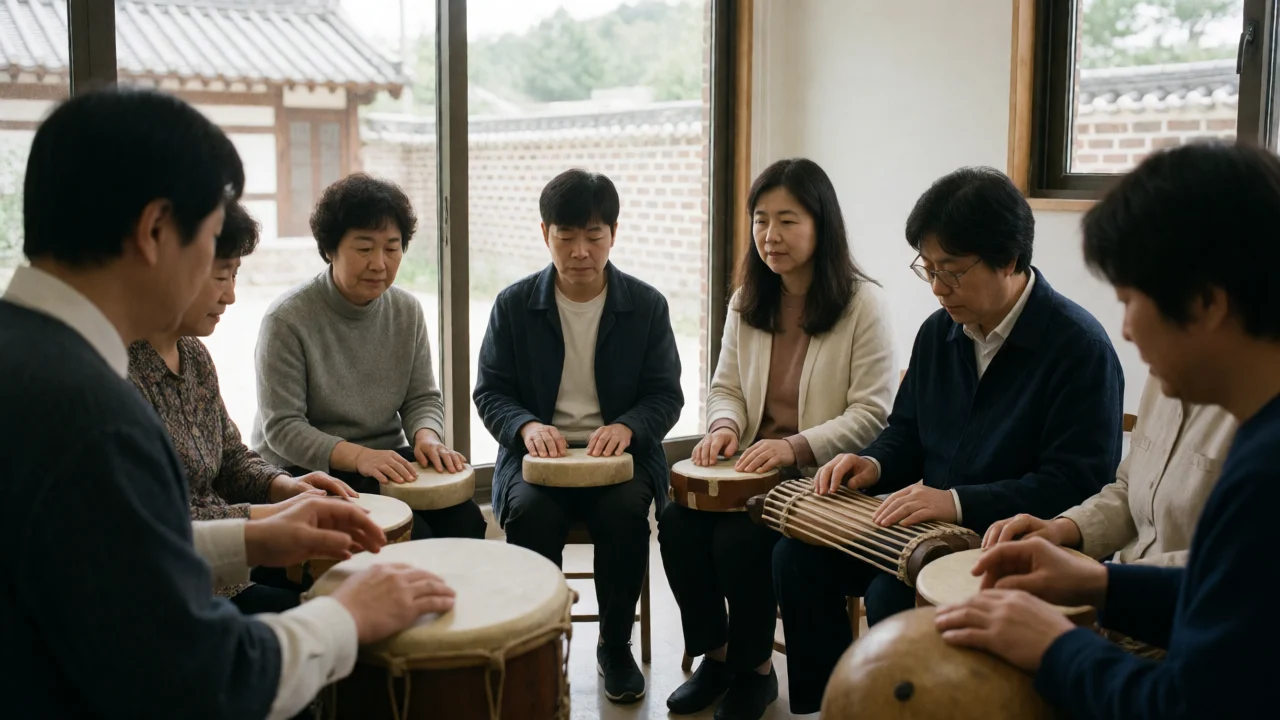
Ahead of the Sonnim-nojeong-gi ritual, Man-seok’s fingertips trembled slightly as he gripped his small gong. Step into the story of Soepungjang, the unique bronze-percussion ensemble style traditionally performed standing by sani musicians in the hereditary shaman rituals of southern Gyeonggi Province.
Settle in and listen to the story at a gentle pace before you begin reading.
The Gong in the Chilly Dawn Air
The dawn mist had not yet lifted from the courtyard of a shaman ritual (gut) in a village in southern Gyeonggi Province. As a sharp breeze cut through his traditional coat (durumagi), young musician Man-seok cupped his freezing hands and blew warm breath onto them. In the center of the straw-matted courtyard, ritual banners fluttered in the wind.
"Man-seok, grip your mallet firmly so your fingers don’t stiffen up," an elder advised quietly, watching the preparations for the village ritual (dodang-gut). Man-seok adjusted his grip on the small gong (kkwaenggwari). Soon, the Sonnim-nojeong-gi—led by the primary ritualist—was about to begin. Before the main ceremony commenced, the musicians had to firmly open the courtyard’s energy with soepungjang, wearing their coats and standing while striking the bronze gong. Man-seok’s heart began to hammer against his ribs.
Misaligned Steps and Clashing Bronze
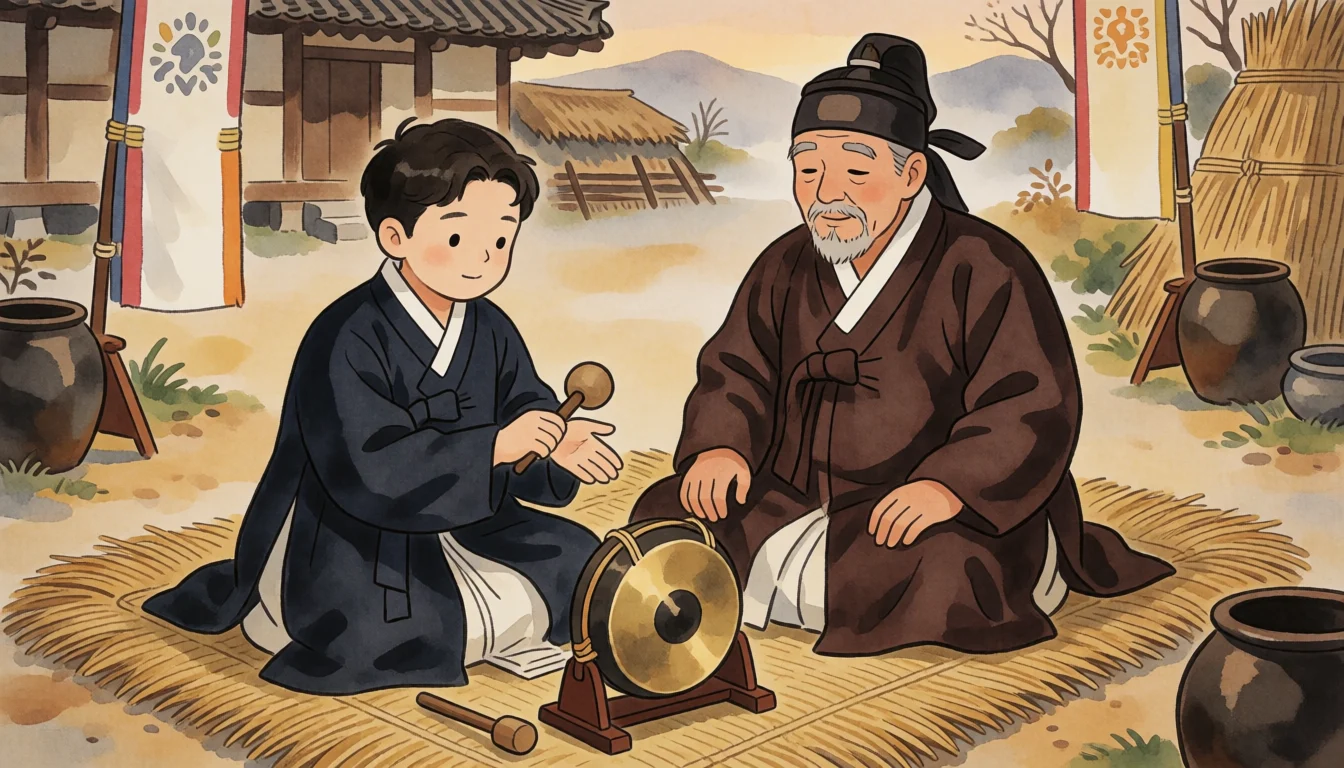
Feeling the expectant gazes of the villagers, Man-seok let his eagerness get the better of him. He desperately wanted to strike the opening rhythm with confidence and earn their approval. Raising the gong mallet high, he struck the metal with force.
"Clang! Clang-a-ling, clang!"
But what went wrong? The slow, triple-beat rhythm of the teobeollim pacing required a steady, grounded touch; instead, impatient and restless, Man-seok’s mallet raced ahead. Even his ritual steps—three paces forward and three paces back, known as samjin-samtoe—became tangled, nearly causing him to trip over the edge of the straw mat. The soepungjang rhythm abruptly cut off, leaving the courtyard chillingly quiet.
Look to the Four Directions
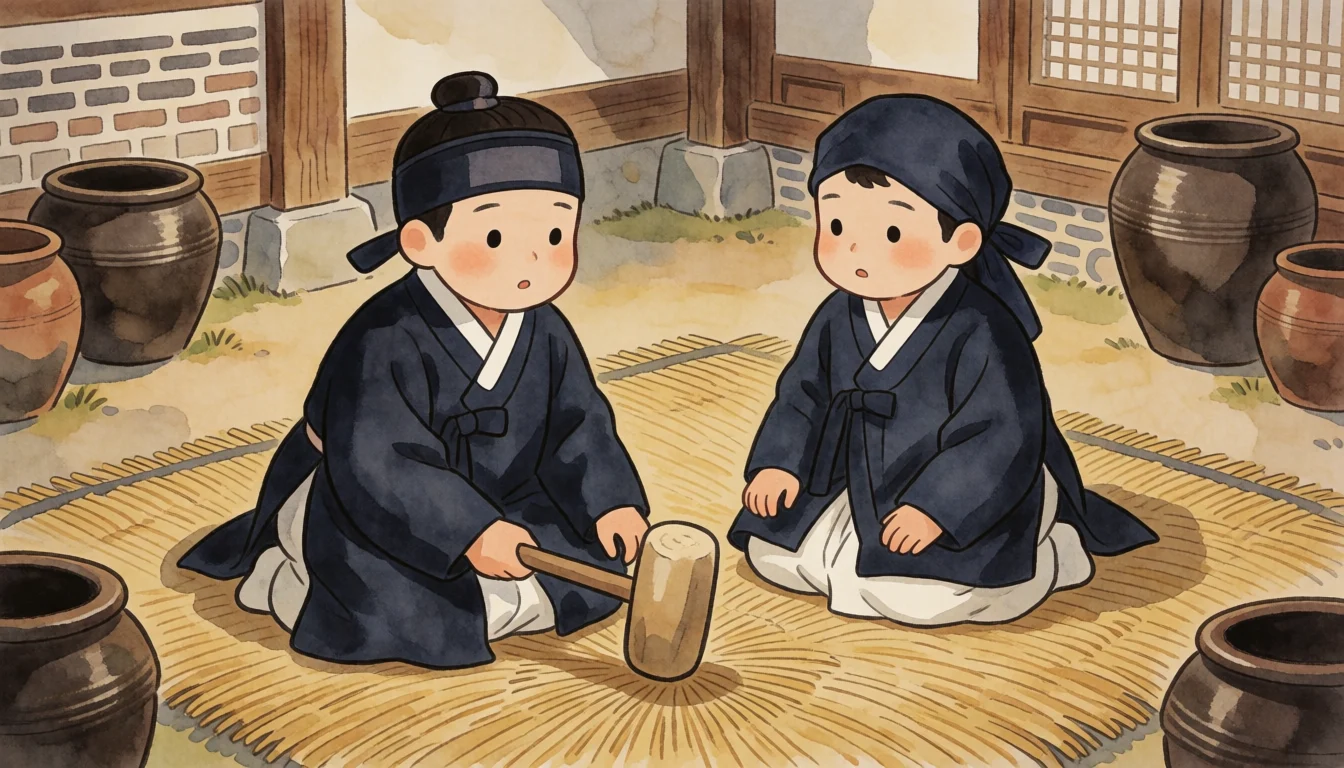
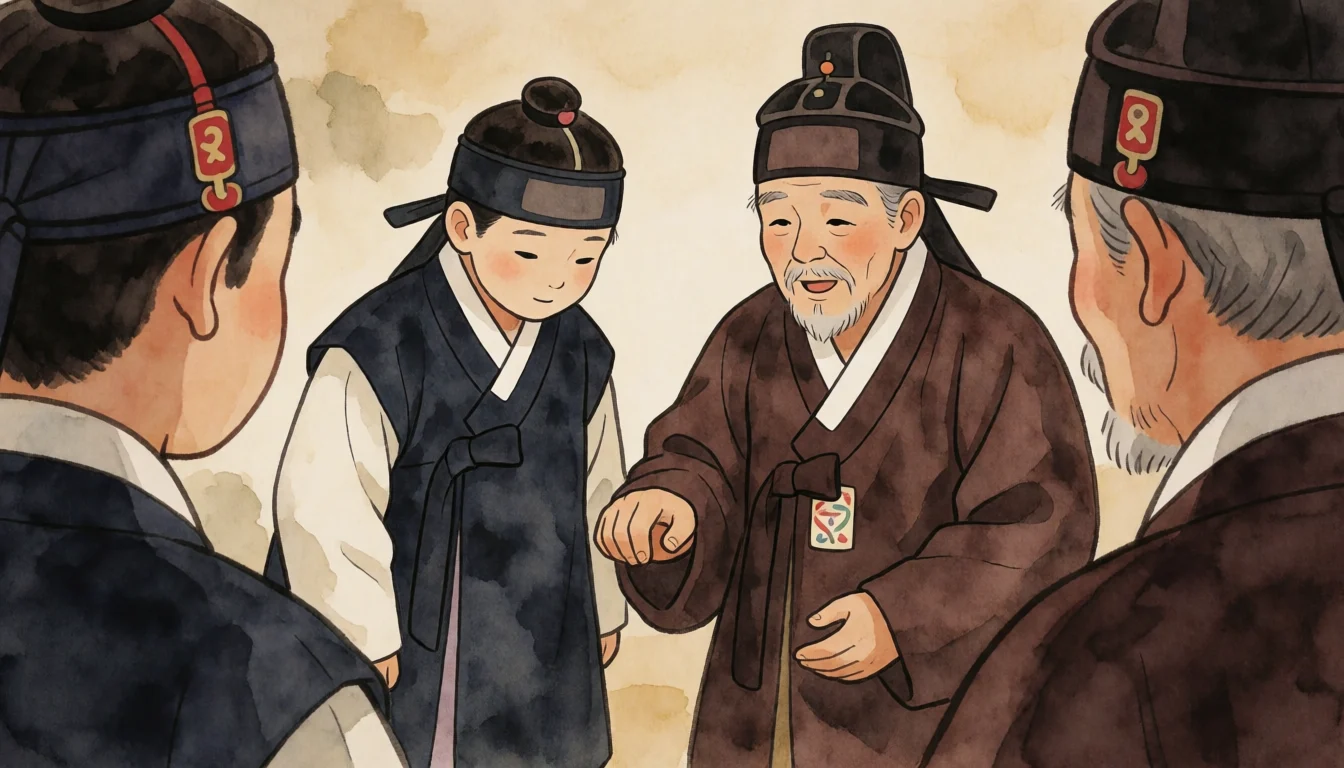
Before he knew it, the elder stepped over and firmly placed his palm over the rim of Man-seok’s gong, instantly silencing the bronze chime.
"What is the point of rushing as if you’re running away from something?"
With his face burning red, Man-seok dropped his head. Adjusting the folds of his coat, the elder slowly pointed toward the four corners of the courtyard.
"Soepungjang isn’t a farmers’ dure-pungjang or deul-pungjang played in reckless isolation. It is ritual music for the dodang-gut of southern Gyeonggi. Have you forgotten that it is a sacred rhythm meant to honor the four directions and open up the ritual ground? If you rush and skip the slow tempo because of your impatience, the subsequent interwoven beats and rapid jajin-gutgeori will all collapse with it."
Man-seok drew a deep breath. He realized that what he needed to protect wasn’t a selfish desire to show off, but a musician’s promise to properly open the ritual courtyard.
The Harmony of Male and Female Mallets
"Let’s try again. Follow my beat."
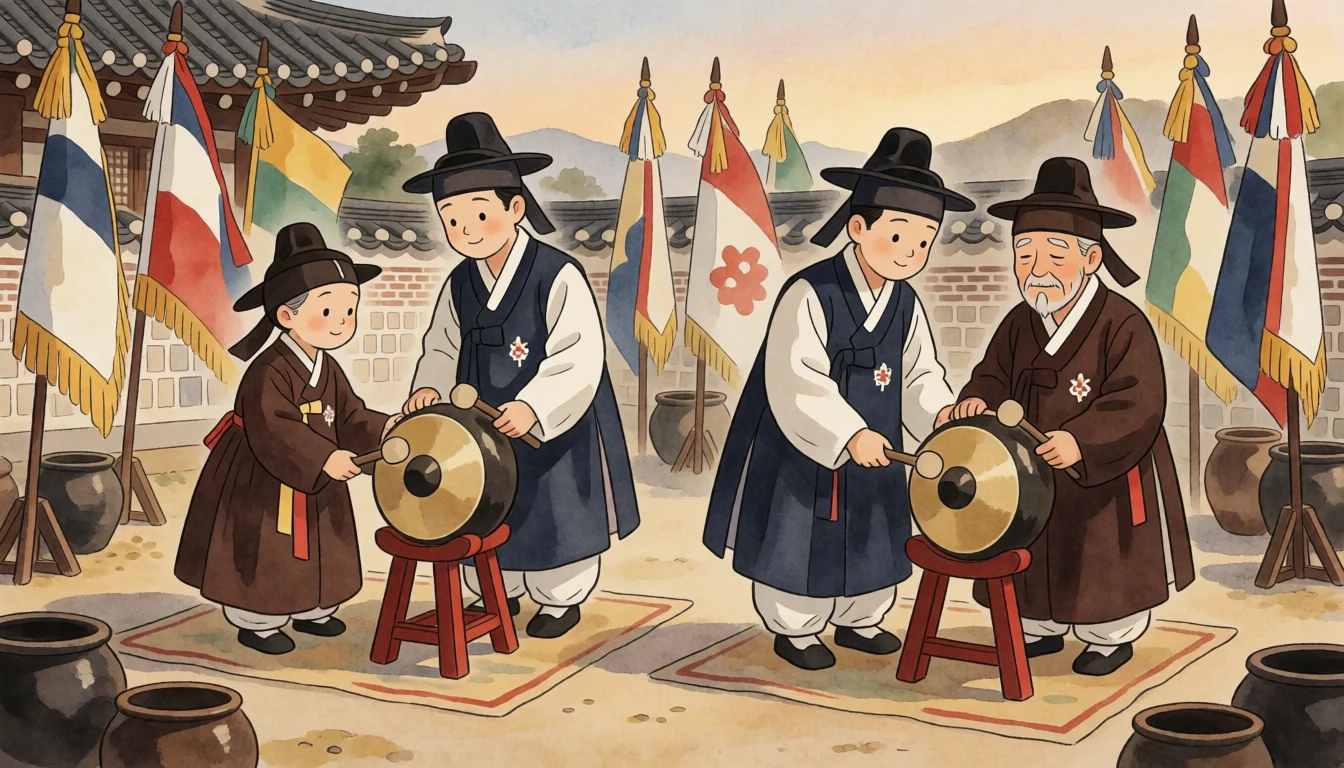
The elder opened the path first with the heavy, resonant strokes of the sutchae (male mallet). A slow, triple-beat rhythm that seemed to vibrate straight through the chest filled the courtyard. Shaking off his impatience, Man-seok responded with the amchae (female mallet) rhythm, gently wrapping around and supporting the elder’s sound.
"Clang—clang, clang-a-ling clang."
Like yin and yang smoothly locking into place, the two musicians’ gongs began to weave together into a single unity. Moving with the orderly steps of samjin-samtoe—three paces forward, three paces back—they faced each of the four cardinal directions in turn, performing the teobeollim rhythm. As if a stubborn knot were slowly coming untied, the heavy air in the courtyard settled into a comfortable calm.
The Resonance Spreading Through the Village Lanes
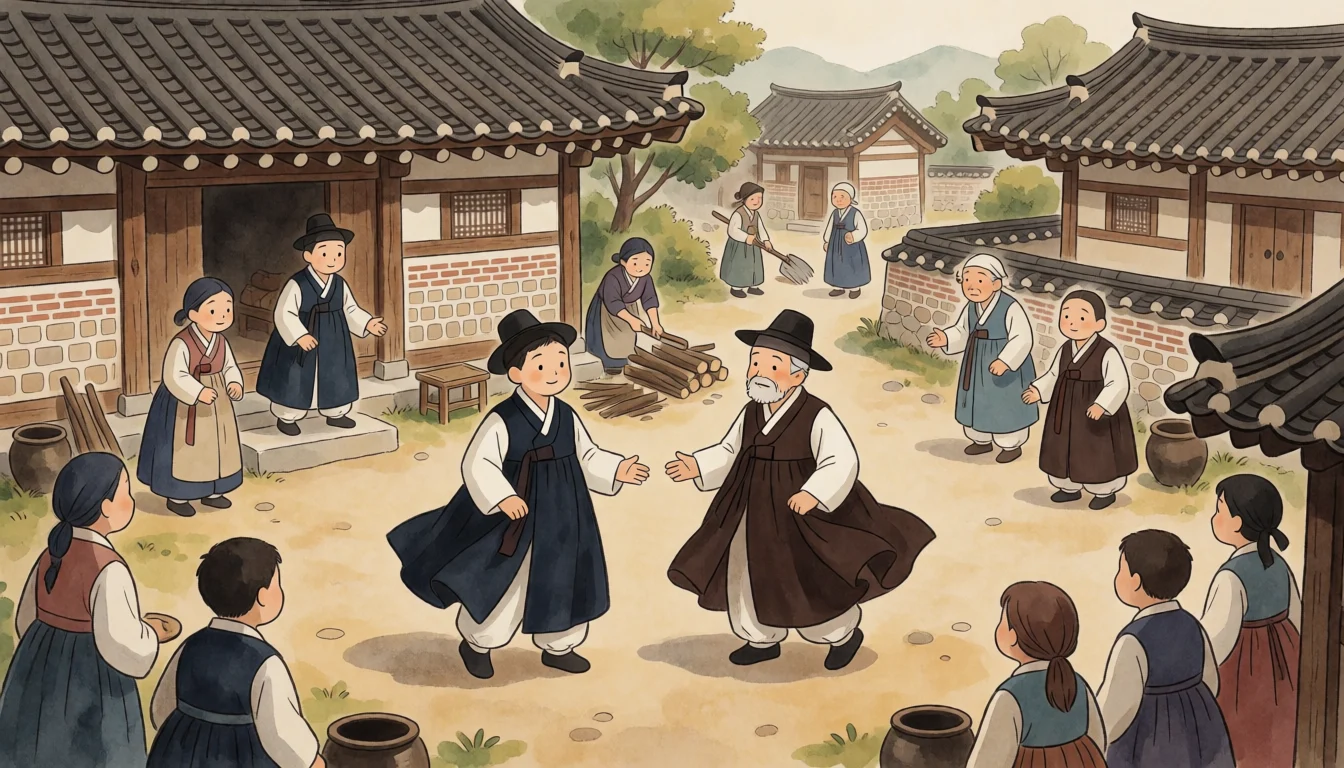
Before long, as the rhythm transitioned from teobeollim to interwoven beats, and finally swelled into the spirited jajin-gutgeori, the soepungjang reached its absolute peak. The tails of their traditional coats fluttered freely in the breeze, and the clear, ringing tones of the bronze gongs soared well past the courtyard walls.
A woman busily chopping firewood in the corner of the yard and an elderly man who had paused while sweeping both stopped what they were doing to listen. The tense, hurried breath of the courtyard rode the steady waves of the soepungjang, calming gracefully and extending a deep sense of peace into every nook and cranny of the village lanes.
Soepungjang: The Unique Bronze Percussion of Southern Gyeonggi Hereditary Shaman Rituals
Soepungjang refers broadly to the bronze-percussion musical segments performed while standing by musicians (sani) during hereditary shaman rituals in southern Gyeonggi Province. Used exclusively in traditions like the regional dodang-gut, it stands out as a distinct type of ritual music (muak) clearly differentiated from farmers’ music traditions such as dure-pungjang or deul-pungjang.
This musical segment typically occurs before and after major ritual sequences—such as sonnim-nojeong-gi or gunung-nojeong-gi—led by the primary ritualist (sinjeung-ae-gutkkun). The musicians wear traditional coats, play gongs, perform the teobeollim ritual of samjin-samtoe (stepping three paces forward and three paces back), and project their bronze rhythms toward the four cardinal directions.
Structurally, it incorporates a blend of rhythms including teobeollim-garak, interwoven beats, and jajin-gutgeori. It begins at a slow triple-beat tempo and gradually accelerates, establishing a harmonious balance of yin and yang through the complementary roles of the female (amchae) and male (sutchae) mallets.
Value and Transmission as Traditional Shaman Music
Throughout the history of hereditary shaman rituals in southern Gyeonggi, soepungjang has been transmitted with its own distinct musical and ritual traditions. As a shamanic musical genre clearly distinct from the percussion of farmers’ music, it stands as an important cultural heritage asset demonstrating the artistic uniqueness and independence of southern Gyeonggi shamanic music.
The Boundary Between Fiction and Historical/Folkloric Facts
The tension and mistakes experienced by the young musician Man-seok, the elder’s spontaneous guidance, and the villagers stopping their chores to listen are narrative elements created to help readers better understand the tradition. They should not be mistaken for actual historical events or verified facts.
However, the performance methods recorded in historical and field research materials remain factual: musicians in southern Gyeonggi dodang-gut standing and playing gongs, performing the samjin-samtoe teobeollim ritual toward the four directions, the flow of the slow triple-beat rhythm, and the yin-yang harmony between the amchae and sutchae mallets.
🎨 Color It Yourself