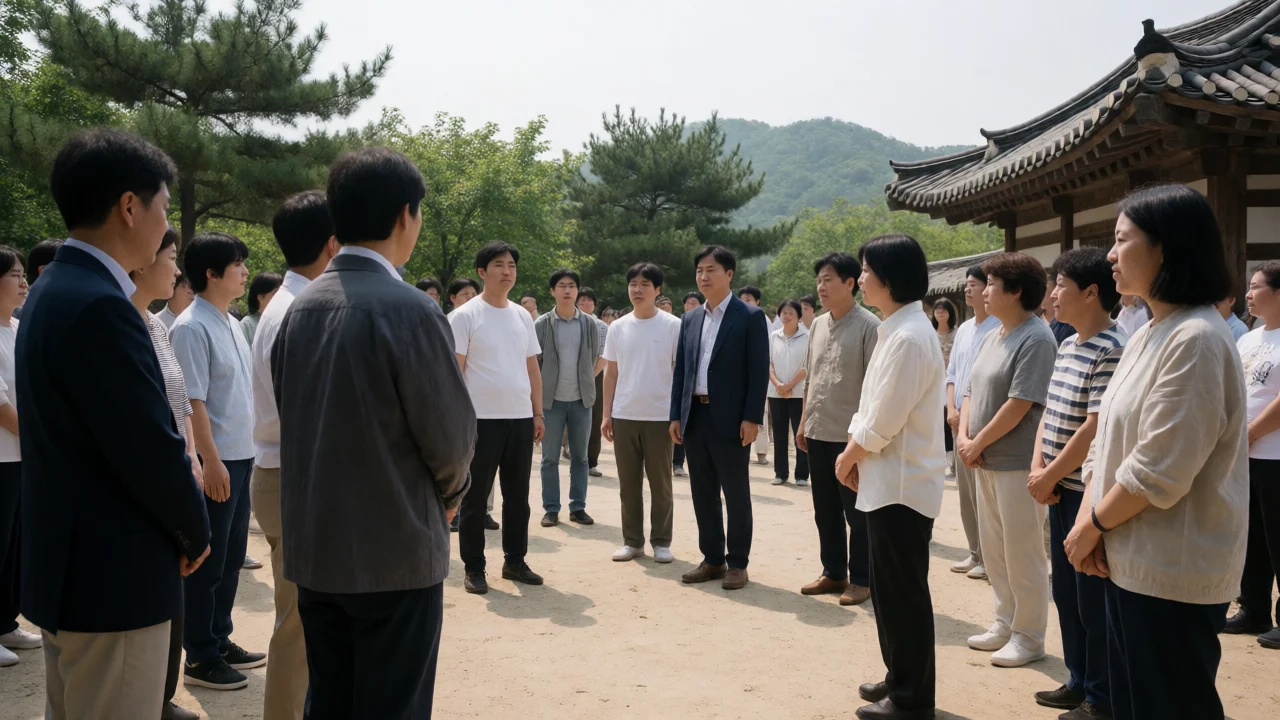
To save their parched seedbeds, a mountain uncle and nephew pull an emergency tool called ‘parae’ (yongdure) from the shed. Discover the structure of this traditional swing-like water-pumping tool and the origins of the rhythmic songs that echoed across the drought-stricken fields.
Settle in and listen to the story at a gentle pace before you begin reading.
Scorched Seedbeds and an Emergency Tool in the Shed
Even with the start of winter just around the corner, the autumn sun was uncommonly fierce. In Jeojeon Village, Bukhu-myeon, Andong, Gyeongsangbuk-do, the fields lay parched and cracked like a turtle’s back, untouched by a single drop of rain. As even the carefully tended seedbeds began to turn a sickly yellow, the farmer Deokgu felt an agonizing knot in his stomach.
"Uncle, at this rate, everything’s going to dry up and die in a few days," young Sundol stammered, swallowing hard. Unable to meet his uncle’s eyes, he stared anxiously at the dirt floor. Though they rarely had reason to use such equipment in this mountainous village, Deokgu knew he could no longer afford to just wait and stare at the empty sky.
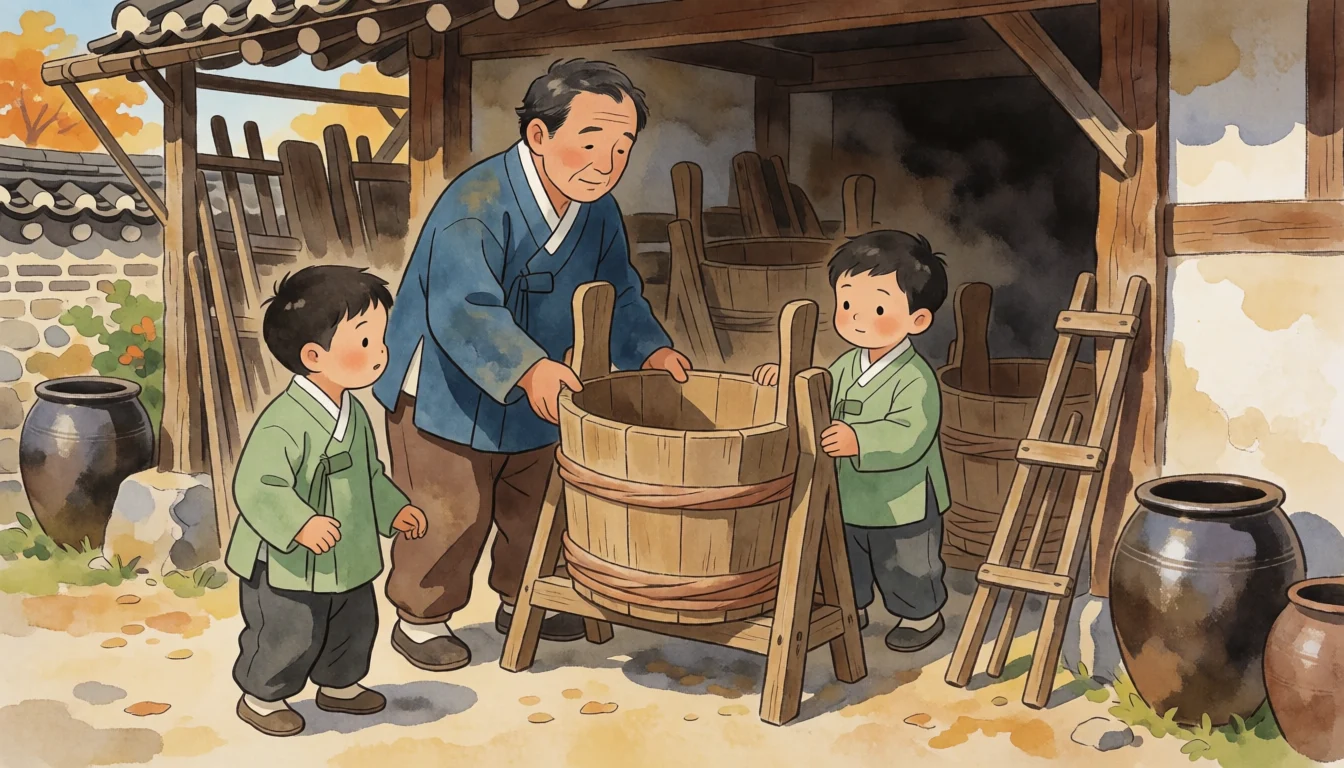
"Sundol, let’s head to the back of the shed. The seedbeds are practically burning up—this is an emergency. We need to break out the parae."
In the Gyeongsang region, people called the yongdure a "parae." Though rarely needed in daily farming, it was an indispensable emergency tool used to scoop water from lower ponds during severe droughts. Shaking off thick layers of dust, the two dragged a large wooden trough and support frames out into the courtyard.
The Elm Pivot and a Clumsy First Step
Carefully carrying their heavy gear, the pair descended the steep bank toward a nearby pond. The parae consisted of three main parts: an elongated trough to hold and lift water, a pivot mechanism that suspended the trough like a swing, and a sturdy support frame to hold it all together.
"Sundol, take a close look at this pivot arm," Deokgu instructed. "Here in Jeojeon Village, we carve these pivots out of tough, resilient elm wood. It has to be strong enough not to snap under the weight of a full trough of water."
Deokgu fitted the sturdy elm pivot into the tripod stand and securely tied the trough’s ropes. However, having sat unused for so long, the apparatus let out a heavy, groaning squeak when he gave the trough a gentle nudge.
"Uncle, you know my strength—leave this to me! Let’s start pumping!"
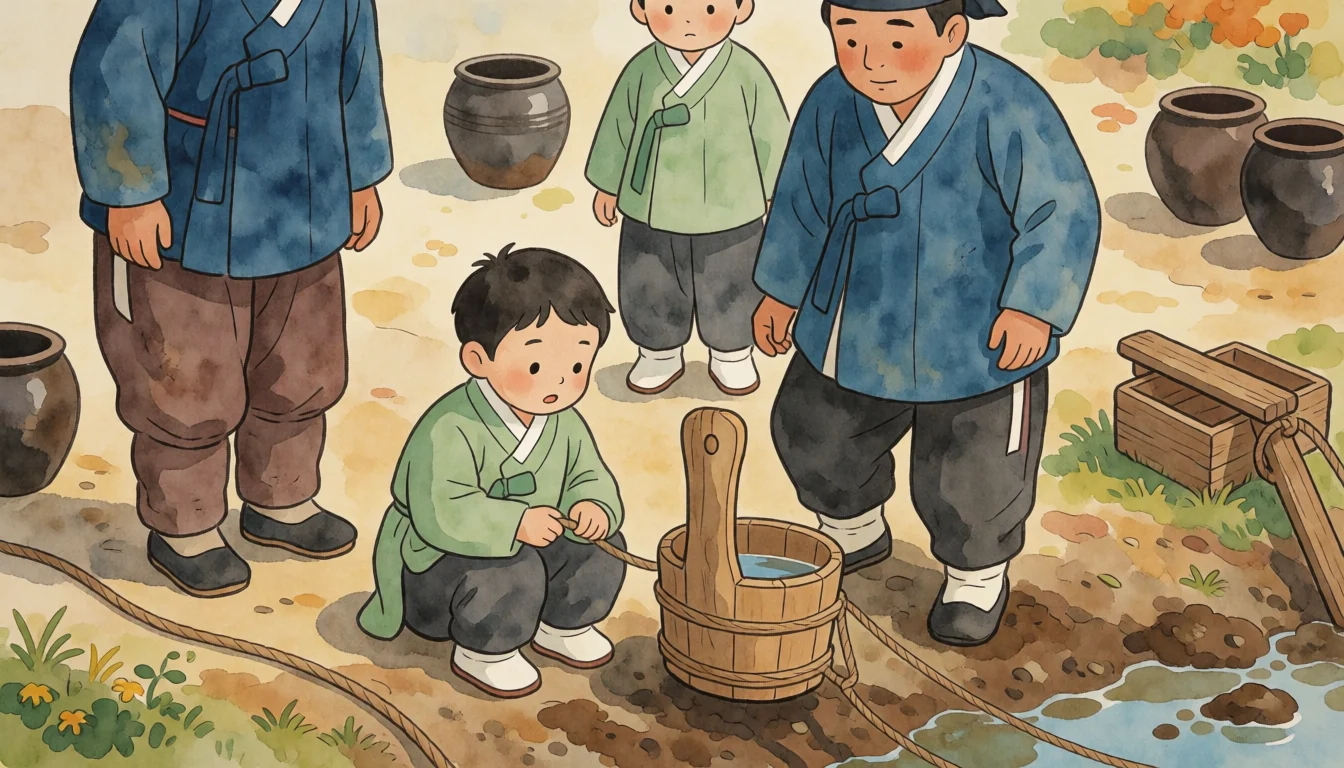
Anxious to get moving, Sundol eagerly grabbed the handle ropes and jerked them downward toward the pond. The trough wobbled violently, and Sundol’s feet slipped right out from under him in the muddy bank. With a startled "Whoa!", he tumbled straight onto his backside, while the elm pivot shrieked sharply in protest.
Finding the Rhythm to Raise the Water
"Ouch… Uncle, this thing has a mind of its own. Are the ropes going to snap or is this elm wood going to break?"
Sundol whimpered, dusting off his pants. Instead of scolding him, Deokgu chuckled warmly and pulled his nephew to his feet.
"Pumping water isn’t about brute strength, boy. A parae has to be swung smoothly back and forth like a playground swing to catch the water. Since there’s quite a height difference between the pond and the fields, rushing will only tip the trough and spill everything."
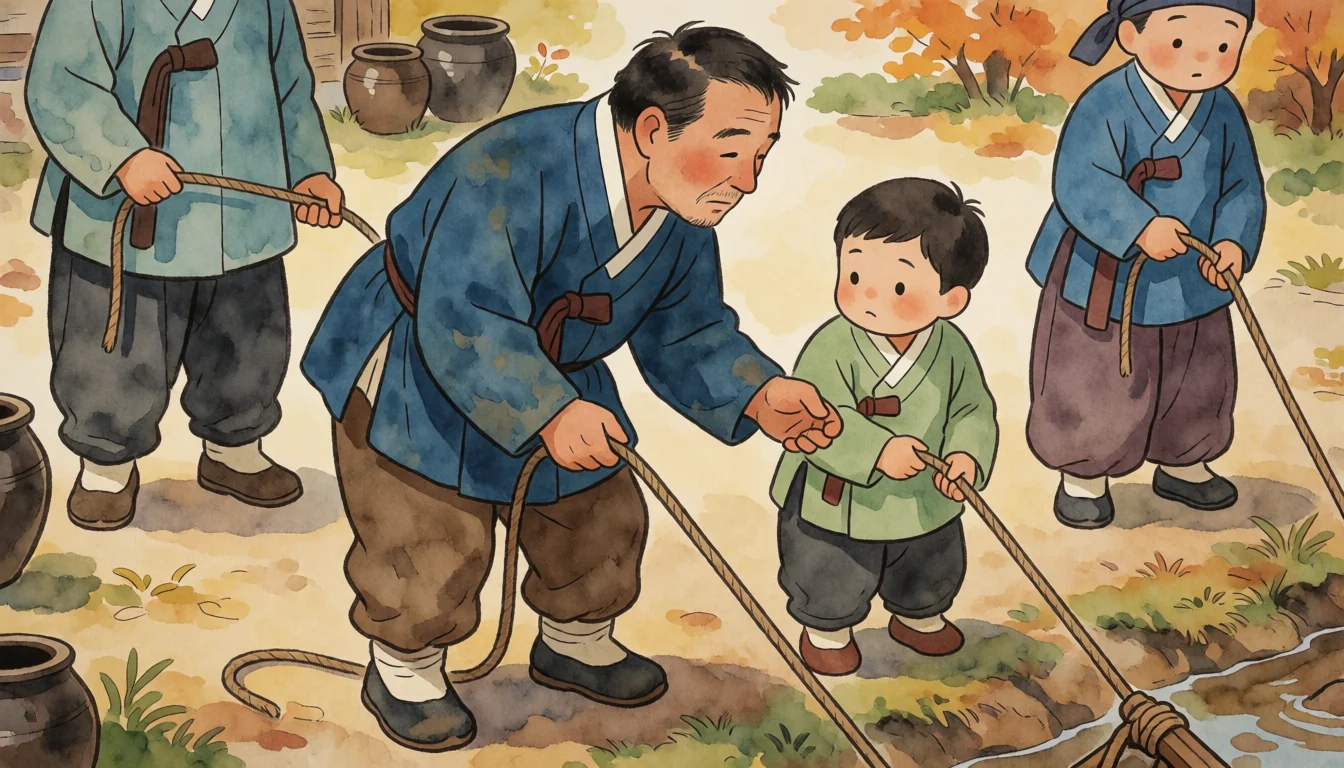
After steadying the rocking trough, Deokgu handed the opposite rope to Sundol.
"Now, match the rhythm to my lead and pull when I call out. Got it?"
Clearing his throat, Deokgu pitched his voice into a steady chant:
"Heh-ya, let the parae draw the water in!"
Catching his breath, Sundol listened closely to his uncle’s call. Feeling a bit self-conscious, he cleared his throat and chimed in with the response:
"Heh-yeo, let the trough turn round!"
The call-and-response melody began to echo softly across the edge of the pond.
A Refreshing Stream Quenching the Parched Fields
As if by magic, their arms and shoulders began to move as one in time with the song. The elm pivot stopped shrieking, swinging smoothly back and forth in a graceful semi-circle. As the front lip of the trough skimmed the surface of the pond, it scooped up a full, sloshing load of clear water.
"All right, lifting now! Put your weight into it, but push smoothly without jerking!"
At Deokgu’s signal, Sundol let out a long breath and pushed the rope upward. The moment the swing-like trough soared past the ridge of the field, a generous stream of water gushed out with a rushing sound onto the dry earth.
"It went in! Uncle, the water is pouring right into the paddy!"
Though Sundol’s face was streaked with sweat and mud, a bright smile spread across his lips. The lifeline of water sank straight into the cracked soil, soothingly wrapping around the roots of the scorched seedbeds.
"That’s it. That’s how we call and respond. You don’t have to rush—just swing to the rhythm, and before you know it, the field will be full."
Wiping the sweat from their brows with their sleeves, the two resumed their melodic parae chants. At last, even amidst the severe drought, the path along the Jeojeon Village ridges was filled with the refreshing sound of running water.
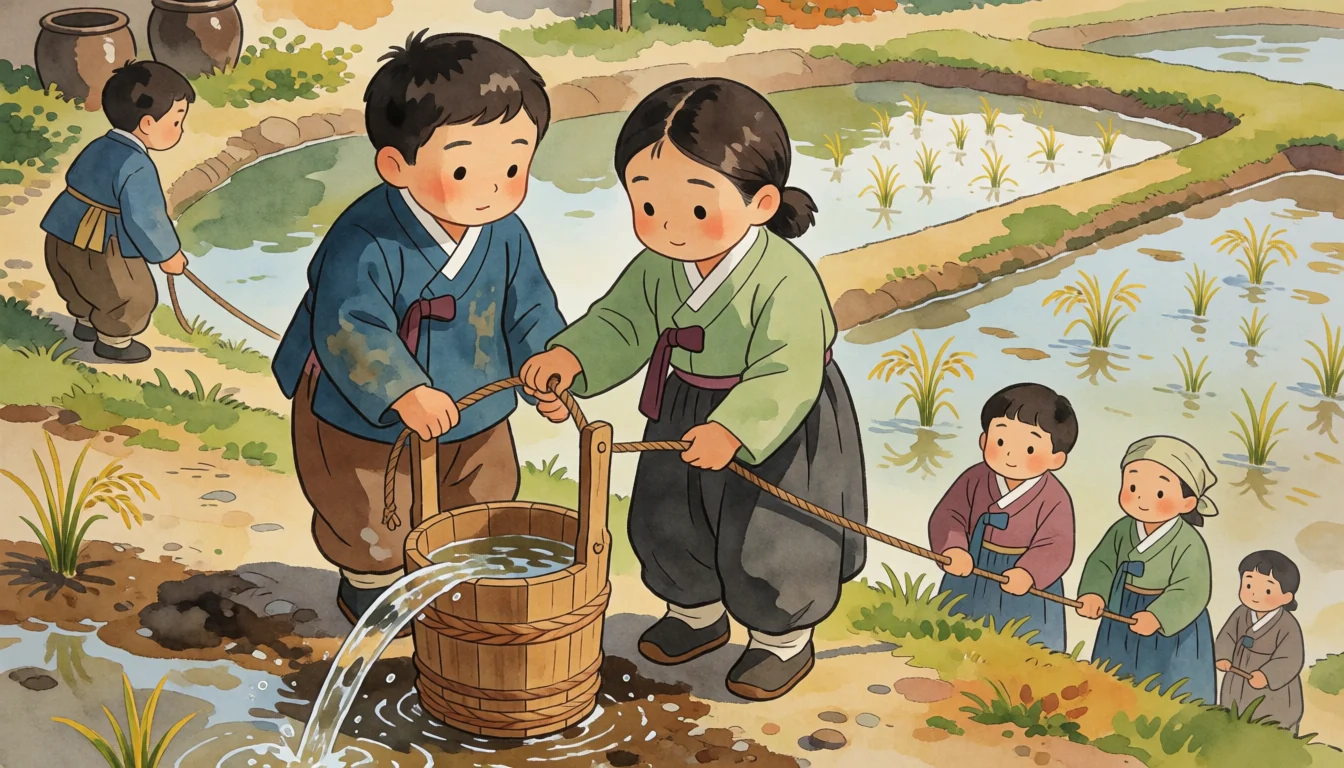
Definition and Structure of the Yongdure
The yongdure is a traditional farming tool used to lift water from a low-lying source into elevated fields. Because it operates by swinging a water-carrying trough like a pendulum, it cannot be used where the height difference between the water source and the field is too extreme. Its structure consists of three main components: the trough, the pivot mechanism, and the support stand.
Regional Names and Usage Patterns
The yongdure goes by various names and uses depending on the region. In the Yeonggwang area of Jeollanam-do, it is called a "tongdure," while in Gyeongsang-do and Gangwon-do, it is known as a "parae." Notably, the term yongdure is rarely used in Gyeongsang-do, just as the term parae is unfamiliar in regions along the West Coast.
In low-lying plains such as Ganghwa-do in Incheon or Gimje in Jeollabuk-do, the yongdure was widely used before modern irrigation facilities became available. In contrast, in mountainous areas like Jeojeon Village in Bukhu-myeon, Andong, Gyeongsangbuk-do, it was rarely used in daily life, serving instead as an emergency tool brought out during severe droughts to pump water from ponds when seedbeds were at risk of burning up. Additionally, in Jeojeon Village, sturdy and resilient elm wood was traditionally preferred for the pivot mechanism.
Water-Pumping Songs and Regional Traditions
When pumping water with a yongdure, farmers traditionally sang call-and-response work songs. Notable examples include the "Parae Sori" of Jeojeon Village in Bukhu-myeon, Andong; the "Yongdurejil Sori" (Water-Pumping Song) of Ansan, Gyeonggi-do; the counting songs of Gyodong-myeon, Ganghwa-do; and the calendar-style songs of Naega-myeon. Among these, the Yongdurejil Sori of Ganghwa-do was designated as Incheon Intangible Cultural Heritage No. 12 in 2003.
The Development of Modern Irrigation and the Evolution of the Yongdure
With the advancement and spread of modern irrigation systems such as electric motors and water pumps, the labor-intensive yongdure gradually disappeared from agricultural fields. While no longer used in everyday farming, it is valued as an important folk tradition—exemplified by the designation of Ganghwa-do’s yongdurejil sori as Incheon Intangible Cultural Heritage No. 12 in 2003—ensuring its legacy lives on as a vital part of Korean folk culture.
Boundary Between Creative Narrative and Historical/Folk Facts
The characters, specific daily conflicts during the autumn drought, and dialogue featured in the story are fictional creations designed to enhance readability. However, the structural components of the parae (yongdure)—consisting of the trough, pivot mechanism, and support stand—as well as its emergency use during droughts in mountainous areas like Andong’s Jeojeon Village, the traditional use of tough elm wood for the pivot, and the call-and-response parae and yongdurejil songs are all grounded in historical and folkloric facts.
🎨 Color This Story