As mounds of rice straw and thick bamboo pile up in the courtyards of Chilseok Village—said to resemble a resting giant ox—a colossal knot structure begins to stir with life. We explore the origins and traditions of the Gwangju Chilseok Gosaumnori.
Settle in and listen to the story at a gentle pace before you begin reading.
The Village of the Resting Ox and the Cries of Geese
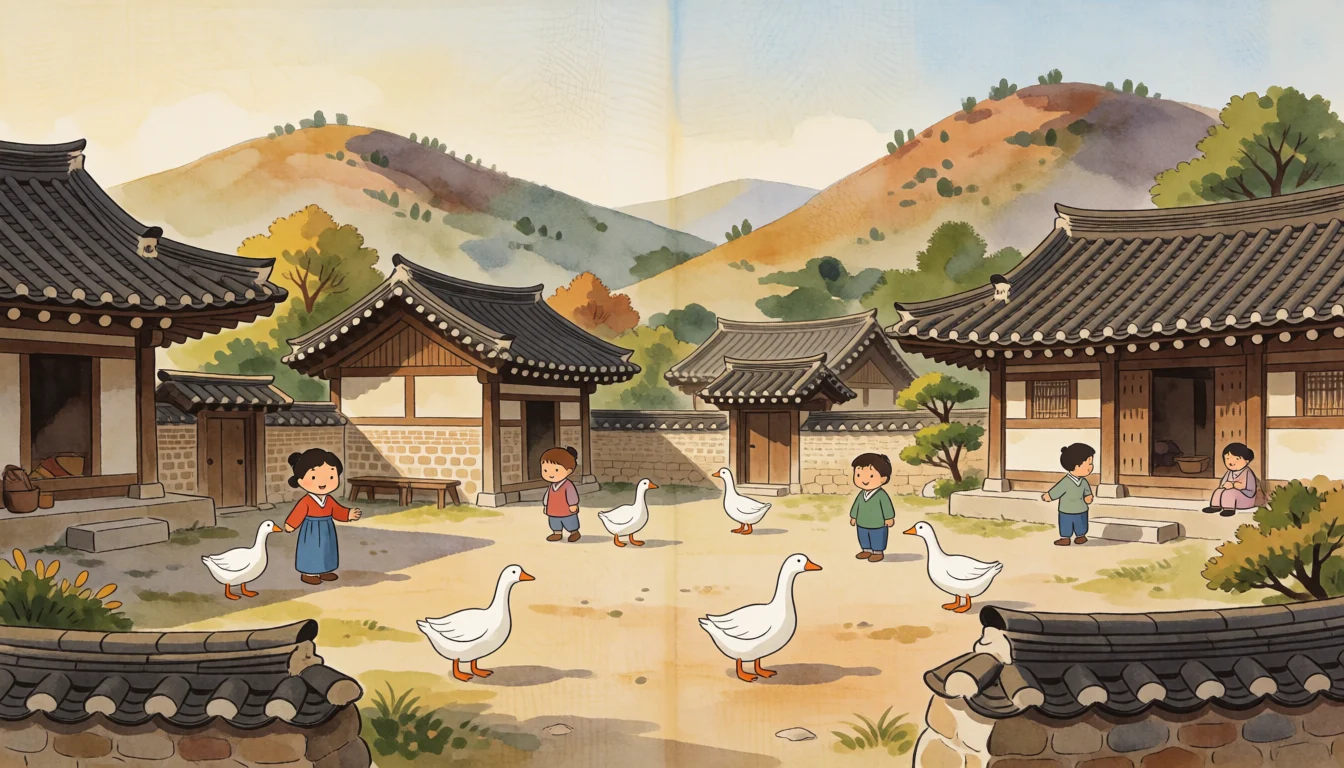
In Gwangju’s Chilseok Village, an amusing tale has been passed down for generations. The village topography resembles a giant ox resting comfortably. Because the earth’s energy was considered fiercely potent, raising dogs was said to stunt their growth; hence, households raised geese instead of dogs.
Legend has it that a wandering geomancer once warned that to prevent the fierce earth energy from harming the young villagers, the terrain needed to be pinned down. Thus, the ox’s halter was firmly tied to a massive ginkgo tree serving as the grandmother dangsan (village guardian tree); a pond shaped like a livestock trough was dug where the ox’s mouth would be; and seven stones were placed at its tail to tame the land’s spiritual currents.
The play designed to tame this potent energy while praying for an abundant harvest was none other than Gosaumnori (knot-fighting play). Featuring two massive play structures resembling large knots tied with clothing ribbons or ropes clashing against each other, the tradition died out around 1940 before Professor Ji Chun-sang revived it in July 1969 by gathering the memories of village elders.
Rice Straw and Bamboo Piled High in the Yard
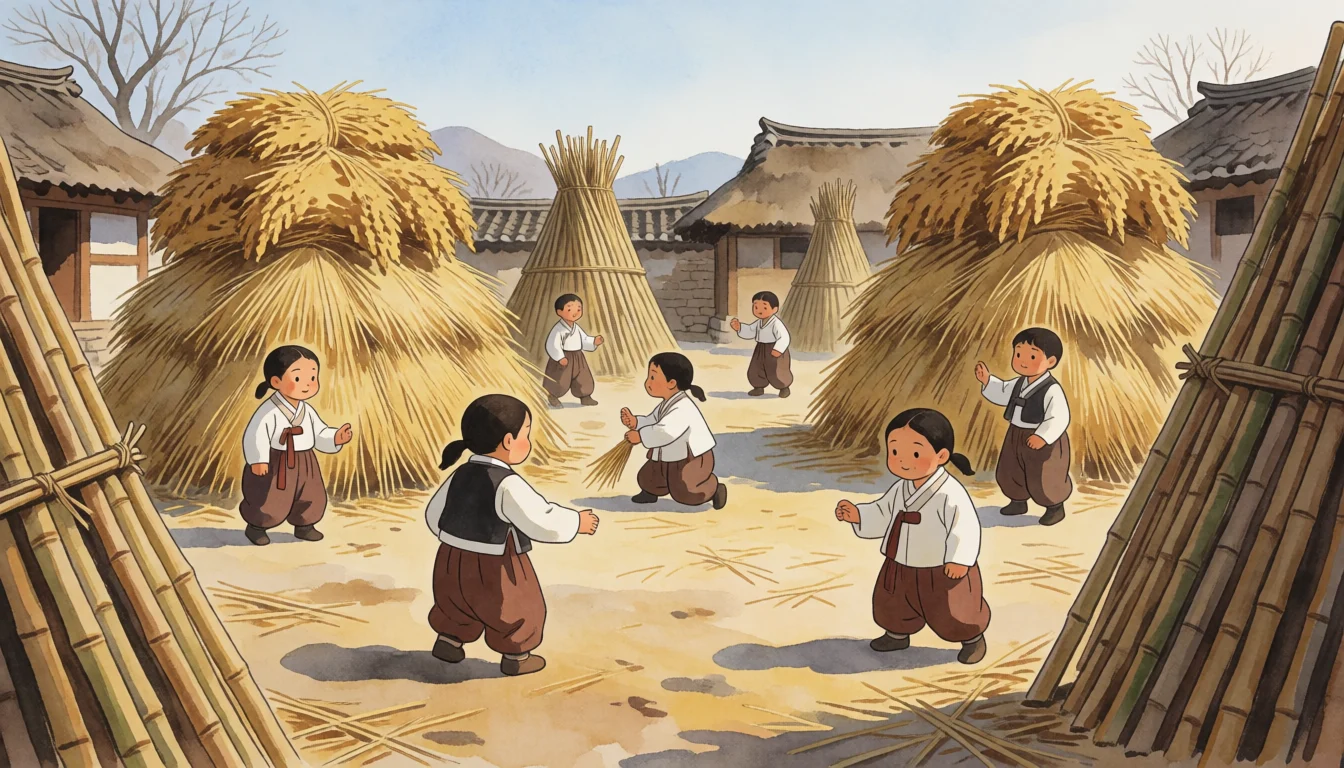
With the Lunar New Year passed and the tenth day of the first lunar month approaching, enormous mounds of rice straw piled high across the wide yards of Chilseok Village. No less than three hundred bundles of straw and over forty thick bamboo poles, each about the thickness of an adult’s wrist (around three centimeters in diameter), were brought in.
Mandol, who led the laborers of the West side, brushed off a bundle of straw and let out a long breath. As he looked at the heavy wooden levers and carrying poles, beads of sweat already dotted his brow.
“Alright, everyone, stay sharp!” Mandol barked. “This knot isn’t just a pile of straw. Dozens of our men from the West will have to carry this on our shoulders and charge across that rugged field.”
At Mandol’s shout, the young men gripped the bamboo tightly and began twisting and weaving the straw. The earthy, savory scent of rice straw and the sharp sounds of taut straw ropes echoed throughout the village.
The Banners of the East and West
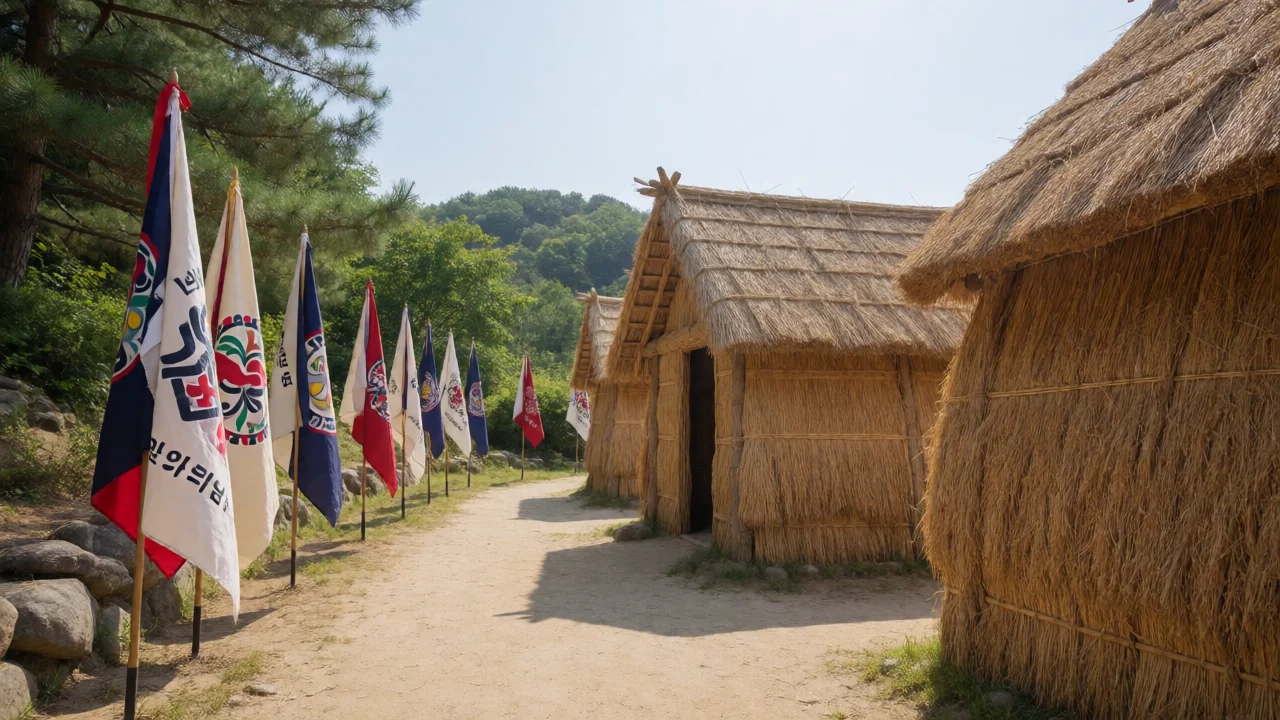
At that moment, a powerful roar of cheers erupted from the East side yard across the village. Dongsu, the young man rallying the spirit of the East, hoisted a large agricultural banner featuring a navy blue border on a white background. Right across the fluttering flag, bold black characters clearly spelled out Nongjacheonhajidaebeon (“Agriculture is the great foundation of the universe”).
“Hey, brother Mandol! Is the West banner still lying down?” Dongsu shouted, flanked by four smaller command flags. “Know that this January, the East will seize the momentum!”
Not to be outdone, Mandol forcefully raised the West banner. Featuring a striking red border on a white background, the West flag stood proudly, creating an immediate, electric tension in the air as it faced the blue-tinted East banner.
“Ha! If farming could be won with words alone, our crops would already be harvested. Have you forgotten the old saying that the West must win for the entire village to enjoy a bountiful harvest?”
The eyes of both village factions burned with fierce pride and competitive spirit, unwilling to yield an inch.
The Creaking Wooden Lever
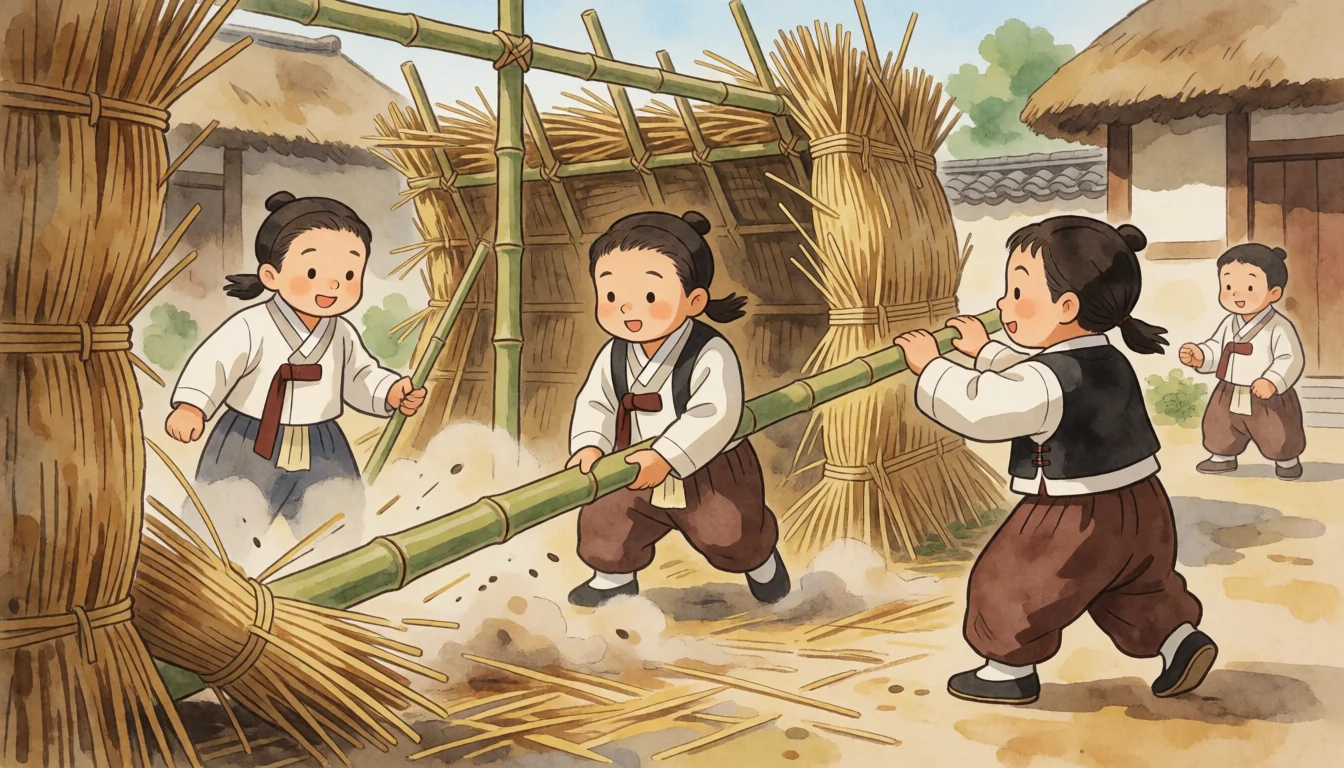
Yet trouble struck just as they were weaving and assembling the massive knot structure. Just as they inserted a heavy seven-meter-long wooden lever down the middle and prepared to secure the carrying poles and the Y-shaped supporting braces,
“Crack!”
Accompanied by an ominous snapping sound, a thick bamboo pole twisted and popped out from within the straw bundles. Unable to bear the weight, the lever tilted sharply to one side, and the tightly bound straw rope knots began to unravel one by one.
“Dangerous! Fall back!”
Mandol shouted urgently, shoving the young men out of the way. The massive head of the knot structure crashed down to the ground, kicking up a thick cloud of dust. People from both villages turned pale and gasped. If the framework warped like this, there would be no talk of lifting the knot structure for the fight on the sixteenth—they couldn’t even assemble it.
Words Shared Beneath the Ginkgo Tree
As a chilling silence settled over the yard, Grandmother Soon-geum walked slowly over from the direction of the grand ginkgo tree, the grandmother dangsan, leaning on her cane. She gently stroked the collapsed head of the knot structure and looked alternately at dirt-covered Mandol and grim-faced Dongsu.
“How could pressing down the back of a resting ox ever be accomplished by brute strength alone?” she murmured. “Whether East or West, if the knot structure isn’t sound, there can be neither a match nor a harvest.”
Grandmother Soon-geum gestured toward the pond at the village entrance and the seven stones.
“Why do you suppose the geomancer made them tie the halter to the ginkgo tree and dig the pond? To subdue the fierce energy, you must first unite your hearts before testing your strength. Stop struggling to build it alone and go mend the joints together.”
At her calm words, the shoulders of the heated, irritable young men instinctively relaxed.
Joined Carrying Poles and the Restored Knot Structure
Mandol let out a deep sigh and took off his dirt-soiled gloves. He then strode over to Dongsu, who had been standing cross-armed across the way, and extended his hand.
“Dongsu. Aren’t you the best in the village at handling the Y-braces? Lend a hand and support this side of the lever.”
Dongsu hesitated for a moment at the unexpected request, then smiled wryly and rolled up his sleeves.
“Hah! I’d hate for this to end on a whim because the knot broke before we even got to fight. Let’s retie those anchor knots first!”
Young men from both the East and West rushed forward without a second thought. While one group used their shoulders to lift the lever with all their might, another braced the neck with Y-shaped supports and wound thick straw ropes tightly around it. As they matched their breathing and sweated together, the tilting giant knot finally raised its head proudly toward the sky.
The Tenth Day of the Lunar Month, Rising Excitement
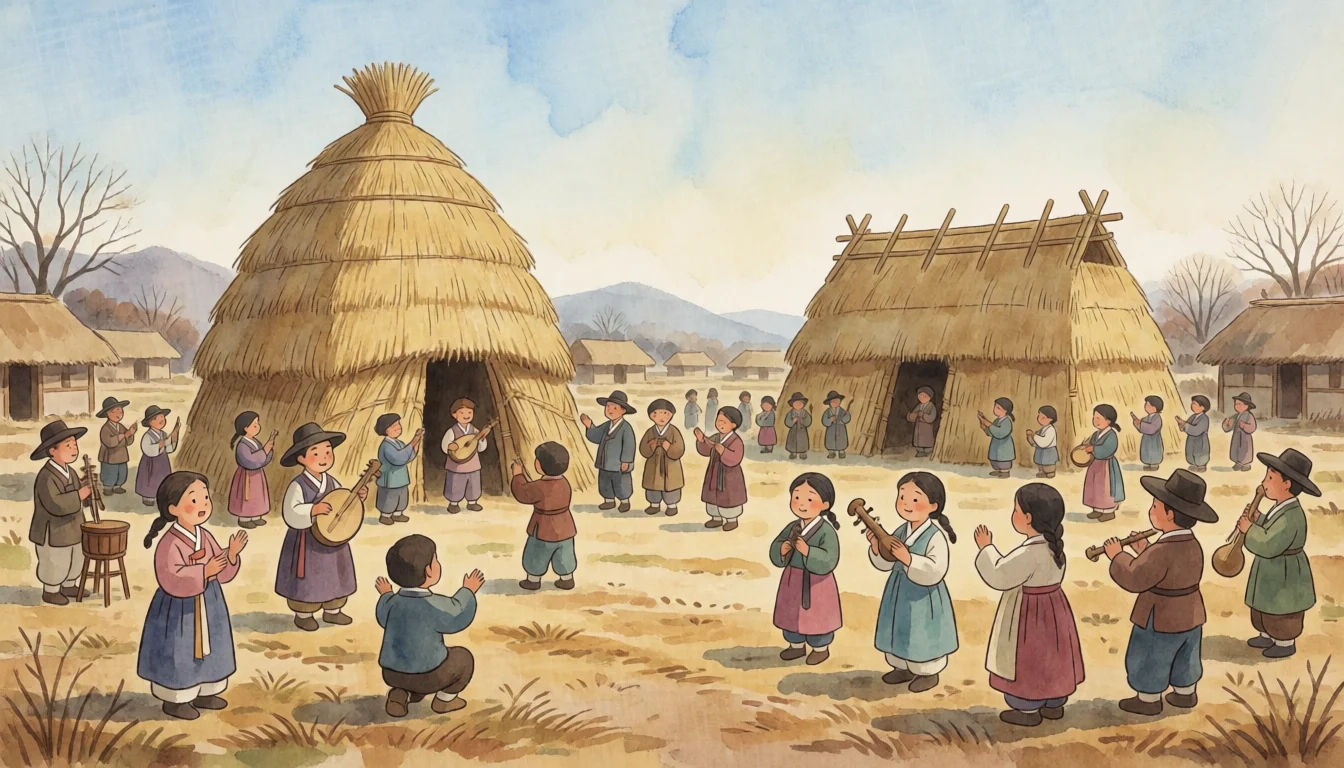
Once the tenth day of the lunar month passed, the fields of Chilseok Village transformed into another world. The two completed knots of the East and West finally revealed their magnificent forms, and the sounds of gongs and small gongs echoed across the entire landscape.
“Eolssigu! Jihwaja johta!”
The earth shook with every heavy step of the dozens of men carrying the knot structures. The young men hoisted the poles firmly onto their shoulders, marching in and out of the village to build excitement, while children and women followed behind the farmers’ music troupe, raising their voices to heighten the festive mood. Whenever the Eastern and Western knots crossed paths, they shook their heads as if growling at one another, foreshadowing the epic clash on the night of the sixteenth.
The Grand Clash on the Moonlit Night of the Sixteenth
At last, the night of the sixteenth day of the first lunar month deepened. Pale moonlight, just past the full moon, poured down from the chilly winter night sky. Across a field, the navy blue banner of the East and the red banner of the West stood in sharp opposition.
“Push! Lift it higher!”
Accompanied by Mandol’s booming shout, the West’s knot structure soared into the air. From the opposite side, the East’s knot, led by Dongsu, charged forward with terrifying momentum, kicking up the earth.
“Thud—!”
The heads of the two giant knot structures collided head-on right in the middle of the night sky. The harsh sound of grinding rice straw mingled with the white plumes of heavy breathing rising from the men. The straining muscles of those refusing to yield and those pressing down from above locked in intense tension. It was truly a majestic spectacle, reminiscent of an ox rising up from the earth.
The Promise of Bountiful Harvest Blossoming in Cheers
After a relentless battle with not an inch given, the West’s knot mustered its final strength, pressing down on the head of the East’s knot and forcing it tilting downward.
“Waah!”
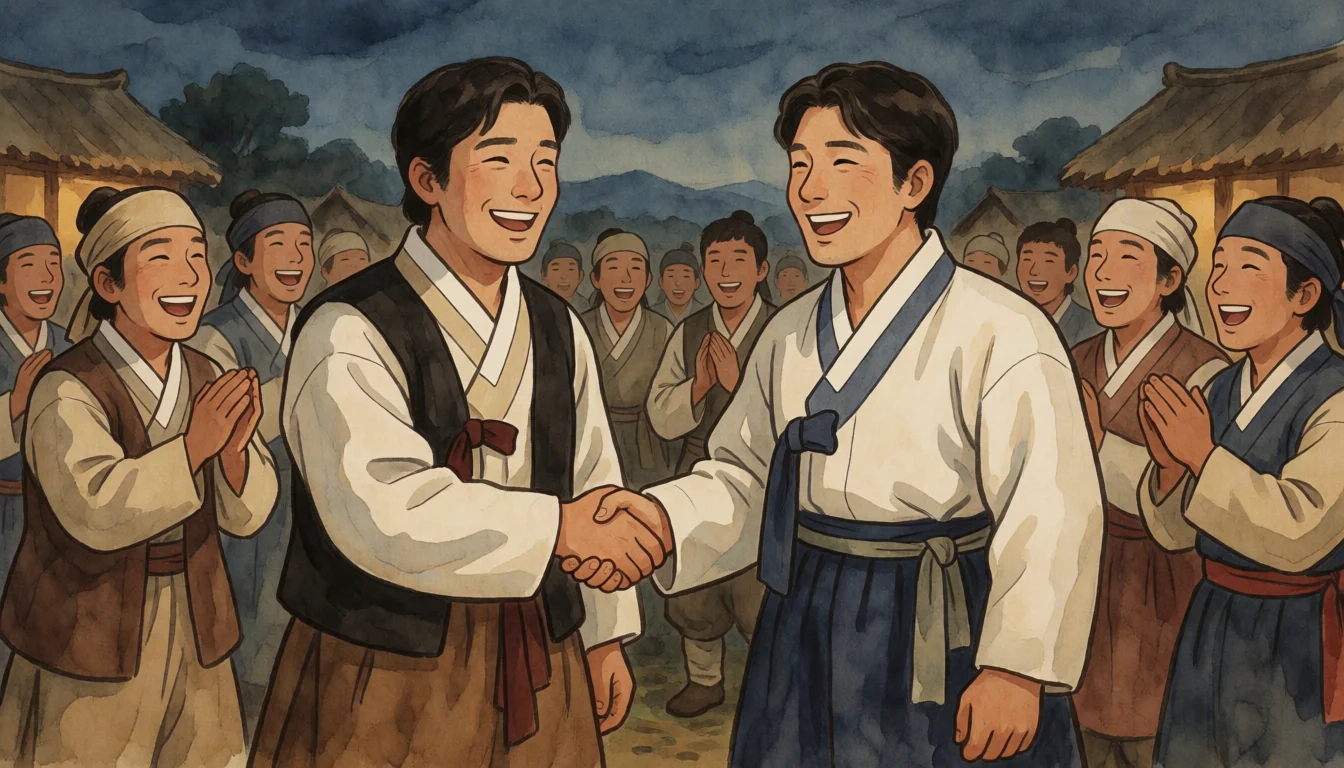
Perhaps due to the long-standing belief that a West victory brings a bountiful harvest, the moment victory was decided, villagers from both East and West burst into unified cheers. Exhausted men embraced one another, and Mandol and Dongsu, panting heavily, shook hands with bright, smiling faces.
Revived after dying out around 1940, this thrilling knot-fighting play won the Presidential Award at the National Folk Arts Competition the following year and was designated as an intangible cultural heritage, ensuring its precious legacy would continue. The burning passion of that night—when the village’s fierce earth was firmly pressed down to pray for blessings—still lives and breathes in the hearts of the people of Chilseok Village today.
Definition and Origin Background of Gosaumnori
Transmitted in Chilseok Village, Gwangju, “Gosaumnori” is a traditional folk play where two large play structures called go—resembling knots tied with clothing ribbons or ropes—clash against each other. There are no written historical records regarding its exact origin, and it relies entirely on oral traditions.
According to the oral transmission of Chilseok Village, the village resembles a resting ox with exceptionally strong earth energy, which is why residents raised geese instead of dogs. Legends and terrain-control rituals tell of a geomancer passing through who planted a ginkgo tree, dug a pond at the ox’s mouth, tied its halter to the grandmother dangsan ginkgo tree, and pinned down its tail with seven stones to pacify the powerful land.
Timing, Folk Beliefs, and Production Tools of the Play
Gosaumnori begins around the tenth day of the first lunar month after the Lunar New Year and culminates on the night of the sixteenth. A persistent folk belief dictates that the West must win for the year to bring a bountiful harvest.
Crafting the colossal knots requires 200 to 400 bundles of rice straw, 30 to 50 bamboo poles (3 cm in diameter), wooden levers (20 cm thick, 5–9 m long), anchor and carrying poles (15 cm thick, 4–5 m long), and Y-shaped support braces (15 cm thick, 2–3 m long). In addition, the agricultural banners for the East and West feature white backgrounds with navy blue and red borders respectively, inscribed with “Nongjacheonhajidaebeon” in black lettering, accompanied by four command flags (yeonggi) for each side.
Historical Break and Reconstruction
Gosaumnori suffered a historical break around 1940 but was reconstructed in July 1969 by Professor Ji Chun-sang. It subsequently won the highest prize, the Presidential Award, at the 10th National Folk Arts Competition held in Daegu in October 1969, and based on this success, was designated as Important Intangible Cultural Heritage No. 33 in 1970.
Related Regional Folk Customs
Similar Daeboreum (First Full Moon) folk plays in South Jeolla Province include the Daeboreum tug-of-war in Mogyeong Village, Gunseo-myeon, Yeongam-gun (held from the 10th to 20th of the first lunar month, featuring male-female paired ropes, ridge supports, and folk singers) and the Jangheung Daeboreum tug-of-war along the Tamjin-gang River in Jangheung-eup (starting with children’s knot ropes on the full moon of the 11th lunar month and involving adults on the night of Daeboreum).
Modern Transmission and Preservation
Following its Presidential Award at the 10th National Folk Arts Competition in 1969 and its designation as Important Intangible Cultural Heritage No. 33 in 1970, the Gwangju Chilseok Gosaumnori has been preserved and transmitted to this day as a precious traditional folk culture asset of Korea.
Boundary Between Fiction and Fact
The details mentioned in this commentary regarding Chilseok Village’s wau-hyung (resting-ox) geomancy, the history of raising geese, the geomancer’s prophecy, and the ginkgo tree, pond, and seven stones are based on recorded oral traditions and legends. Furthermore, the historical interruption around 1940, its reconstruction by Professor Ji Chun-sang in 1969, the Presidential Award at the National Folk Arts Competition, and its 1970 intangible cultural heritage designation are established historical facts.
Narrative elements in the creative story—such as specific dialogues among characters, unexpected crises during knot production, and conflicts and cooperation between individuals—are fictional elements created to help readers understand the narrative and should be distinguished from actual historical facts.