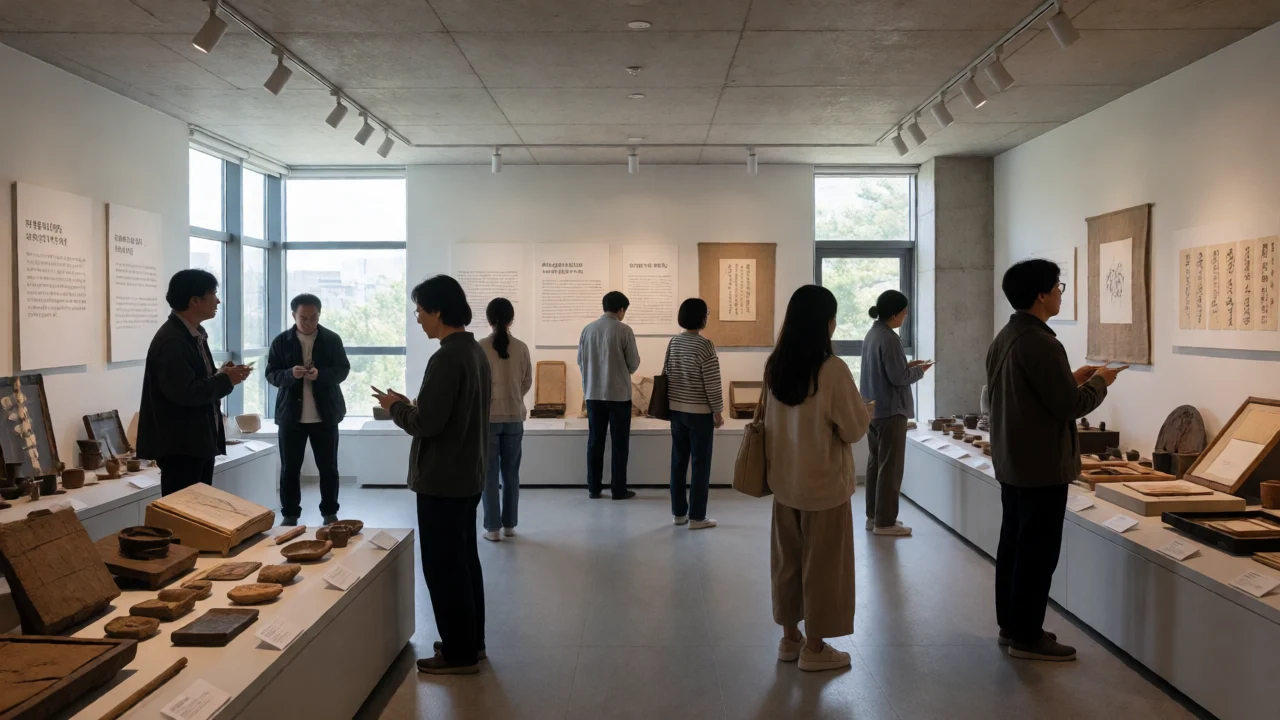
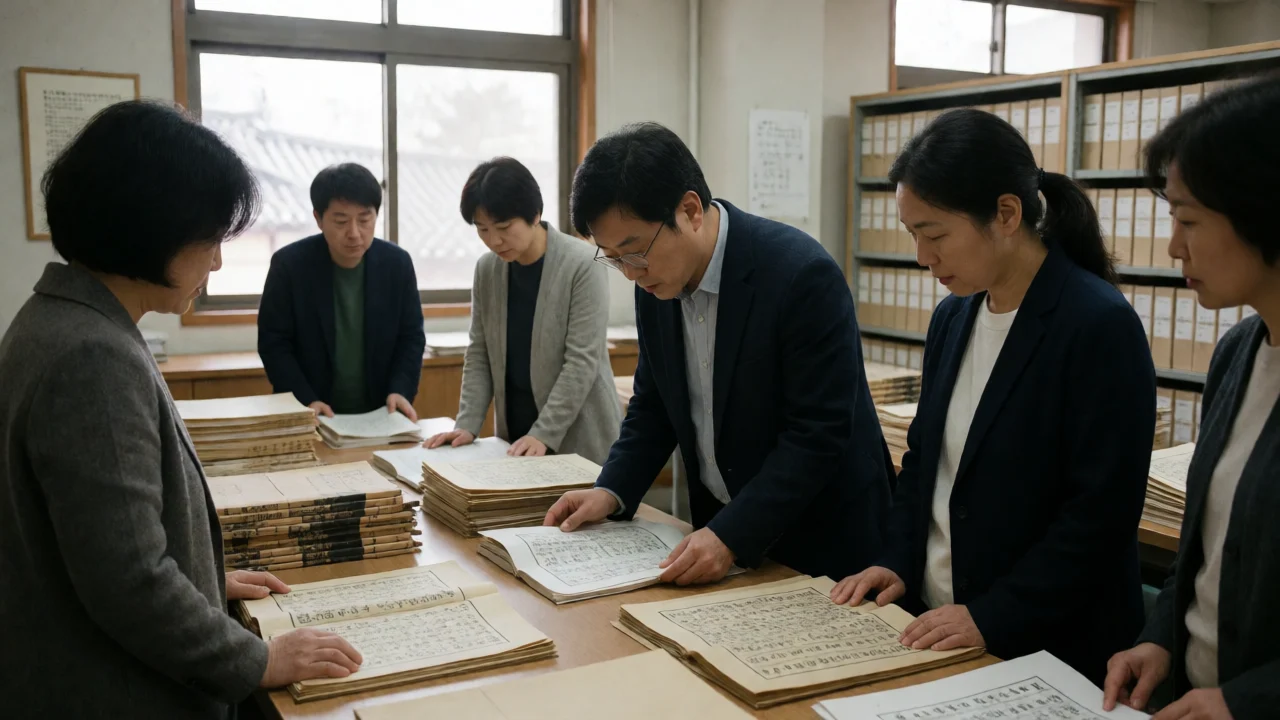
Meet “The Devoted Sisters-in-Law,” a warm late-Joseon folk tale that puts a fresh spin on the famous story of devoted brothers by highlighting the wisdom and integrity of two sisters-in-law.
Settle in and listen to the story at a gentle pace before you begin reading.
A Sunlit Courtyard and Two Straw Mats
In the late Joseon Dynasty, two brothers lived side by side in neighboring houses sharing a high courtyard wall. The elder brother’s household was well-off, with granaries overflowing thanks to plentiful rice paddies. In contrast, the younger brother’s family struggled; every spring, they found themselves gasping just to survive the harsh barley-hunger season. While village customs dictated that men made the major household decisions, it was the women of the inner courtyard—those who tended the daily fires in the cauldrons and managed the grain—who truly held the rhythm of domestic life.
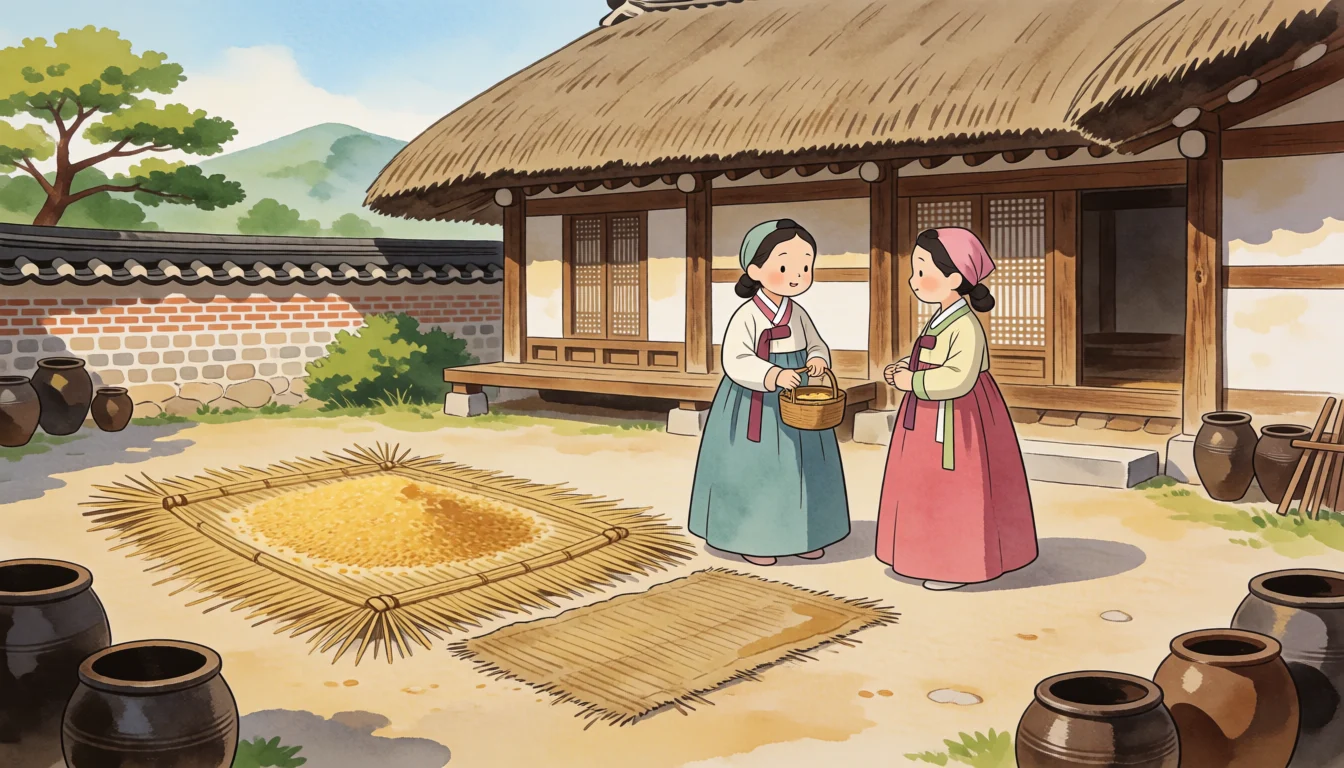
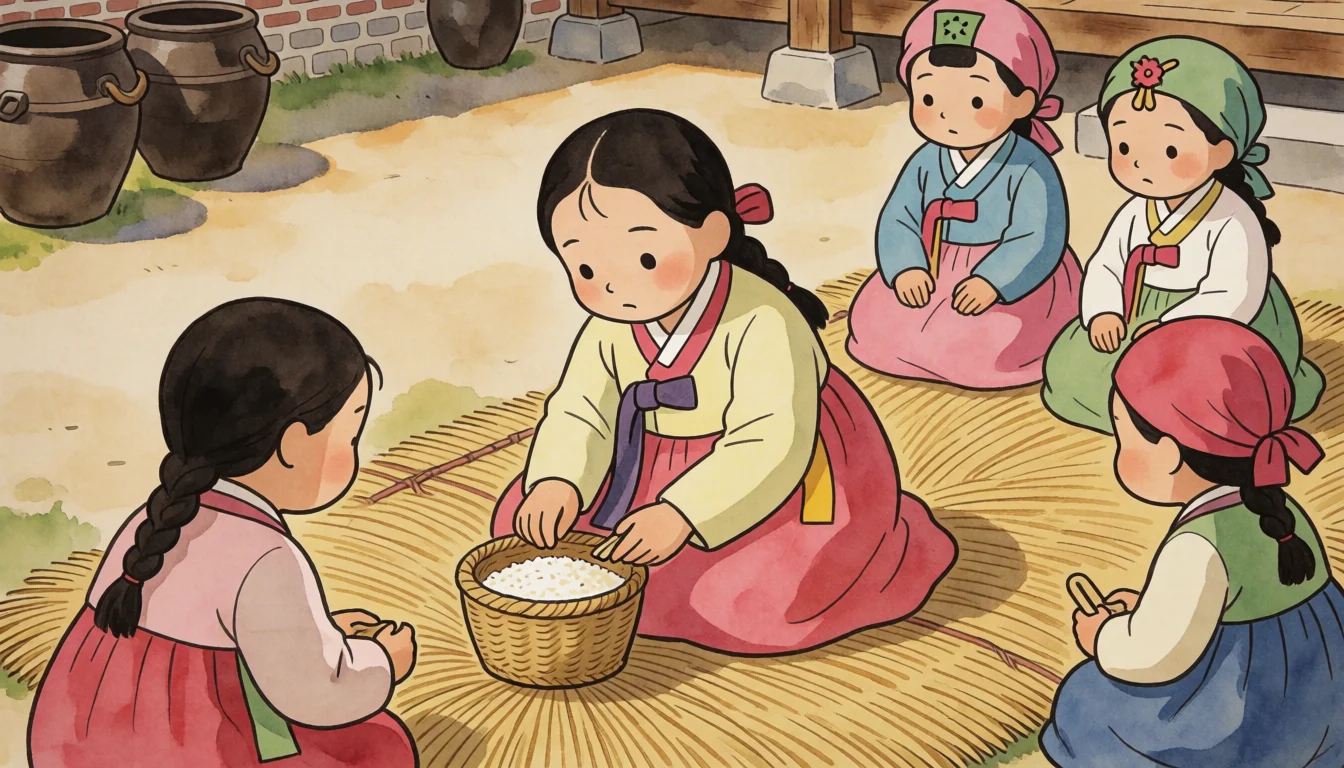
When the winter frost finally melted and warm spring sunshine filled the courtyard, the elder sister-in-law rolled out a large straw mat to dry the grain she had stored away. Bright yellow rice kernels cascaded across the mat, releasing an earthy, sun-warmed fragrance. Just then, careful footsteps sounded near the wicket gate. The impoverished younger sister-in-law entered with a shy expression, clutching a small basket to her chest.
“Sister, the sunlight in the yard is wonderful,” she said softly. “Our household’s rice has gotten a bit damp, too. Would it be all right if we spread out a small mat in the corner of your yard to dry it?”
“Of course,” the elder sister-in-law warmly replied. “Go ahead and set it up over there where the sun hits best.”
Encouraged by her warm permission, the younger sister-in-law laid out a small, worn-out mat in a corner of the yard and carefully spread her meager portion of rice. Placed beside the elder household’s abundant grain, the younger family’s stash looked pitifully thin, yet both women worked diligently with their rakes, filling the yard with the vibrant energy of spring.
A Secret Heaping Basket Spilled in the Yard
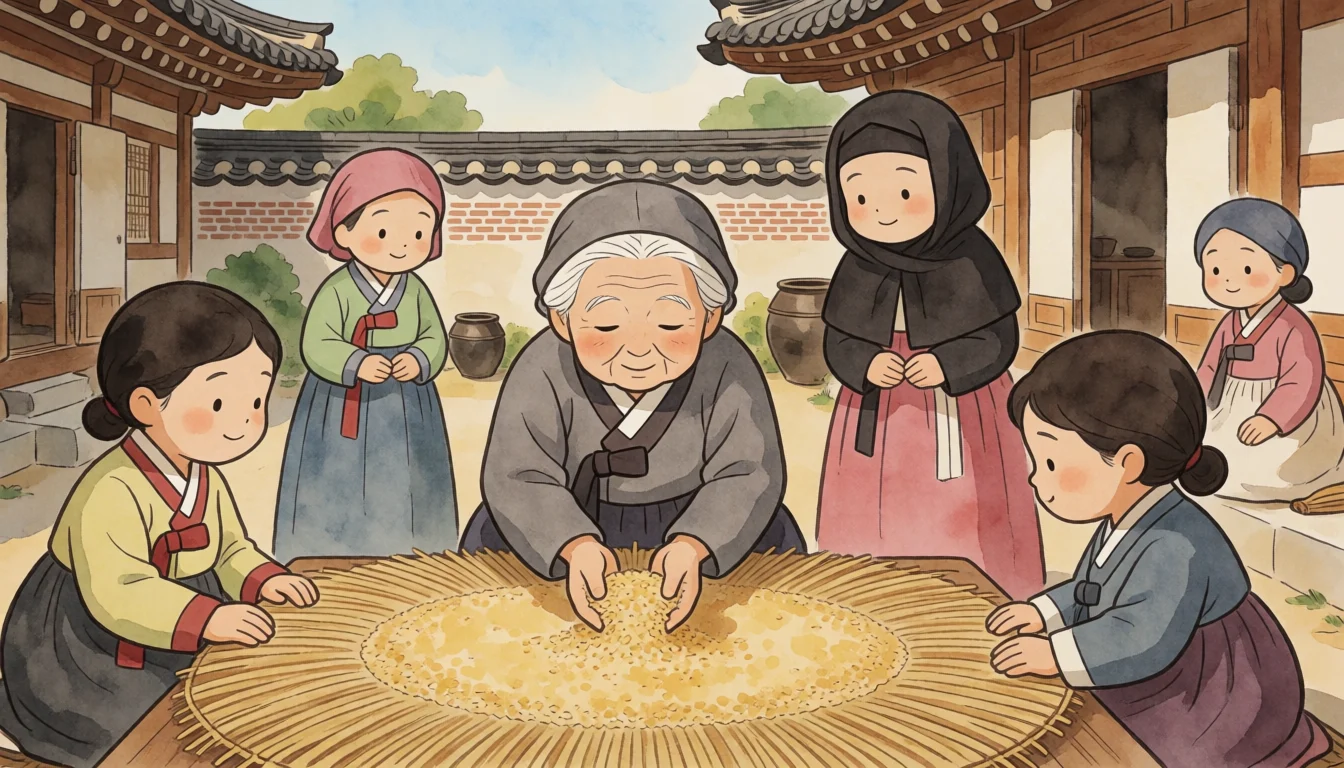
While the two women stepped into the kitchen to prepare lunch, the mother-in-law, who had been sitting quietly on the wooden veranda, slipped her straw shoes back on. Her heart always ached for her younger son and his wife, whose dining table rarely featured anything more than thin gruel. Glancing cautiously around, she strode over to the elder sister-in-law’s straw mat and scooped up two full handfuls of rice.
With a rustling sound, and without the elder daughter-in-law knowing, she furtively poured the grain onto the younger sister-in-law’s mat. Feeling that wasn’t enough, she added a good full dipper more, then retreated to her room as if nothing had happened, sliding the door shut. Instantly, the center of the younger woman’s thin mat swelled into a noticeable mound.
Not long after, having cleared away the lunch table, the younger sister-in-law stepped back outside to turn over her rice. But when she approached her mat, her eyes went wide with astonishment. She had clearly laid out only the small amount that barely covered the bottom of her basket, yet now a generous heap of rice sat piled in the very middle of the yard.
She stopped beside the mat and swallowed hard. The grain certainly couldn’t have blown in on the wind, nor could it have fallen from the sky. She could easily guess that this was a touching, secret gesture from her mother-in-law, but beads of sweat formed on her forehead as she fell into deep contemplation.
Raking Back Only What Was Hers
The younger sister-in-law hesitated for a long time under the glaring sun. With dinner provisions desperately needed, she could easily have swept the extra grain into a sack and pretended not to notice, giving her children a warm meal of real white rice. Instead, she slowly shook her head. Squatting down, she began to carefully separate the grains with both hands.
She accurately measured out the exact portion she had originally brought and placed it back into her basket. Then, gathering up the remaining heap—about a full dipper’s worth—in both hands, she walked over to the elder family’s mat and returned it precisely to where it belonged, scattering it back into place. There was not a shred of hesitation in her hands as she restored every single grain without taking a single one.
Just then, a pair of eyes watched this scene in breathless silence through a gap in the main hall door. It was the elder sister-in-law. She had long since suspected the mother-in-law’s secret generosity and had been quietly watching to see how the younger woman would handle the situation. Seeing her maintain such upright honesty, refusing to covet another’s grain and taking back only what was rightfully hers, a deep resonance stirred within the elder sister-in-law’s heart.
“Even in poverty, her spirit is so clear and pure,” she thought. “What use is it for us to eat our fill of white rice alone while having such a sister-in-law?”
Quietly closing the door to the veranda, the elder sister-in-law firmly resolved to take a momentous step she hadn’t even shared with her husband yet.
Moonlit Drinks and the Deed to the Paddy
That evening, the elder sister-in-law stoked the kitchen fire and prepared a lavish drinking table overflowing with food. She laid out savory pan-fried pancakes, rich meat dishes, and smooth, mellow liquor before her husband. Astonished by his thrifty wife’s sudden hospitality, the husband’s eyes grew round and a wide grin spread across his face.
“My dear, is today some special occasion?” he asked. “Why go to all this trouble for such a grand table?”
“I simply prepared a small token of sincerity to give you strength for your farming work,” she replied with a bright smile. “Eat up.”
Beaming, she continuously refilled his empty cup. Swept up in the merry mood, the husband readily drank down every cup his wife poured. By the time the moon began to tilt, his tongue was slurring, and the moment his head hit the pillow, he fell fast asleep.
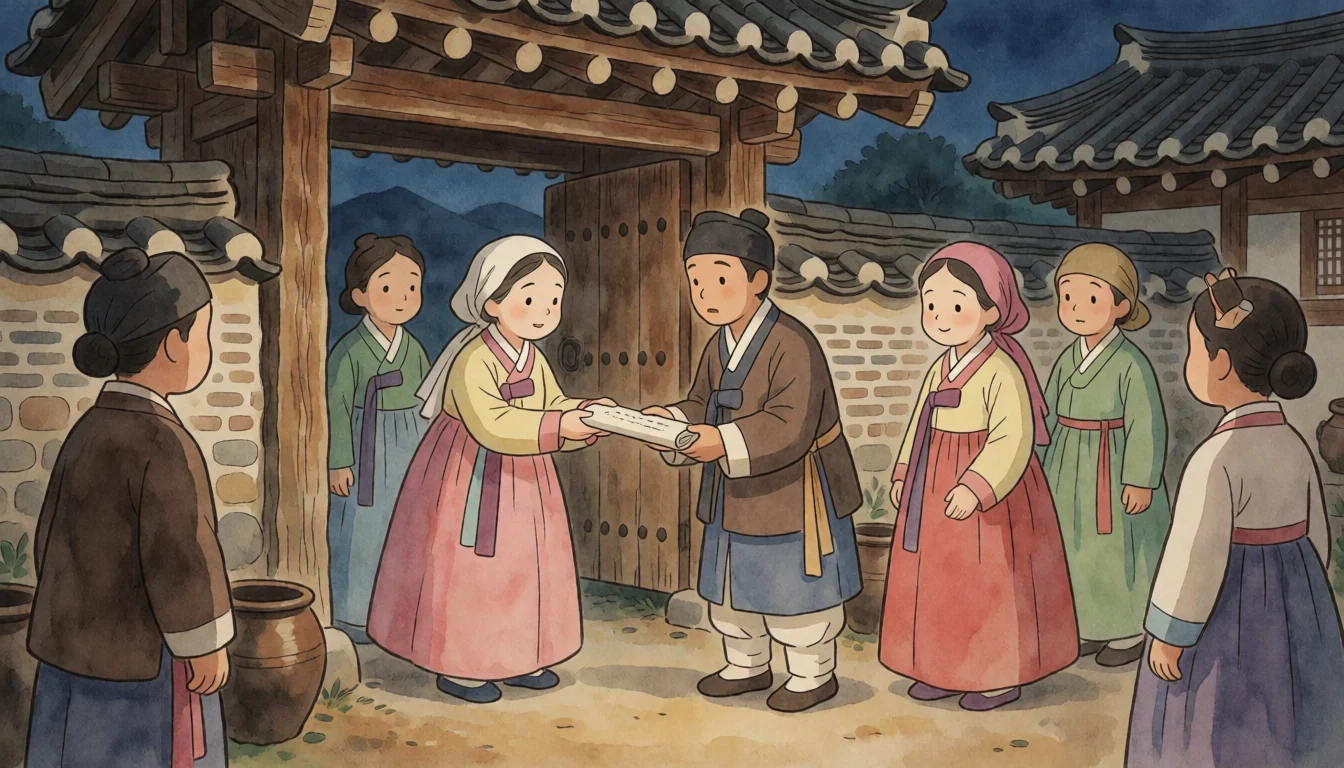
Confirming that her husband was snoring deeply, the elder sister-in-law opened the depths of their wardrobe. Wrapped inside layers of bojagi was none other than the deed to their family’s fertile rice paddy. Without hesitation, she tucked the document into her robes and, slipping through the darkness, gently knocked on the younger family’s wicket gate.
“Brother-in-law, are you awake? It’s your sister-in-law.”
Startled awake, the younger brother hurried out, and she quietly pressed the land deed into his hands. Though he waved his hands in startled refusal, the elder sister-in-law’s gaze remained steady and resolute.
“Your brother has been worrying about your family’s livelihood since earlier today, and he finally made up his mind to give you this deed,” she whispered. “Do not refuse it; take it and farm the land. Tomorrow morning, if your brother asks about it, simply tell him he handed it to you himself in his drunken stupor last night.”
A Man’s Word is Worth a Thousand Pieces of Gold
The next morning, the husband woke up with a throbbing headache, rubbing his eyes blearily. Heading toward his desk to soothe his sour stomach, he suddenly noticed a drawer standing wide open. Ransacking the wardrobe, his frantic scream shattered the quiet morning courtyard.
“Wife! Wife, come here! Our land deed has completely vanished! We’ve surely been robbed!”
Without missing a beat while sweeping the courtyard, the elder sister-in-law calmly turned her broom around and replied evenly, “Robbed? Don’t talk nonsense. Weren’t you the one who, in your drunken stupor last night, called over your younger brother and grandly handed the deed to him? If you don’t remember, go ask him yourself.”
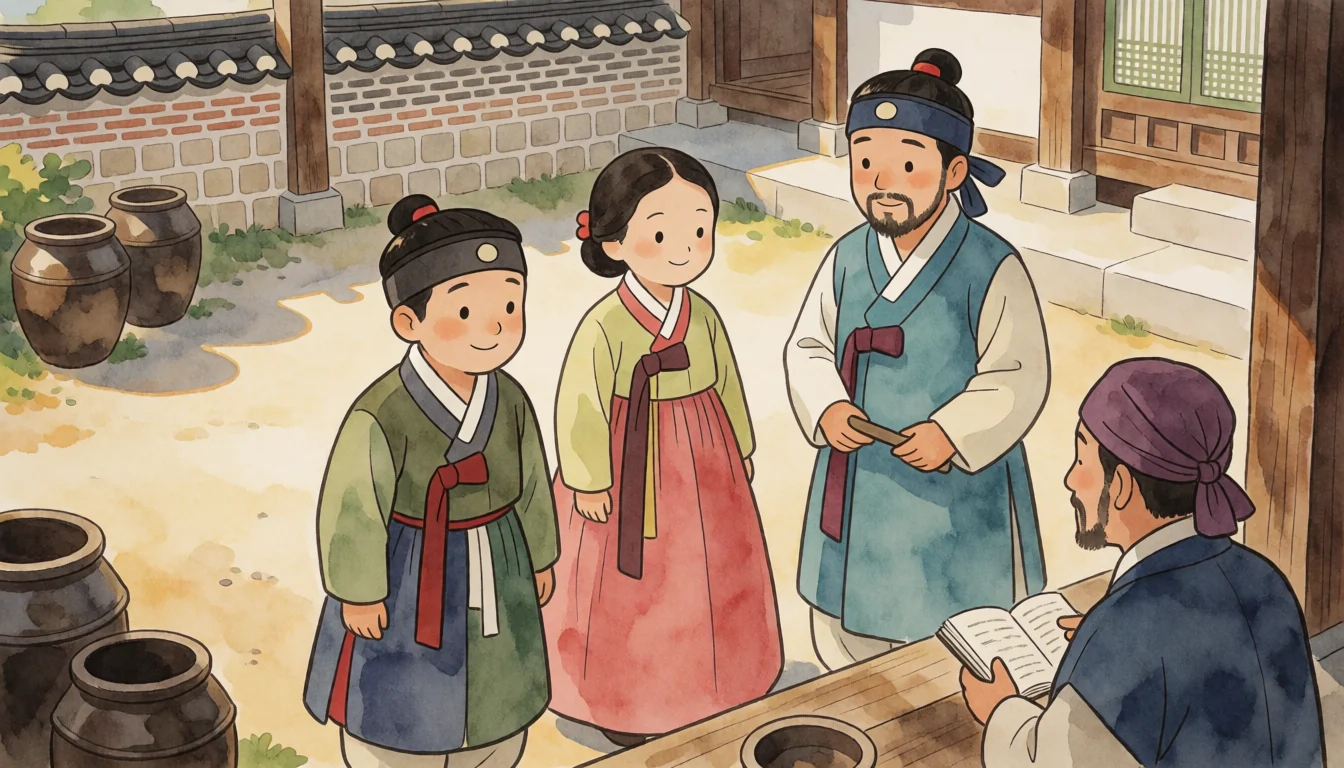
Looking completely dumbfounded, the husband ran toward the younger house in his bare socks. Meeting his younger brother in the yard, the younger man brought his hands together and spoke respectfully, just as his sister-in-law had instructed.
“Brother, didn’t you give me this precious document last night, telling me that we brothers should live well together? I will never forget your immense kindness and will farm the land diligently.”
Standing there with his face flushing red and unable to speak in sheer bewilderment—wondering if he really had made such a monumental decision while drunk—the elder sister-in-law, who had followed right behind him, drove the point home with a firm and clear voice.
“A true gentleman’s word is heavier than a thousand pieces of gold,” she declared. “How can you try to take back a land deed you handed with your own hands to your own flesh-and-blood brother? A man’s word is worth a thousand pieces of gold; you must remain a wonderful older brother who helped his younger sibling.”
Faced with his wife’s confident rebuke and his younger brother’s tearful expression of gratitude, the husband could do nothing but let out an awkward cough and scratch his head.
“Ah, well… I suppose I said it in a drunken haze, but since it was meant to help my younger brother… how can a man take back what he has said? Farm that land well.”
As the husband’s wry yet generous laughter filled the courtyard, the two sisters-in-law exchanged warm smiles. The women’s unyielding integrity and deep wisdom gently embraced the strict rules of patriarchy, and from that day on, the two households flourished like the grain piled high on the straw mats, sharing a deep bond of sibling affection for generations to come.
‘The Devoted Sisters-in-Law’ is a traditional folk tale estimated to have formed after the establishment of the patriarchal system in the late Joseon Dynasty. Unlike the widely known brother-centered tales of virtue, this narrative centers on female protagonists—the elder and younger sisters-in-law—who take charge of preserving sibling affection and family harmony within everyday cultural life.
The straw mat appearing as a prop in the story was a tool widely used in daily agricultural life, such as for drying rice, while rice grain was the crop spread out to dry. Furthermore, the land deed appears as a crucial document passed to the younger brother after the elder sister-in-law gets her husband drunk. Depending on the local variant, there are various differences regarding the reason for getting the husband drunk, the husband’s reaction, and the way the older brother directly grants the land.
The folk tale ‘The Devoted Sisters-in-Law’ continues to be transmitted today through oral literature and folklore research as an important traditional tale illustrating family relationships and women’s roles in the late Joseon period. It deals with family harmony and affection demonstrated within the lifestyle and patriarchy of past agricultural society, with its contents preserved through relevant literature and folkloric materials.
The actual cultural facts regarding ‘The Devoted Sisters-in-Law’ based on historical records are limited to the fact that it is a folk tale formed after the establishment of the patriarchal system in the late Joseon Dynasty, the core framework of women taking the lead in maintaining fraternal bonds, and the use of props such as straw mats, rice grain, and land deeds. Therefore, detailed descriptions in the main text—such as specific conversations, internal conflicts by the straw mat, the preparation of the drinking table, and the morning commotion—belong to the realm of literary creation (fiction) based on traditional folklore.
🎨 Color It Yourself