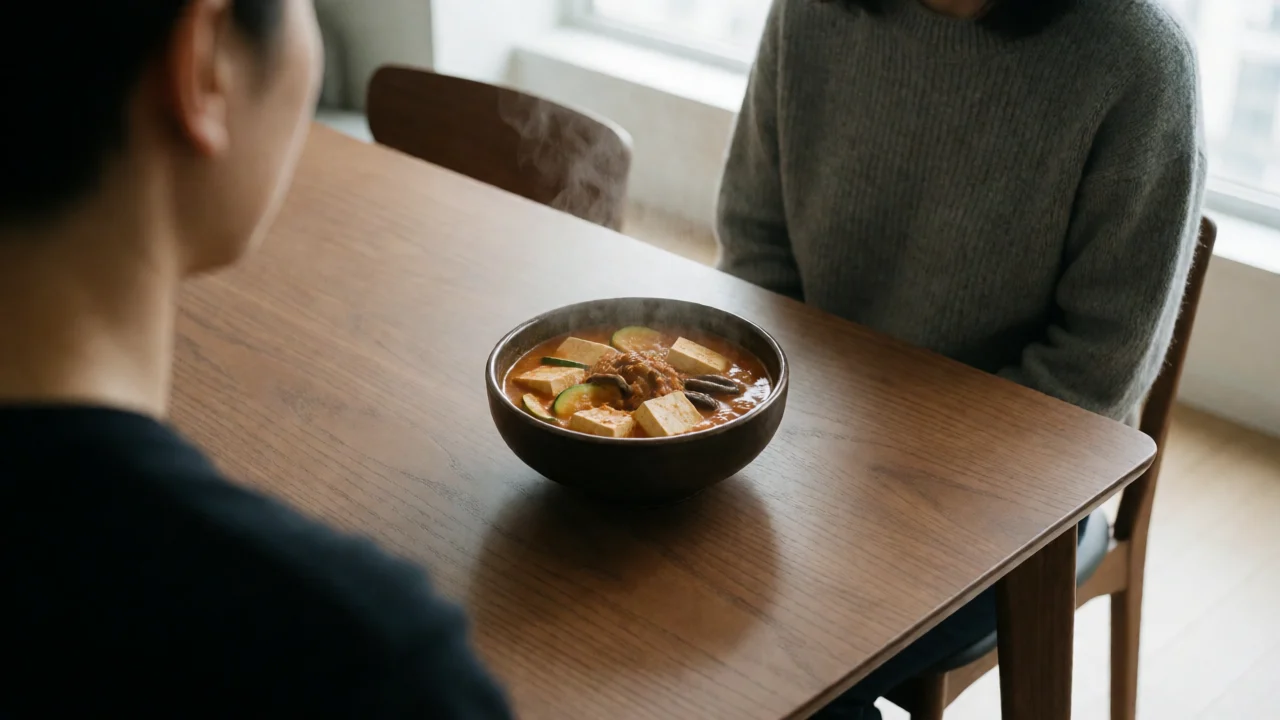
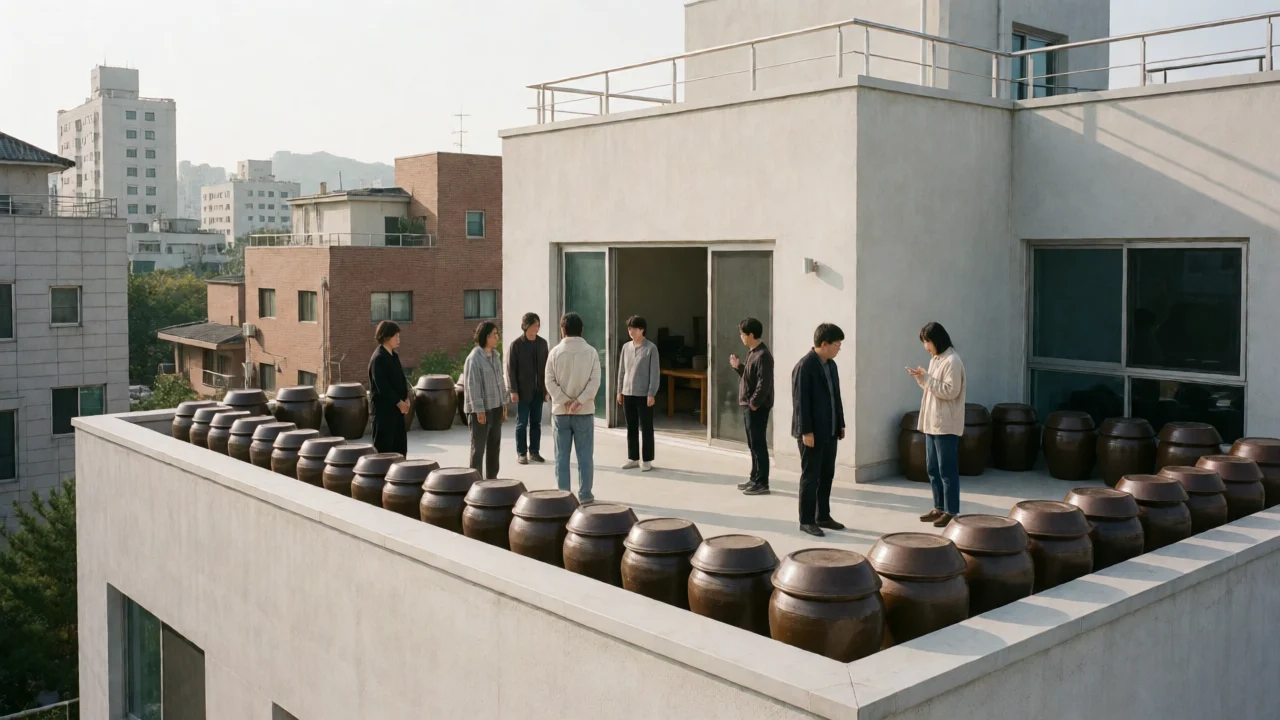
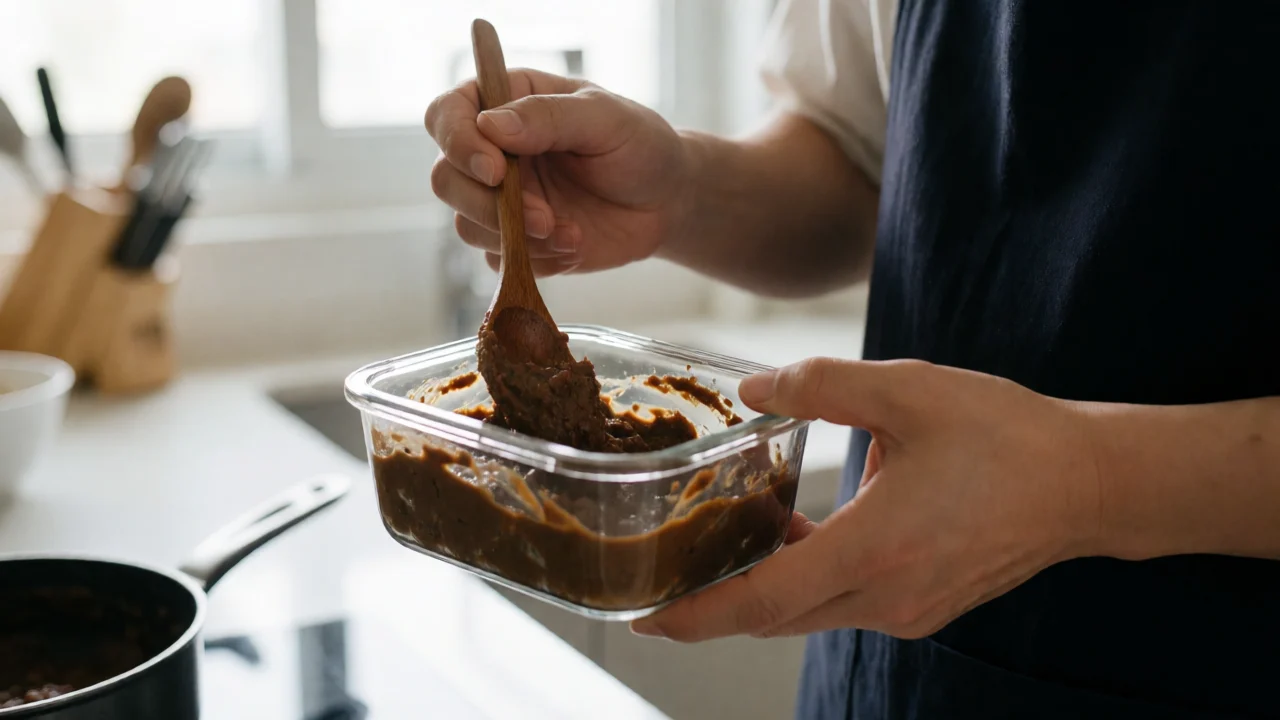
As twilight settles over the village and Uncle Samdol falls violently ill, rumors spread that he has been possessed by a wandering ghost (gaekgwi). Enter Grandmother, stepping into the courtyard armed with a kitchen knife and a doenjang-filled gourd. We explore the folk beliefs surrounding the jangdokdae (platform for jang jars) and the gaekgwi-muligi (spirit-banishing) ritual, deeply rooted in Korea’s traditional fermented soybean paste, doenjang.
Settle in and listen to the story at a gentle pace before you begin reading.
Moans Echoing in the Twilight
The sun was dipping below the horizon, casting long shadows down the village alleyways in Sindeok 2-ri, Imha-myeon, Andong, North Gyeongsang Province. From inside the wicket gate of Uncle Samdol’s home, a low, agonizing groan leaked out.
"Oh, my stomach! Oh, my head…"
Earlier in the day, Samdol had strode out confidently, saying he was heading to a feast in a neighboring village. But no sooner had he returned than he collapsed onto the wooden porch and began writhing on the heated floor inside. Neighbors lingering outside the door gathered one by one, clicking their tongues.
"He went and wolfed down feast food at someone else’s place this afternoon. Do you think he’s severely bloated?"
"I don’t know… his complexion is sickly yellow and his limbs are ice-cold. This doesn’t look like ordinary indigestion."
Just then, Grandmother emerged from the detached quarters leaning on her walking stick. She cast a sharp gaze across the threshold, felt the feverish sweat on Samdol’s forehead, and firmly shook her head.
"This isn’t just a simple case of trapped food. He’s eaten improperly at a stranger’s house, and a wandering spirit has latched onto him hard. We have to drive it out before complete darkness falls!"
At Grandmother’s fierce decree, young Sundol’s eyes grew wide as saucers where he stood in the courtyard.
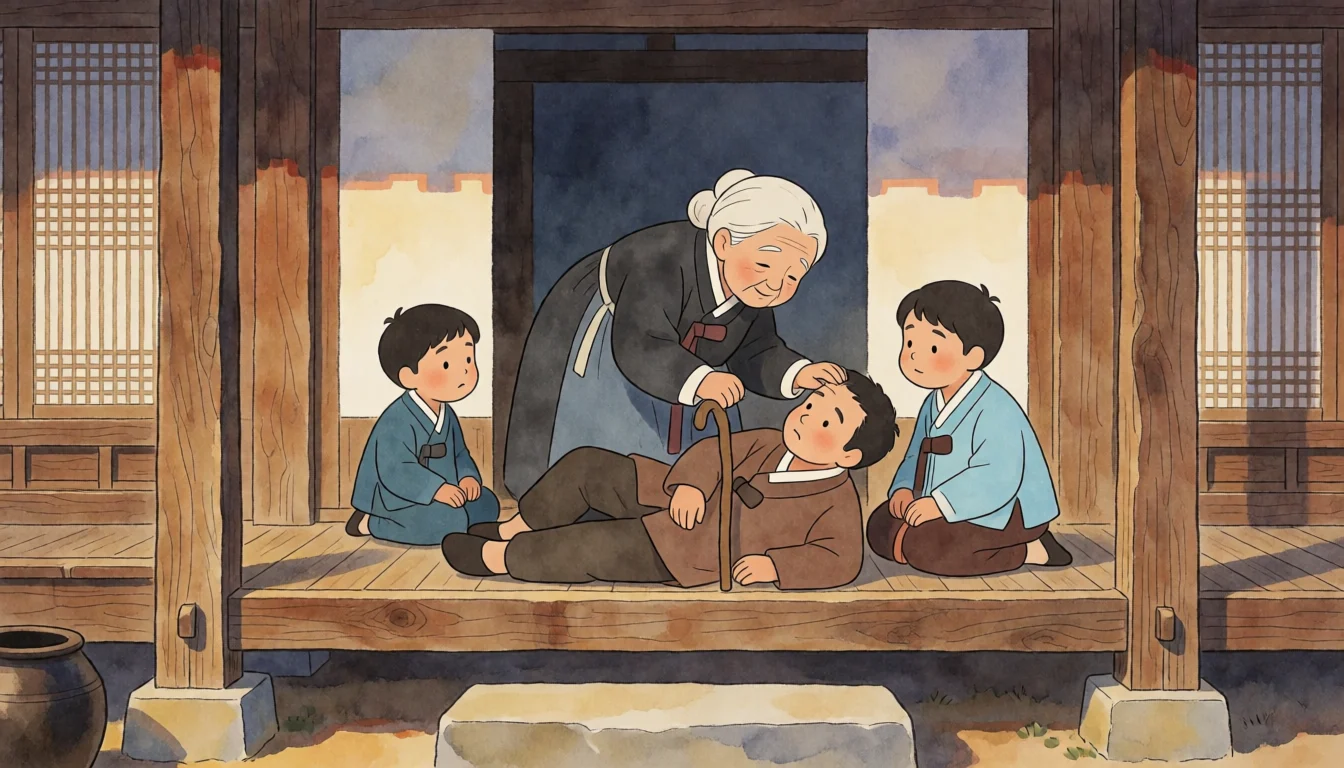
Salty Spirit-Banishing Rice Cooked in a Gourd
"Sundol, don’t just stand there staring—run to the kitchen! Once the sun drops completely, chasing away a stray ghost becomes ten times harder."
Urged on by Grandmother, Sundol dashed across the kitchen threshold. Grandmother stood beside the iron cauldron, her hands moving briskly.
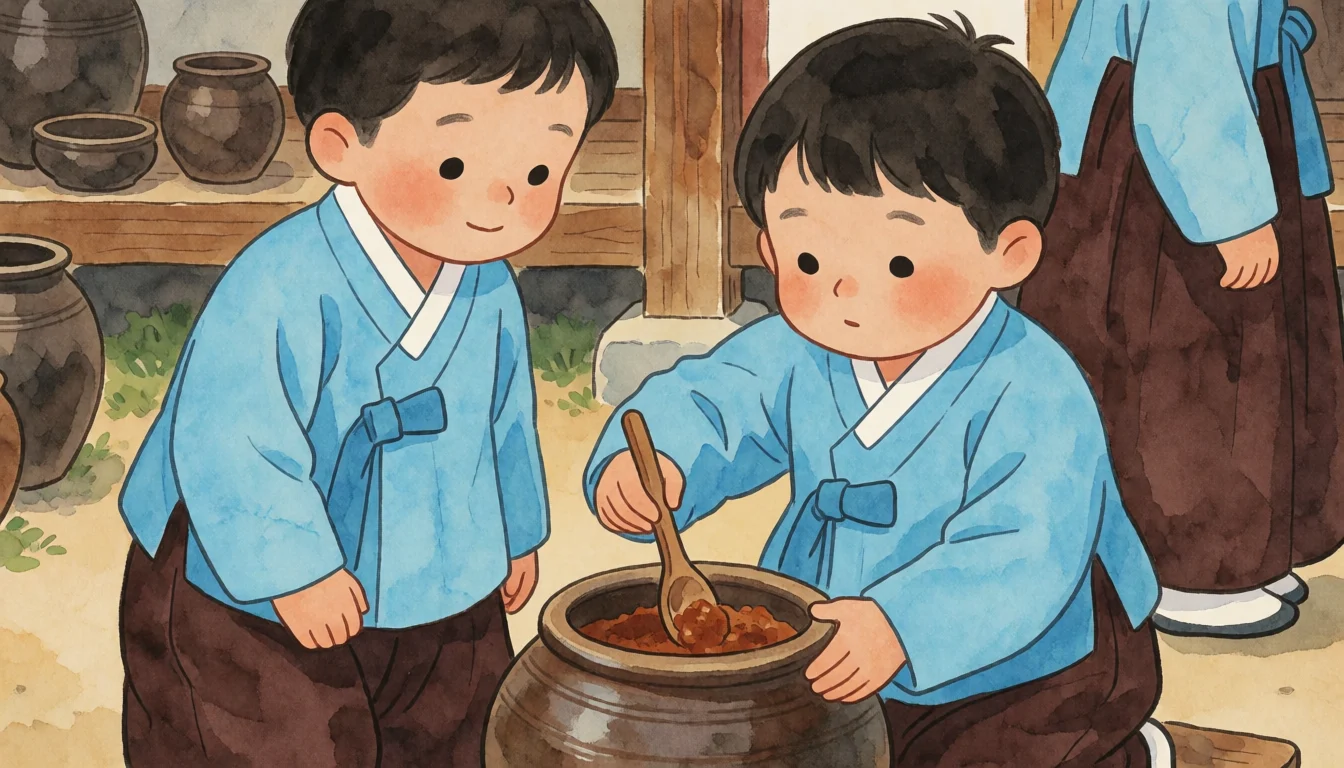
"Scoop up a generous spoonful of aged doenjang from the jar, and throw all the leftover rice, kimchi, and seasoned greens from the cupboard right into the pot. And don’t forget a pinch of red pepper powder!"
Heart pounding nervously, Sundol hurried to scoop fragrant doenjang from the crock just as instructed. As water bubbled in the pot, he dissolved the doenjang, tossing in the rice, roughly chopped kimchi, greens, and vibrant red pepper powder. A pungent, salty aroma billowed up through the steam, filling the entire kitchen.
"Grandmother, it’s all boiled!"
"Good. Ladle it quickly into a wide gourd bowl. And grab a sharp kitchen knife from the cupboard, too!"
Carefully supporting the steaming gourd bowl with both hands, Sundol hurried across the darkening courtyard, while Grandmother strode toward Samdol’s room, gripping the kitchen knife.
The Commotion of the Three Raw Beans
Twilight had already swallowed the room in shadows. Only Samdol’s harsh, ragged breathing beneath his heavy quilt filled the space. The moment she entered, Grandmother struck the rim of the gourd bowl rhythmically with the back of her kitchen knife.
"Begone at once! Stop tormenting a good man from someone else’s house—eat this meal and get out!"
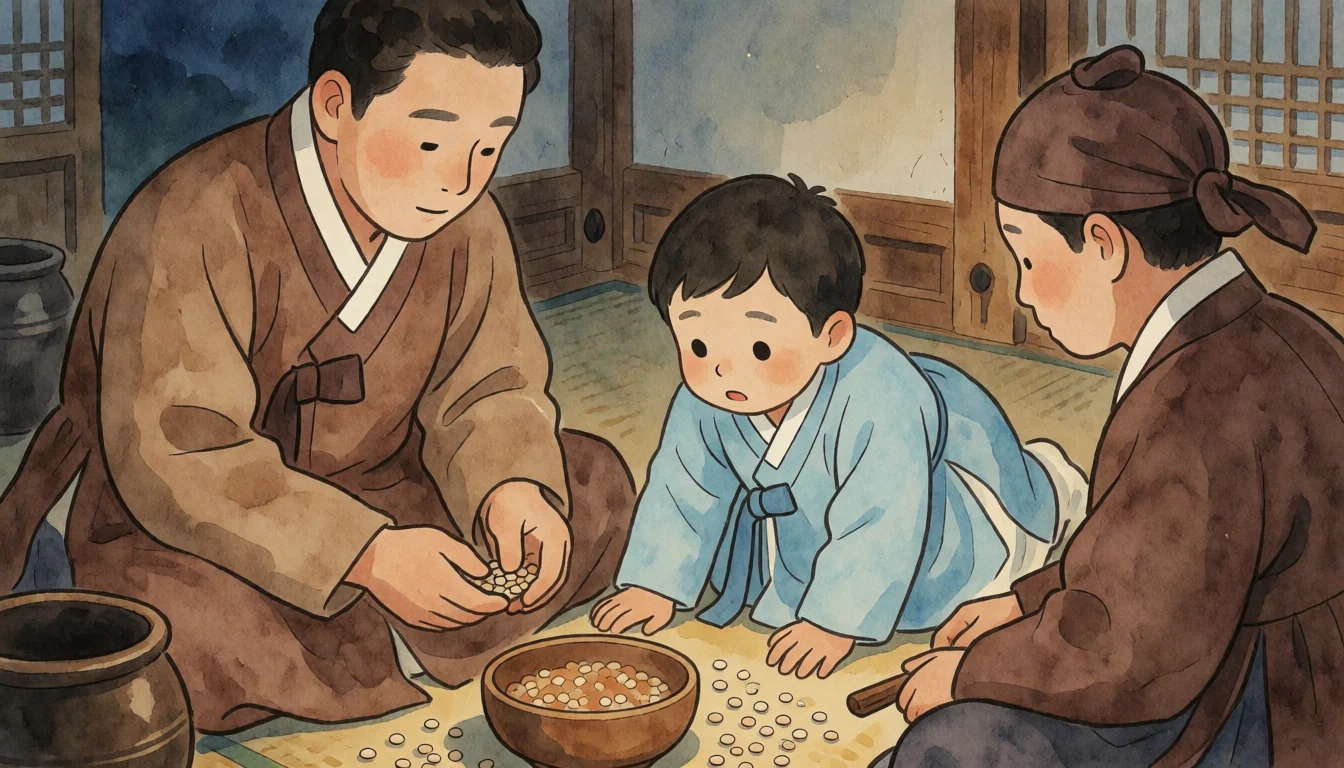
The ringing metallic sound instantly chilled the air in the room. Swallowing hard, Sundol pulled three raw beans from his pocket and handed them to Samdol.
"U-uncle! You have to chew these three beans thoroughly and spit them into the gourd!"
Perhaps it was because terrified little Sundol was shaking like a leaf, but as he tried to place the beans into Samdol’s palm, his hand slipped. One of the beans bounced right off the bridge of Samdol’s nose and rolled under the floor bedding with a soft click.
"Oh no, my bean!"
Startled out of his wits, Sundol landed squarely on his bottom and frantically rummaged under the bedding. Watching this absurd scene in blank amazement, Samdol let out an incredulous breath, clutched his stomach, and burst into laughter he couldn’t hold back.
"Pfft—ah, Sundol. You come in here to chase away a ghost, and end up poking a man right in the nose… heh-heh."
In a split second, the heavy, frightening tension in the room completely evaporated.
Blade Raised Toward the Front Gate
Face flushing red at the laughter, Sundol managed to retrieve the bean and hand it back. Samdol popped the remaining three raw beans into his mouth, chewed them noisily, and spat them sharply into the spirit-rice gourd. Rolling her eyes fiercely, Grandmother dipped the tip of her kitchen knife into the red broth of the gourd and smeared a drop across Samdol’s parched lips.
"Good. Now, we sweep the hair!"
Using the flat of the knife blade, Grandmother stroked Samdol’s hair three times, shook the strands toward the gourd, and Samdol spat three times into the bowl just as instructed. It was a fierce, commanding ritual to trap every last shred of evil energy from the room inside the bowl.
Wiping the remaining broth on her hands, Grandmother scrubbed the creaking door latch, threw the door wide open toward the courtyard, and hurled the kitchen knife right into the center of the yard.
Clack!
The knife landed on the dirt floor, but its blade pointed straight back toward the main house.
"It hasn’t gone out yet!"
Clicking her tongue, Grandmother picked up the knife again, prompting Sundol to clench his fists and shout from the side.
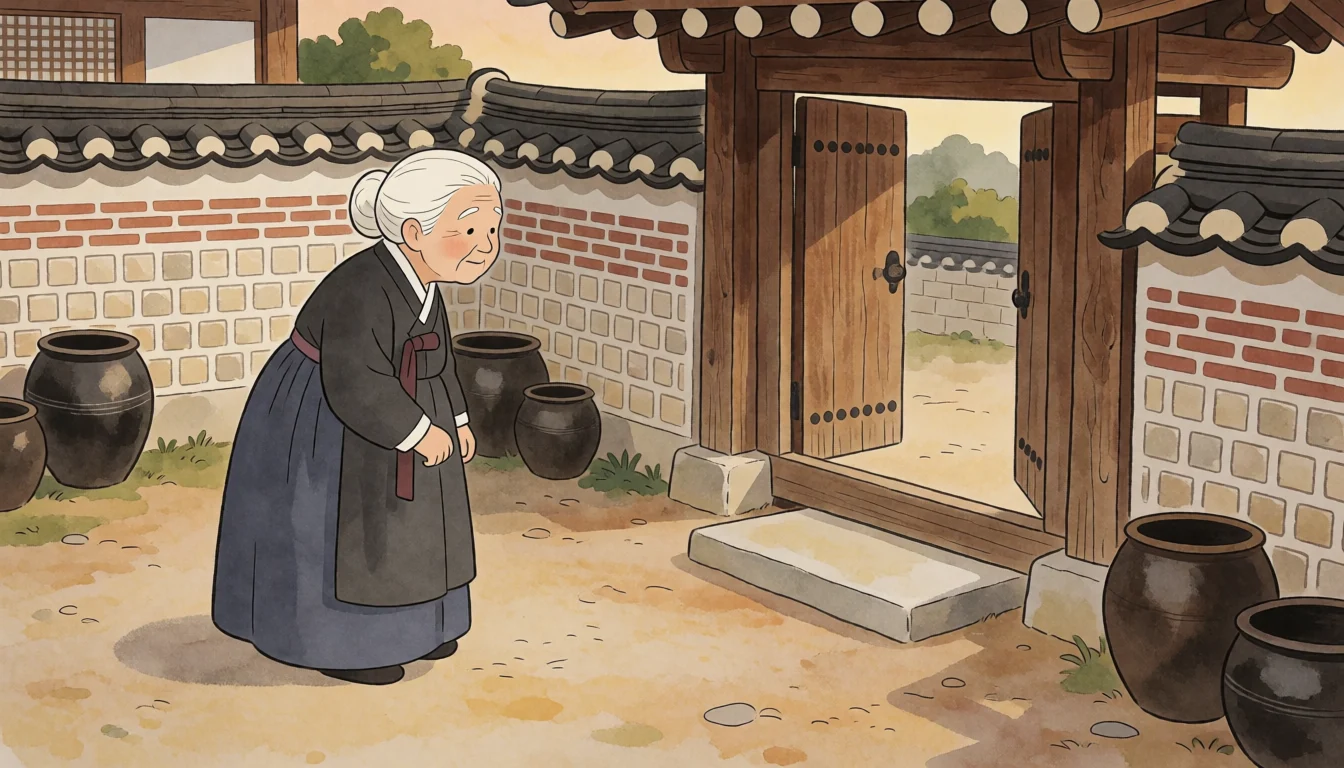
"Grandmother, I’ll clear the path to the gate! Shoo, shoo, go out toward the front gate!"
Taking a deep breath, Grandmother hurled the kitchen knife with all her might a second time. Spinning through the air, the knife this time plunged firmly into the dirt floor, its sharp blade pointing straight out toward the outer gate.
Sorrows Poured Outside the Gate and Shared Warmth
"The blade is facing outside! Sundol, grab the gourd and follow me!"
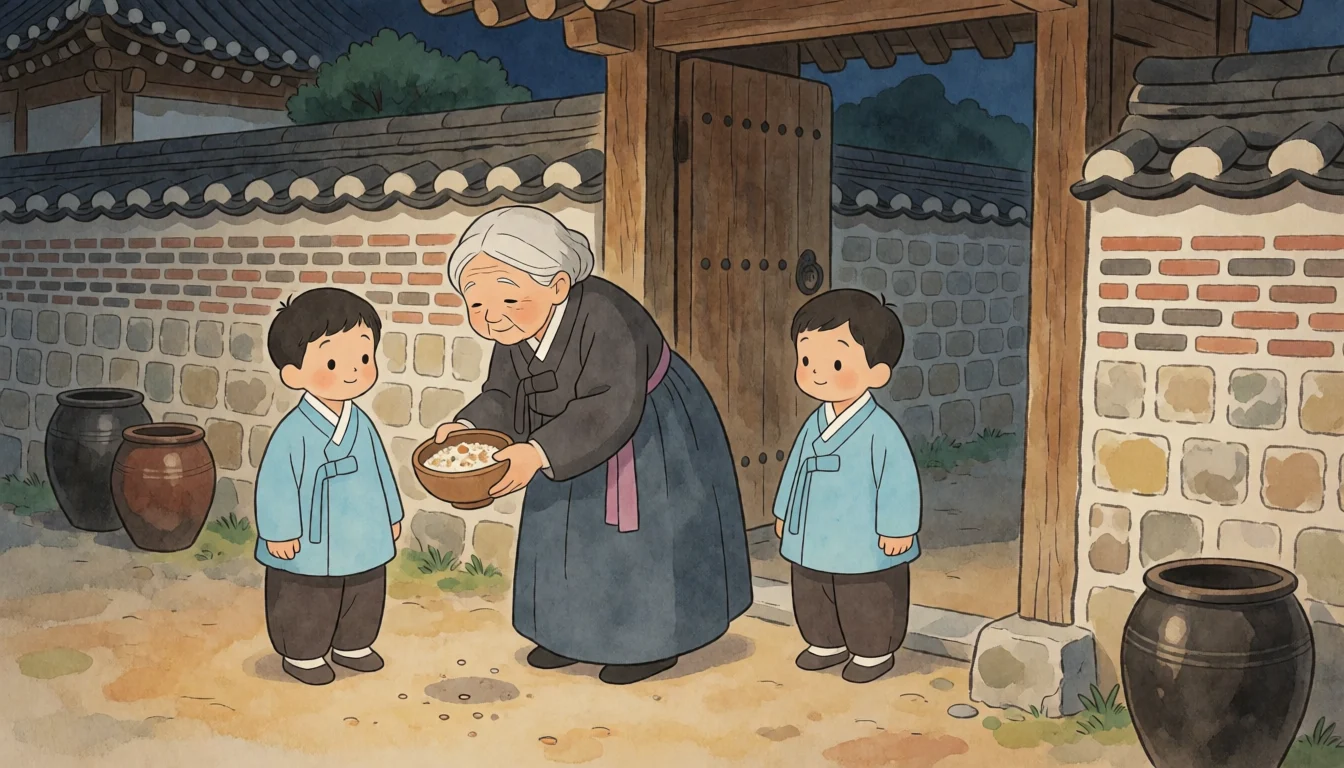
At Grandmother’s cry, Sundol snatched up the cooling gourd and bolted across the darkening courtyard. Rushing out past the wicket gate to the stone wall, Grandmother took the gourd and poured the spirit-rice in a swift cascade onto the cold pathway.
"Evil spirits and wandering demons have eaten your fill, so begone far away on your own path!"
The rice grains and red broth soaked into the earth, scattering into the chilly night wind. Sundol finally let out a long, pent-up sigh of relief.
When the two returned to the room, a truly miraculous sight met their eyes. Samdol, who had been groaning under his quilt just moments before, was sitting up against a pillow, wiping away his sweat. Healthy color had returned to his complexion.
"Oh, Grandmother… Sundol. Ever since I got hit in the nose by that bean and started laughing, it felt like the heavy knot in my chest unraveled, and now my stomach ache is completely gone."
Grandmother gave a dry cough and wiped the kitchen knife clean with a dishcloth.
"See? I told you—dissolving doenjang is what drives out the sickness when you eat stranger’s food and fall ill. If this clumsy boy hadn’t made a fuss, the ghost wouldn’t have laughed and run off."
At those words, Sundol and Samdol burst out laughing together. In the deep stillness of the dark rural night, the room lingered with the savory scent of doenjang—and the warm, tender care neighbors shared for one another.
Definition and History of Doenjang
Doenjang is a traditional fermented soybean paste made by boiling soybeans to form meju, aging them with brine in an earthenware crock, drawing off the resulting liquid (soy sauce), and continuing to age the remaining solid residue. Since ‘jangsi’ (jang market) was recorded as a betrothal gift during the marriage of King Sinmun of Silla during the Three Kingdoms period, records of doenjang span Korean history—including emergency relief distributions in the Goryeo-sa (History of Goryeo) and royal gifts and military provisions in the Veritable Records of the Joseon Dynasty. Detailed methods for making and managing jang are also recorded in Joseon-era culinary texts like Sallim Gyeongje (Farm Management) and Jeong Hagyu’s 19th-century Nongga Wolryeongga (Monthly Songs of the Farming Household).
Selecting Days and Taboos for Making Jang
Traditionally, people preferred choosing auspicious days with fur/hair names—such as the Day of the Horse, Chicken, or Pig—between the first full moon of the lunar year (Jeongwol Daeboreum) and Samjinnal (March 3rd) to make doenjang. This practice stemmed from sympathetic magic, wishing that the jang would become clear like a horse, sweet like a chicken, or honey-sweet like a pig. Additionally, taboos were observed during jang-making, such as wearing a strip of Korean mulberry paper (hanji) over one’s mouth to prevent accidental spitting.
Jangdok Rituals and Beliefs
Ancestors performed shamanistic rituals around the jangdokdae (platform for jang jars) to ward off impurities, wrapping sacred straw ropes (geumjul) embedded with left-twisted straw, charcoal, white hanji, and red chili peppers, and pasting inverted paper patterns of traditional socks (beoseonbon) onto the jars. At the historic Yun Jeung Old House in Gyochon-ri, Noseong-myeon, Nonsan, South Chungcheong Province, inverted sock patterns are still attached to the jang jars, and people sometimes shout "Honey Jar!" (kkuldok) in hopes that the jang will turn out sweet like honey. Furthermore, various regional deities governing the jang jars and platforms have been venerated, such as the Cheollyung or Cheollyung Halmai in Honam, the Chilseong in the central and southern regions, and the Iwol Halmae in the Yeongnam region.
Shamanistic Rituals and Values
Doenjang extended far beyond daily cuisine, being widely used in shamanistic rituals such as banishing wandering ghosts (gaekgwi-muligi), warding off ritual impurities (dontijap-i), exorcising bad luck (akmangi), and appeasing household deities. Notably, in Sindeok 2-ri, Imha-myeon, Andong, North Gyeongsang Province, the gaekgwi-muligi ritual is still handed down: when a wandering ghost possession is suspected, "spirit-rice" (gaekgugap) made by boiling doenjang, water, rice, kimchi, greens, and red pepper powder is prepared, and a kitchen knife and gourd are used to threaten the spirit, casting the knife to divine its direction. Furthermore, a family’s character, hospitality, and fortunes were judged by the taste of their jang, giving rise to proverbs like "A house with sweet jang has abundant blessings" and "If the taste of the jang changes, misfortune visits the household."
Specific dialogues in the story, such as Sundol’s blunder with the dropped bean and the emotional exchanges, are fictional creative elements introduced to help readers understand the narrative. However, the actual procedures of the gaekgwi-muligi ritual transmitted in Sindeok 2-ri, Imha-myeon, Andong (including preparing spirit-rice boiled with doenjang, rice, kimchi, greens, and red pepper powder; striking the gourd with a knife; chewing and spitting three raw beans; smearing broth with the knife blade; stroking the hair; spitting; washing the door latch; and throwing the knife until the blade points toward the gate) are strictly based on folkloric records.
🎨 Try Coloring This Scene