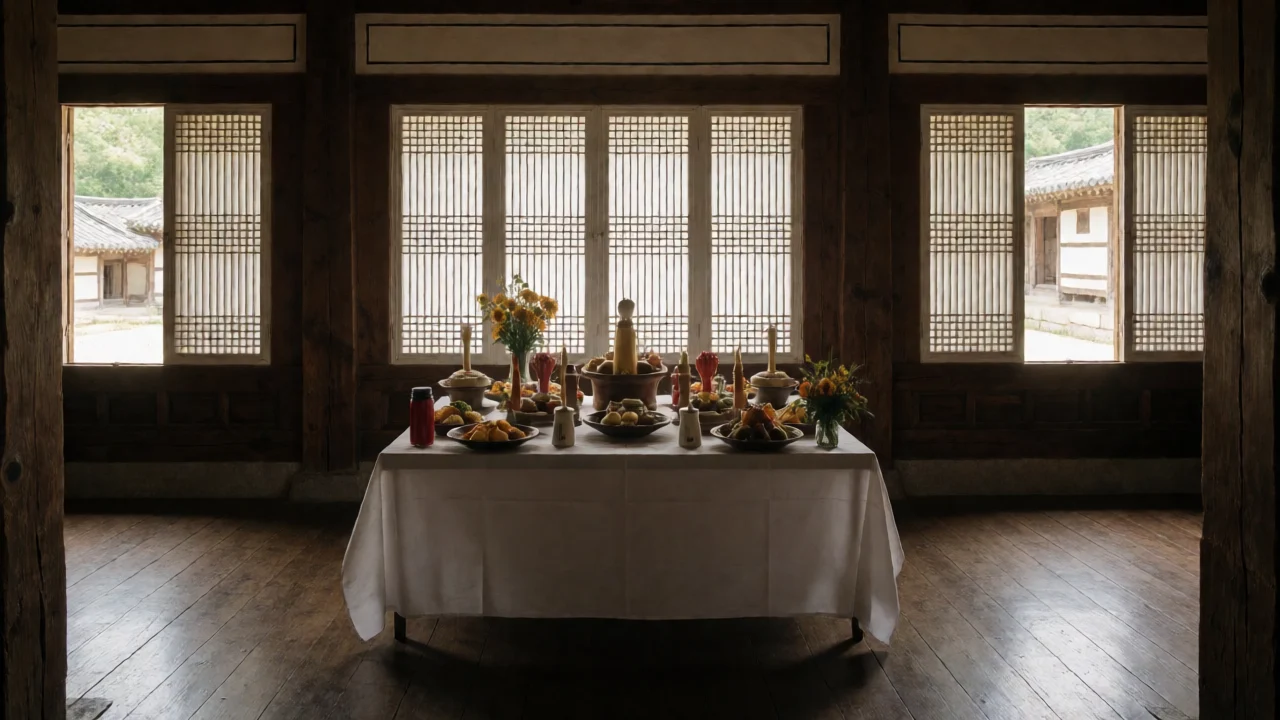
On New Year’s Day, Buni visits a shaman’s home with rice and a candle. Discover the meaning of hongsumagi, a traditional ritual meant to ward off misfortune throughout the twelve months of the year.
Settle in and listen to the story at a gentle pace before you begin reading.
Stepping Out into the Chilling Morning Wind
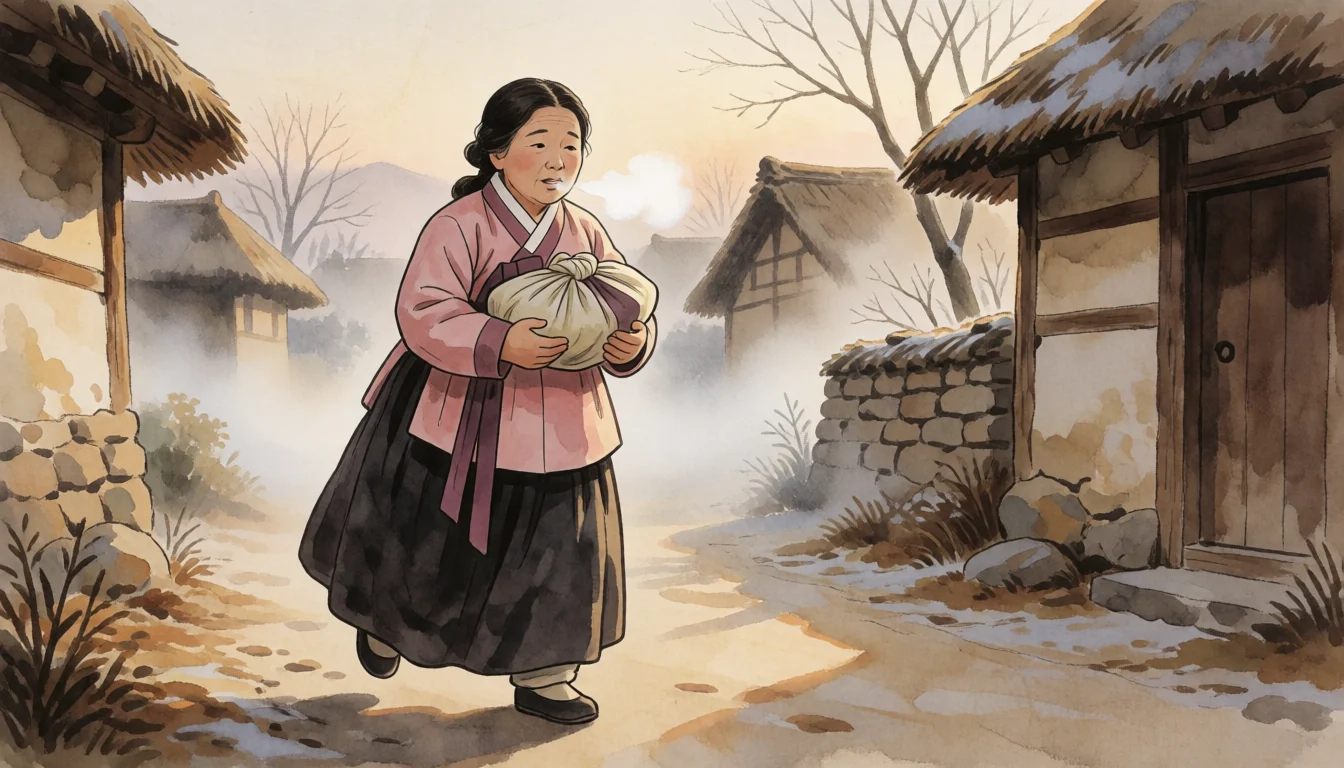
On the morning of Seollal, the Lunar New Year, the edges of the village were still draped in a hazy fog. It was just around the time when households would be dressing in their holiday best and filling the air with the savory aroma of rice cake soup. Buni, however, had finished cleansing her hands and bathing in icy-cold well water long before dawn broke.
Whenever a new year begins, everyone naturally hopes for a smooth and trouble-free year ahead. In the past, people referred to unexpected misfortunes or hardships that might creep into life as hoengsu (sudden disasters), and the small rituals performed to preemptively block them were called hongsumagi. It was customary to visit a mansin (shaman) between New Year’s Day and the fifteenth of the first lunar month to pray for annual peace.
“Dear, did you pack everything? Make sure the bag of rice is tied up securely so it doesn’t leak.”
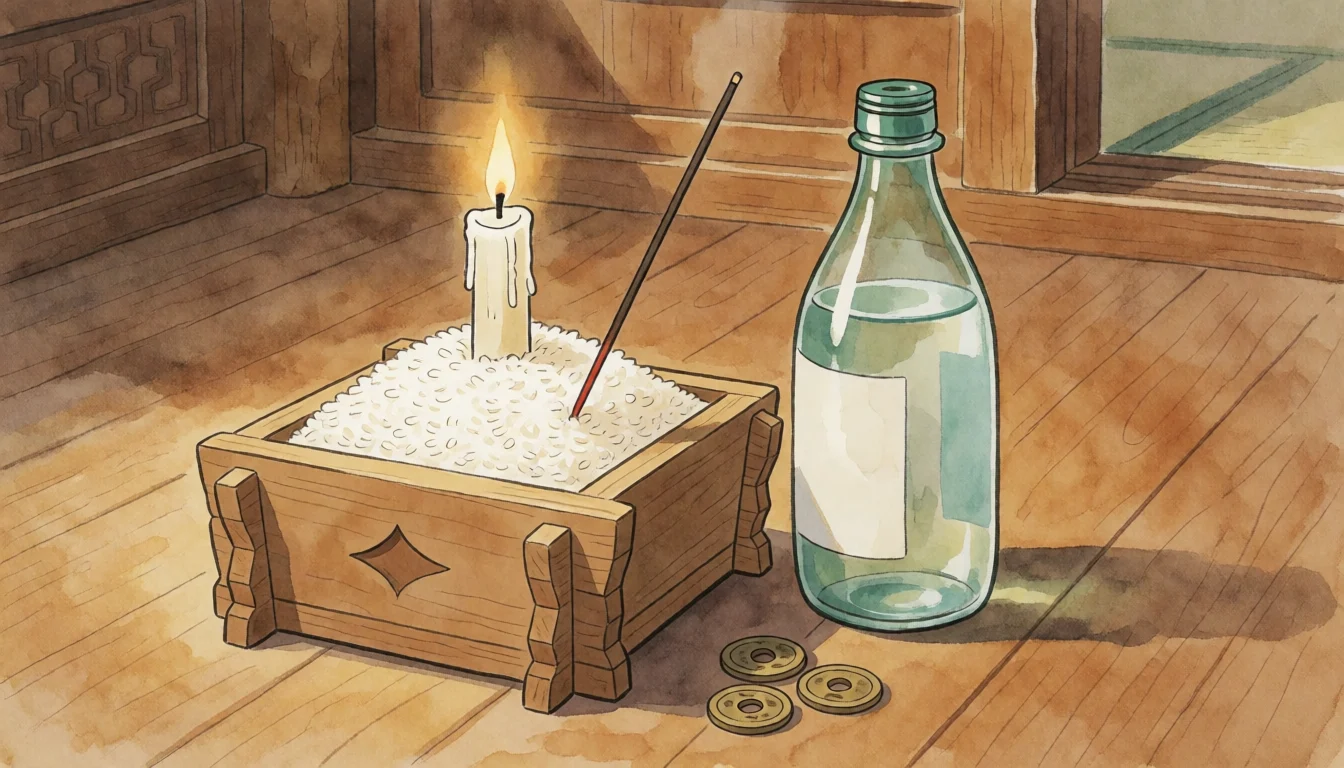
At her husband’s voice, Buni adjusted the wrapping cloth. Inside were a full doenbak (traditional measure) of carefully washed and dried rice, a candle and incense to cast a gentle flame, a bottle of clear rice wine, and a small amount of money. It was a modest offering, but she had chosen only the cleanest things in the household for her journey.
“Yes, don’t worry. I’ve even written down the children’s birth dates and tucked them into my coat, so I’ll be right back.”
Buni exhaled puffs of white vapor and hurried toward the shaman’s home with quick steps. The biting January wind slipped through the lapels of her jacket, but her desire to protect her family’s well-being kept her pace steady and fast.
Devotion Gathered in the Shaman’s Room
As Buni pushed open the wicker gate of the shaman’s house, a clear, chiming sound of brass bells drifted from the courtyard. The first fifteen days of the new year were a time when villagers lined up, one after another, to perform hongsumagi. Inside the room, a subtle, calming scent of incense lingered.
“Ah, Buni’s mother, you’ve arrived. Your hands must be frozen stiff from the cold wind. Come right in and sit on the warm floorboards.”
Noticing Buni’s chilled hands, the shaman ushered her toward the warmest part of the floor. Buni caught her breath and carefully untied the bundle she had been holding against her chest. She placed the candle and incense atop the smooth mound of rice, stood the bottle of rice wine neatly beside them, and laid out the small coin offering.
“I’m sorry to bother you right on the first day of the new year. I simply have no greater wish than for my husband’s work outside to go smoothly and for the children to pass the year without minor illnesses.”
Buni pressed her hands together neatly as she spoke, and the shaman smiled gently and nodded.
“A mother has walked all this way in the bitter cold of New Year’s morning to shield her family from misfortune—how could I offer these prayers carelessly? Now, tell me the names of your family members and their birth dates step by step.”
The shaman picked up a writing brush and began to note the names and dates of birth that Buni recited onto a clean sheet of white paper. Inside the room, the soft scratching of the brush tip against paper and a solemn quiet settled together.
Fortune and Misfortune for the Year in Birthdates
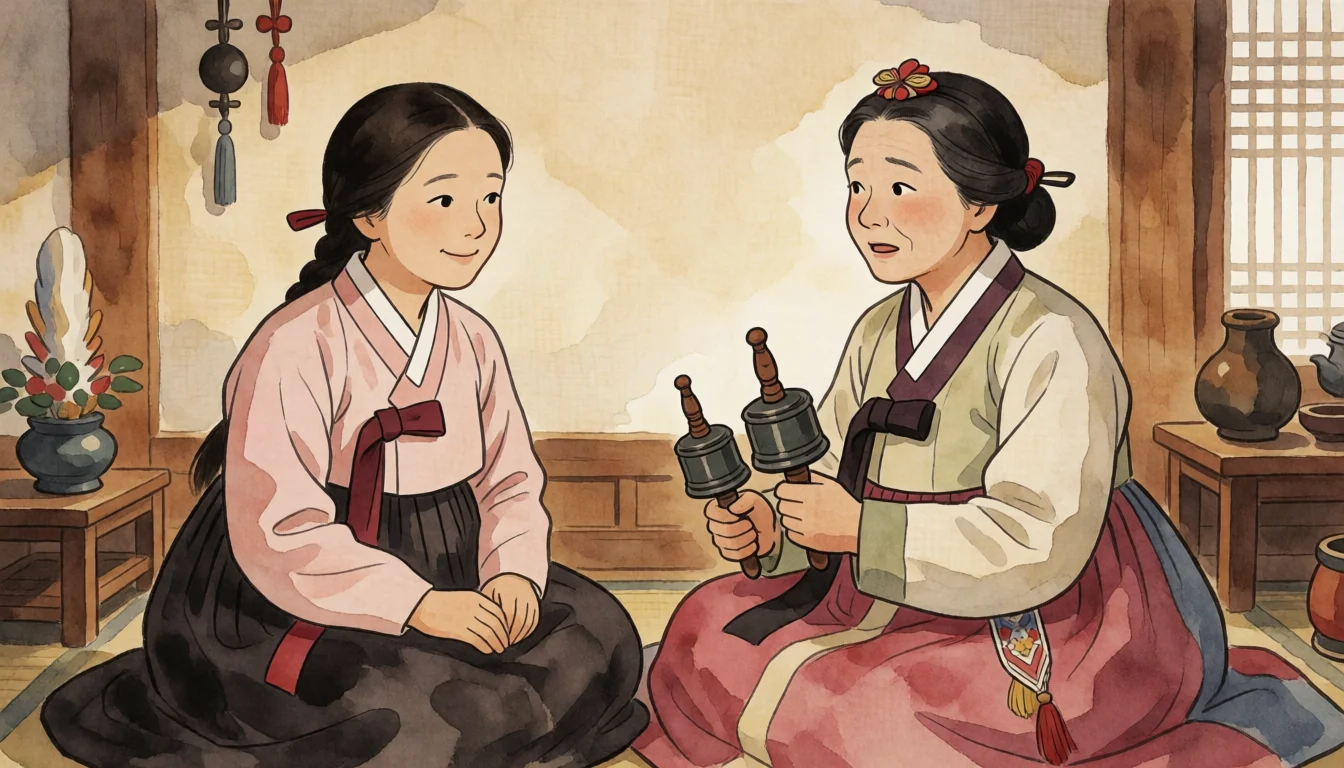
With the paper laid out before her, the shaman lightly offered a bowl of fresh water and bowed toward the shrine. Then, quietly calling upon the names of Buni’s family members one by one, she began to deliver gongsu—prophetic messages outlining the favorable and difficult events expected in the coming year.
“This year, there will certainly be times when warmth shines upon your household, but you must remain cautious each month so that unexpected disasters do not trip up your steps.”
As the shaman’s serious voice reached her ears, Buni swallowed hard without realizing it.
“When you say disaster… does that mean something harsh will happen?”
With wide, startled eyes, Buni looked up. The shaman stopped handling her bells and gazed back at Buni with a warm expression.
“There’s no need to be frightened. A disaster isn’t just something that drops out of the sky like a sudden lightning bolt; it refers to the various troubles, big and small, that we encounter as we live our lives. If you properly manage and appease the seasonal misfortunes as they arise across the twelve months of the year, even harsh troubles will brush past like a gentle breeze.”
Hearing those words, Buni let out a breath she didn’t know she was holding and listened closely.
“If you tell me how to ward them off, I will faithfully prepare whatever is needed.”
The Wisdom of Warding Off Misfortunes Month by Month
The shaman pressed her knee and looked straight into Buni’s eyes, explaining that a single gut ritual or noisy ceremony could not sweep away a full year’s worth of worries all at once.
“Listen carefully. The misfortune for the first lunar month is warded off through the New Year bows you respectfully offer to your elders today. Greeting one another properly at the start of the year is the greatest barrier against misfortune.”
“Ah, so we ward off misfortune for the first month through New Year’s bows?”
As Buni nodded, the shaman continued.
“Indeed. The misfortune of the second month is warded off on Hansik day by eating cold foods and disciplining one’s conduct; the third month’s misfortune on Samjinnal; and the fourth month’s by accumulating merit on Buddha’s Birthday. The fifth month’s misfortune is warded off on Dano by washing one’s hair in iris water, and the sixth month’s on Yudu by bathing in clean water.”
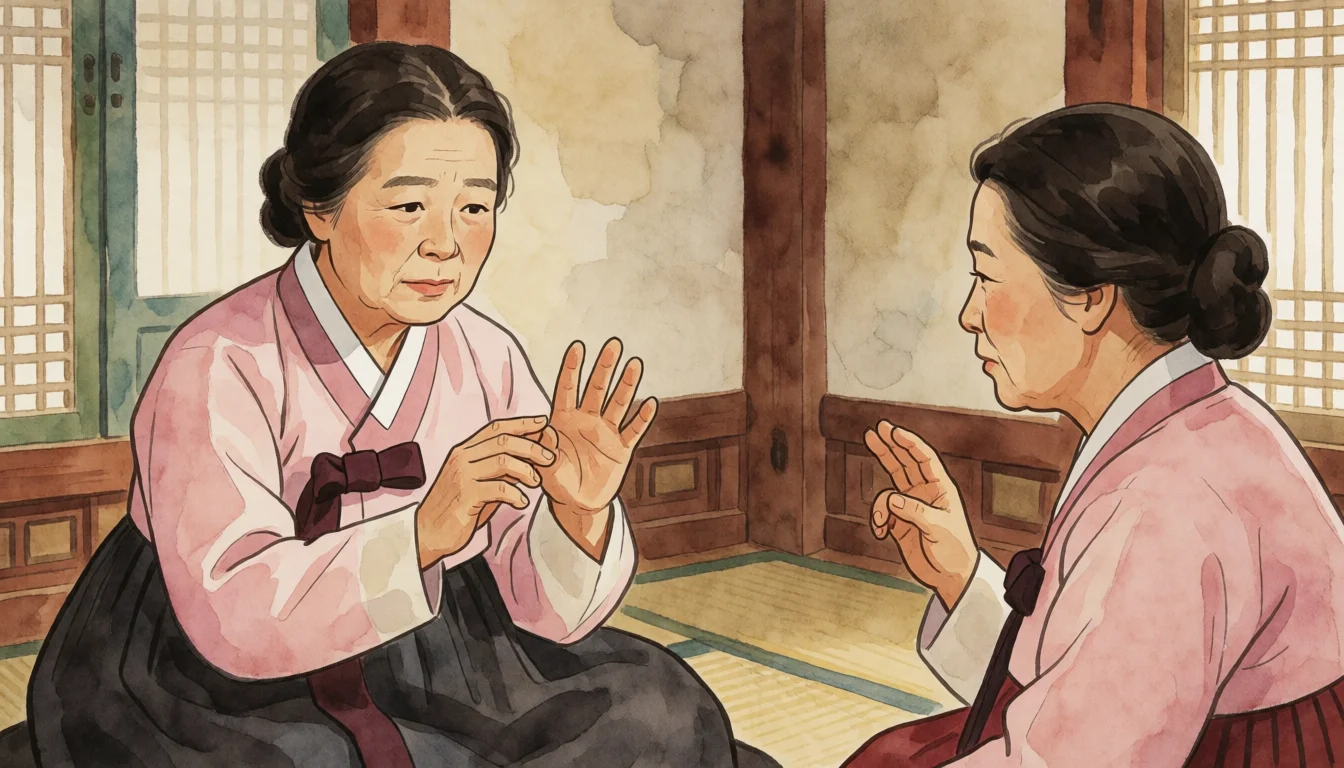
Buni counted on her fingers, clearly imprinting the dates to observe each month in her mind. She had thought the shaman simply chased away misfortune on her behalf, but she now understood that she herself had to pour sincere devotion into welcoming each changing season throughout the year.
“The seventh month’s misfortune is warded off on Chilseok when the Herdsman and Weaver stars meet, the eighth month’s with Chuseok when all grains are abundant, and the ninth month’s on the double-ninth day.”
The shaman’s resonant voice filled the room like a seasonal song blooming month after month.
The Promise of Radish Rice Cakes and Red Bean Porridge with Rice Balls
Before long, the conversation reached late autumn and the threshold of winter as the year drew to a close.
“Do you know how we ward off misfortune in the tenth sangdal month, as the chilly winds begin to blow?”
At the shaman’s question, Buni pondered for a moment before speaking cautiously.
“Since new grains are harvested in the upper tenth month, is it by offering rice cakes?”
“You are insightful. The tenth-month misfortune is warded off by steaming mu sirutteok—thick rice cakes layered with sweet chunks of radish. And the misfortune of the eleventh Dongji month, which has the longest night, must be warded off with red bean porridge containing chewy rice-ball dumplings called ongsimi. Finally, the misfortune of the last twelfth month is cleanly blocked on the twenty-fifth by welcoming the Taejong god.”
Buni pictured the freshly steamed radish rice cakes of October and the steaming bowl of red bean porridge with ongsimi in December. Warding off misfortune was not some distant, mystical secret; it was simply the modest act of gathering seasonal harvests, sharing them with neighbors, and feeding one’s family.
“Shaman elder, I will not forget. I’ll make thick radish rice cakes in the tenth month and roll ongsimi for red bean porridge in the Dongji month to share evenly with my family. If I do that, will this year pass without major trouble?”
“Of course. How could misfortune linger in a household where such monthly devotion is never forgotten?”
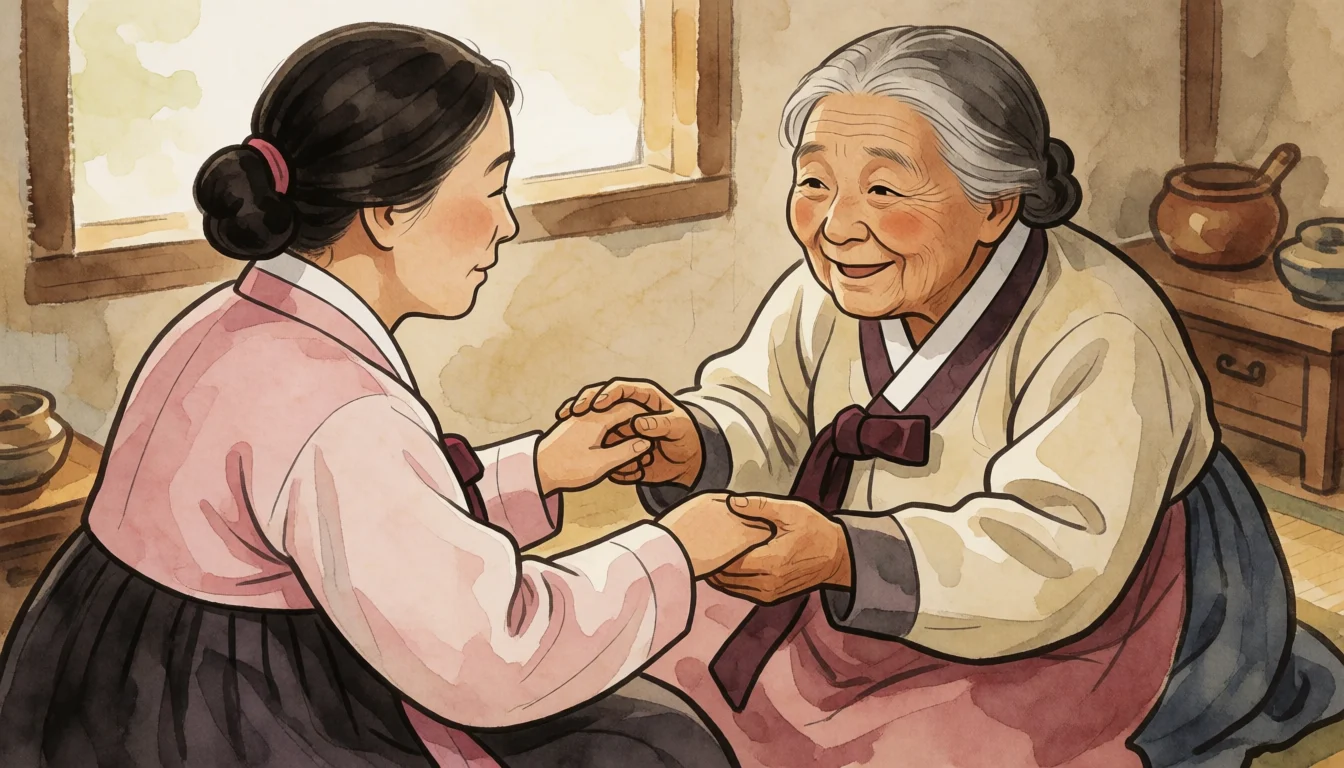
The shaman grasped Buni’s hand with a satisfied smile.
A Lighter Step and Warm Rice Cake Soup
Her ritual completed, Buni bowed deeply toward the shrine to express her gratitude. Though the candle and rice bundle she had carried so heavily against her chest were now empty, her heart was filled with a sturdy, warming energy.
Stepping outside the wicker gate, the cold air of the New Year morning remained, but it no longer felt as piercing as before. Along the lanes, neighborhood children dressed in their fine holiday clothes laughed and bustled about as they visited elders to offer New Year’s bows.
‘That’s right. Today’s misfortune can be warded off with the bows to our elders, and as long as I show sincerity in the months to come, everything will be fine.’
Returning home, Buni was warmly greeted by her husband and children.
“Mother, where have you been? We were waiting because we were afraid the rice cake soup would get cold.”
“Ah, I went to hear some good words so our family stays safe and well all twelve months of the year. Now, let’s hurry and offer our bows to grandfather and grandmother, and then we can all enjoy a bowl of rice cake soup together.”
Sharing bowls of steaming rice cake soup, Buni looked at the bright faces of her family. Her small morning walk on New Year’s Day to preemptively ward off unexpected misfortune had transformed into a warm promise to look after her family, brightly illuminating the first day of the new year.
Definition and Period of Hongsumagi
Hongsumagi (also known as hoengsumagi) is a shamanic ritual performed to preemptively ward off sudden disasters or misfortunes that might arise in everyday life. The ritual is typically conducted during the roughly fortnight-long period from New Year’s Day to the first full moon (Daeboreum).
Visiting the Shaman and Ritual Procedures
To perform hongsumagi, people cleanse themselves early in the morning, gather candles, incense, rice, rice wine, and a small monetary offering, and visit a shaman’s home. The shaman delivers prophecies regarding the good and bad events expected over the coming year while recording the family members’ names and birth dates to pray for the deflection of bad fortune. When performed as a large-scale ritual, it is called a hongsumagi gut, and the bad fortunes entering throughout the twelve months are warded off during the changbu-geori segment toward the end of the ritual.
Twelve-Month Hongsu Defense Methods
Hongsumagi tradition transmits a method of dividing and warding off each month’s misfortunes through specific seasonal holidays or foods:
- First Month: Warded off by New Year’s bows (sebae) on Seollal
- Second Month: Warded off on Hansik day
- Third Month: Warded off on Samjinnal
- Fourth Month: Warded off on Buddha’s Birthday (Chopail)
- Fifth Month: Warded off on Dano day
- Sixth Month: Warded off on Yudu day
- Seventh Month: Warded off on Chilseok day
- Eighth Month: Warded off on Chuseok (Harvest Moon Festival)
- Ninth Month: Warded off on the Double Ninth Day (Guilnal)
- Tenth (Sangdal) Month: Warded off with radish rice cakes (mu sirutteok)
- Dongji Month: Warded off with red bean porridge with rice-ball dumplings (ongsimi patjuk)
- Twelfth Month: Warded off on the twenty-fifth by welcoming the Taejong god
Historically, hongsumagi functioned as a shamanic ritual to manage everyday misfortune in traditional society, and its context continues to be transmitted today as a domain of folk religion and traditional culture.
The detailed conversations of characters, early morning outing scenes, and psychological descriptions appearing in the introduction and narrative progression are fiction created to help readers understand. However, the facts that hongsumagi is a shamanic ritual intended to ward off misfortune, that it takes place between New Year’s Day and Daeboreum, the process of visiting a shaman’s home carrying candles, incense, rice, rice wine, and money, and the twelve-month defense methods ranging from New Year’s bows to the twelfth-month Taejong greeting along with the culinary uses of radish rice cakes and ongsimi red bean porridge are grounded in strict folkloric facts recorded in historical literature.
🎨 Color This Story