As peeling mountains of garlic ahead of Chuseok left her shoulders aching, Suni spotted a scattered deck of flower cards in the courtyard and broke into a song that soon had the whole village laughing.
Settle in and listen to the story at a gentle pace before you begin reading.
A Busy Sigh in the Holiday Courtyard
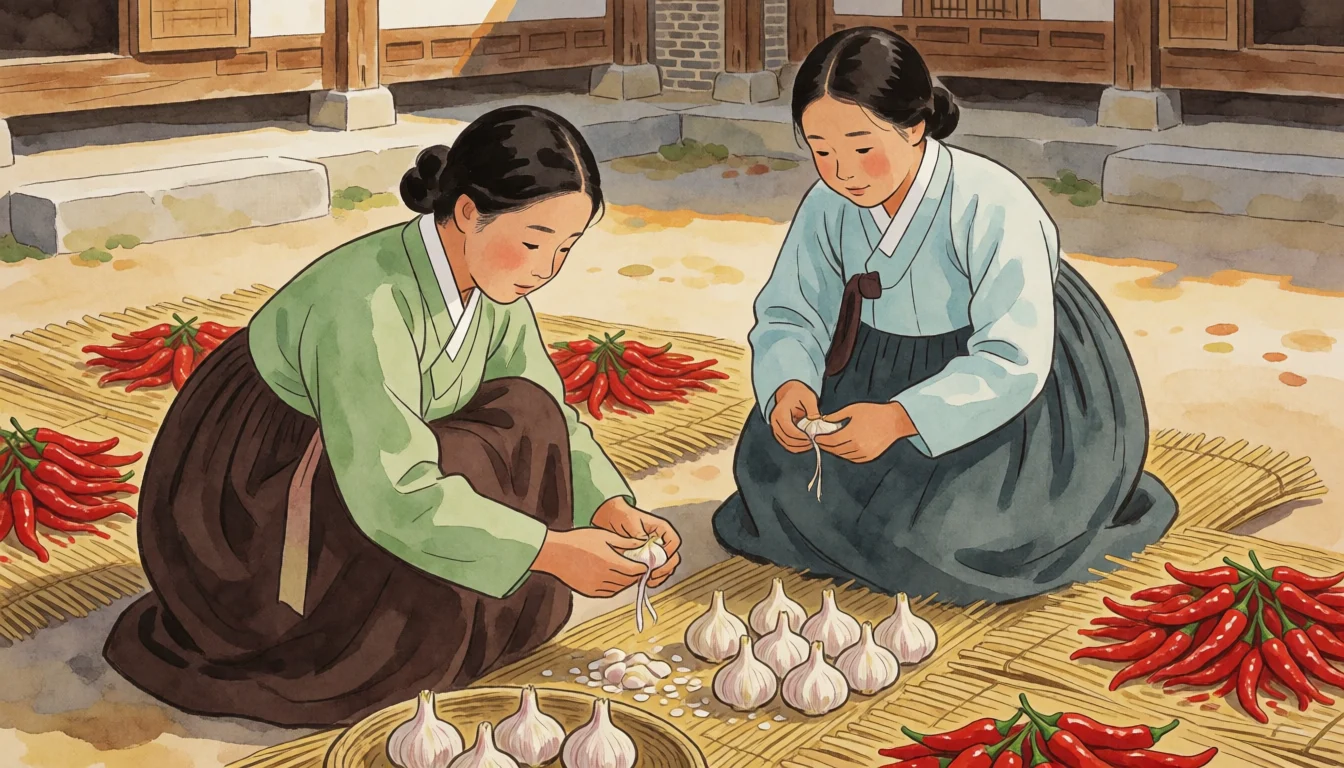
The autumn sun beat down fiercely across the courtyard. With Chuseok just around the corner, the village women of Miryang, South Gyeongsang Province, had gathered early in the morning. Red chili peppers were laid out drying on a large straw mat, accompanied by towering mounds of whole garlic waiting to be peeled.
Suni sat huddled over, working diligently. Her fingertips were already stained red, stinging from the pungent garlic juice. She needed to finish peeling the garlic and put away the peppers before the sun dipped behind the western hills, but no matter how fast her hands moved, the pile seemed stubbornly endless.
"Oh, my aching back. The sun is already dipping low, and a whole basket is still left," Suni muttered, pausing to thump her stiff lower back.
Buni’s mother, busy turning over the chili peppers nearby, wiped away a bead of sweat and glanced over.
"Suni’s wife, you can’t wear out this early. We promised to finish everything before sunset, so let’s push through just a little longer."
Despite her encouraging words, Buni’s mother’s voice was heavy with exhaustion. In the austere days of the colonial era, the arrival of a major holiday only seemed to double the emptiness in body and mind.
Scattered Cards on the Veranda
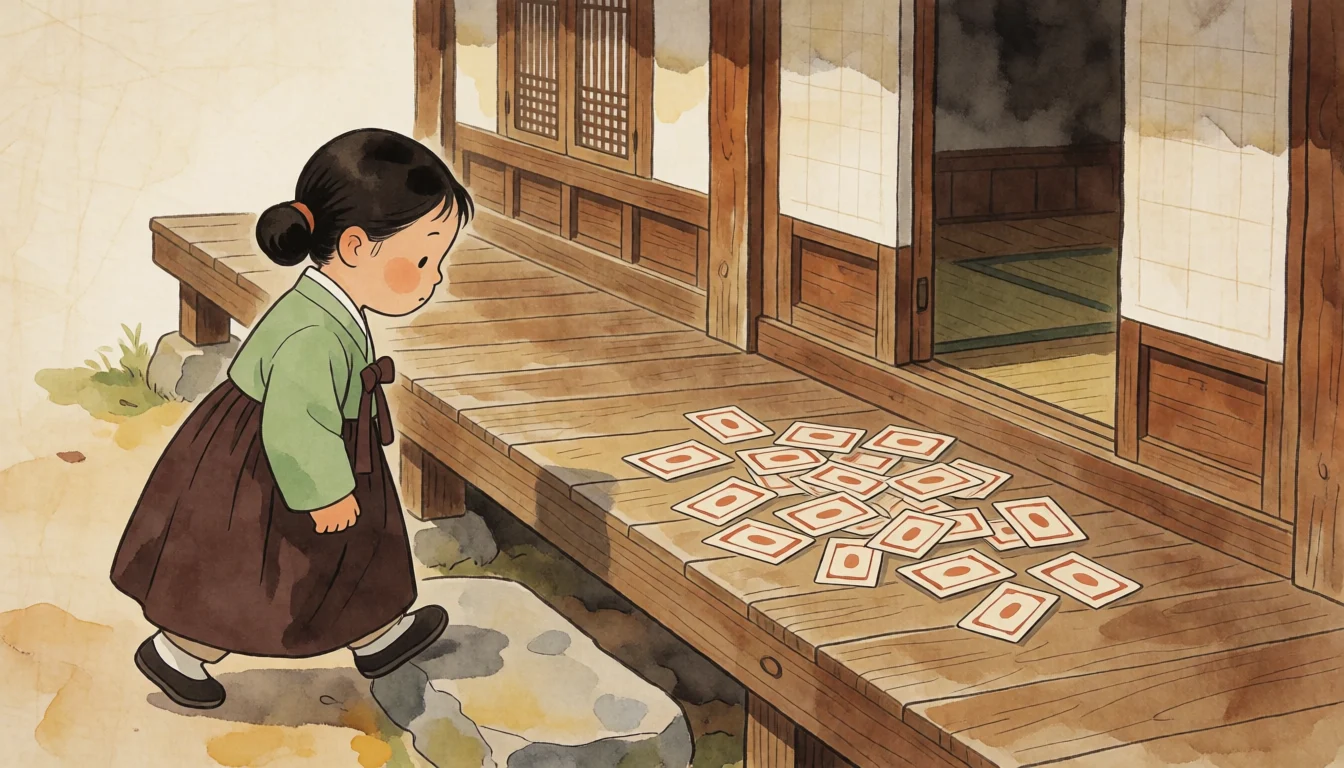
As Suni paused to stretch her stiff shoulders, her gaze drifted to the wooden veranda in the corner of the courtyard. Forty-eight hwatu flower cards—commonly used for entertainment by adults during holidays or funerals—were scattered about. They were red-backed paper cards left behind by someone who had been gambling.
"Tsk tsk, losing their minds to gambling and leaving these cards strewn everywhere, oblivious to how futile it all is," Suni clicked her tongue.
Buni’s mother, sweeping up garlic skins, offered a bitter smile.
"What can you do? Life is so grim and hollow that people cling to these red and black cards through the night, hoping for a stroke of luck. But when you chase after victory and defeat, all you’re left with in the end is a sigh."
Suni looked closely at the illustrations scattered across the veranda. From the crane perched under a pine tree representing January, through plum blossoms, cherry blossoms, chrysanthemums, and autumn maples, the cards marked the twelve months of the year. Imagining the tense faces of people fumbling over these tiny paper tiles amid a fleeting life, a hollow feeling welled up inside Suni as well.
Well, I can’t just sit here sighing all day.
Dusting off her garlic-stained hands, Suni stood up and stepped briskly toward the veranda. As she gathered the scattered cards one by one, a playful glint appeared in her eyes.
A Tune Carried on a Heavy Heart
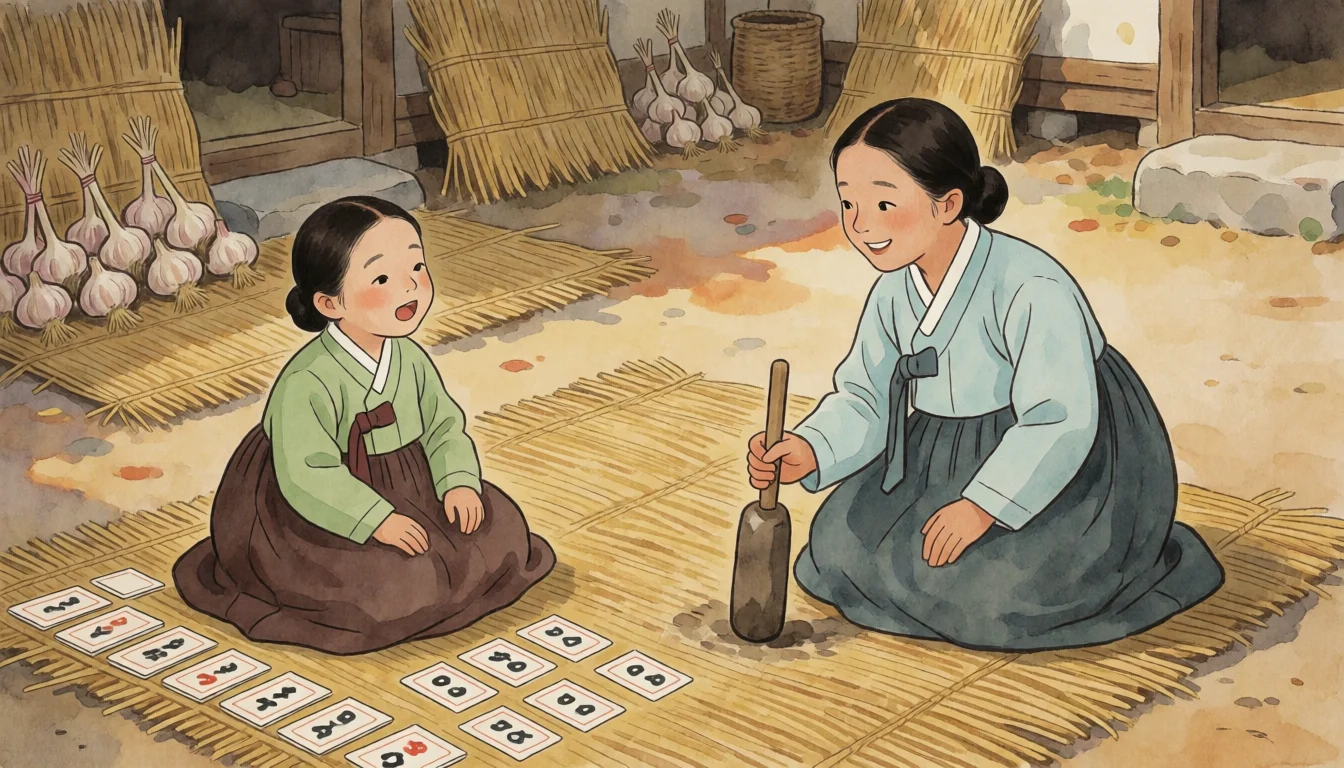
Suni arranged the forty-eight flower cards neatly at the corner of the straw mat and cleared her throat. She wanted to lift the spirits of her neighbors, who were sagging under the weight of endless chores. Keeping to a traditional four-beat rhythm, Suni let out a low, resonant chant:
"January pine branches for a knotted heart, February plum and bird to seal them tight!"
At her clear, melodious voice, the women peeling garlic stopped short. Buni’s mother widened her eyes and stared at Suni.
"Suni’s wife, what on earth is that? Are you singing a song while holding flower cards?"
"Mother, if we just work, our backs will snap. Since we have to do it anyway, we might as well mock the pictures on these cards and shake off our blues!"
Suni flashed a bright smile and immediately launched into the next verse.
"March cherry blossoms for a restless mind, April black bush clover to scatter the worries!"
Comparing the flowers and birds on the cards to the tangled anxieties of the human heart, her witty lyrics coaxed a wry smile from Buni’s mother. Without realizing it, the hand holding her garlic-pounding pestle began tapping a steady beat against the straw mat.
"That’s right! Toss worries as messy as April bush clover right out into the yard! Come on, let’s hear the next month!"
Flowers of Laughter Blooming on the Straw Mat
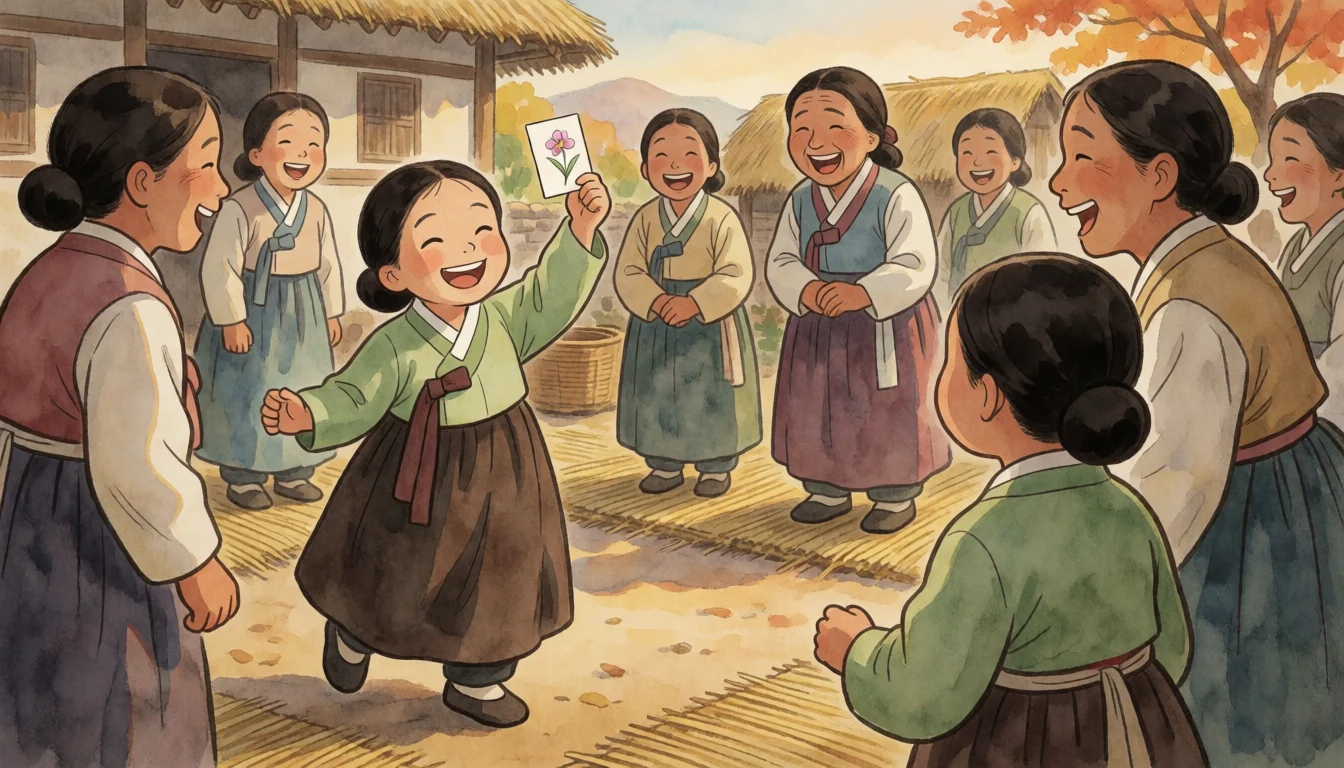
Energized, Suni picked up the May orchid card and swayed her shoulders.
"May orchids turning into butterflies, dancing away on June peonies!"
As Suni fluttered her arms like a butterfly with humorous gestures, a young maiden cleaning up garlic peels burst into laughter. The neighbors resting on the veranda also clapped their hands, encouraging the song.
"July red boars lying alone, August mountain where the moon rises!"
"That’s it! The Chuseok moon will soon rise high over that mountain, so let’s finish our work quickly and go moon-watching!" Buni’s mother chimed in robustly.
In that instant, the cards—once regarded merely as gambling tools—were transformed through Suni’s lips into a lively, comforting chant that lightened heavy labor. Across faces that had just been lamenting a harsh life, smiles warmer than the autumn sun bloomed brightly.
"September chrysanthemums with a stubborn heart, falling flat with October maples!"
At Suni’s dramatic gesture of letting her hand drop like a falling maple leaf, the entire courtyard erupted into laughter once more. The shadow of the gambling table, where people used to turn red-faced over winning and losing, was nowhere to be found; instead, the yard was filled with the warm, resilient bonds of neighbors sharing their hardship.
Crossing Over the Twelve Months of Worry
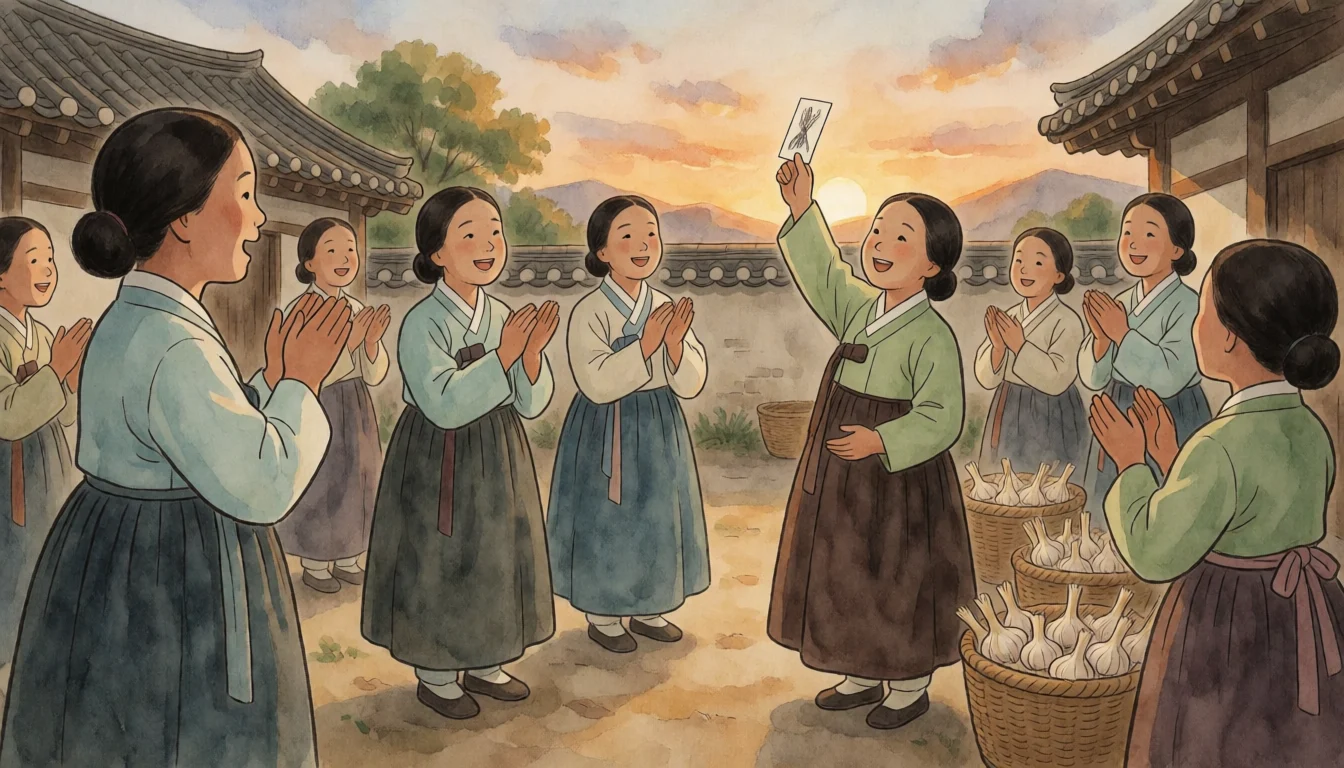
Finally, they reached the end of the year. Holding the very last card high up against the autumn sky, Suni brought her song to a triumphant close:
"The paulownia of the twelfth lunar month, crossing over the twelve rains!"
"Crossing over, eolshigu! Crossing over all those bitter rains!"
The women gathered in the courtyard joined voices to echo the end of the song, clapping in unison. Though it was a dark and futile era under colonial rule, they shared a steadfast determination to weather all the storms and sorrows of the twelve months with just this simple tune.
Miraculously, once the song ended, their heavy movements felt remarkably lighter. Suni, Buni’s mother, and the neighbors busily moved their hands while humming the lyrics, and by the time the sun began to paint the western hills in twilight hues, they had neatly finished peeling the garlic and spreading out the chili peppers.
"Thanks to Suni’s wife, we got through our holiday prep without feeling bored today. Who would have thought you could make such an amazing song out of those wretched gambling cards?"
Buni’s mother packed away the empty baskets and warmly squeezed Suni’s hand. The flower cards from the veranda were neatly packed back into their pouch, and the women walked away across the straw mats, stepping lightly into the fading autumn sunset.
Hwatu-taryeong is a folk game song (specifically a tool-play and chanting folk song) sung using hwatu (flower cards) as its subject matter. It highlights thoughts entrusted to chance, involving elements of competition, winning and losing, or skill.
This song mostly follows a 5-4 syllable meter in a four-beat rhythm, functioning as a monthly calendar (wolnyeong-che) folk song that depicts the characteristics of flower cards across the twelve months from January to December. Hwatu consists of 48 play tiles divided into 12 categories, with four matching cards for each month, and has traditionally been used as entertainment during holidays like Chuseok and Lunar New Year, or at funeral houses.
Hwatu-taryeong is believed to have originated in modern times and gained widespread popularity during the Japanese colonial period. Theories regarding when and how hwatu was introduced to Joseon vary, with some suggesting it was brought by Japanese invaders during the Imjin War, and others attributing its spread to Tsushima merchants trading through ports in the late 19th century. In the Miryang region of South Gyeongsang Province, lyrics such as "January pine branches for a knotted heart, February plum and bird to seal them tight / March cherry blossoms for a restless mind, April black bush clover to scatter the worries / May orchids turning into butterflies, dancing away on June peonies / July red boars lying alone, August mountain where the moon rises / September chrysanthemums with a stubborn heart, falling flat with October maples / The paulownia of the twelfth lunar month, crossing over the twelve rains" have been collected and passed down.
Calendar-style songs that humorously interpret hwatu imagery by month, known as wolnyeong-che-ga, were widely sung across various parts of the country until recently. The tradition of these folk songs, which served to soothe the empty lives and powerlessness of colonial subjects during the Japanese colonial era, remains preserved in various oral heritage materials today.
The scenes in the main text—such as peeling garlic and drying chili peppers in a holiday courtyard, the specific dialogue and actions between Suni and Buni’s mother, and the narrative of sharing laughter through hwatu-taryeong—are fictional creations designed to aid the reader’s understanding.
The actual historical and folkloric facts are that hwatu exists as an amusement tool consisting of 48 cards across 12 categories used during holidays or funerals, and that Hwatu-taryeong is a four-beat, 5-4 meter calendar folk song utilizing hwatu imagery to humorously depict the traits of the twelve months, with related lyrics preserved and transmitted in regions such as Miryang, South Gyeongsang Province.
🎨 Color It Yourself