As the red sunset casts a late afternoon glow, follow Dojin polishing ritual vessels on the wooden porch of a jaesil (ancestral memorial hall) and an old man carrying an A-frame carrier down a mountain path, exploring the traditional landscape and preparation process for ancestral rites.
Settle in and listen to the story at a gentle pace before you begin reading.
The Setting Sun and Brass Vessels in the Courtyard
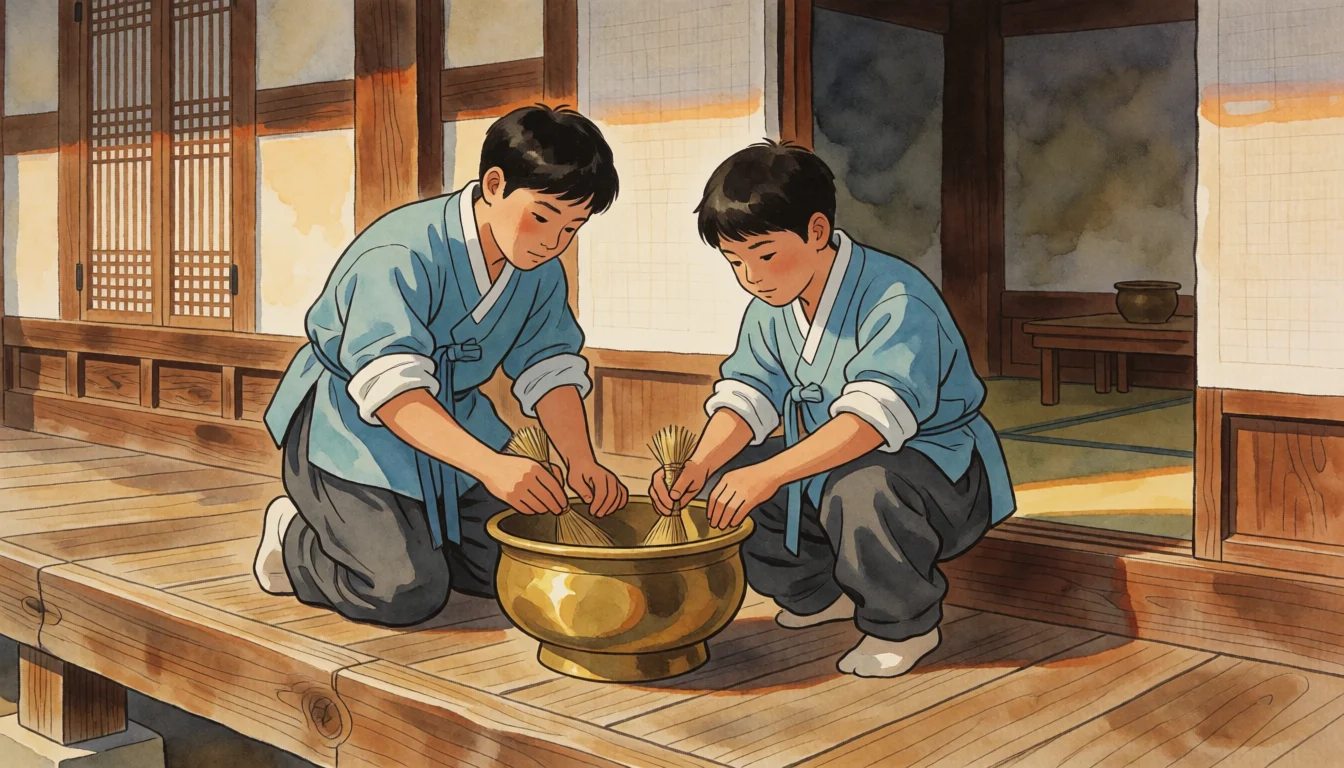
It was late afternoon, and a brisk autumn wind brushed against the mountain foothills, sweeping coldly across the wooden veranda of the jaesil. Dojin, with his sleeves rolled up, was working frantically, scrubbing heavy brass ritual vessels—retrieved from the storage chest—with a bundle of straw. Because the upcoming seasonal ancestral rite (sije) would gather all the senior clan members, not a single detail could be neglected.
“Ah, the sun has already dipped over that mountain ridge.”
As the red sunlight slanted beyond the western horizon, Dojin’s hands moved even faster. Inside the memorial hall, offerings had to be prepared, and the incense and ritual prayers kept in the incense room needed to be inspected before nightfall. Though the memorial hall sat neatly nestled below the family graves, the remaining time was far too short for one person to handle all the preparations alone.
Countless Graves Scattered Along the Ridge
Looking up from the courtyard, ancestral tombs stretched out in winding lines along the steep mountain ridge. Traditionally, performing ancestral rites meant visiting each rugged gravesite one by one throughout the day to set up the ritual tables. Lugging heavy loads up and down steep slopes often left descendants completely exhausted before the rites even began.
Dojin quietly recalled a story he had read in the writings of past elders: “Master Saje Kim Jang-saeng, worried that descendants would grow too exhausted by the sheer number of mountain graves to offer sincere devotion, once asked Master Toegye Yi Hwang if they could build a jaesil below the graves and hold a joint ancestral rite (hapje) there.” Master Toegye agreed, answering that gathering the spirit tablets at the jaesil to hold rites together was actually a way to focus one’s sincerity entirely. Even so, tasks like weeding and maintaining the gravesite today still demanded navigating the grueling mountain paths.
A Bent Back Stopped on the Slope
Just as Dojin was about to carry the polished vessels over to the main hall, a cloud of pale dust and heavy breathing rose from the narrow path winding up the ridge. It was Gu-nam, the elderly caretaker who had silently watched over and protected the clan’s burial grounds for many years.
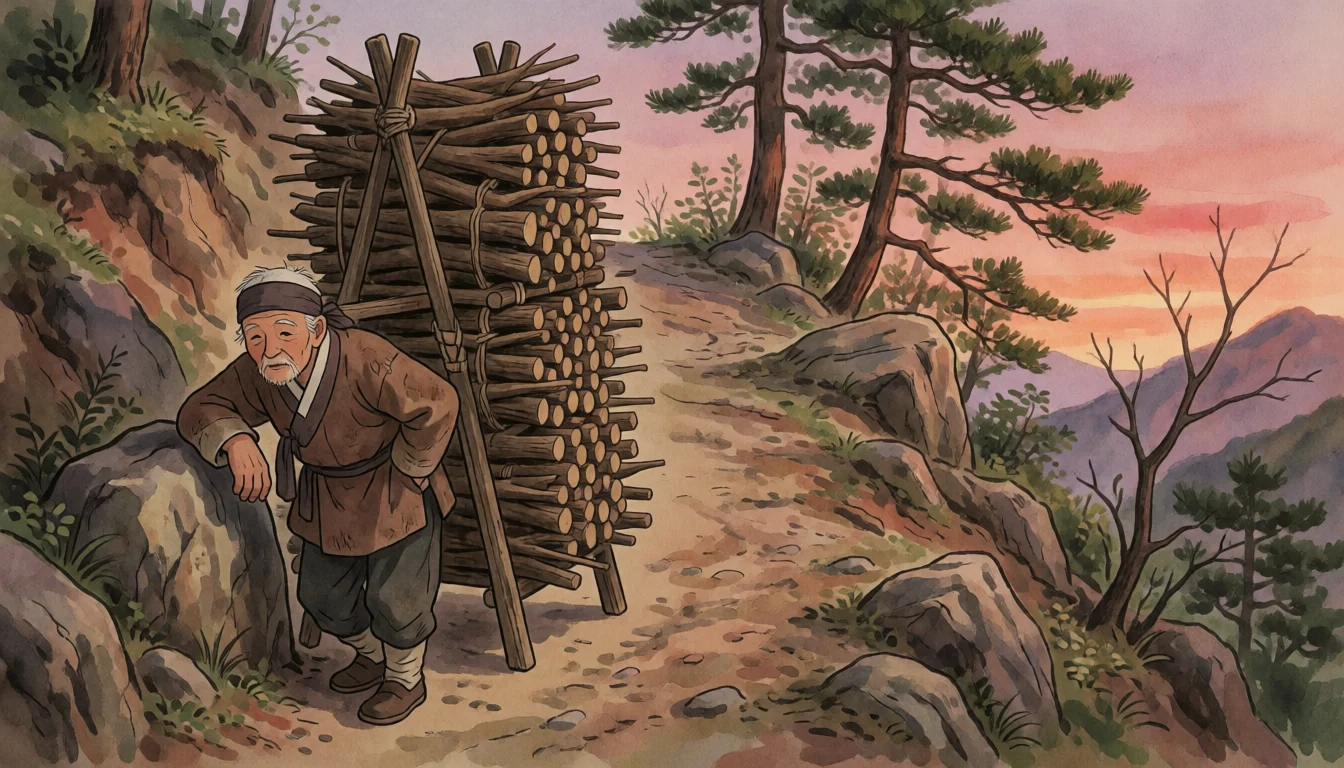
Yet, the old man’s usually steady stride looked precarious. Atop his A-frame carrier sat a towering pile of pruned branches and dry firewood for the rites, and Gu-nam was leaning heavily against a boulder, limping badly on his right leg.
“Elder, are you alright?”
Dojin cried out in surprise from the edge of the porch, but Gu-nam could only gasp for breath, unable to properly raise his head. In the red sunset glow, the old man’s bent back trembled slightly.
Footsteps Halting Before the Pressure of Time
Dojin’s mind began to race. The prayer box in the incense room still needed to be secured, and a basket of unwashed ritual vessels remained. Once the sun dipped completely behind the peak, he might not be able to begin the ritual purification (jaegye) by tonight if he had to clean bowls under a dim oil lamp. Purification of mind and body was the most crucial step on the eve of the ancestral rites.
‘If I go up the mountain path now, I won’t finish polishing the vessels…’
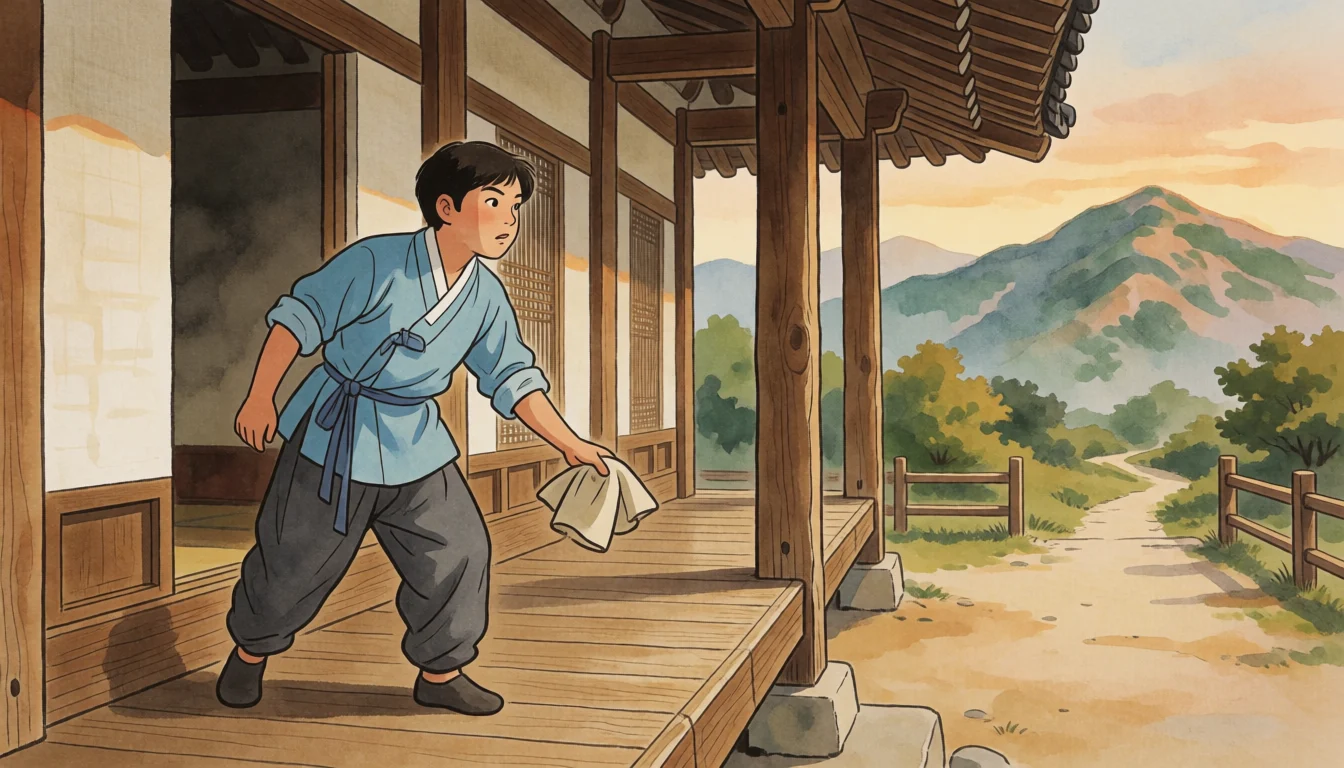
Yet, the moment he saw the old man’s parched hand trembling against the boulder, Dojin dropped the hemp cloth from his hand onto the porch. Before he knew it, his feet were darting toward the dusty hillside path.
Sharing the Heavy A-Frame Load
“Hey now, a young man like you should be preparing for the rites—why are you running up here!”
Gasping for breath, Gu-nam grumbled gruffly the moment he saw Dojin. Yet, beads of sweat streamed down his forehead and dripped heavily from his chin.
“Your ankle looks bad, Elder. Please, hand me that load.”
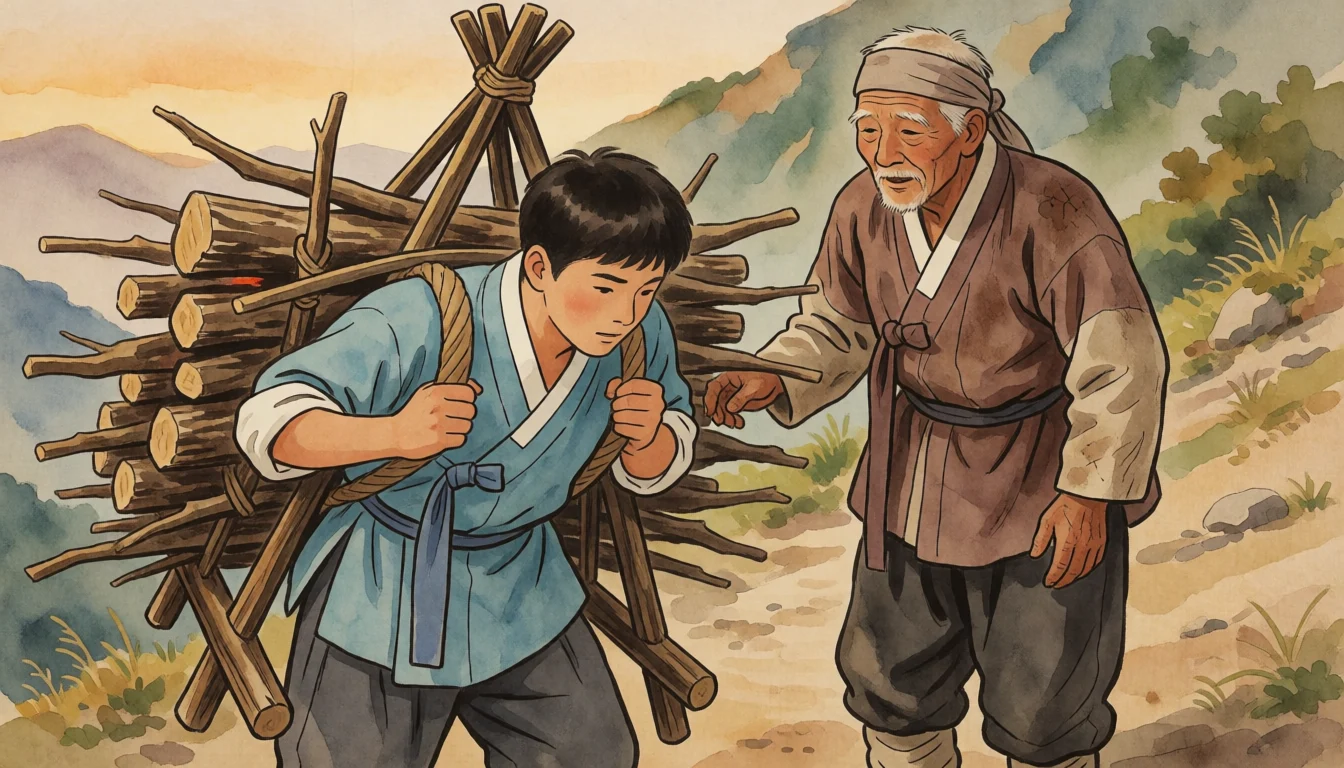
Without waiting for permission, Dojin unfastened the carrier straps and hoisted them onto his shoulders. As the heavy bundle of firewood pressed down, Dojin’s knees nearly buckled. He could vividly feel the immense toll the old man had borne all day, single-handedly gathering this heavy load while tidying the gravesites and prepping firewood for the jaesil hearth.
“Tsk tsk, you barely have enough time to polish the ritual vessels, yet you’re asking for extra trouble…”
Gu-nam still grumbled, but as he lightly dusted off his freed shoulders, he did not refuse Dojin’s support.
The Meaning Behind the Mountain Keeper’s Nagging
Stepping carefully, the two men made their way down to the mountain keeper’s dwelling attached to the jaesil. Thick beads of sweat dotted Dojin’s forehead as well.
“Elder, why on earth did you push yourself to climb the mountain like that until after dark?”
As Dojin lowered the carrier next to the veranda, Gu-nam let out a dry cough and replied:
“If wild bushes grow unchecked from the mountaintop graves down to the bottom, descendants might lose their way or get hurt. Why do you think our ancestors built this jaesil below the graves and discussed holding joint rites by enshrining the spirit tablets? It was because they feared descendants would grow exhausted by the mountain path and lose their sincerity in honoring their ancestors. So, as an old man guarding the mountain, I have to clear the path so the descendants coming to pay their respects can do so with peace of mind.”
Only then did Dojin warmly realize that Gu-nam’s usual constant nagging actually stemmed from a deep affection for the descendants who had to traverse the rugged mountain paths.
A Humble Meal Blossoming on the Jaesil Porch
After pouring cold water over Gu-nam’s ankle and wrapping it with cloth at the dwelling, Dojin returned to the jaesil to find the sky deeply stained with indigo twilight. Just as expected, a few unwashed ritual vessels still sat lonely in the corner of the porch.
“See? I told you your work wouldn’t be finished.”
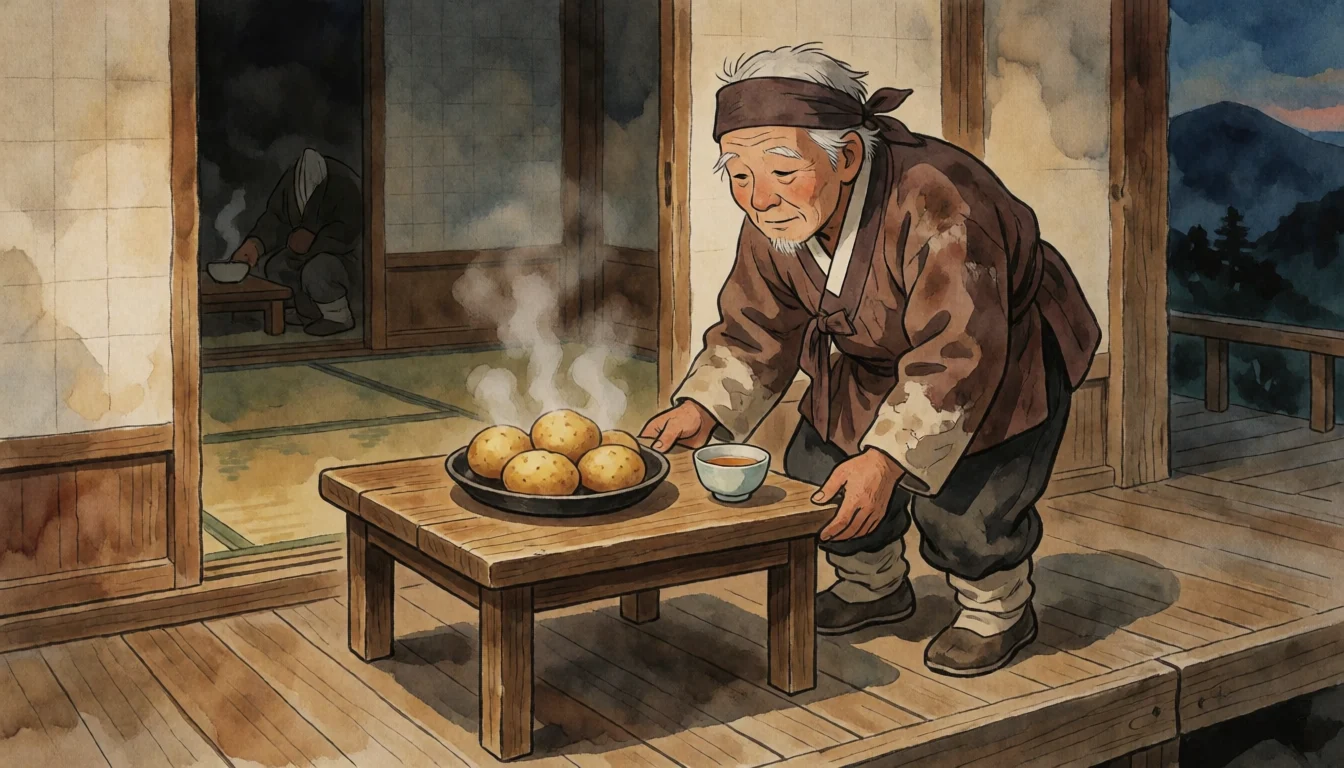
Limping after him, Gu-nam clicked his tongue and casually dropped a small dining tray he had brought from his kitchen in front of Dojin. Neatly arranged on the tray were two steaming hot potatoes, a few jujubes, and a bowl of clear tea—a modest meal (sichan) reminiscent of the simple foods ancestors once enjoyed.
“You’ve had an empty stomach all day preparing for the rites, so moisten your throat before you finish scrubbing the bowls.”
As Dojin carefully picked up the teacup, its gentle warmth softly wrapped around his freezing fingertips.
Warmth Lingering in the Twilight
By the time night had fully fallen, not all preparations had been completed perfectly during daylight. The tedious task of scrubbing the remaining vessels under an oil lamp and lighting the candles in the incense room still awaited.
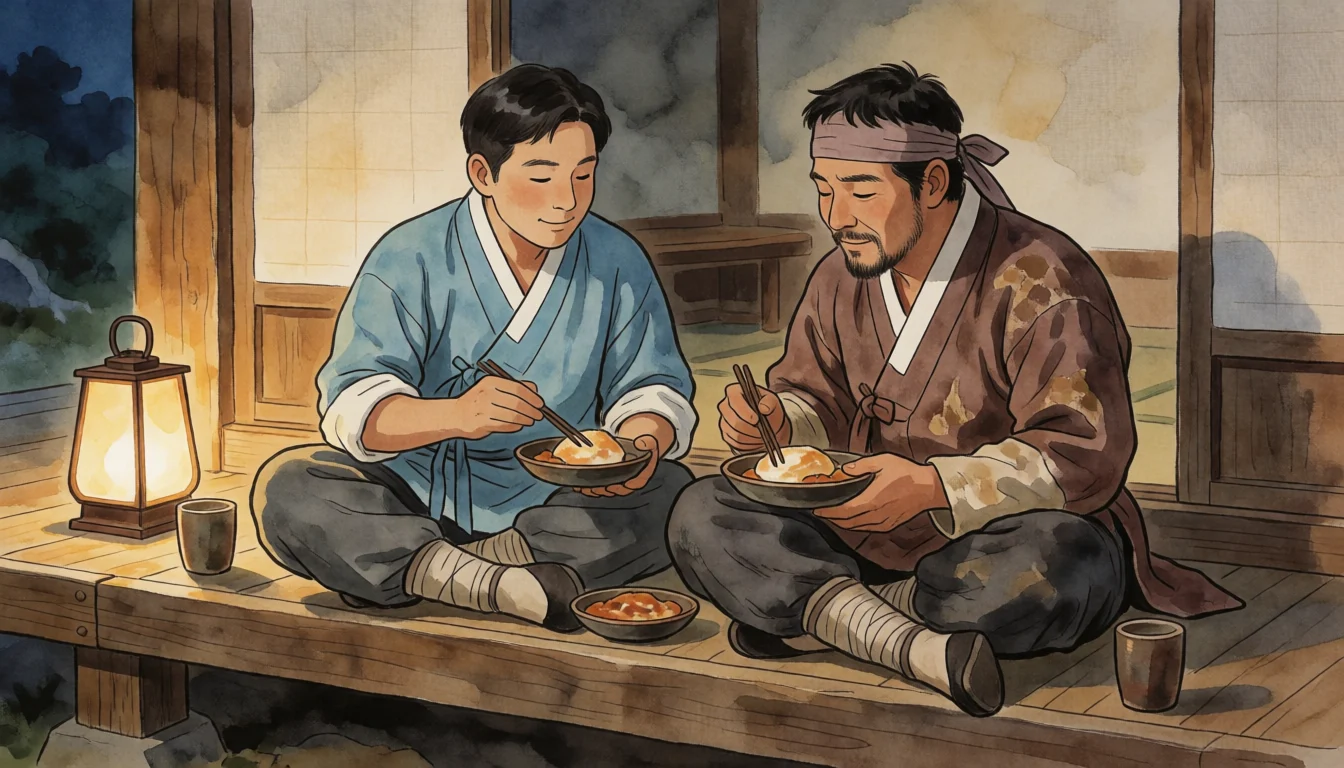
Even so, sitting side by side on the jaesil porch and sharing the steaming food, the hurried anxiety on their faces was replaced by a warm serenity. In a moment where they recognized each other’s hard work and shared a heavy burden, the night at the jaesil ahead of the ancestral rites deepened with boundless warmth, even amidst the chilly autumn wind.
A jaesil (齋室) is a building typically constructed below ancestral gravesites to perform moknyok jaegye—purifying the body and mind—prior to holding ancestral rites. Serving as a space for preparing rituals and protecting and managing the graves, it functioned as an important clan heritage site and the center of ritual operations.
The interior structure of a jaesil was variously organized to systematically store and execute ritual goods. It featured the hyangdaecheong (incense and prayer storage room) and ritual hall, the jipsacheong for officiants and assistants to undergo purification, spaces related to spirit tablets for food preparation, and the jesiggor (vessel storage room), alongside an attached living quarter for the resident caretaker or mountain keeper. In addition, widap (ritual paddies) were designated near the jaesil to cover ritual expenses; both the hall and the paddies were managed as communal clan property.
Strict purification rites and taboos preceded ancestral rites. For seasonal rites (sije), purification began three days prior (two days of mountain purification, one day of residence purification). During mountain purification, taboos were strictly observed: avoiding alcohol, refraining from eating pungent vegetables, avoiding condolences or hospital visits, shunning music, and staying away from unclean or bad deeds. For graveside rites (myoje), purification was performed at the jaesil the day before. Ritual foods called sichan were prepared using foods the ancestors usually enjoyed, set up in places like the southern quiet spots of the jaesil area before holding the rites.
This tradition can also be found in the establishment of jaesil and records by Confucian scholars of the Joseon Dynasty. Uam Song Si-yeol built a jaesil in front of his parents’ graves based on Zhu Xi’s Hancheonjeongsa and Yujeong systems, while Sunam An Jeong-bok built a three-kan house in Deokgok to serve as a ritual site. Furthermore, records show that Saje Kim Jang-saeng, worried that numerous graves would lead to neglect, asked Toegye Yi Hwang about building a jaesil near the graves to hold joint rites, to which Toegye agreed. An Jeong-bok noted in Sunamjip that building jaesil near tombs in the Jin dynasty and establishing memorial rites on Hansik day in the Tang dynasty marked the beginning of graveside rites.
In today’s modern society, as clan-centered ritual practices have individualized and hollowed out, the functions of jaesil—once spaces for hosting ancestors and preparing rites—are losing their meaning or gradually disappearing.
Fictional elements introduced for the reader’s understanding include the young descendant “Dojin” and the mountain keeper “Gu-nam,” the specific lifestyle details such as limping while carrying heavy firewood, and the narrative portrayal of sharing a modest sichan and tea while facing each other on the jaesil porch at sunset.
On the other hand, historical and folkloric facts rooted in literature include the architectural reality of building jaesil below graves with facilities like the hyangdaecheong, ritual hall, jipsacheong, jesiggor, and living quarters; the system of operating widap as communal clan property to cover ritual costs; the strict purification rites and taboos observed before seasonal and graveside rites; and historical records regarding the construction of jaesil and joint rites by sages such as Song Si-yeol, An Jeong-bok, Kim Jang-saeng, and Toegye Yi Hwang.