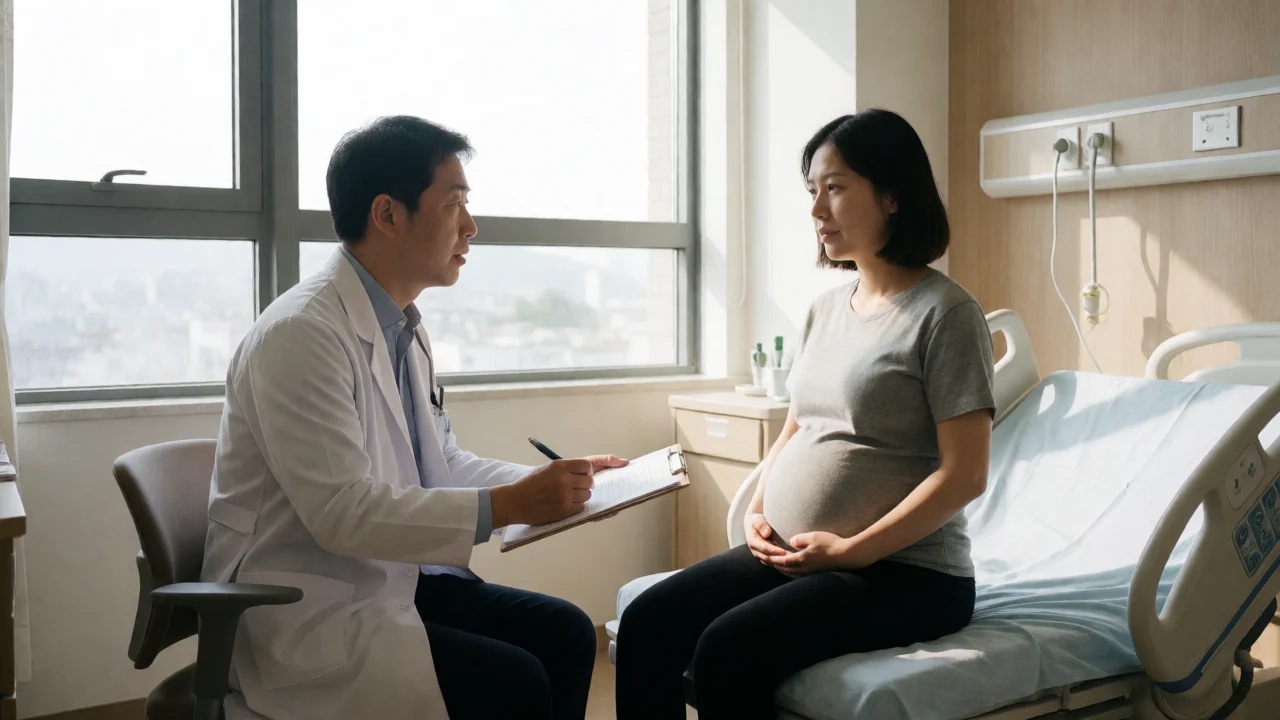
An unexpected bout of labor on a quiet, empty morning. Step into a traditional Jeju household where a young father welcomes a newborn using traditional birthing tools like straw and a galjungi (persimmon-dyed work jacket), alongside a local village midwife.
Settle in and listen to the story at a gentle pace before you begin reading.
A Chilly Draft Sweeping Through an Empty House
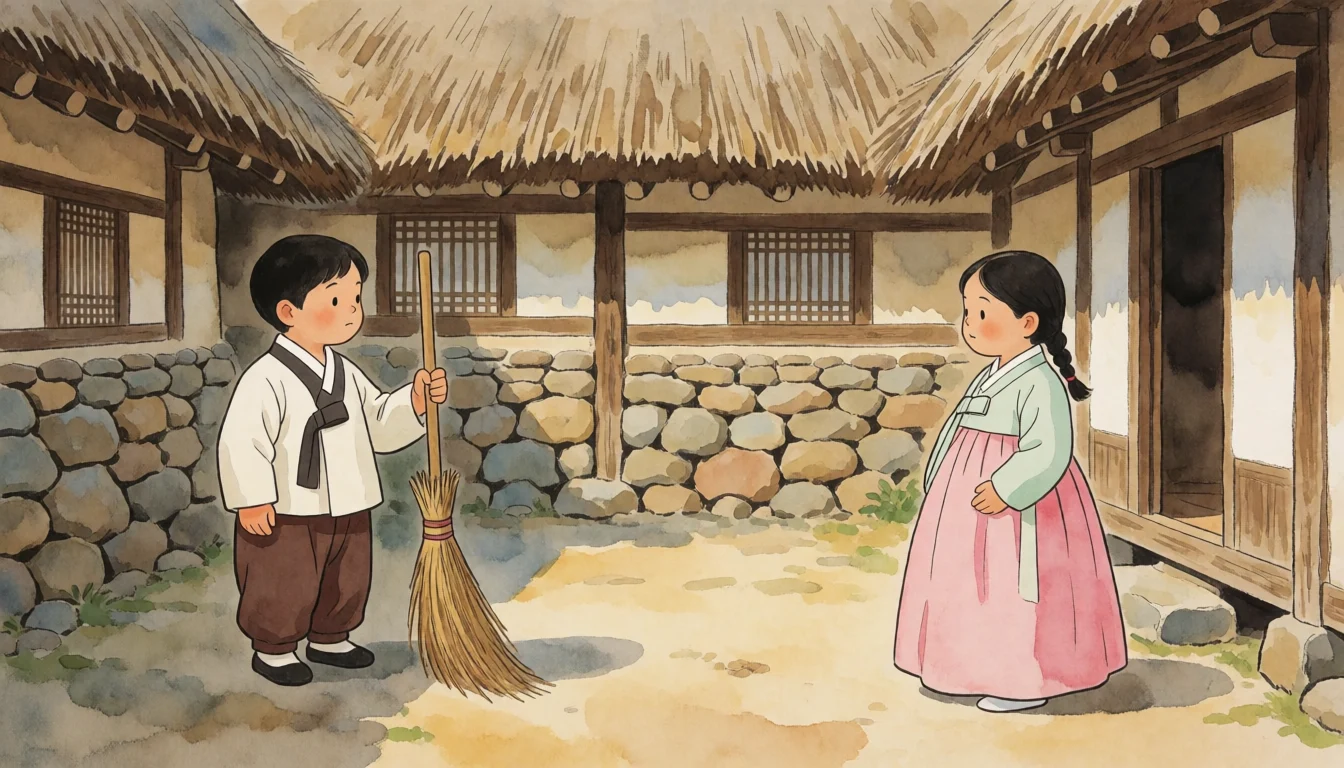
It was around the time morning sunlight began to stream over Bukchon village in Jeju, a place famously swept by wind. On this particular day, the elders and the rest of the family had set out early, packing straw bundles and ancestral ritual items to attend a memorial service for a distant relative. The courtyard was left in complete stillness, save for the faint marks of a broom.
The only ones left at home were Dori and his heavily pregnant wife, Sunim. Dori leaned a split-bamboo broom against the wall and looked around the courtyard corner.
"How are you feeling today, my dear? The family probably won’t be back until late tonight—will you be alright?"
Sunim smiled gently, smoothing down her rounded belly.
"There are still a few days left before my due date, so don’t worry. Just mind the house and take it easy while everyone is away at the ritual."
Relieved, Dori headed to the shed to pull out a bundle of rice straw to twist into ropes. It was supposed to be a peaceful, uneventful day.
Sudden Labor and a Frozen Husband
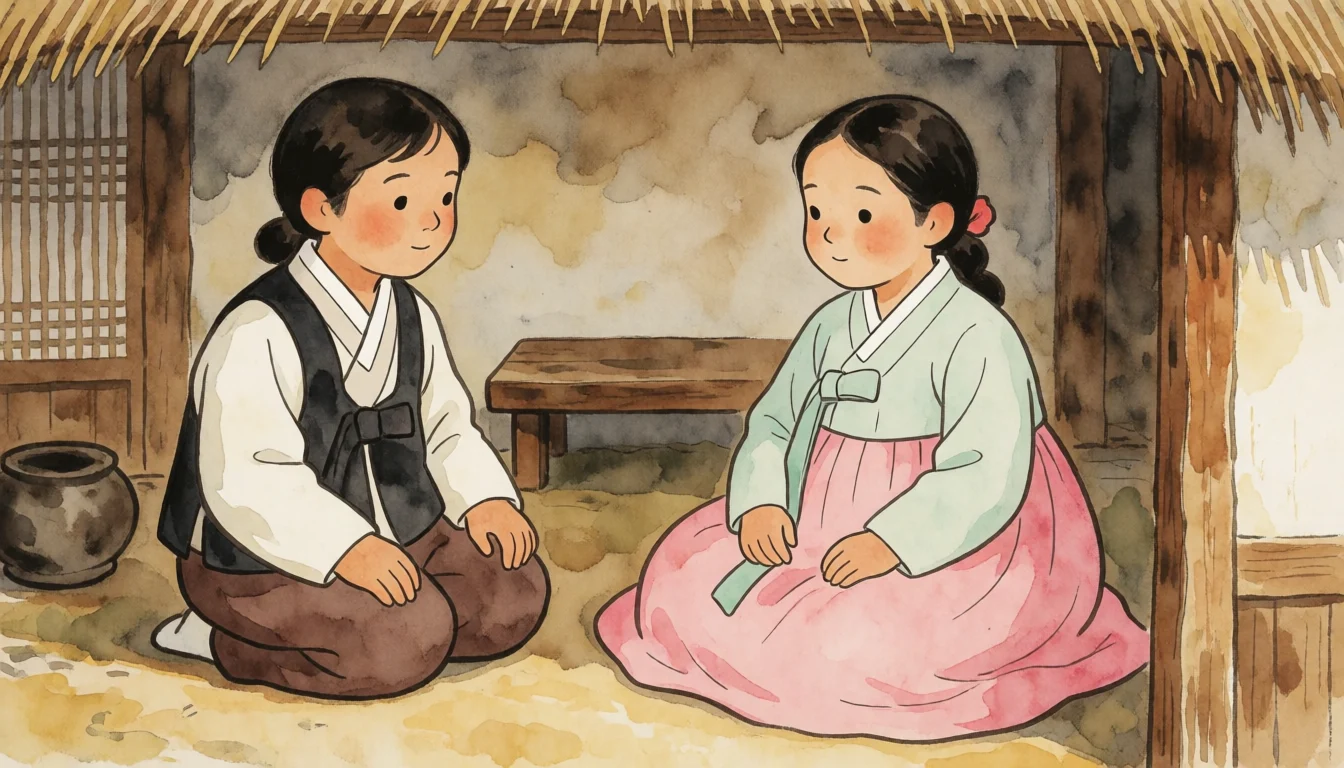
Then, just as he had twisted half a length of straw rope, a sharp clatter echoed from inside the room, followed by Sunim’s strained gasp.
"Oh dear… oh, husband!"
Startled, Dori scrambled across the threshold without even getting his shoes on properly. Sunim was slumped on the floor, clutching her loungewear as cold sweat beaded across her forehead.
"Sunim, what’s wrong? Are you in pain? Tell me!"
"The baby… I think the baby’s coming. My stomach feels like it’s being wrung out."
Dori’s mind went completely blank. Although this was their third child, births had always been managed by his mother and the senior women of the household, leaving him utterly clueless about what was needed in a delivery room. Pacing frantically, he bolted out the door.
"Elders! Is anyone out there? Somebody help us!"
Cruelly, however, everyone in the village had gone off to the distant memorial service or was out working the fields, leaving only the whistling wind to echo through the empty alleyways.
An Unexpected Footstep and Granny Makrye’s Rebuke
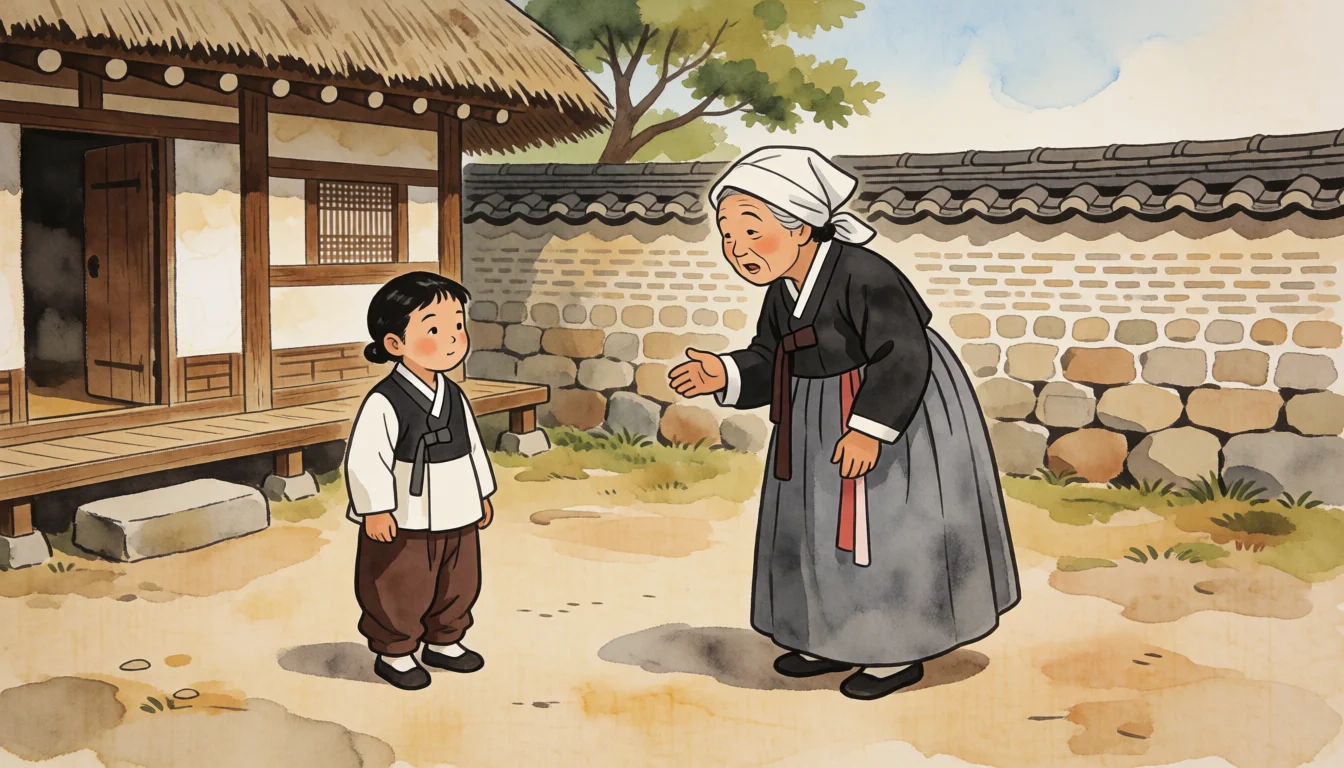
Just as Dori sat slumped outside the gate looking ready to cry, the sound of a cane tapping against the ground reached his ears. It was Granny Makrye, a neighbor walking past along the stone-wall path near the storage jars.
"You foolish boy, why are you screaming like a madman right outside your own gate?"
Springing up as if he had just met a savior, Dori grabbed the hem of her jacket.
"Granny! Sunim is about to have a baby! There are no elders at home. Please, save my wife!"
Granny Makrye’s eyes widened in shock before she clicked her tongue and peered toward the inner room. The rough sound of Sunim’s breathing filtering through the door gap was unmistakable. Straightening her back, the old woman gave Dori’s shoulder a sharp smack.
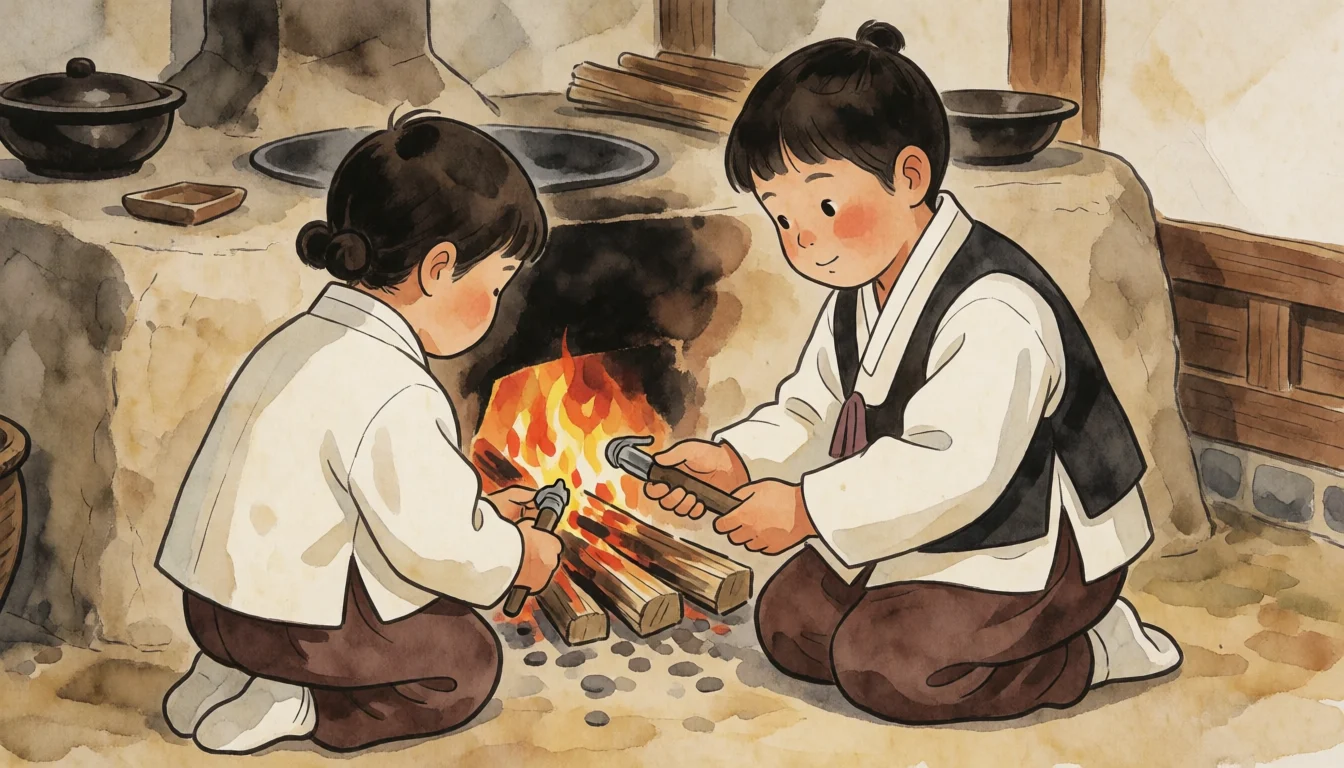
"How long do you plan on standing there spaced out? Your wife is suffering and you’ve lost your wits? Run straight to the kitchen, light a fire under the cauldron, and get water boiling!"
Opening the Cauldron Lid and Stoking the Fire
Granny Makrye’s fierce scolding snapped Dori back to reality. This was no time to wait for someone else to step in; he was the only one who could protect his wife and unborn child.
"I’ll boil the water right now!"
Dori sprinted to the kitchen, scooped up an armful of firewood, and sat down in front of the hearth. Striking a flint to catch a spark, he filled the large courtyard cauldron with water. Meanwhile, Granny Makrye stepped into the inner room and called out to him.
"Bring clean straw and lay it down thick on the floor! And fling open every single chest, wardrobe, and cupboard door in the house!"
Dori hurried to carry in bundles of rice straw, carefully spreading them across the birthing room floor, then swung open the wardrobe and chest doors just as the grandmother had instructed. He even went outside to nudge open the kitchen cauldron lid and the lid of the large water jar in the courtyard. The age-old wisdom was that opening everything closed would help the baby slip smoothly out into the world without obstruction.
"Sunim, I’m right here. Just hold on a little longer."
Carrying a basin of boiled water into the room, Dori gripped his wife’s hand, which was twisted in agony.
A New Breath Welcomed by Unfolding the Galjungi
The contractions grew fiercer, Sunim’s cries echoing through the room. Wiping sweat from her brow at the doorway, Granny Makrye shouted urgently,
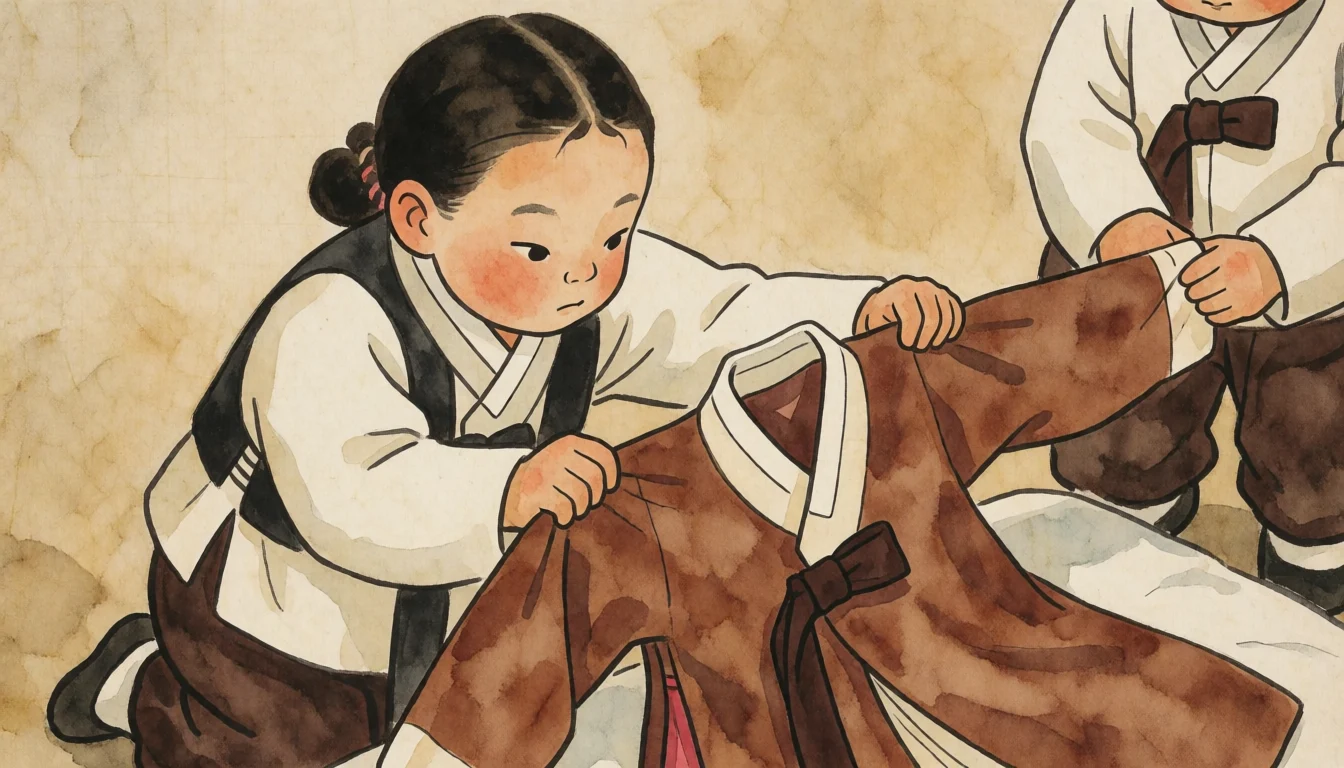
"I can see the head! Dori, hurry and bring a clean galjungi! There’s no time to look for other cloths!"
A galjungi—stiff, durable work clothing dyed in rich persimmon juice—was ideal because it resisted sweat and blood and was easy to wash. Dori grabbed a neat, clean galjungi hanging on the wall and unfolded it wide across his chest. His trembling hands suddenly steadied as he looked into Sunim’s labored breathing.
"Sunim, push one more time! I’m right here with you!"
"Aaaah!"
At the exact moment Sunim let out her breath with all her might, a small, red life finally slipped out into Dori’s palms. Overwhelmed by a surging wave of emotion throughout his body, Dori carefully wrapped the newborn in the unfolded galjungi.
"Waaah! Wah-!"
A clear, high-pitched cry filled the room. It was their third daughter. Panting heavily, Sunim shed tears as she looked at her sweat-drenched husband and baby, while Dori sobbed openly, holding the little bundle swaddled in the galjungi.
The Returning Family and the Warmth in Their Arms
As the sun dipped low toward the western horizon, the family members who had gone on their long journey finally stepped into the courtyard. Carrying straw bundles and baskets back from the ritual, the elders were stunned to find the main gate wide open and the courtyard cauldron lids unsealed.
"What on earth is going on here? Why are all the doors wide open… and is Sunim alright?"
When the mother hurriedly kicked off her shoes and rushed into the room, she stopped dead in her tracks at the sight before her.
Inside, clean straw was neatly laid out, and a sweat-soaked Dori was tenderly wiping Sunim’s forehead while cradling a baby in a well-worn galjungi wrapping. Through the gap in the red fabric, the quiet, steady breathing of their third daughter could be heard.
"Mother, it’s our third daughter. I… I delivered her with my own hands."
Unable to speak, the mother patted her son’s sweat-drenched shoulder, and smiles of profound relief blossomed across the family’s faces. The desolate, empty-feeling thatched-house courtyard of that morning was now completely filled with the warm embrace of new life.
Traditional Midwives and Birth Assistance Roles
In traditional society, midwives helped ensure smooth deliveries and handled tasks like cutting the umbilical cord throughout the entire birth process. This role was typically performed by female family members such as mothers-in-law or maternal grandmothers with childbirth experience. When no such family member was available, relatives, women in the village with high fertility experience, regular shamans, or ritual practitioners stepped in. Depending on the region, they were called Sam-halmeoni in Gangjin, South Jeolla Province, while in Gongju, South Chungcheong Province, the support system was called haemakgan, involving maternal and paternal grandmothers, sisters-in-law, and husbands who participated by laying the mother in auspicious directions, reflecting a family-centric approach to childbirth support.
Birthing Tools and Customs for an Easy Birth
During childbirth, straw was laid in the birthing room and water was boiled in preparation. If labor was prolonged, all doors, chest lids, cauldron lids, and water jar lids in the house were opened to invoke a smooth, unobstructed birth. As reflected in the tradition of Bukchon village in Jeju, when helpers were unavailable, husbands personally boiled water and even received babies using galjungi, traditional Jeju persimmon-dyed garments. Furthermore, in cases of difficult labor, prayers were offered to Samshin in regions like Geochang; fortune-tellers set up a Jewangpan Samshin table to pray in Jinju; and on Jeju Island, elders known as Agi-halmang or Samseung-halmang rubbed the mother’s belly or performed shamanic rituals to overcome difficult labor.
Midwife Taboos and Customary Rewards
Midwives observed strict taboos to avoid bringing harm to the newborn. Even if their own daughter was giving birth, they would not attend directly; they refrained from delivering two babies in a single month; and professional midwives who only delivered babies had rules against accepting an even number of births in the same month. These customs stemmed from a deep reverence and caution born of the belief that handling too many births in one month might cause the birth goddesses (Samshin) to quarrel or bring harm to the children. Meanwhile, neighbors expressed gratitude for the midwife’s hard work by offering gifts suited to their household circumstances, such as a pair of traditional socks (beoseon), dried seaweed, dried fish, or rice, while regions in southeastern Jeju provided meals of rice, fish, and soup.
Transition to Modern Medical Systems and the Birth Environment
The role of traditional folk midwives was integrated into modern professional medical systems through modern legislative developments. The "Midwife Rules" enacted in 1914 designated traditional birth helpers as "midwives" (sanpa), a title later changed to "maternity home" (josanwon) under the 1952 Medical Service Act, and "midwife" (josansa) with the 1987 revision. Today, with the advancement and universal availability of modern medicine, giving birth at home has become rare in favor of visiting maternity clinics or obstetrics hospitals, where assistance from male medical professionals is a common sight.
The story in this article is based on an actual oral account from a male informant in Bukchon village, Jeju, who personally boiled water and delivered a baby using a galjungi while his family was away at an ancestral ritual. However, specific elements such as the dialogue between Dori and Sunim, Granny Makrye’s rebukes and movements, and the detailed reactions of the returning family were created to help readers understand the narrative. While customs such as opening doors and cauldron lids and spreading straw during difficult labor reflect folk practices of traditional society, they should not be broadly interpreted as the official origin of any specific historical event.
🎨 Color This Scene