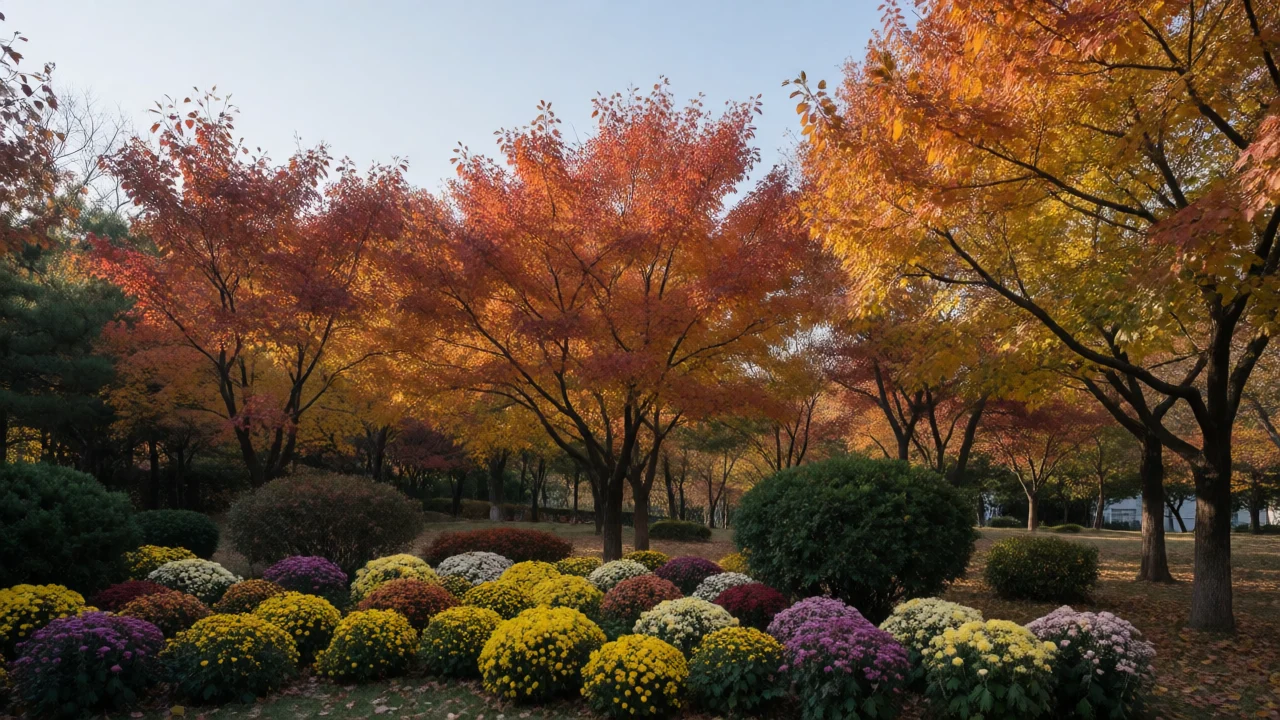
On a morning when old man Manbok bolted into his courtyard, startled by the season’s first heavy white frost, he dropped his precious drinking cup. Today, we explore the customs and chrysanthemum wine traditions of Sanggang (Frost’s Descent), the eighteenth of the twenty-four solar terms in late autumn.
Settle in and listen to the story at a gentle pace before you begin reading.
White Frost Settles on the Courtyard
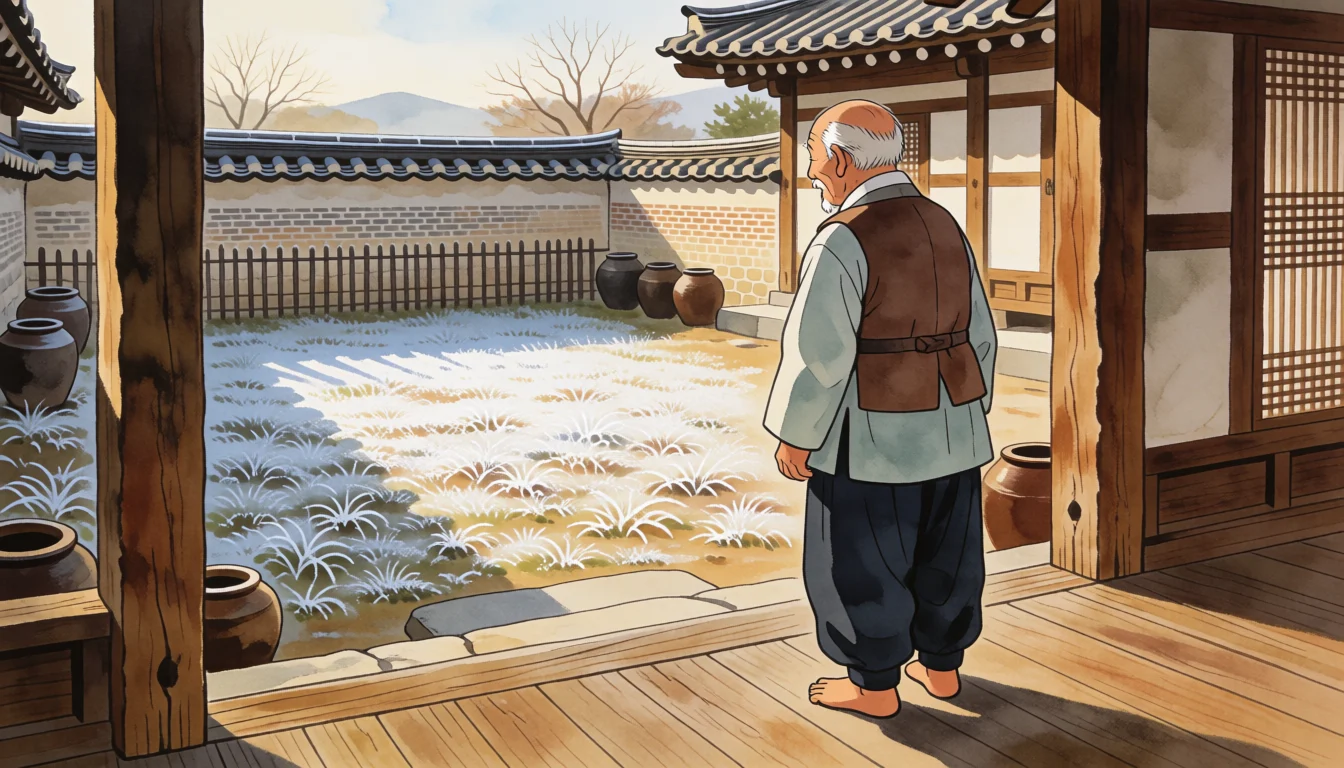
The paper window screens rattled in the early dawn chill as a sudden draft swept into the room. Slipping his bare feet into untied straw sandals, old man Manbok dashed out onto the wooden porch. The moment he laid eyes on the courtyard, his jaw dropped wide open.
“Goodness me, look at all that! The frost is already white on the ground!”
They say that around Sanggang—the period falling between Hanro (Cold Dew) and Ipdong (Beginning of Winter)—frigid winds sweep across the land. Sure enough, frost clung to the lids of the outdoor fermentation jars and along the brushwood fence as though someone had scattered coarse white salt everywhere. While the rice harvest and autumn gathering in the fields were long finished, Manbok still had one precious treasure left to collect: the bright yellow chrysanthemums blooming beneath the stone wall. Just then, the kitchen door slid open and his granddaughter, Suni, peered out.
“Grandfather, where are you going without even putting on your shoes?”
Suni asked, her eyes wide with surprise, but Manbok didn’t even have time to answer as he hurried across the yard in his socks toward the chrysanthemum patch.
Hasty Hands and a Broken Cup
Delicate yet resilient beneath the chilly dew and frost, the chrysanthemums by the fence shone with vibrant vitality. If a severe hard frost struck again tonight, those lovely petals would freeze black, leaving not a single one to salvage.
“If we don’t pick them and brew the wine today, everything will be ruined! Quickly, fetch the brewing jar and my cup from the storage room!”
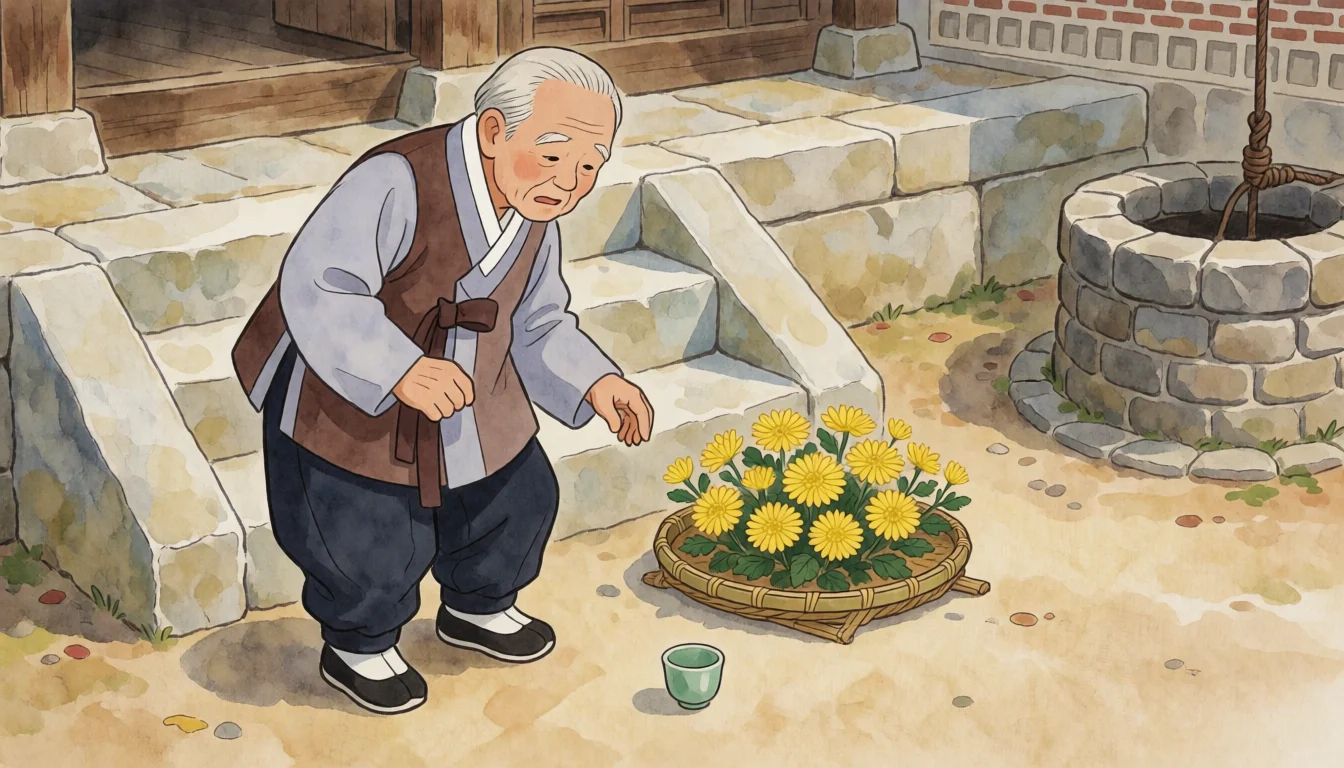
“Grandfather, the petals are still stiff with frost. It won’t be too late to pick them after the sun warms them a bit,” Suni coaxed, gently grabbing his sleeve. But nothing could reach the old man’s impatient ears. With trembling hands, he hastily snapped off the flower stems and stuffed them haphazardly into a bamboo drying tray. Determined to wash his cherished, jade-hued drinking cup at the well in the windswept corner of the yard, he hurried off. As he walked, his foot slipped, his body swayed, and he dropped the cup right onto the stone foundation step.
Clang! With a sharp, heartbreaking sound, the cup shattered into a thousand pieces.
The Meaning of Washing a Cup Toward the Autumn Wind
“Oh dear, my cup! A man must pour his wine into this very cup every autumn to properly send off the year…”
Manbok sat heavily on the ground, gathering the broken shards with trembling hands as a deep sigh escaped him. A chilly autumn wind swept across the courtyard, making his pale face look even more forlorn. The old Joseon scholar Kwon Mun-hae once wrote in a poem, “As autumn draws to a close, an old man sometimes washes a broken wine cup facing the western wind.” It was the exact portrait of Manbok’s present despair. Like a drooping willow branch blighted by autumn, his shoulders slumped hopelessly.
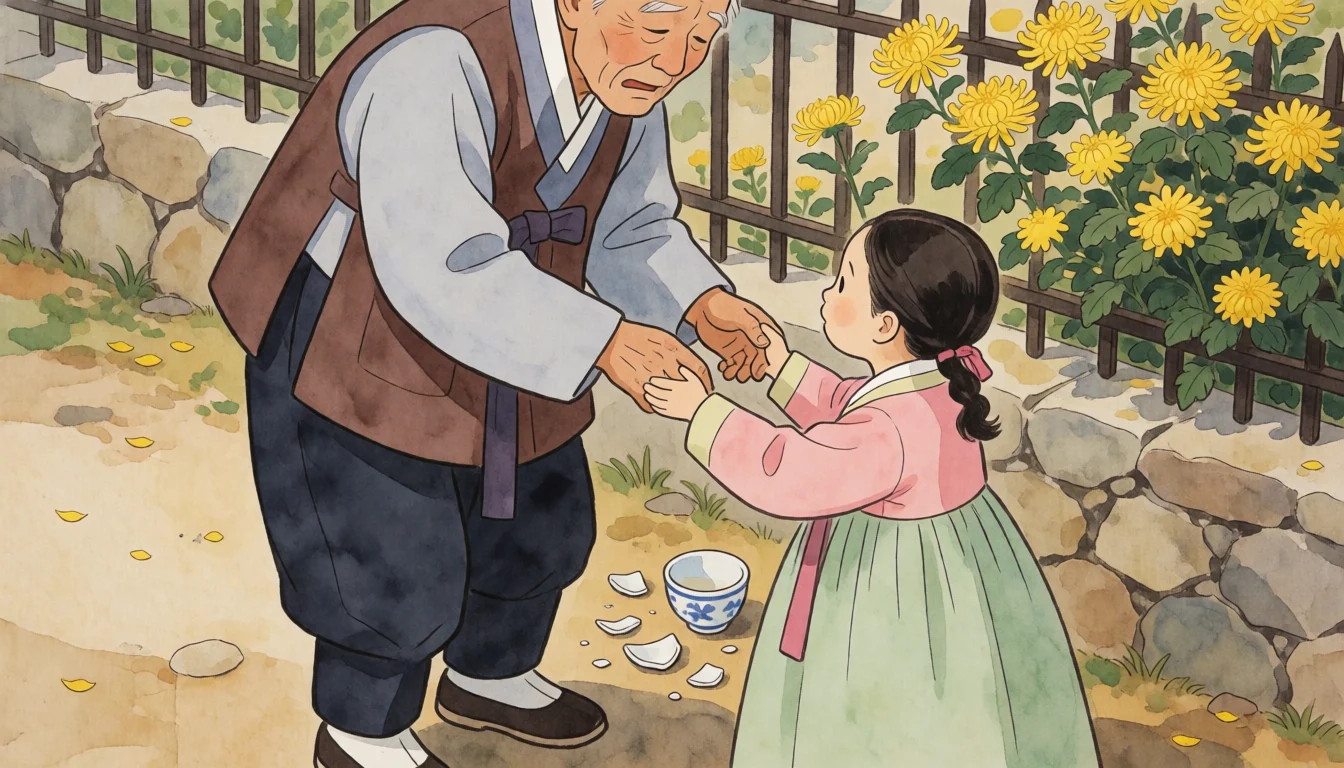
Just then, Suni quietly stepped forward and wrapped both her hands around his rough, weathered fingers.
“Grandfather, the cup may be broken, but the flowers are still blooming soundly by the fence. We can easily replace a broken cup with an ordinary earthenware bowl, but if we don’t harvest the petals right now, they really will freeze completely. Come on, help me gather the flowers first.”
Looking into Suni’s determined eyes, the old man scrunched his nose in embarrassment, cleared his throat with a heavy cough, and finally set the broken shards aside, dusting off his knees as he stood up.
Brewing Chrysanthemum Wine Amid the Chilly Frost
Before long, the sky grew dim, the mountain peaks turned pale and stark, and a frightened flock of wild geese flew in a long line against the edge of the clouds. As night deepened, a hard frost settled silently across all directions, subduing the world in a solemn quiet.
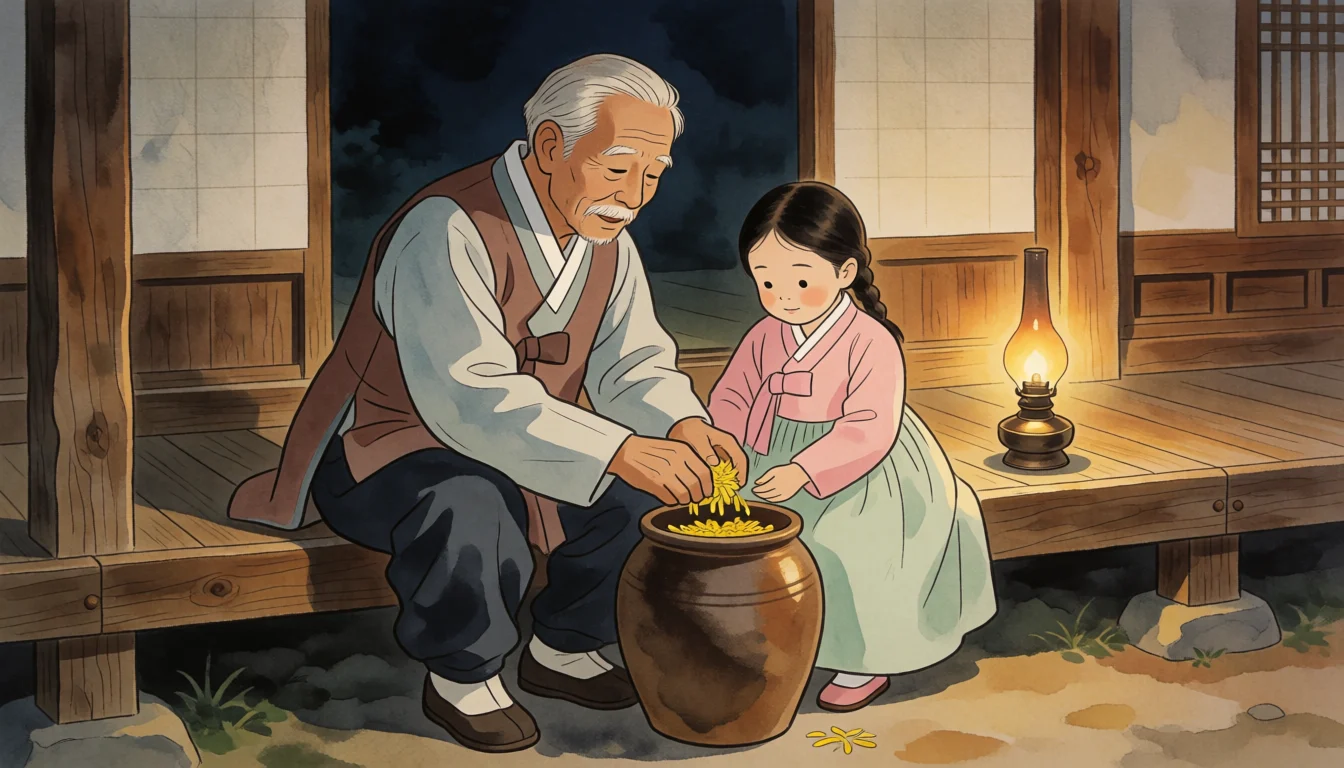
Manbok and Suni sat side by side on the wooden porch by the flickering light of an oil lamp. Though the biting autumn wind pierced fiercely through the gaps in the door, their hands moved without a pause. Suni carefully rinsed the petals in clear spring water, picking away impurities, while Manbok blended cooked rice and fermentation yeast in a large earthenware jar, gently folding in the fragrant petals.
“Grandfather, even without a fancy cup, the chrysanthemum aroma rising from this humble jar is so rich,” Suni said with a bright smile. Manbok burst into a hearty laugh.
“Ho ho, you’re right. I was just acting foolish and making a fuss over an old cup. With your caring hands touching them, this year’s wine will taste all the sweeter.”
Breathing together through the long night, the grandfather and granddaughter brewed the batch while a subtle, sweet scent of chrysanthemums slowly filled the room.
An Autumn Outing Under Clear Skies
It was truly a wondrous sight. The following morning, as if last night’s hard frost had thoroughly washed the world clean, the autumn sky opened up as clear and transparent as a polished mirror. The forest foliage reached the absolute peak of its brilliant red and yellow autumn colors.
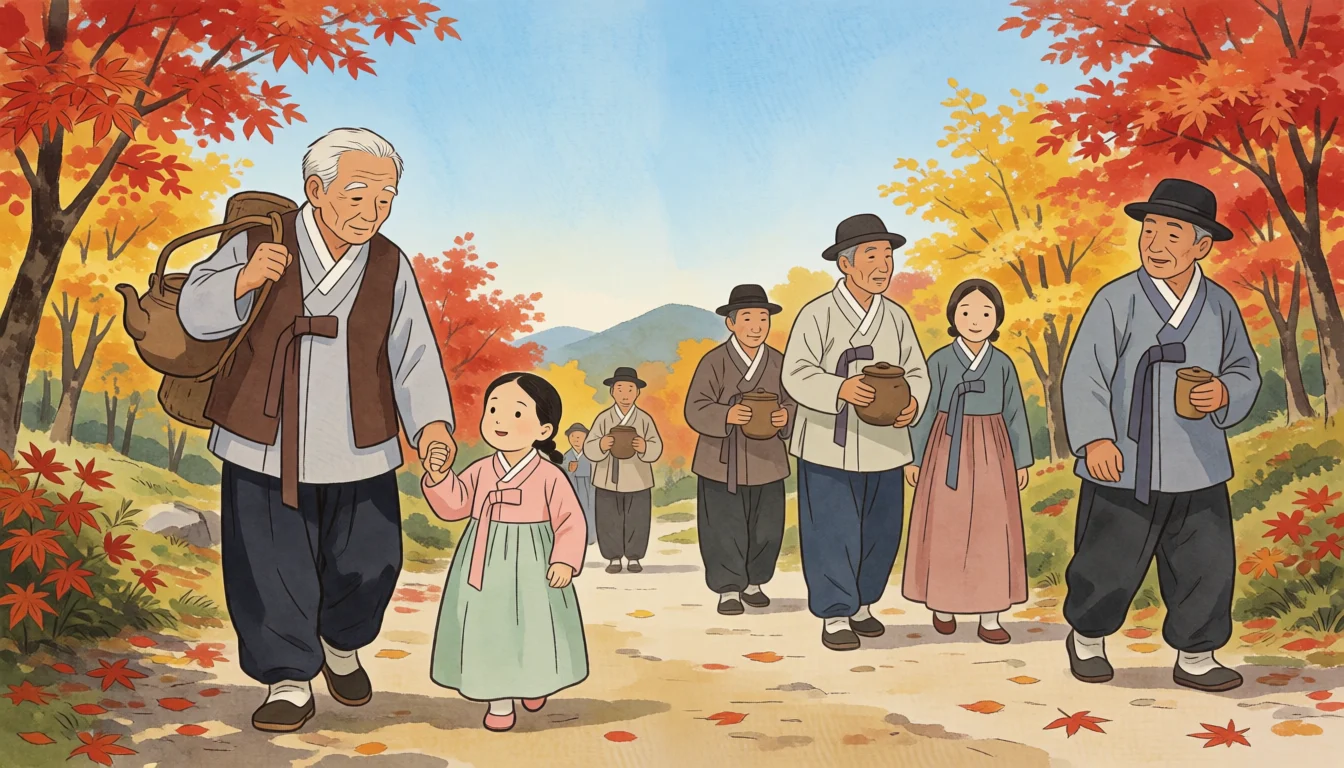
Manbok filled an earthenware kettle generously with the freshly brewed chrysanthemum wine, slung it over his shoulder, and took Suni by the hand as they headed toward the village entrance. One by one, neighborly faces gathered, having already finished their autumn harvests.
“Elder Manbok, what is that sweet fragrance wafting in the morning air?”
“It’s chrysanthemum wine that my granddaughter and I brewed all through the night before the frost got to the flowers! My cup broke, so we’ll be pouring it into humble bowls, but the flavor is deeper than ever. Let’s all have a cup and go enjoy the autumn foliage!”
The villagers clinked their bowls together and burst into hearty laughter. As the clear scent of chrysanthemums drifted far and wide on the autumn breeze, everyone set off together down the brightly colored country path for a joyous autumn outing.
Seasonal Significance and Natural Phenomena of Sanggang
Sanggang (Frost’s Descent) falls between Hanro (Cold Dew) and Ipdong (Beginning of Winter). Occurring around October 23 on the solar calendar when the sun reaches the 210-degree ecliptic mark, and generally arriving in the ninth lunar month, it is one of the twenty-four solar terms marking the arrival of frost. During this period, dropping nighttime temperatures cause frost and occasional early ice to form, while autumn foliage reaches its peak and chrysanthemums bloom fully. Traditionally in China, the period from Sanggang to Ipdong was divided into three five-day phases—early, middle, and late—to describe natural phenomena, a framework also adopted by Kim Hyung-su in his agricultural poetry collection Nongga Sibiwol Soksi (Common Poems for the Twelve Months of the Farming Year).
Agricultural Calendar, State Rituals, and Seasonal Customs
On the agricultural calendar, this time marks the completion of the harvest and the beginning of winter preparations. During the Joseon Dynasty, a state ritual called Dukje (a ritual honoring the military spirit banner) was performed during Sanggang. There was also a custom of drinking chrysanthemum wine and enjoying autumn outings, similar to the traditions of the Chungguil (Double Ninth) festival. In Kwon Mun-hae’s collection Chogan Sensaeng Munjip, a poem for Sanggang records the serene yet desolate scenery of late autumn under the frost: “At midnight, a harsh frost falls far and wide, making heaven and earth stand in solemn purity.”
Today, Sanggang remains one of the twenty-four solar terms that conveys the deepening mood of late autumn. As the foliage reaches its peak and chrysanthemums bloom, this season prompts us to reflect upon the changing natural world and the endless cycle of the seasons.
The characters Manbok and his granddaughter Suni, the anecdote about the broken cup, and the detailed scenes of gathering with neighbors to brew chrysanthemum wine in an earthenware kettle are fictional elements created for storytelling. They are built upon historical and cultural facts, including the seasonal characteristics of Sanggang, the Joseon Dynasty’s Dukje ritual, chrysanthemum wine traditions, autumn outing customs, and literary descriptions of frost-touched scenery.
🎨 Color This Story