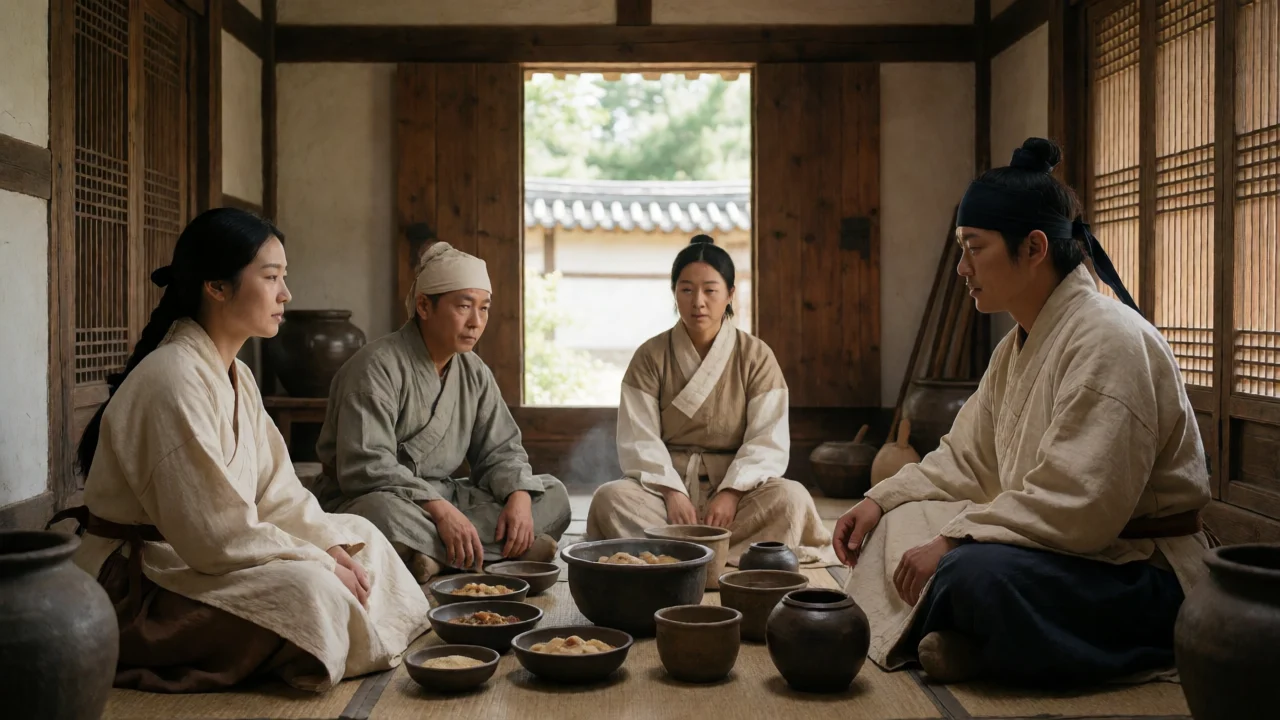
Step into the tale of Wonhyo, the Silla dynasty monk known as “Master Hoseong,” who shed his monastic robes to dance in the bustling marketplace. Discover the deeper meaning hidden behind his whimsical cry for an “axe without a handle.”
Settle in and listen to the story at a gentle pace before you begin reading.
A Monk Who Walked the Marketplace in Ordinary Clothes
Rather than staying within the serene mountain temples or high halls of Silla, a strange figure appeared right in the bustling heart of the marketplace. It was none other than Wonhyo, the renowned monk who lived from 617 to 686 and dedicated his life to spreading Buddhist teachings far and wide. Instead of chanting difficult scriptures from lofty pavilions, he stepped directly into the everyday lives of ordinary people.
Dropping his formal monastic robes for the simple, everyday garments of commoners, he began calling himself “Master Hoseong.” Without a trace of self-righteousness, he sought to meet people in the humblest of places. With his hair tied in a topknot and draped in coarse hemp cloth, he strode right into the narrow alleys where the laughter and sighs of the marketplace intertwined.
Who Will Lend Me an Axe Without a Handle?
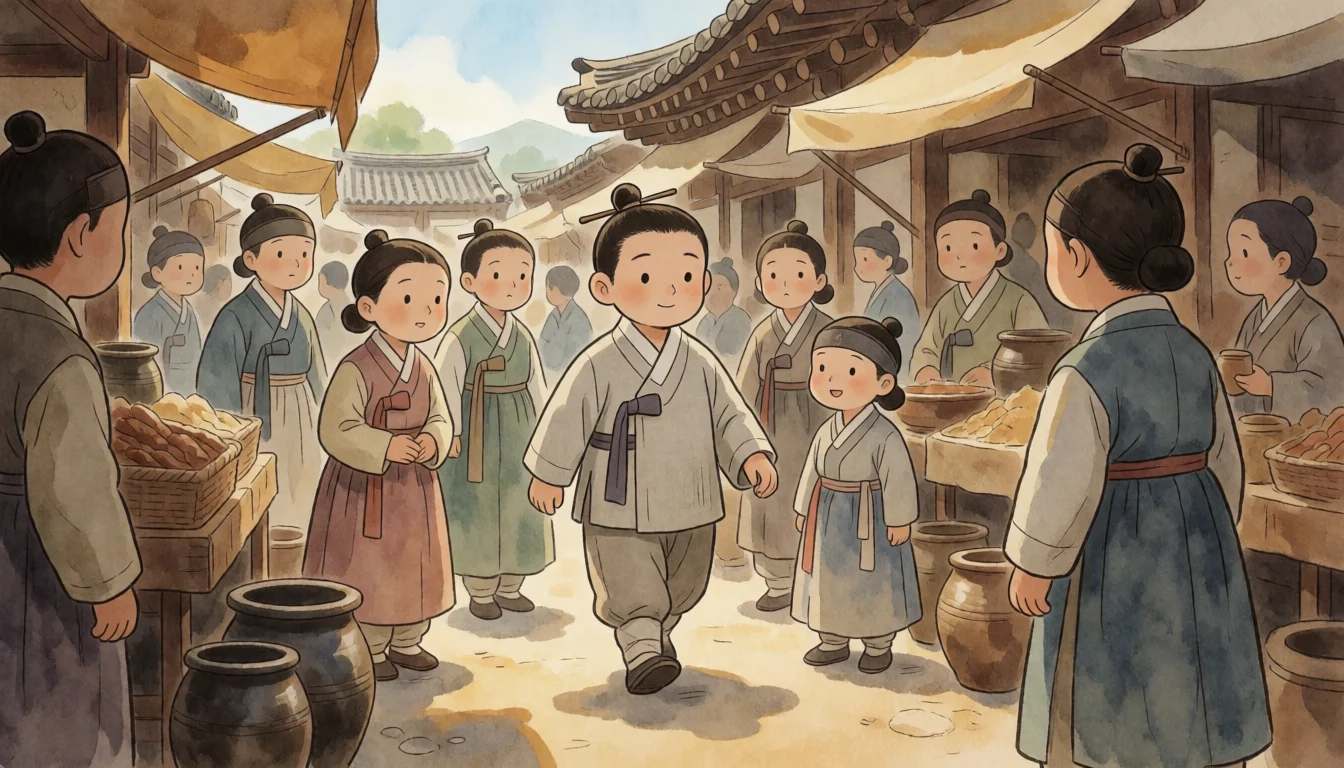
Bau, a young boy selling wild greens at the corner of the market, widened his eyes in surprise. A sturdy-looking man was clapping his hands and dancing joyfully right in the middle of the crowded square. Merchants and shoppers alike put down their loads and gathered around in murmuring crowds.
“Won’t someone lend me an axe without a handle? I would use it to chop down the pillar that supports the sky!”
Master Hoseong chanted this puzzling song at the top of his lungs. Onlookers exchanged bewildered glances and whispered to one another. Bau frowned and clicked his tongue.
“How on earth are you supposed to chop wood with an axe that has no handle? Is he just here to stir up trouble in the market?”
An axe needed a sturdy handle to be of any use, and since the man was shouting absolute nonsense, Bau took him for nothing more than a local eccentric trying to cause a commotion.
Eccentric Questions and Flustered Footsteps
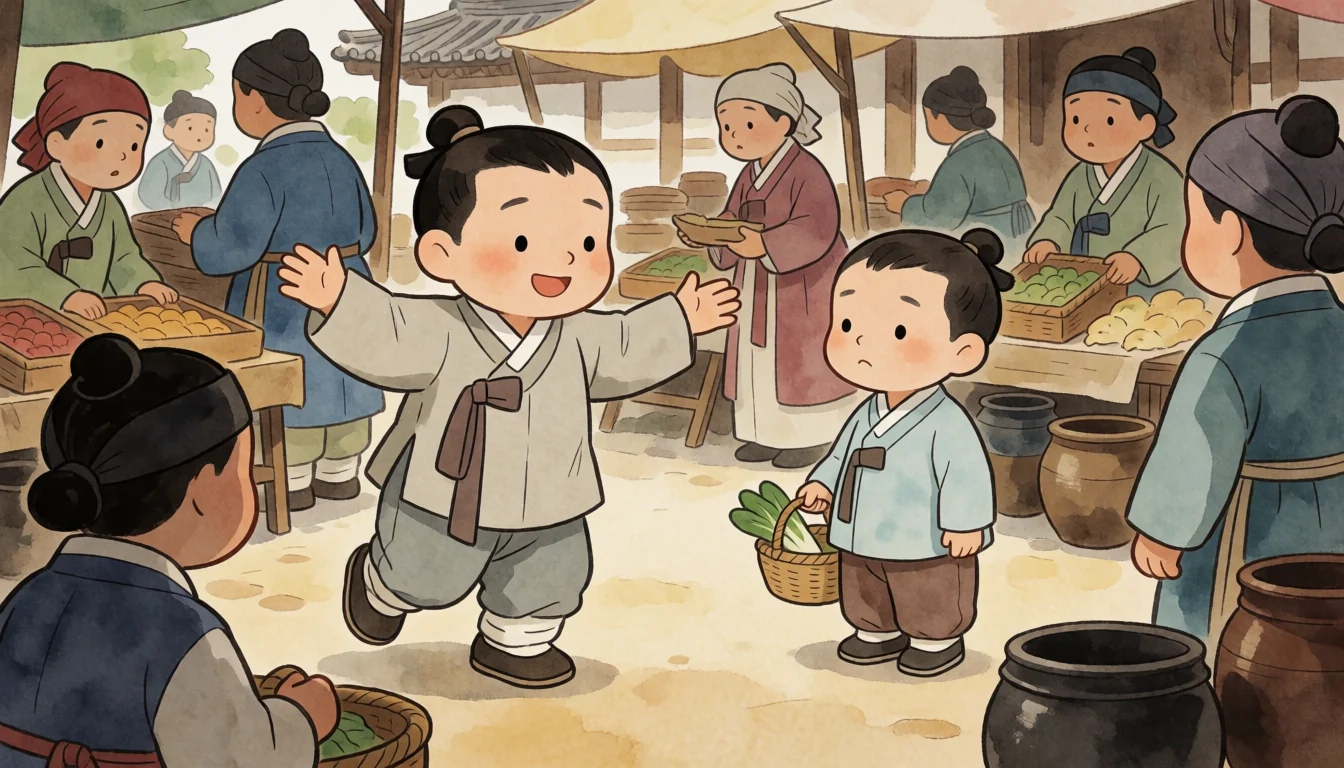
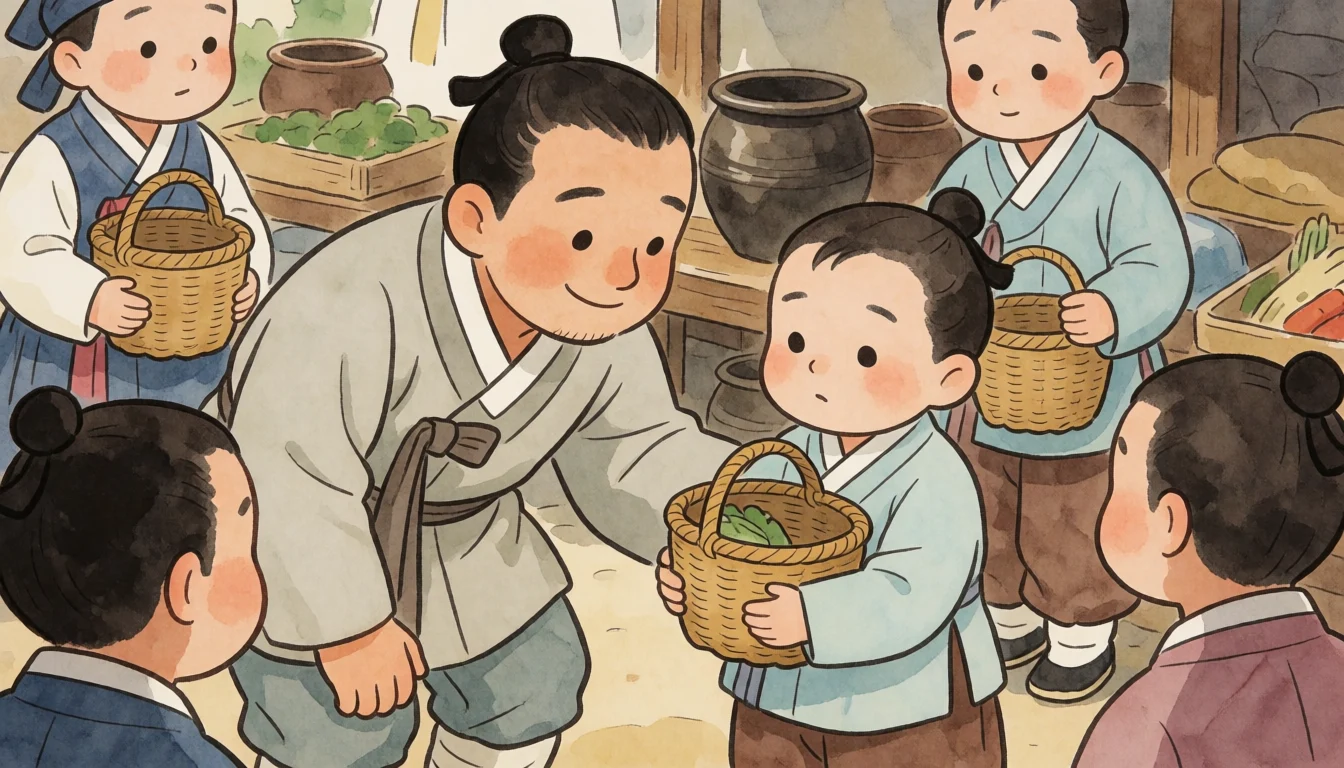
As the crowd began to scratch their heads and drift away one by one, Master Hoseong’s eyes lit up as he walked straight toward Bau. Startled by the sound of mud-caked straw sandals crunching on the dirt, Bau instinctively took a few steps backward.
“My boy, your basket holds all the toil and sweat of today’s market. By any chance, do you know what an axe without a handle is used for?”
The sudden question made Bau’s heart skip a beat.
“I-I’m just a boy who sells wild greens! I don’t know anything about weird tools like that!”
Clutching his basket tightly to his chest, Bau turned on his heel. Terrified of getting dragged into some bizarre trouble, he scurried off down the alley. The deep, hearty laughter of Master Hoseong followed him long down the wind.
An Argument Erupting in the Narrow Alley
Ducking into the alleyway, Bau ran straight into an unexpected disturbance. A porter pulling a wooden cart and an earthenware vendor carrying heavy jars were shouting at each other, each demanding the other back up first. The path was too narrow, and neither was willing to yield, causing the loads of the people following behind to tangle together and completely block the alley.
“Move aside! My cart entered this path first!”
“What are you talking about? I’m carrying fragile earthenware—how can you expect me to back up?”
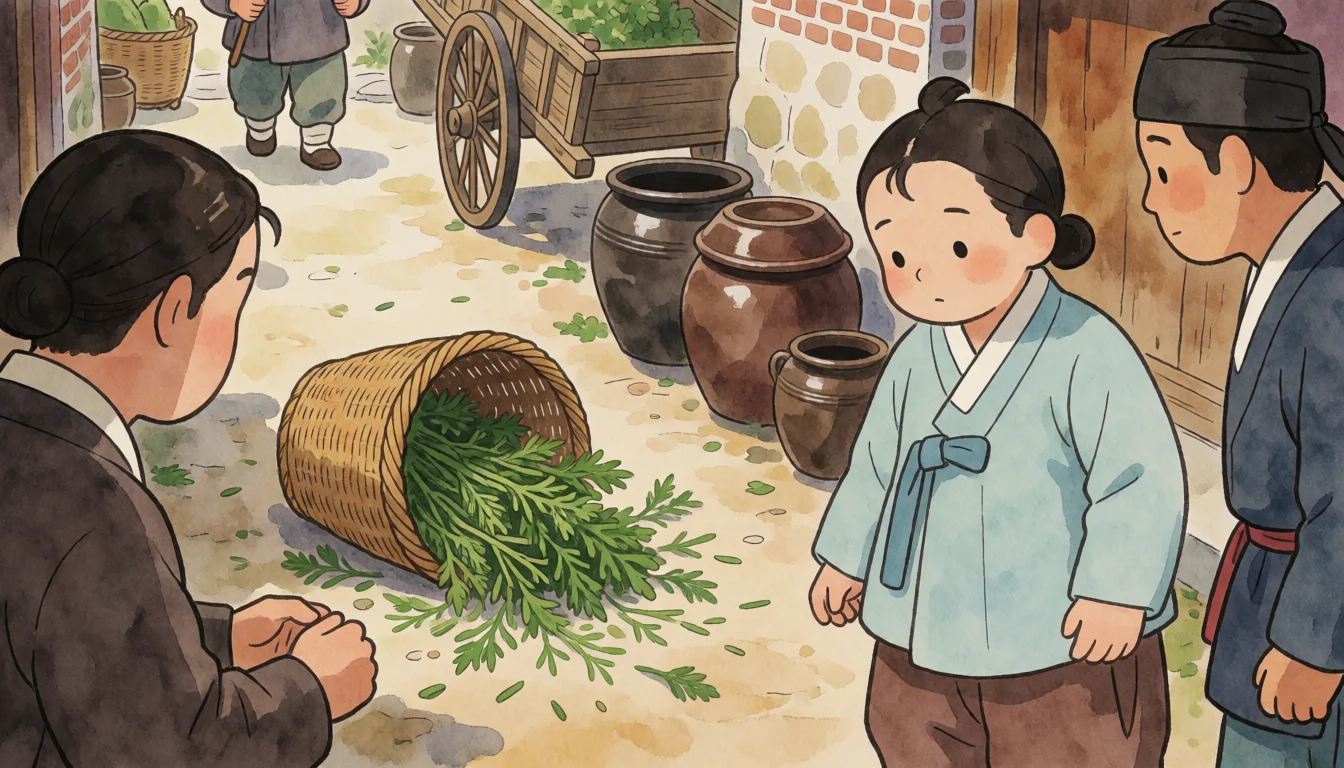
The higher their voices rose, the tenser the air in the alley became. Trying to squeeze past the commotion, Bau accidentally bumped into someone’s elbow and dropped his basket of greens onto the dirt. The basket tipped over, spilling his carefully trimmed mountain greens all over the dusty ground. Drowned out by the shouting, Bau’s small gasp went entirely unnoticed by anyone. He lacked the strength on his own to break up the tangled crowd or pick up his spilled greens.
A Rough Hand That Picked Up the Greens
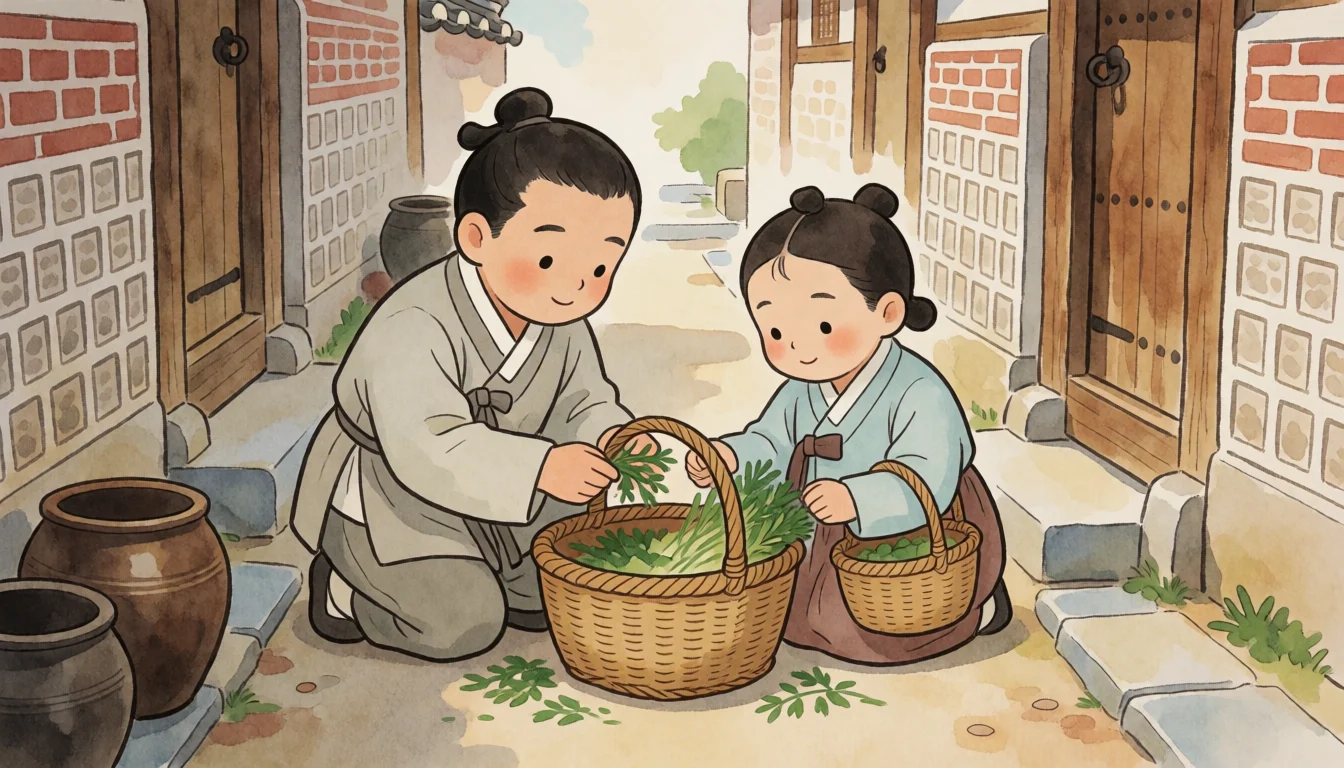
Just as Bau was about to sit down with a tearful expression, a large hand gently gathered the dirt-covered greens. Startled, he looked up to find Master Hoseong standing there. Rolling up his sleeves, the monk knelt beside Bau and carefully dusted off the greens before placing them back into the basket.
“When the heart is hurried, footsteps tangle; when greed comes first, the path is blocked.”
At Master Hoseong’s warm gaze, a mix of guilt and gratitude welled up inside Bau, and he asked in a tiny voice, “I’m sorry I ran away earlier. But why have you been singing such strange songs all this time?”
Looking out at the commotion in the alley with a serene expression, Master Hoseong replied in a low voice, “People each cling to their own sturdy handles, trying only to push others out of the way. Relying solely on the handles of their own axes to target one another, they leave wounds wherever they cross paths. I, too, always felt a heavy ache in my chest wondering how to break through those hard shells and reach people. That’s why I cast aside the handle and asked if anyone had the heart to help shape a great pillar for us all to hold up together.”
Only then did Bau feel a sudden shift deep within his chest. He realized that what he had thought was the nonsense of an eccentric was actually an earnest plea meant to open up people’s closed minds.
Two Sets of Hands Keeping Rhythm Together
Bau adjusted his dirt-flicked basket and looked up at Master Hoseong.
“Master, do you think those people’s stubborn hearts can be softened by that song, too?”
Master Hoseong smiled gently and nodded.
“If you sing alone, it echoes through empty space, but when someone matches the beat by your side, the song becomes a path.”
“Then I’ll keep the rhythm!”
Bau set his basket down and clapped his bare hands together—clap, clap. Master Hoseong lifted his voice once more, clear and resonant. Skipping joyfully down the narrow alley, Bau drew the attention of the onlookers.
“Won’t someone lend me an axe without a handle? I would use it to chop down the pillar that supports the sky!”
As Master Hoseong’s booming laughter and Bau’s bright voice filled the narrow alley, the bickering porter and earthenware vendor paused in bewilderment and turned to look at the two of them.
The Pathway Melted by Laughter
Bau gently tugged at the porter’s sleeve and flashed a smile.
“Mister, if you roll your cart back just half a span, the earthenware jars will slide right past! Let’s take a breather and listen to that grand pillar-chopping song!”
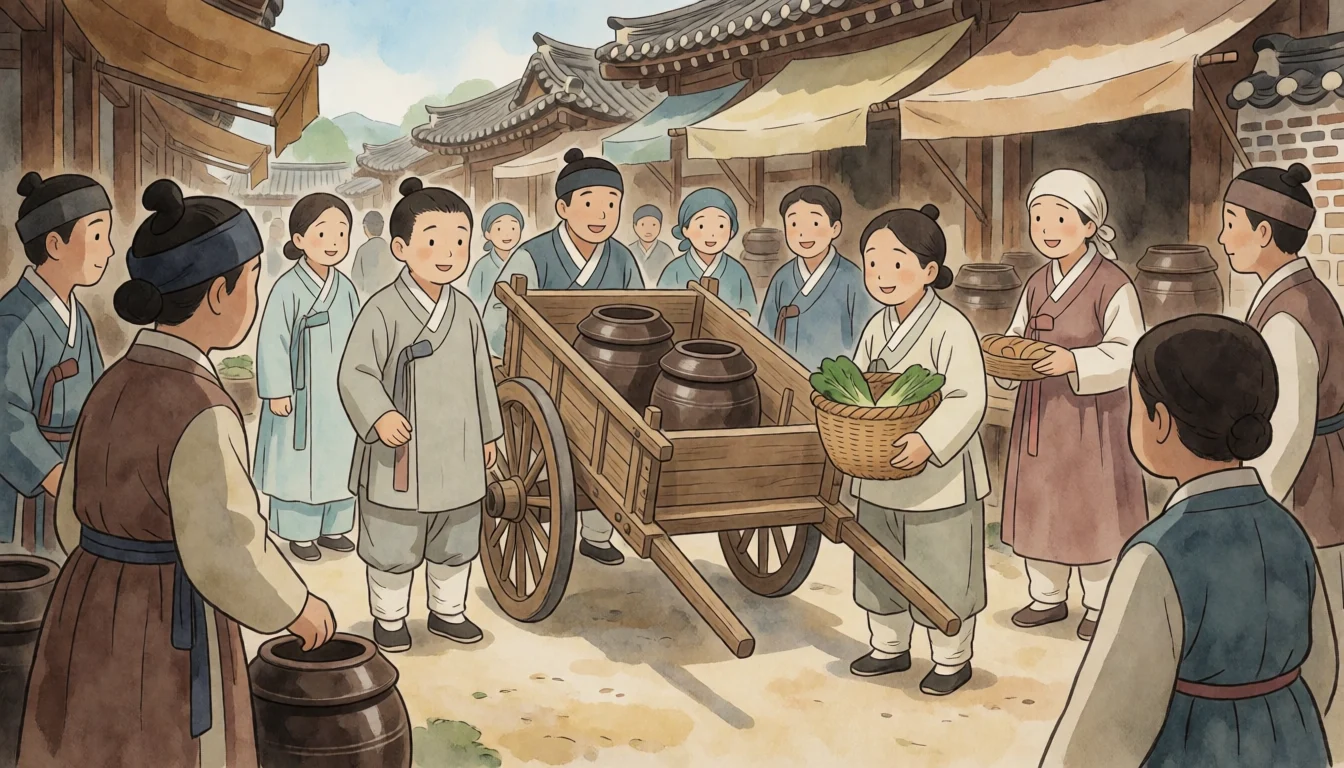
Master Hoseong shrugged his shoulders and spun playfully in front of the pottery vendor with a comical gesture. Unexpected laughter burst forth in the tense alleyway. The porter scratched his head and sheepishly rolled his cart backward, while the vendor similarly shifted his footing with an apologetic look.
“My word, it’s hard to stay angry with a little kid and a fellow who can’t decide if he’s a monk or a clown.”
Once the blocked path miraculously opened up, people began helping each other with their fallen bundles, humming along to Master Hoseong’s tune. The awkward, sharp air melted away as softly as spring snow.
Wiping away his sweat, Master Hoseong gave smiling Bau’s shoulder a light pat. The two stood side by side in a corner of the marketplace, looking at each other and smiling brightly in silence.
Wonhyo (617–686) was a monk during the Silla dynasty who left a monumental footprint on the history of Korean Buddhism by popularizing the religion. His life and deeds are passed down through both historical literature and oral folktales.
Historical records focus on his propagation of Buddhist teachings and the popularization of the faith, displaying a pro-Buddhism perspective. Meanwhile, oral folktales emphasize his miraculous deeds and populist, heroic traits. These include his birth legend—where his mother conceived after dreaming of a shooting star entering her arms, and a five-colored cloud covered the area when she gave birth under a chestnut tree—and the tale of how he gave up studying abroad in China after realizing that the water he drank from a cave while traveling with Uisang was actually stagnant fluid from a rotting corpse.
Literature also records his famous chant, “Won’t someone lend me an axe without a handle? I will chop down the pillar that supports the sky,” which King Muyeol (Kim Chunchu) interpreted, leading to his union with Princess Yoseok and the birth of Seol Chong, as well as his habit of changing into ordinary clothes and calling himself “Master Hoseong” to spread the Dharma. Additionally, oral traditions tell of miraculous deeds such as saving a monk on China’s Mount Wutai, building Unhongsa Temple to encourage wealthy individuals to make voluntary donations, spraying water to extinguish a fire south of Bulguksa Temple from Dotong-gol in Unhwa-sa Temple, winning a divination wager with Samyeongdang, and subduing bandits to found Buseoksa and Yeonghyeolsa temples.
Today, Wonhyo is remembered as a pioneering monk who did not remain confined to difficult scriptures, stepping directly into the lives of the masses to spread the truth. Through both historical records and folklore, his unconventional actions and approachable demeanor remain a deep well of inspiration within Korean history and culture.
Within the story above, the historical facts and textual records include that Wonhyo was a monk who lived in Silla from 617 to 686, that he wore ordinary clothes and called himself Master Hoseong to preach the Dharma, and that the tradition of his chanting about the “axe without a handle” is grounded in historical texts.
However, specific everyday incidents—such as the character Bau who is wary of Master Hoseong in the marketplace, the argument between the earthenware vendor and the porter in the narrow alley, and Bau’s basket of greens spilling over—are fictional elements created to enhance narrative delivery and emotional resonance. These creative additions do not elevate themselves into actual historical events or legends and remain strictly within fictional boundaries.
🎨 Color This Story