Discover the folklore of the Jucheonseok stone along the Jucheon River in Yeongwol, Gangwon-do, and the fascinating origin of the legendary spring that poured clear refined rice wine for nobles and milky rice wine for commoners.
Settle in and listen to the story at a gentle pace before you begin reading.
From Juyeon of Goguryeo to the Wine Spring of Yeongwol
Along the winding currents of the Jucheon River in Jucheon-myeon, Yeongwol-gun, Gangwon-do, lies a village steeped in ancient tales. Back in the era of Goguryeo, this place was called "Juyeon," meaning a deep pool of wine. Later, during the reign of King Gyeongdeok of Silla, the name was changed to "Jucheon," meaning a spring from which wine gushes forth.
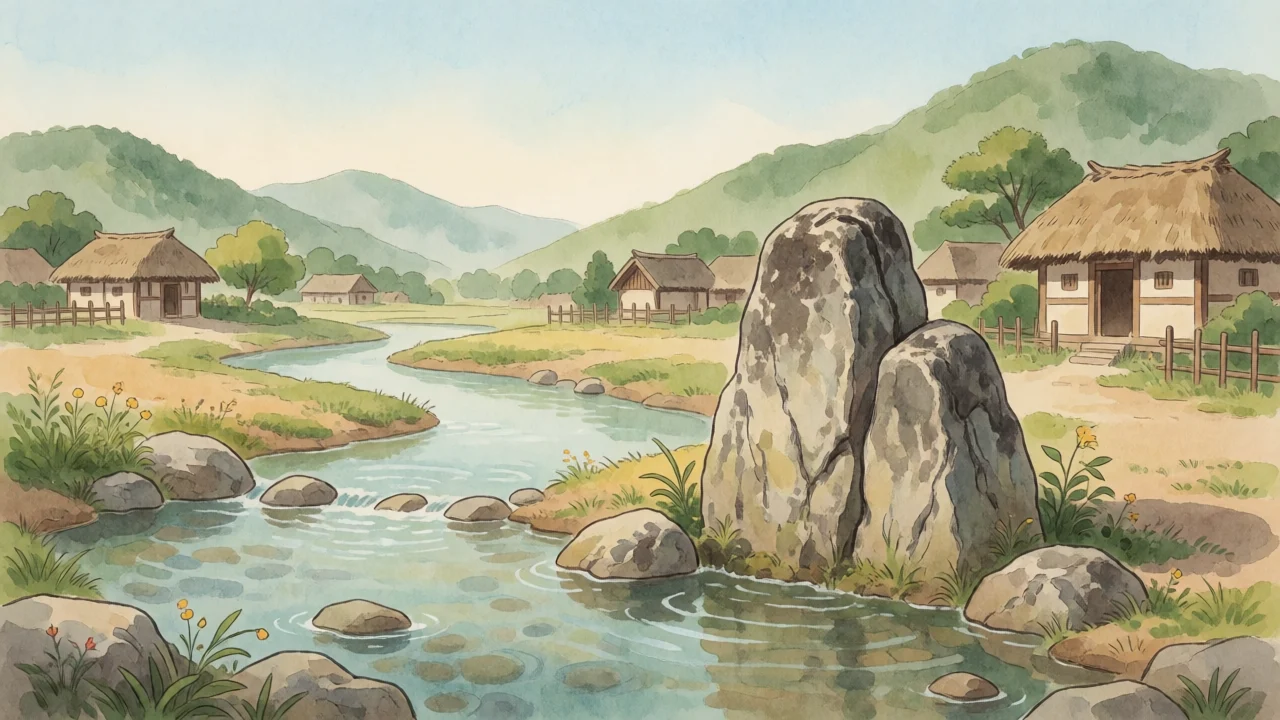
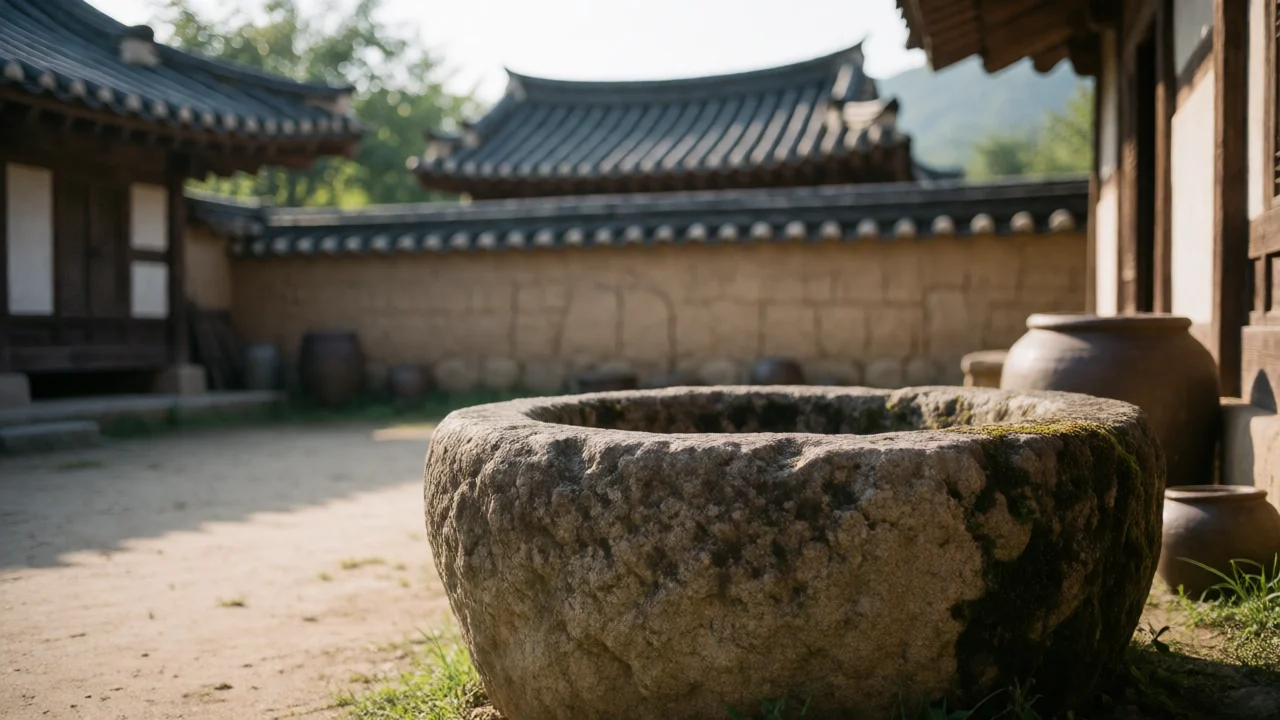
In one corner of the village sits a curious rock known as "Jucheonseok." According to old records such as the Sinjeung Dongguk Yeoji Seungnam (Expanded Survey of the Geography of Korea), this rock originally resembled a stone mortar. When a local official, growing weary of carrying water every day, attempted to move the stone right into the local government office, lightning and thunder suddenly struck from a clear sky, splitting it into three pieces. One of those split pieces remains to this day.
People also called this spring the "wine spring." However, another tale passed down by word of mouth suggests that it was originally called "Shilsam"—the "resting spring"—where travelers along the road would put down their baggage, catch their breath, and rest comfortably, and that over time, the pronunciation shifted from "shil" to "sul" (wine). Hidden around this wondrous spring is a captivating folktale passed down through generations.
Cheongju for the Yangban, Takju for the Commoners
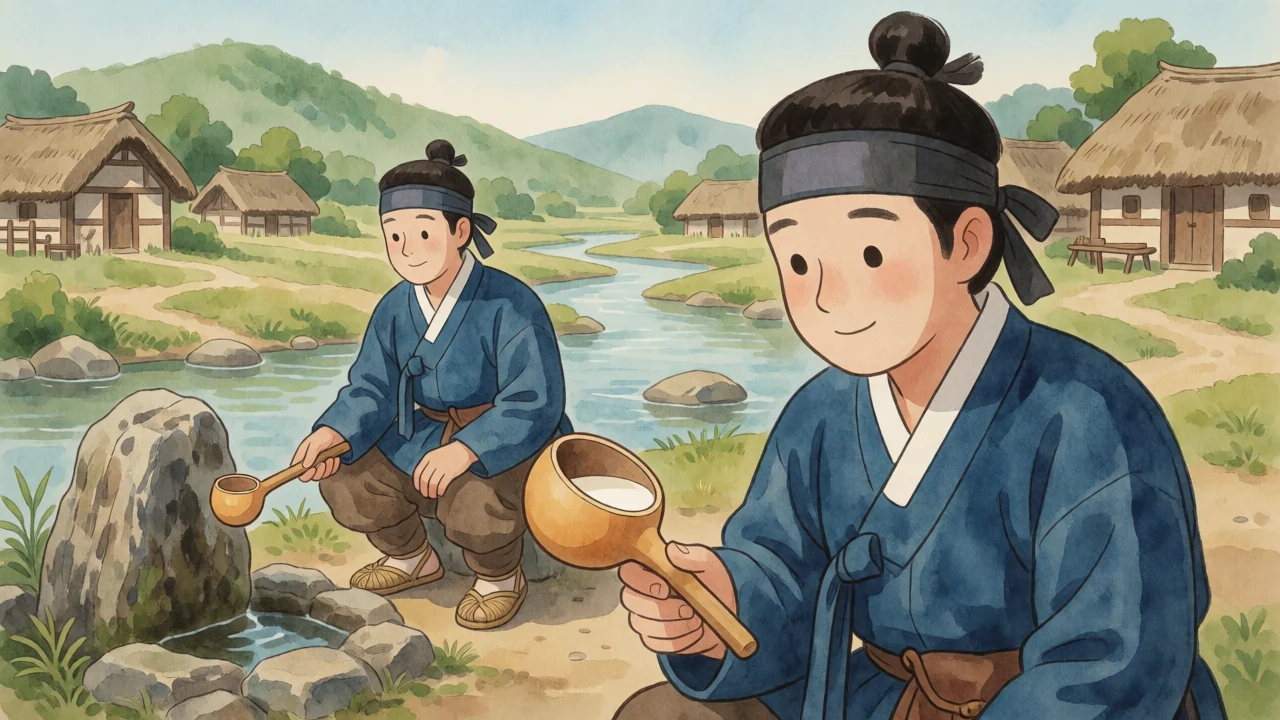
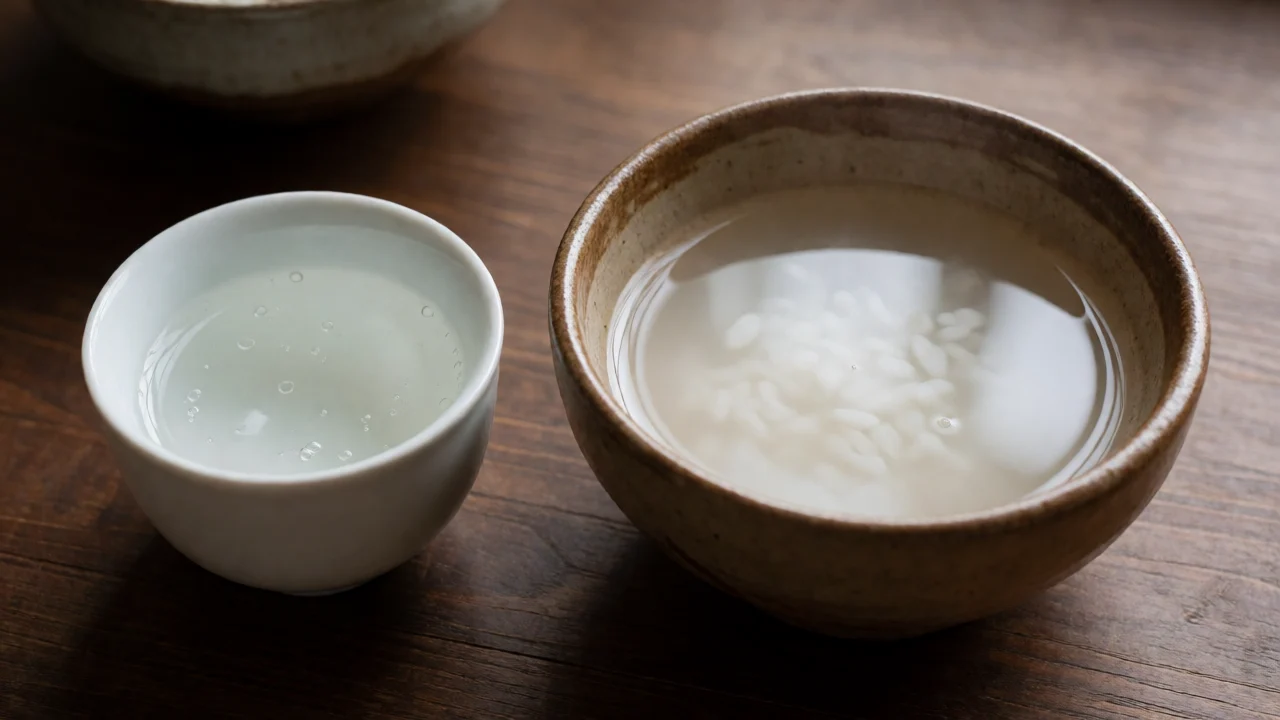
According to ancient lore, the spring in Jucheon-ri gushed forth wondrous liquor throughout the four seasons. Yet, this springwater had a peculiar trait. When a noble wearing a gat hat and dopo robe dipped a gourd into it, clear and fragrant cheongju (refined rice wine) bubbled up. But when an ordinary commoner who worked hard in the fields stepped up to draw water, thick and savory takju (milky rice wine) pooled up white and cloudy.
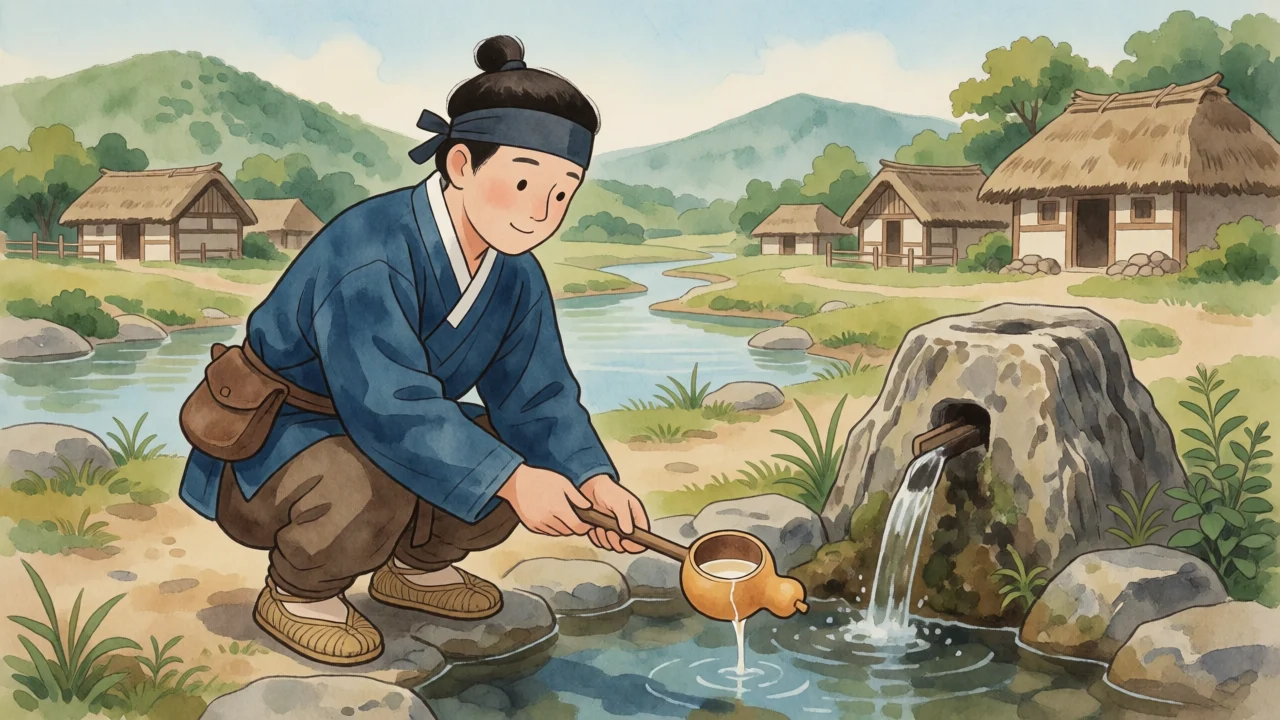
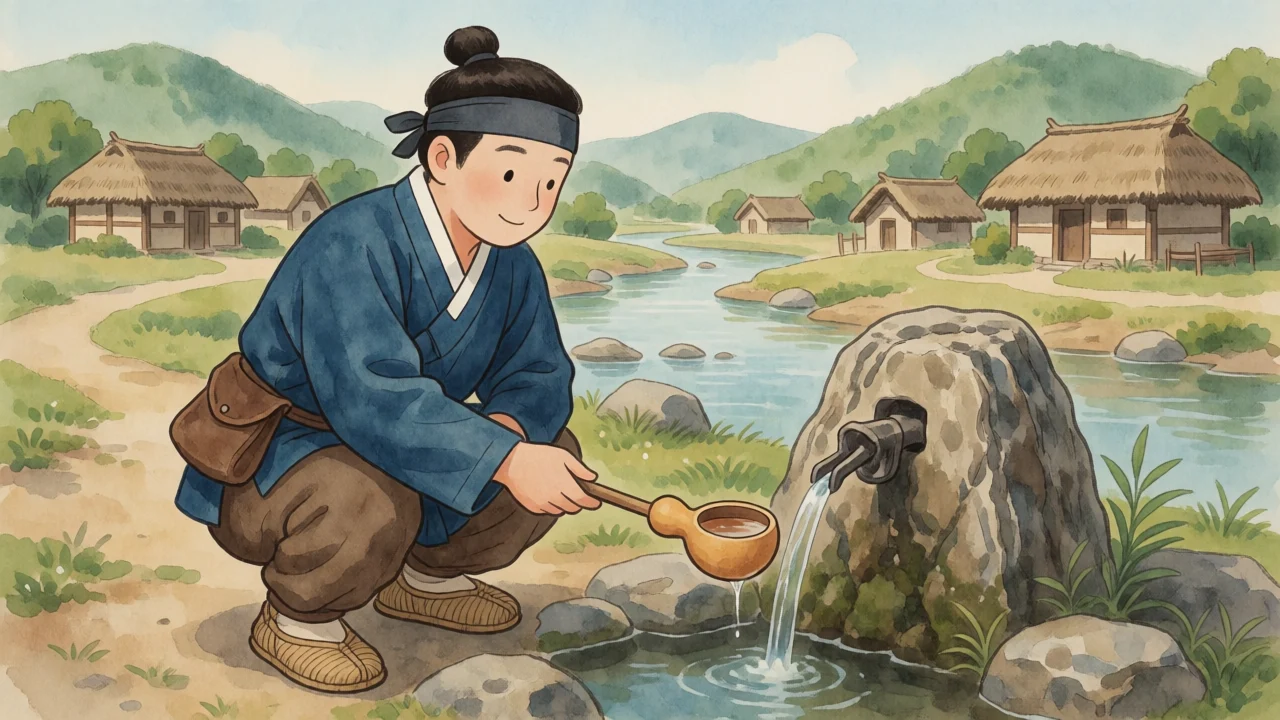
Dolsoe, a young farmer in the village, thought of this rumor every time he wiped sweat from his brow. Whenever he brushed off his dirt-stained trousers, squatted by the springside, and dipped his gourd, without fail, thick takju would well up to quench his thirst. Though it was a welcome drink that filled his belly, a quiet ambition began to take root deep inside Dolsoe's heart.
"I cannot spend my whole life growing old on this muddy ground without ever tasting a single sip of that crystal-clear cheongju."
Even while gripping a hoe to till the fields by day, Dolsoe kept an old Thousand-Character Classic book tucked inside his jacket. Deep into the night, long after his neighbors had fallen asleep, he rubbed his tired eyes under the dim lamplight to study. He firmly believed that if he passed the state examination, became a proud official, and truly gained the status of a yangban, the springwater would finally grant him clear, transparent cheongju.
Conflicting Words of the Villagers
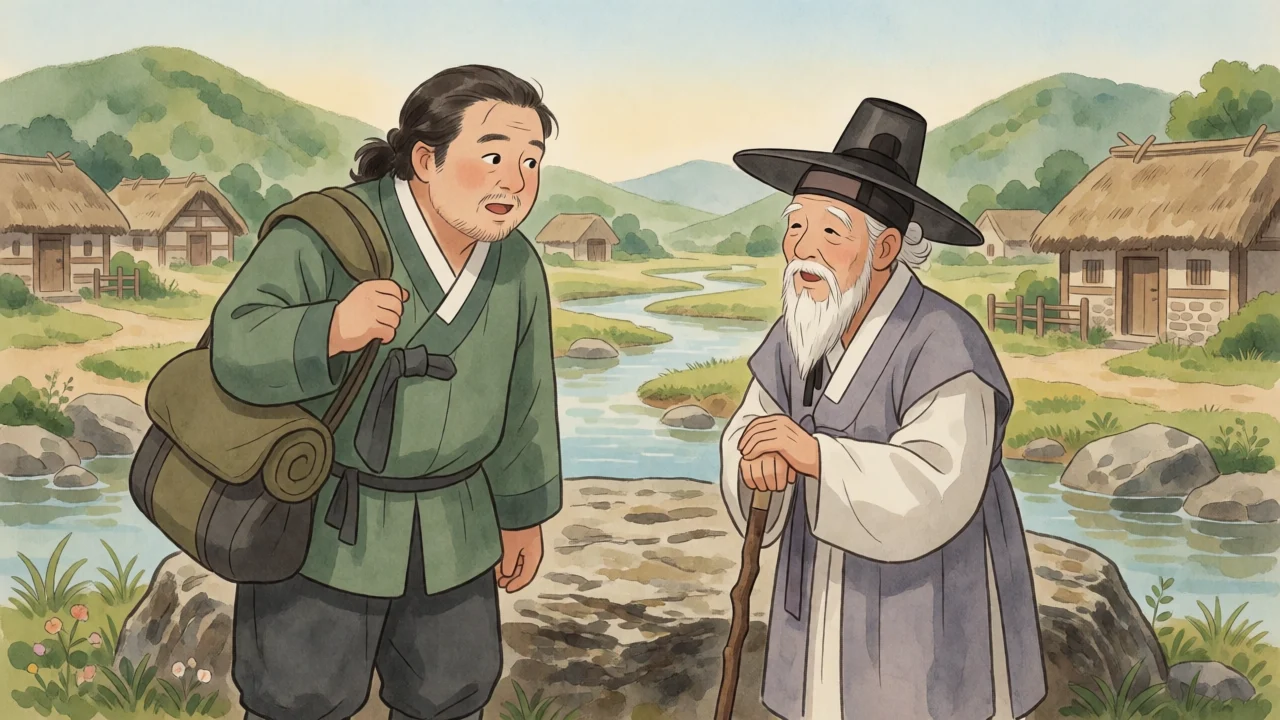
On the eve of his departure to take the state examination, Dolsoe visited the spring to quench his thirst one last time. Village elders and neighbors were gathered on the flat rocks by the spring, chatting away. Park Seobang, a traveling merchant, wiped his brow and chimed in.
"Well, you see, Kim Seobang from the neighboring village borrowed a yangban's dopo robe and even stuck on a fake beard to go try it! But astoundingly, his gourd filled right up with milky takju! That springwater must see straight down to a person's true character."
At that, an ajumma trimming wild greens nearby waved her hand dismissively and added her own take.
"Character? What nonsense! When a scholar walked by the other day, harboring a greedy heart and trying to gulp down three or four cups in a row, the water instantly clouded up and turned into takju. The spring judges not by clothes or status, but by whether one is tainted by impurity."
As the villagers' opinions clashed, Dolsoe tilted his head. He couldn't tell whether the spring saw the social standing flowing in one's bones or the purity of one's mindset. Yet, straightening his chest, Dolsoe muttered to himself:
"It won't be a sham of stealing someone else's clothes. Once I truly master my studies and proudly pass the state examination, even the springwater won't be able to deny me."
Passing the State Examination and a Triumphant Return
Dolsoe's determination was steadfast. After heading up to Hanyang and enduring years of grueling study, he finally passed the state examination that opened the path to official government service. With an eosa-hwa royal flower pinned to his hat and wearing a splendid silk official robe, Dolsoe made a majestic and triumphant return to his hometown of Jucheon-ri, Yeongwol.
As he entered the village, everyone from young children to the elderly came out, waving and cheering. Since Dolsoe, who used to weed fields covered in mud, had returned as a proud government official, it was practically a village-wide feast.
"Dolsoe did it! A real official and yangban has come out of our village!"
Dolsoe's heart swelled as he walked amid the people's praises. However, the very place he headed to first was not the banquet table, but the Jucheon springside on the village hill. The moment he had imagined countless times had finally arrived—the moment to scoop up clear, transparent cheongju with his own hands, where the bottom of the cup could be seen plain as day.
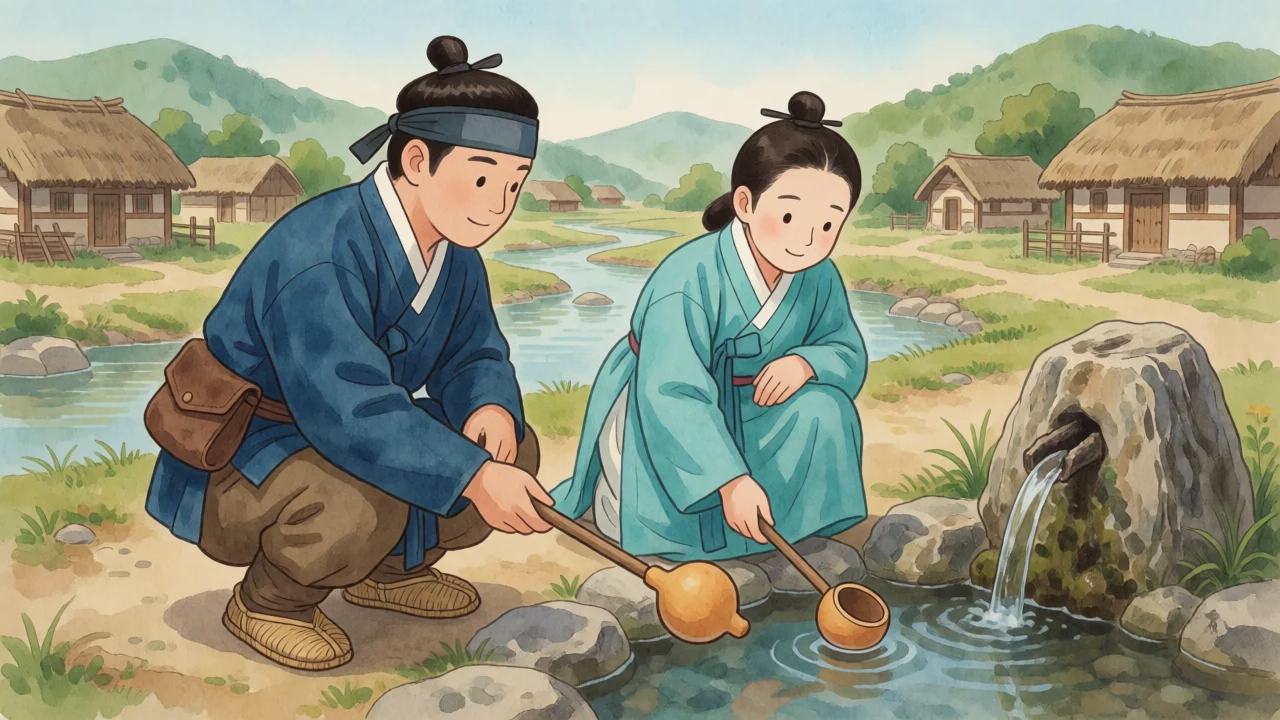
Fluttering the hem of his robe, Dolsoe carefully bent his knee and pushed the gourd deep into the springwater.
Milky Takju Pooling in the Gourd
With a gentle splash, the gourd filled. With his heart pounding, Dolsoe lifted it carefully. But the moment he peered inside, Dolsoe's eyes grew wide, then instantly froze.
What filled the gourd to the brim was not clear cheongju carrying a subtle fragrance. It was that thick, milky takju—makgeolli—he used to drink while sweating in the fields long ago.
"T-This cannot be. What kind of clothes am I wearing right now…!"
Flustered, Dolsoe emptied the gourd and plunged his hand deep into the water once again. Though he desperately hoped for a clear stream to well up, the second gourd he drew up also splashed with cloudy, sour takju.
The murmurs of the villagers who had followed behind him pierced Dolsoe's ears sharply.
"Hey, even though Dolsoe passed the exam, takju is still coming out?"
"Does the spring still see him as Dolsoe the field-weeding commoner?"
Those words felt like blades mocking his years of toil. Dolsoe's face flushed red with shame and anger. Was it to drink just this single cup of liquor that he had spent all those long years sacrificing his sleep? A sense of unfairness and betrayal surged up, turning his vision white.
The Lifted Stone and Elder Mandol's Restraint
"You fickle spring! All that talk about telling apart yangbans and commoners is a lie—a preposterous trick that tramples on a person's hard work!"
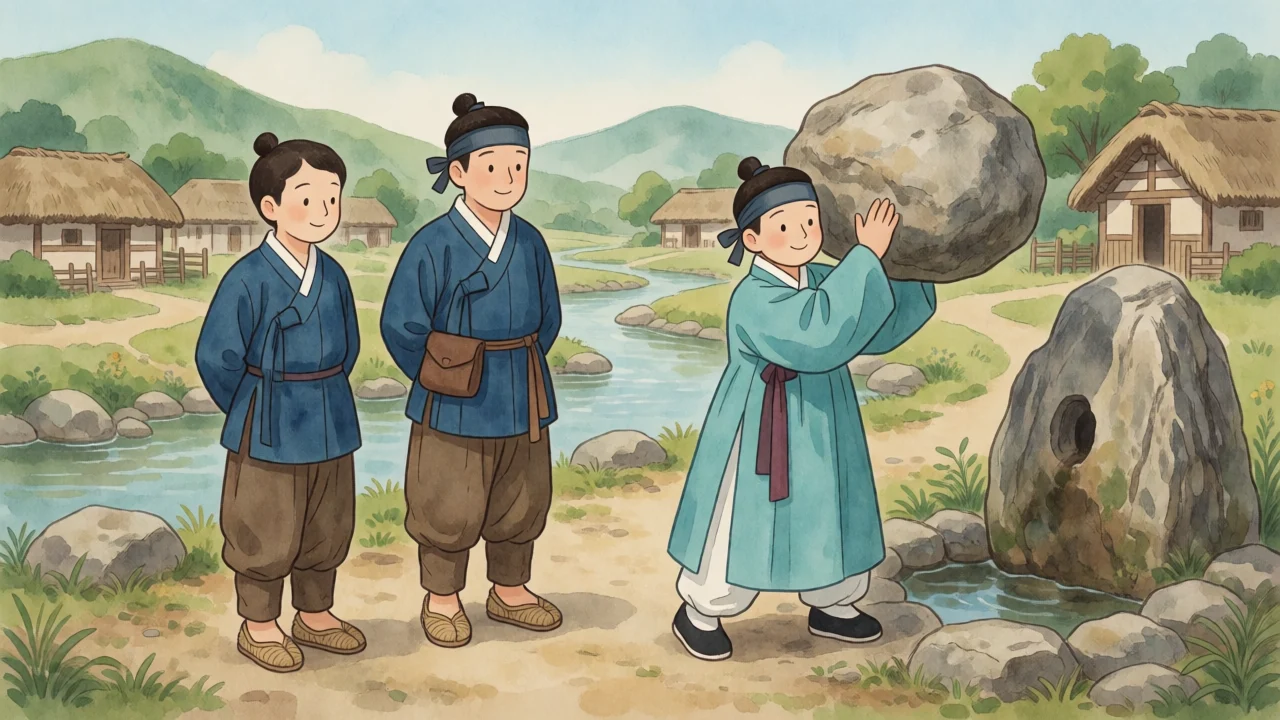
Having lost his reason, Dolsoe grabbed a large boulder lying by the roadside with both hands and lifted it high. His intention was to smash and bury this fraudulent spring forever so that no one could ever drink from it again. Just as the villagers retreated in terror, Elder Mandol, with his hair completely white, stepped forward leaning on his cane.
"Dolsoe, stop! I fear your hasty anger will invite disaster."
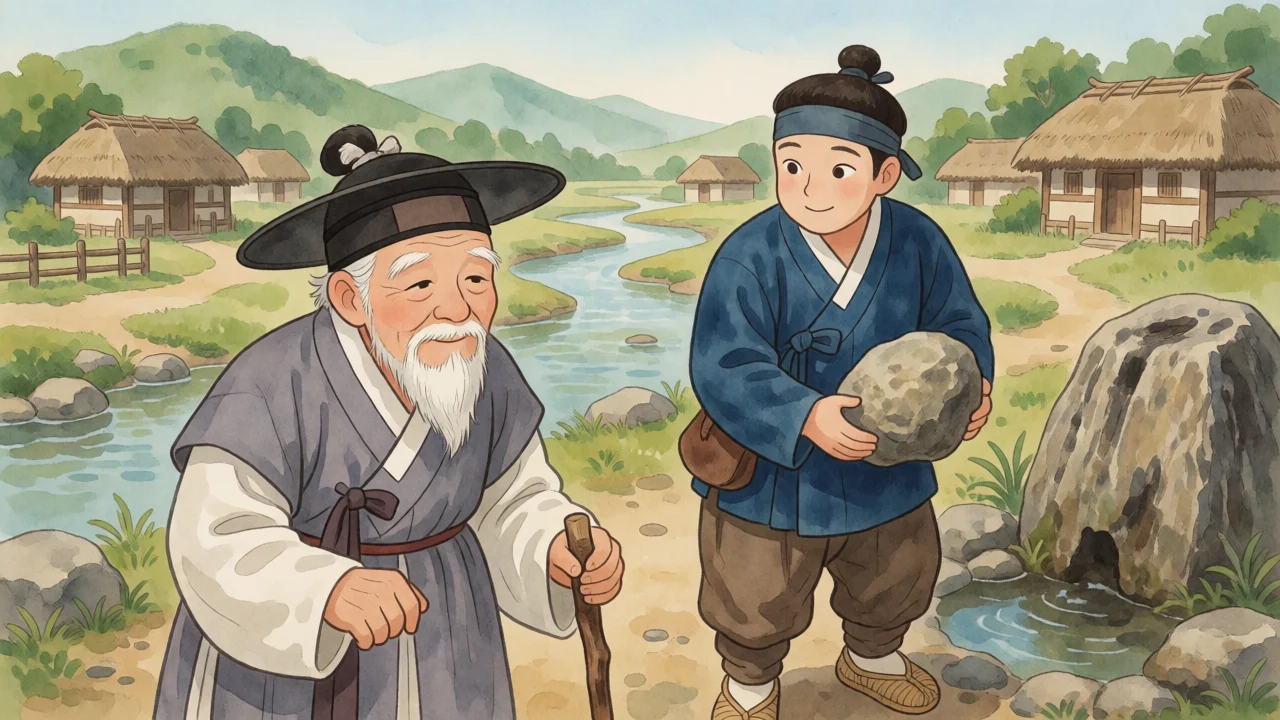
Blocking Dolsoe's path, Elder Mandol admonished him in a heavy voice.
"Have you truly forgotten the old tale of Jucheonseok? Isn't it recorded and passed down even in the Sinjeung Dongguk Yeoji Seungnam? Think of what happened to the official in ancient times who thought it too troublesome to fetch water and tried to move this mortar stone into the government office for his own comfort. Lightning flashed, thunder roared, and the stone split into three! How can you not know that this was a stern warning dealt by nature to those who recklessly meddle with the spring out of their own greed and arrogance?"
At the story of the lightning-struck rock and the elder's stern rebuke, Dolsoe's arms trembled violently. The elder's words weighed heavier on his heart than the boulder he held aloft.
The True Heart Embraced by the "Resting Spring"
With a dull thud, Dolsoe lowered the rock he had been holding. Panting heavily, he looked at the elder with reddened eyes.
"Elder, I simply wanted to be recognized. I studied through bone-crushing hardship, proudly passed the examination, and became a yangban—why does this spring still treat me as a commoner who drinks rough takju? Were my efforts truly all for naught?"
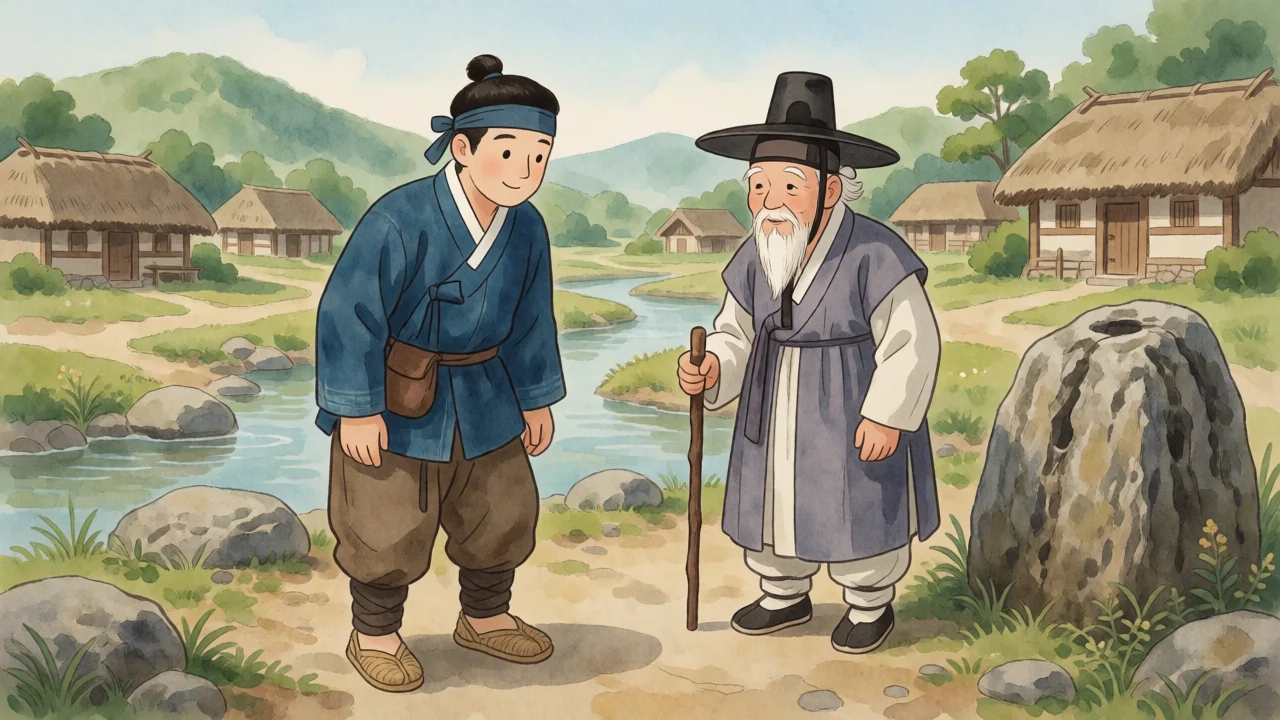
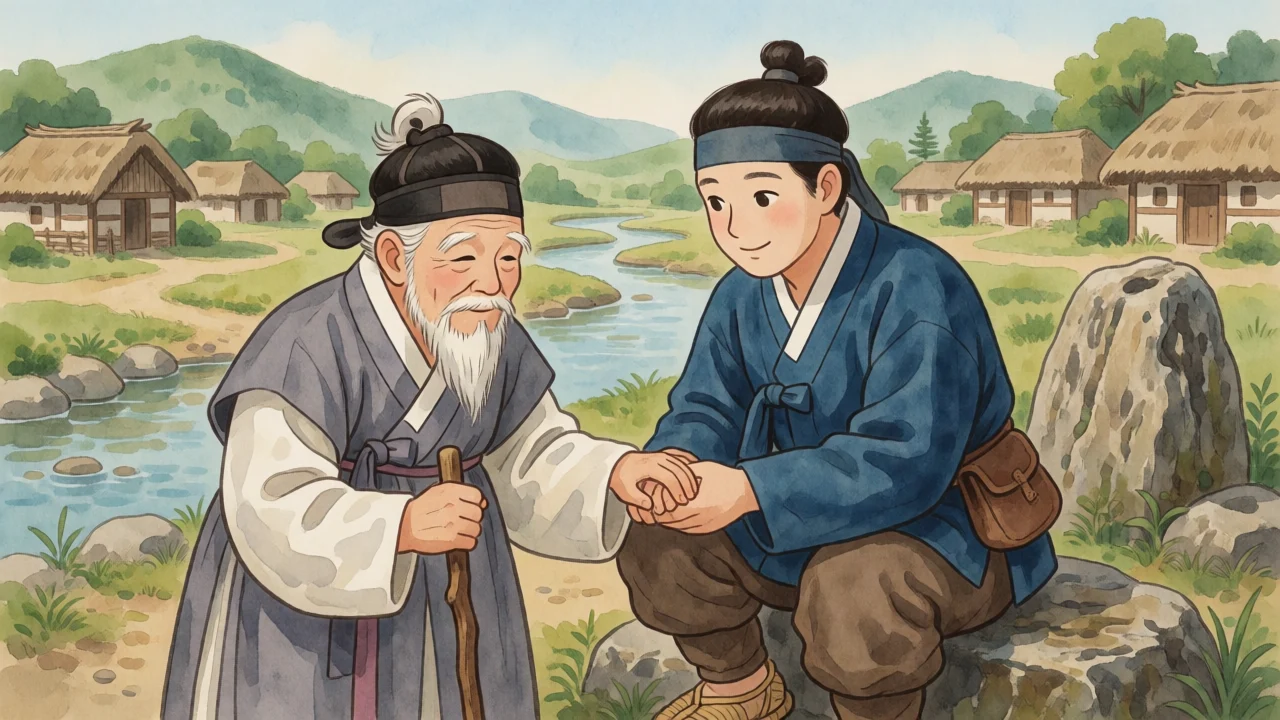
Elder Mandol gently grasped Dolsoe's dirt-stained hand—rough and calloused, visible beneath the sleeves of his official robe.
"Dolsoe, do you remember what the original name of this spring was? Before it was called the wine spring because wine flowed from it, it was the 'resting spring'—a place where travelers crossing harsh mountain passes and farmers exhausted from farm work could unburden their packs and quench their thirst. Even if cheongju is clear and precious, isn't it this thick and warm bowl of takju that comforts the empty stomachs of the hungry, weary common folk and gives them strength?"
The elder picked up the gourd Dolsoe had dipped and took a sip.
"The spring has not looked down on you. It is telling you not to become a cold-hearted yangban who turns his back on his hometown people just because you gained a high office, but rather to become a generous person who washes away the sweat of your neighbors and embraces their hunger, just like this rough makgeolli."
Every single word from the elder knocked on Dolsoe's closed heart. The narrow-minded greed he had harbored—trying to show off his social standing with a cup of clear liquor—finally melted into shame.
The Warmth Shared over Clinking Cups
Dolsoe's rigid shoulders finally relaxed. Rolling up his official robe sleeves, a shy and warm smile replaced the cold anger on his face as he stepped back toward the spring.
"I was foolish. I almost ruined this precious water source out of sheer stubbornness."
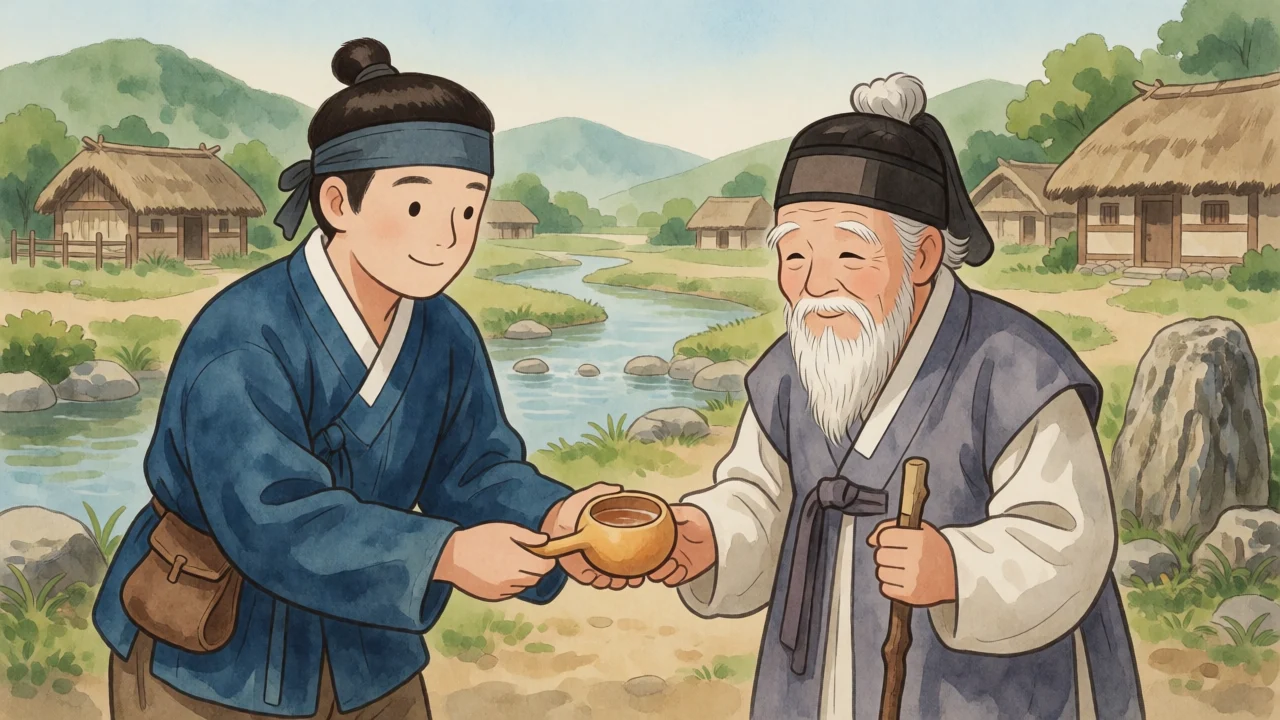
Dolsoe picked up the gourd and scooped up a generous portion of milky takju bubbling up. Then, he respectfully presented it with both hands first to Elder Mandol.
"Elder, please have a cup. Today, I have received the greatest lesson I could ever learn, born and raised in this village."
"Ho ho, truly sweet and refreshing!"
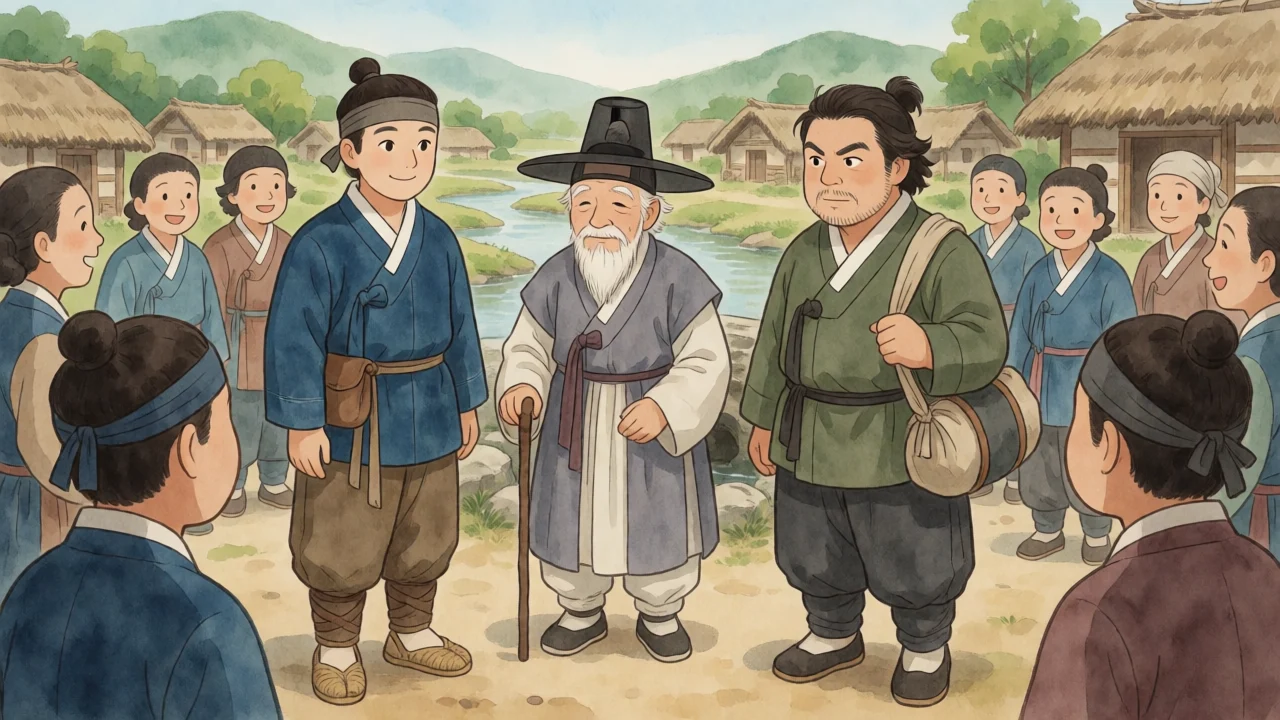
Next, Dolsoe busily passed the gourd around to Park Seobang, the neighborhood ajummas, and the mothers of the runny-nosed children standing nearby. The villagers gathered around, clapping their hands, and the once-rigid springside instantly transformed into a joyful banquet spot. Some drank straight from the gourd, while others held out dirt-stained bowls to share the refreshing takju.
Voices arguing over whether someone had become a yangban or remained a commoner were no longer heard. There was only the generous sound of laughter, casting away the day's fatigue and embracing one another.
Affection Flowing in the Clear Waters of Jucheon River
Though time has passed and the legendary spring has long since vanished underground, the waters of the Jucheon River, embracing Jucheon-myeon in Yeongwol, continue to flow leisurely, still carrying the wisdom of that day.
Like the Jucheonseok rock that held its place even after being struck by lightning, the greed of coveting the stone mortar was broken, leaving only the generous spirit of rest where travelers could pause—a spirit that lives on as the name of the village. Rather than boasting of clear cheongju, the story of Dolsoe and the villagers who knew how to cheerfully share a bowl of rough takju with their neighbors still lingers gently in our ears along the sound of the Jucheon River's flowing waters.
Should you ever pass through the land of Jucheon and encounter the cool river breeze, remember this: more important than rising to a high position is the warm heart to recognize the sweat droplets of the person standing beside you and willingly share them together.
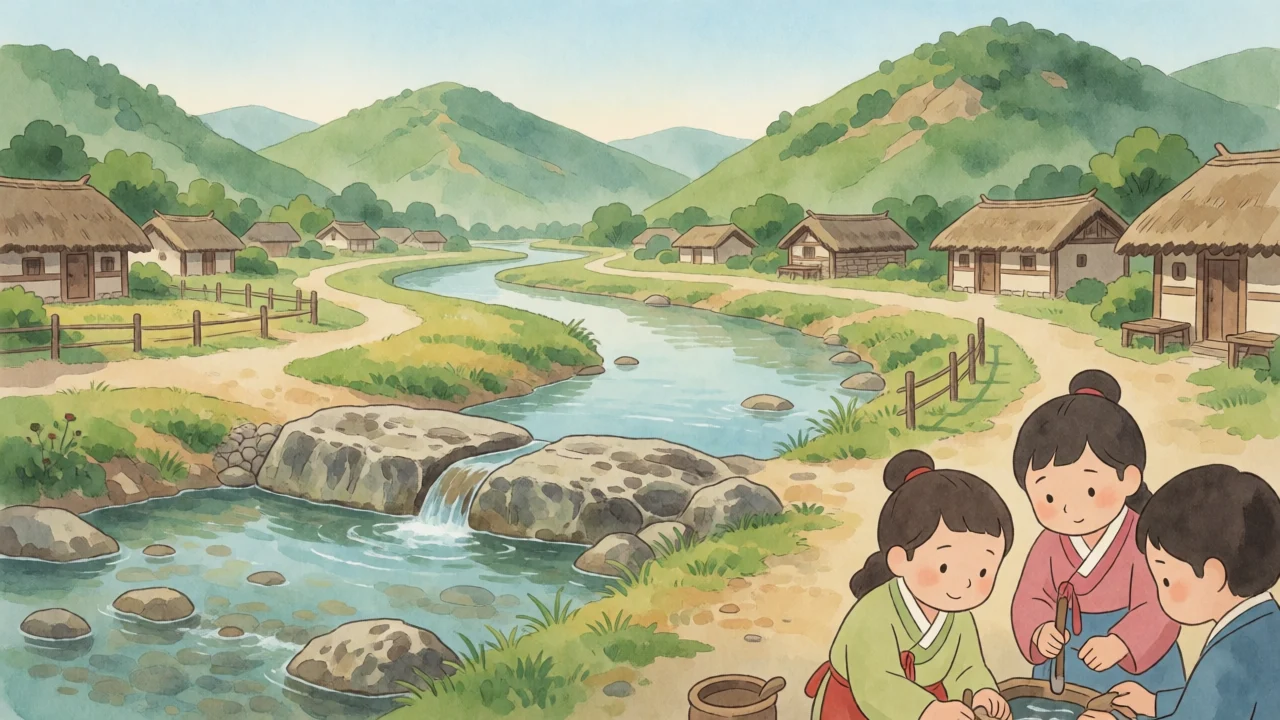
The Jucheon River, Jucheonseok, and the Tales Behind the Place Name
The Jucheon River in Jucheon-myeon, Yeongwol-gun, Gangwon-do, and the local place names and folktales associated with it encompass both long historical records and folk traditions. In the Goguryeo era, this place was named "Juyeon" (Wine Pool), and during the reign of King Gyeongdeok of Silla, it was changed to "Jucheon" (Wine Spring). Additionally, the Sinjeung Dongguk Yeoji Seungnam records that Jucheonseok originally resembled a stone mortar, but when an official who found fetching water daily too troublesome attempted to move it to the local government office, thunder and lightning struck, splitting the rock into three pieces, one of which remains today. Stories related to Jucheonseok are sometimes interpreted as reflecting the social stratification changes of the late Joseon Dynasty.
Today's Jucheon-myeon and the Significance of Transmission
The name "Sulsae" (Wine Spring) in Jucheon-myeon, Yeongwol-gun, Gangwon-do is presumed to have evolved from "Shilsam" (Resting Spring), meaning a place where travelers gathered to rest around the spring. Similar legendary motifs—where a single person is allowed only a single cup of wine, but a certain person or monk drinks multiple cups, causing a spiritual taint that stops the wine from flowing—are also transmitted in other regions such as Yeongjongdo in Incheon and Cheongdo-gun in Gyeongsangbuk-do. Today, the Jucheon River area holds significance as a space preserving the footsteps of these place-name origins and old folktales.

The Boundary Between Historical Fact and Legend
The geographic name changes mentioned in the text (from Goguryeo's "Juyeon" to Silla King Gyeongdeok's "Jucheon") and the contents regarding Jucheonseok recorded in the Sinjeung Dongguk Yeoji Seungnam are grounded in historical literature and facts. However, the specific narrative of the Jucheon folktale—where cheongju came out for yangban and takju for commoners throughout the four seasons, the young man Dolsoe who passed the state examination trying to block the spring, and the phonetic shift from "Shilsam" to "Sulsae"—belong to the realm of legends and oral traditions. The folklore and transmitted tales recorded in literature cannot be reduced to historical facts themselves, but should be understood as stories combining fictional narratives with folkloric imagination.